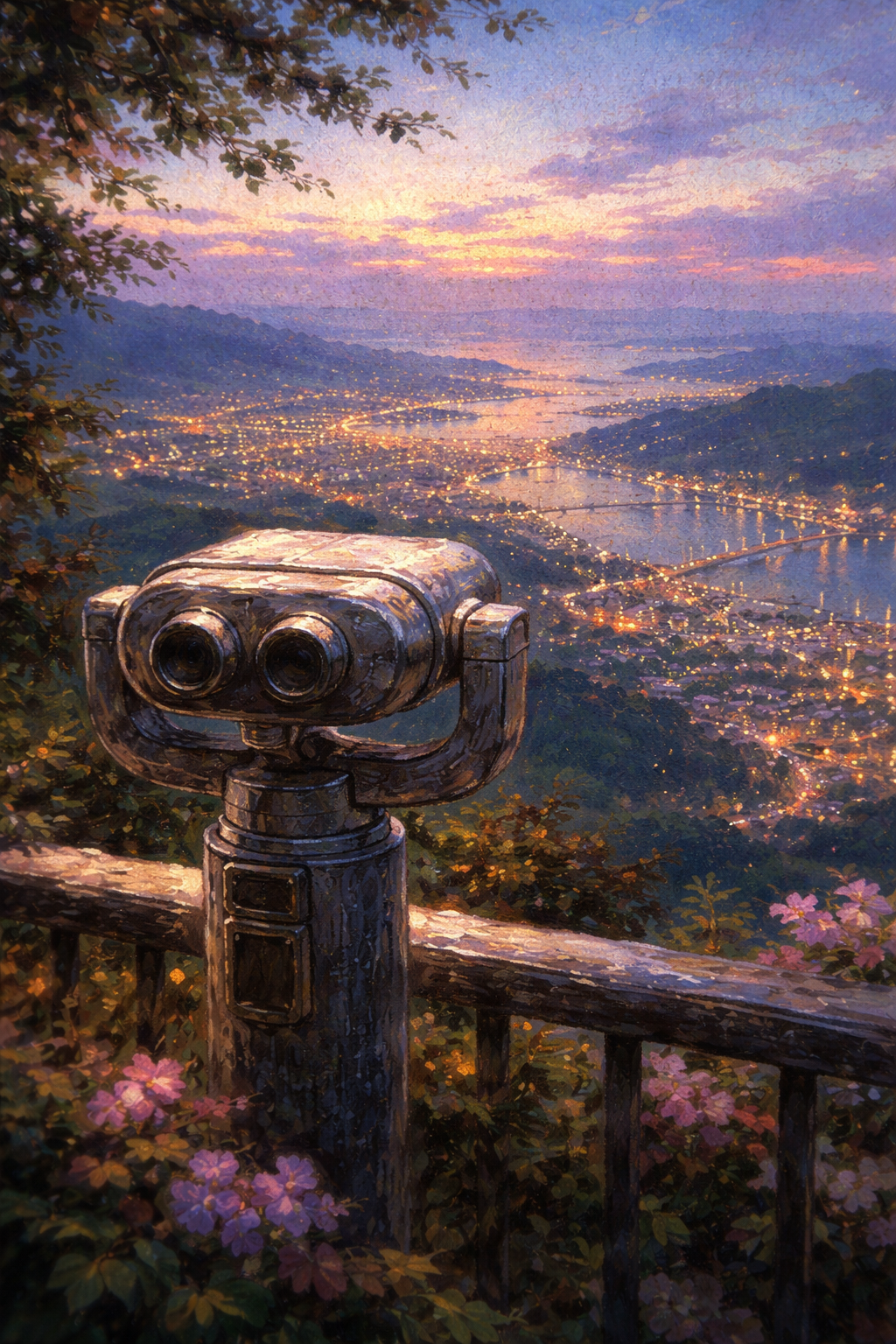
Twilight's Golden Observation
Critique
1. Introduction The visual composition features a pair of public viewing binoculars overlooking a sprawling cityscape. The scene is captured at twilight, with vibrant sunset colors filling the sky. The foreground frames the viewing instrument amidst foliage, while city lights glow in the distance. 2. Description A heavy metal binocular stand dominates the left foreground, showing signs of weathering and use. Beyond the viewing platform, a wide river curves through a densely populated valley filled with illuminated buildings. The sky above is colored with hues of purple, orange, and pink. Soft pink flowers and green leaves border the lower edge of the frame. 3. Analysis The structural arrangement uses the binoculars as a strong foreground element to anchor the expansive landscape. The color tones transition from the cool metallic surfaces of the instrument to the warm twilight colors above. The atmospheric perspective softens the distant city details, creating a sense of vast space. The lighting balances the fading natural daylight with the emerging city lights. 4. Interpretation and Evaluation The composition captures the transitional mood between day and night in an urban space. The viewing instrument acts as a proxy for the viewer, inviting them to survey the distant landscape. The contrast between the immediate foreground objects and the distant city creates a compelling sense of scale. The visual elements work together to evoke a quiet moment of observation. 5. Conclusion The visual work successfully balances a detailed foreground with an expansive background scene. The skillful use of twilight coloring creates a cohesive and engaging atmosphere. The careful framing ensures that both the viewing instrument and the vast cityscape receive appropriate visual attention.
Same Subcategory
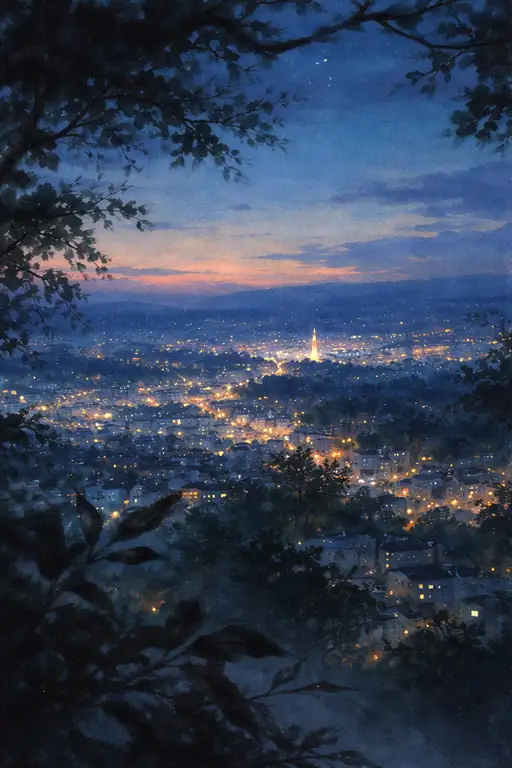 Whispers of the Dreaming City
Similar Artworks
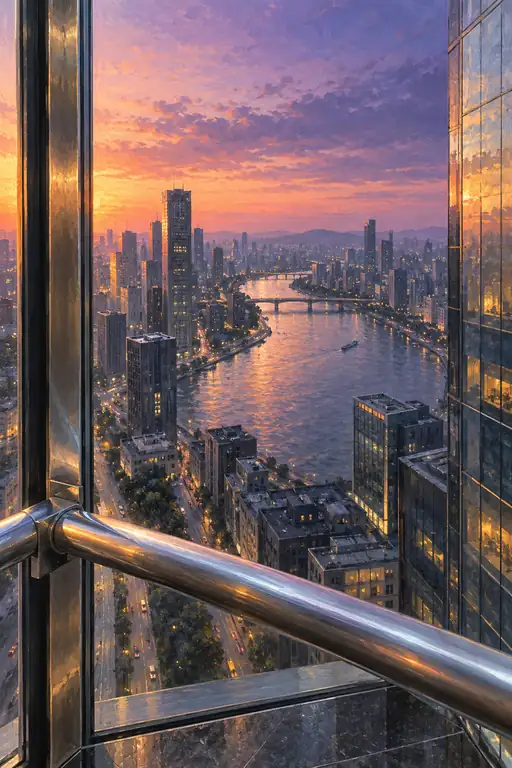 Amber River of the High Terrace
 Sunset Over the River of Glass
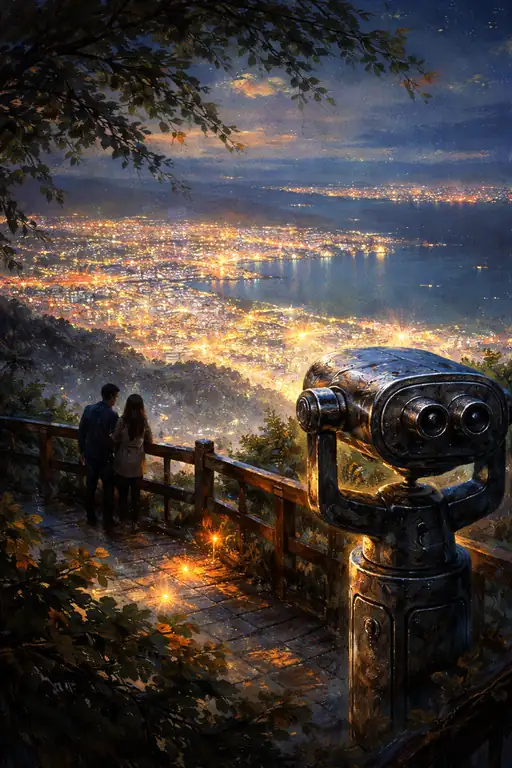 Midnight Stargazing Over the Bay
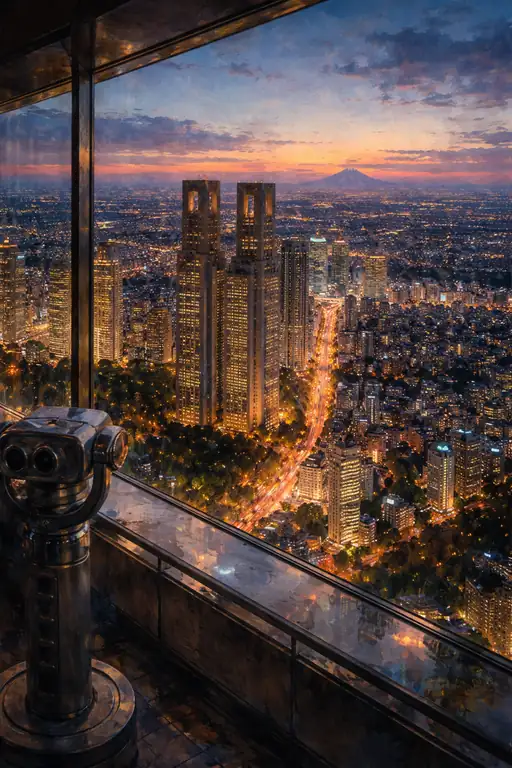 Gazing at the City's Golden Veins
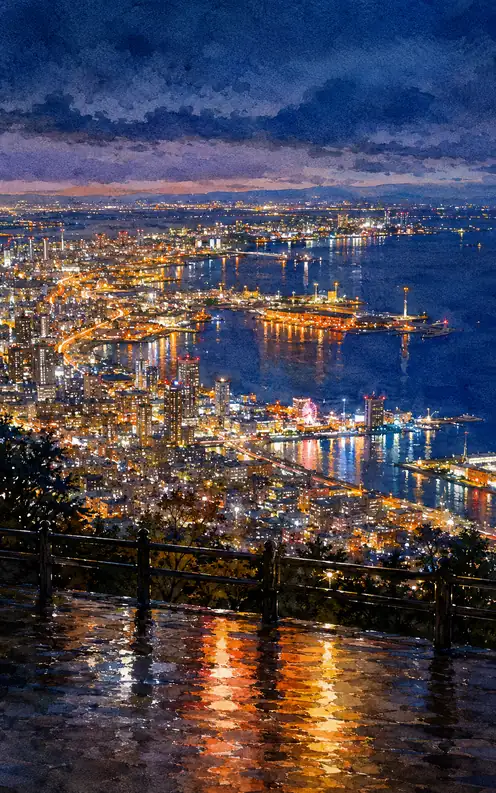 Rain Carries the City Lights Home
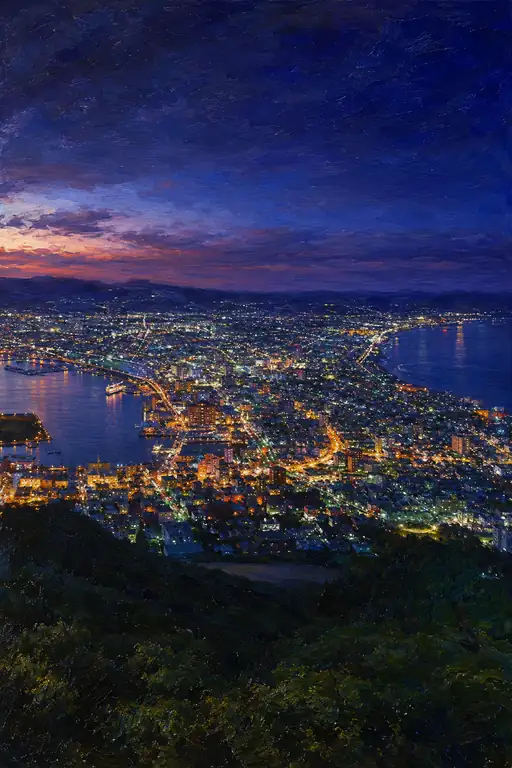 Where the Sky Meets the Sea of Light
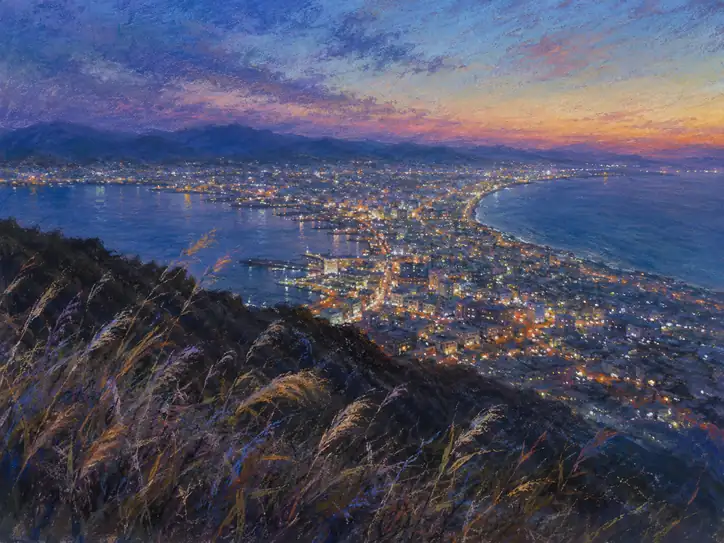 The Cradle of Shimmering Dreams
 Luminous Urban Tapestry
 The Observer's Urban Constellation
 The Bay Spills Its Stars