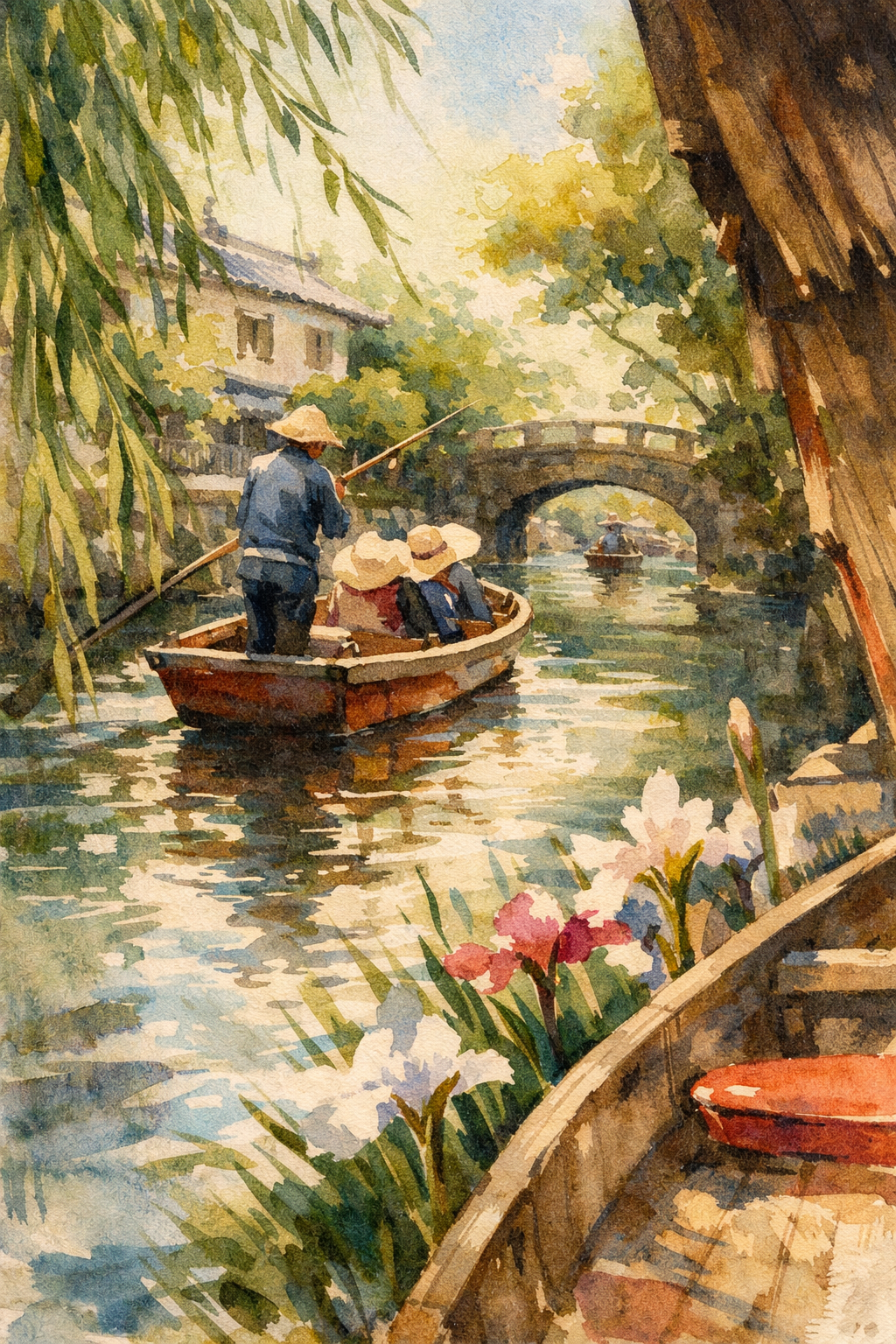
Petals on the Water's Mirror: Summer's Quiet Flow
Critique
1. Introduction This luminous watercolor painting depicts a tranquil canal scene in a traditional Japanese water district, likely during the early summer when irises are in bloom. A boatman guides a wooden vessel through serene waters, surrounded by weeping willows and historical architecture. Through its fluid washes and expert handling of light, the work captures the refreshing and peaceful atmosphere of this cultural landscape. 2. Description The central subjects are a traditional "donko-bune" boat and its passengers, steered by a man in a straw hat using a long pole. In the background, a stone arch bridge spans the canal, beneath which another small boat can be seen. The foreground is filled with elegant white and purple irises, while delicate willow branches hang from the upper left. Along the banks, white-walled houses with tiled roofs complete the historic setting. 3. Analysis The artist employs a vertical composition that emphasizes the receding depth of the waterway, leading the eye from the detailed irises in the foreground to the distant bridge. The characteristic transparency of watercolor is used to brilliant effect, conveying the shimmering reflections on the water and the soft texture of the foliage. Brilliant highlights are achieved by strategically leaving the white of the paper untouched, enhancing the sense of bright sunlight. 4. Interpretation and Evaluation The work successfully translates the poetic essence of a "water capital" into a visual form where nature and human life coexist in harmony. A refreshing palette of greens and blues, punctuated by the soft floral colors, evokes a strong sensory response to the early summer air. The expressive yet controlled brushwork demonstrates a high level of technical mastery and an intimate understanding of the watercolor medium. 5. Conclusion While the scene is a classic representation of regional Japanese scenery, the sophisticated use of color and light elevates it beyond a mere sketch. Ultimately, the painting serves as a vivid celebration of seasonal beauty and traditional Japanese aesthetics. It stands as a masterfully executed landscape that balances technical precision with a profound sense of atmosphere.
Same Subcategory
 Dreams Soaring on the Vernal Wind
 Symphony of the Golden Ginkgo
Similar Artworks
 Willow Breezes and the Ancient Stone Span
 Morning Reflection on the Wooden Arch
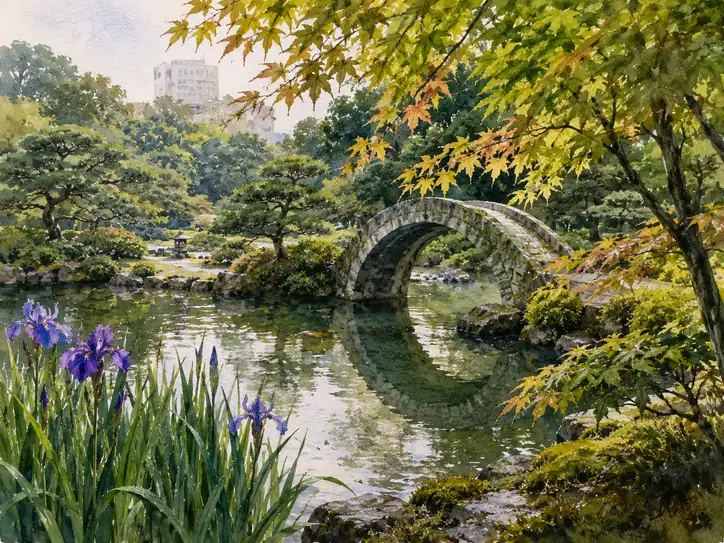 Where the Heart Finds Its Circle
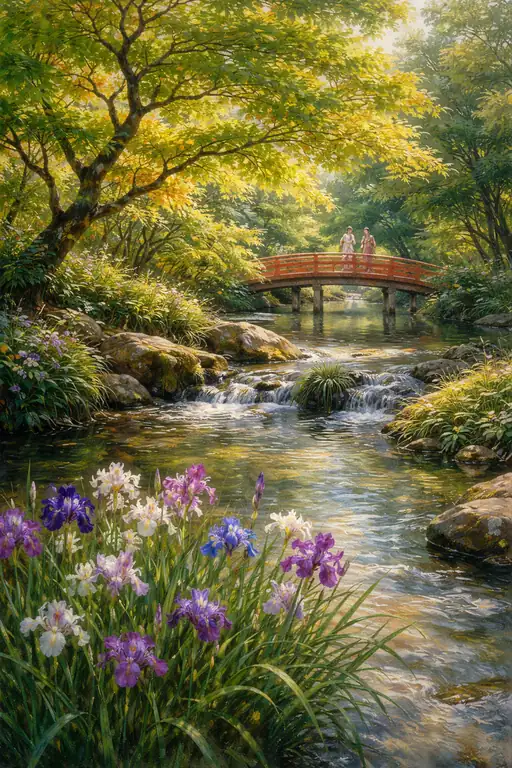 Dance of the Irises by the Crimson Bridge
 Whispers of the Willow in the Morning Light
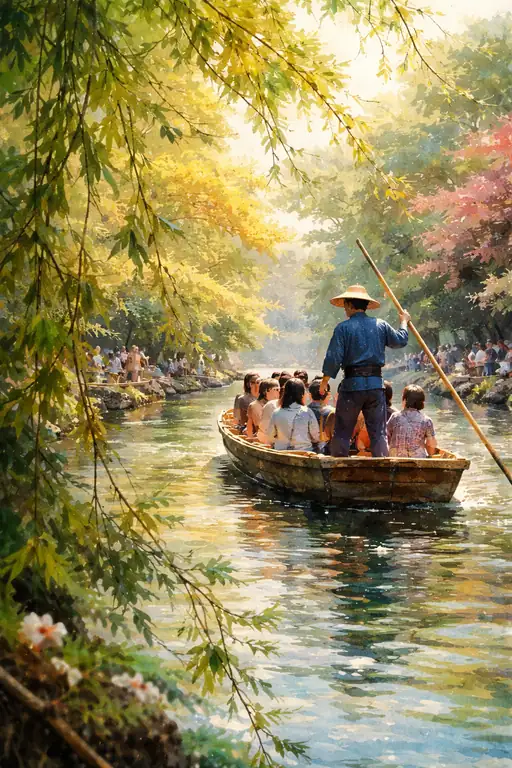 Drifting Through the Emerald Canopy
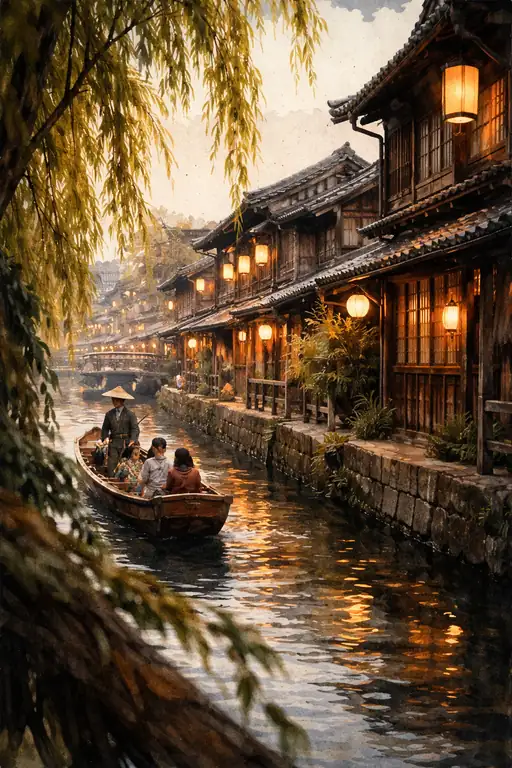 Echoes of Amber on a Timeless Tide
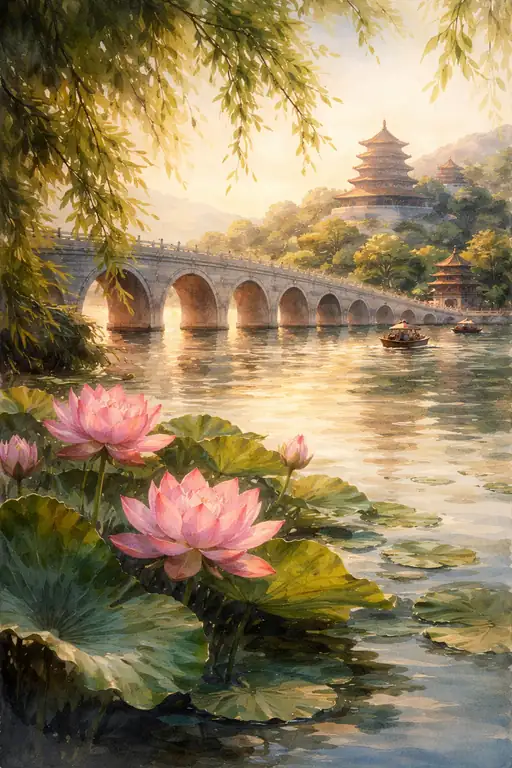 Golden Lotus in the Imperial Garden
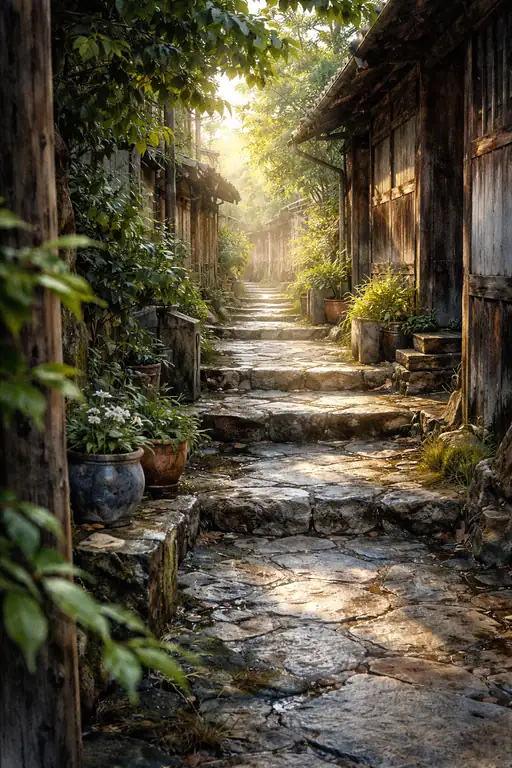 Morning Mist on the Stone Steps
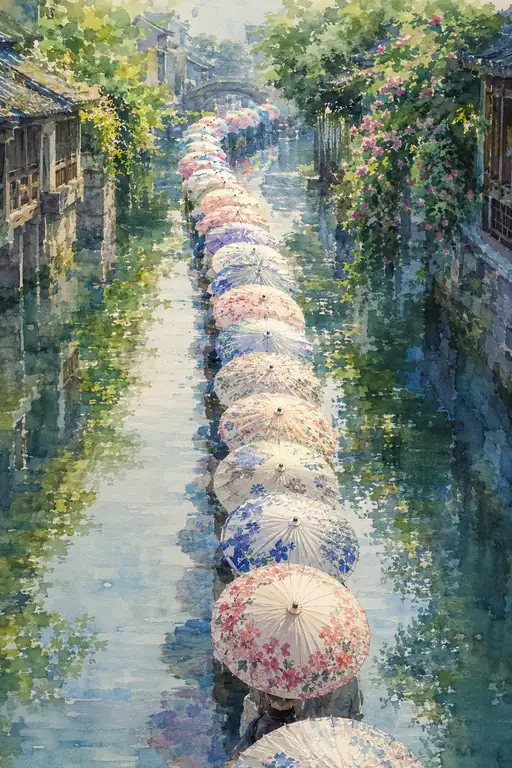 A Procession of Silent Flowers