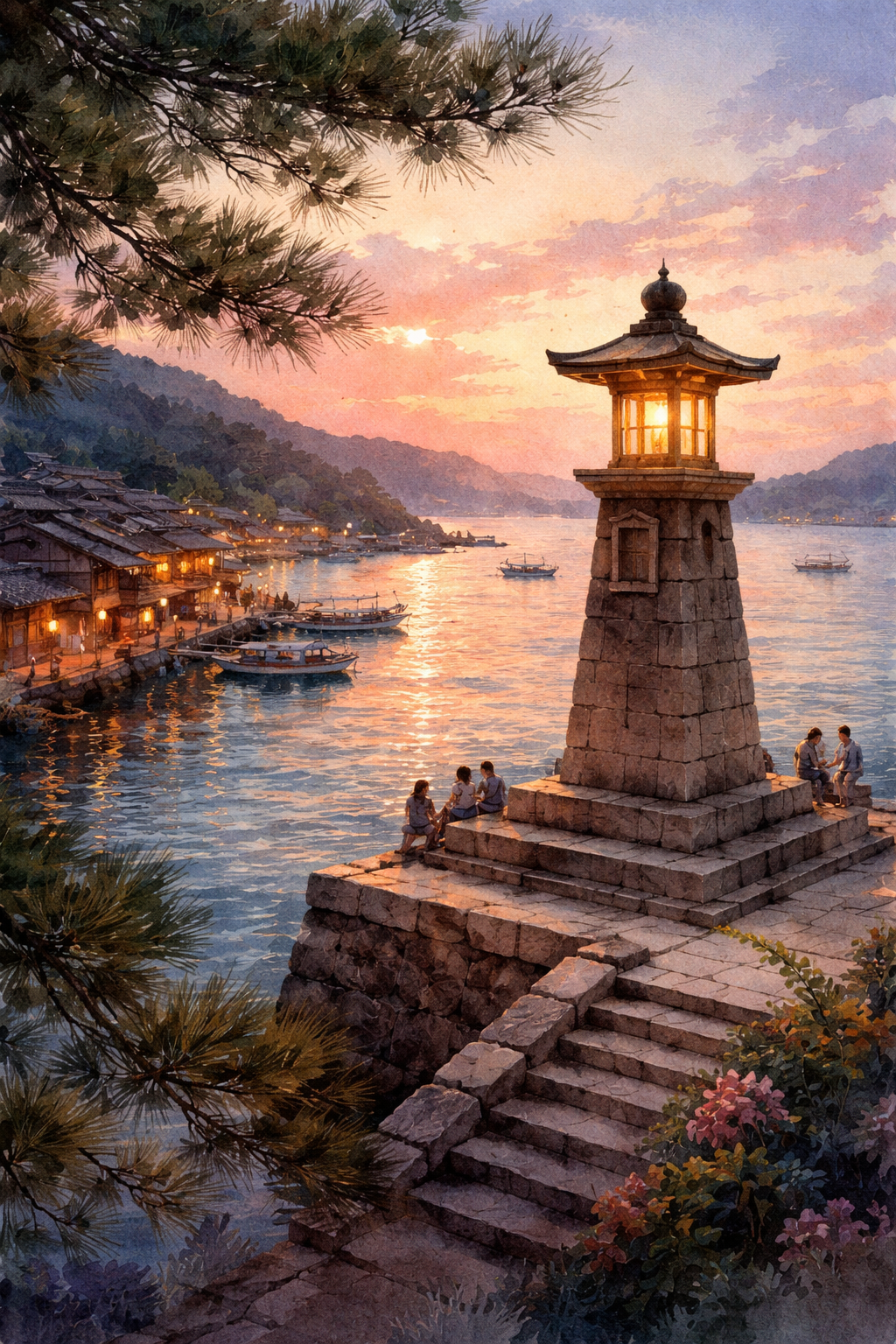
The Joyato Lantern Guiding the Twilight
Critique
1. Introduction This lyrical watercolor painting depicts a traditional Japanese stone lantern standing watch over a quiet harbor town at dusk. The soft radiance of the setting sun and the golden reflections dancing on the water’s surface beautifully recreate the nostalgic atmosphere of an ancient port. Framed by the textured branches of a pine tree, the robust stone structure serves as a monumental anchor within a space of profound tranquility and beauty. It is a sophisticated landscape that captures the intersection of historical permanence and the transient, everyday moments of human life. 2. Description The right side of the composition is dominated by a stone lighthouse set atop a tiered pedestal, its lantern room glowing with a steady, warm light. Figures gather at its base, sitting on the cool stone steps as they gaze across the quiet bay. In the background, traditional houses with tiled roofs huddle along the shoreline, their windows twinkling with evening light. Several wooden boats float on the calm sea, which reflects a gorgeous gradient from deep violet to shimmering gold. Pine needles in the foreground add a sense of intimate proximity, framing the vast coastal view. 3. Analysis Technically, the work thrives on the contrast between the lighthouse's vertical strength and the soft, organic undulations of the sea and sky. The artist employs a wet-on-wet technique to simulate the humid evening air, creating an immersive sense of atmosphere and diffused light. The composition follows a sweeping curve from the foreground stone steps toward the distant town, emphasizing the intimate spatial beauty of a traditional port. The color strategy harmonizes the dominant sunset oranges with the deep greens of the pine and the cool grays of the masonry, resulting in a perfectly balanced and emotive tonal palette. 4. Interpretation and Evaluation The work can be interpreted as a meditation on the passage of time and the enduring value of sites that offer light and sanctuary. The figures gathered at the lighthouse symbolize the continuity of community and the way historical monuments remain vital centers of social connection. Technically, the artist demonstrates exceptional control over light management, particularly in capturing the subtle nuances of shadows on the stone textures and the brilliant highlights on the water. This painting successfully merges technical precision with a deeply empathetic gaze, creating a masterpiece of contemporary landscape art. 5. Conclusion While initially drawn to the breathtaking sunset, the viewer eventually discovers that the true subject is the gentle flow of time inherent in the town’s existence. The small light flickering from the lantern serves as a beacon of hope and continuity, providing peace and reassurance as night falls. Through meticulous detail and a warm, unifying atmosphere, the artist elevates this specific scene into a universal symbol of spiritual home. This is a profound work that captures the essence of Japanese aesthetics and sentiment with remarkable sensitivity and grace.
Same Subcategory
 Golden Harbor of Tropical Reverie
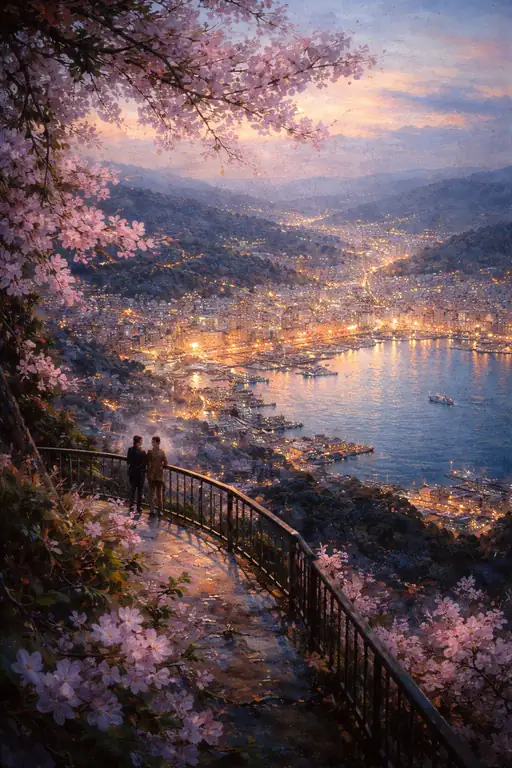 The Silent Watchers of the Twilight City
Similar Artworks
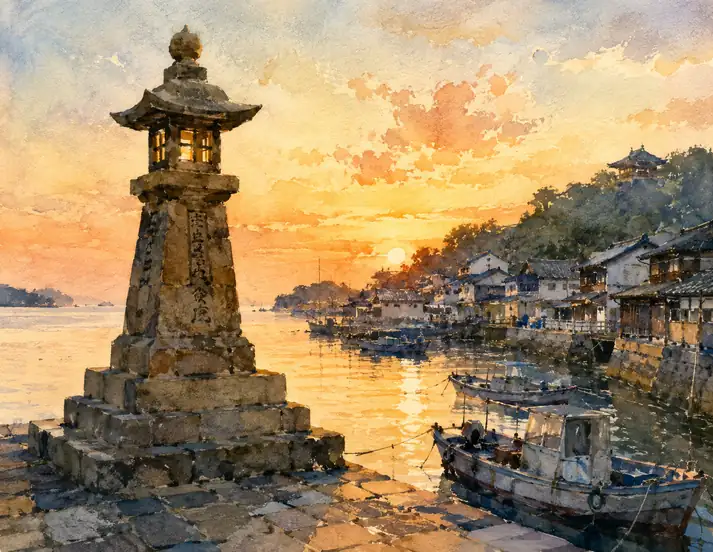 A Beacon for the Heart's Return
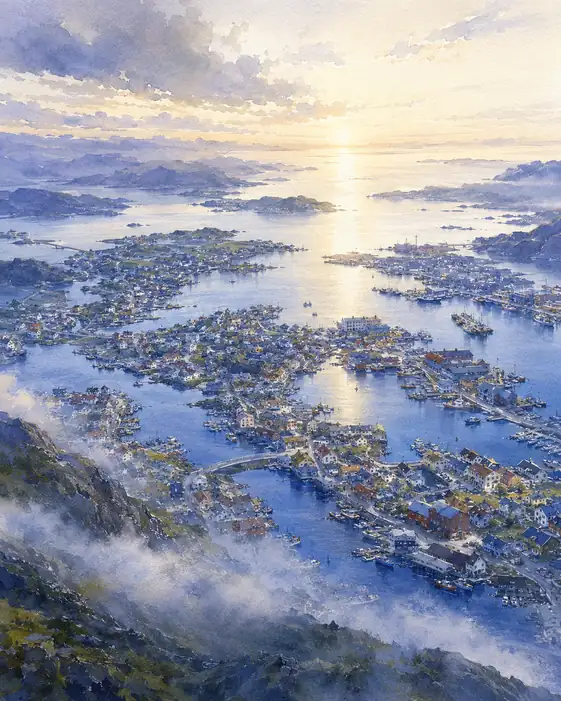 Where the Light Comes to Rest
 The Gentle Slumber of a Coastal Haven
 The Golden Departure at Sunset
 Golden Farewell to the Working Tides
 Lullaby of the Moored Vessels
 Where the River Holds the Sunset
 The Crossing of Golden Memories
 Whispers of the Working Harbor
 The Warm Embrace of La Rochelle