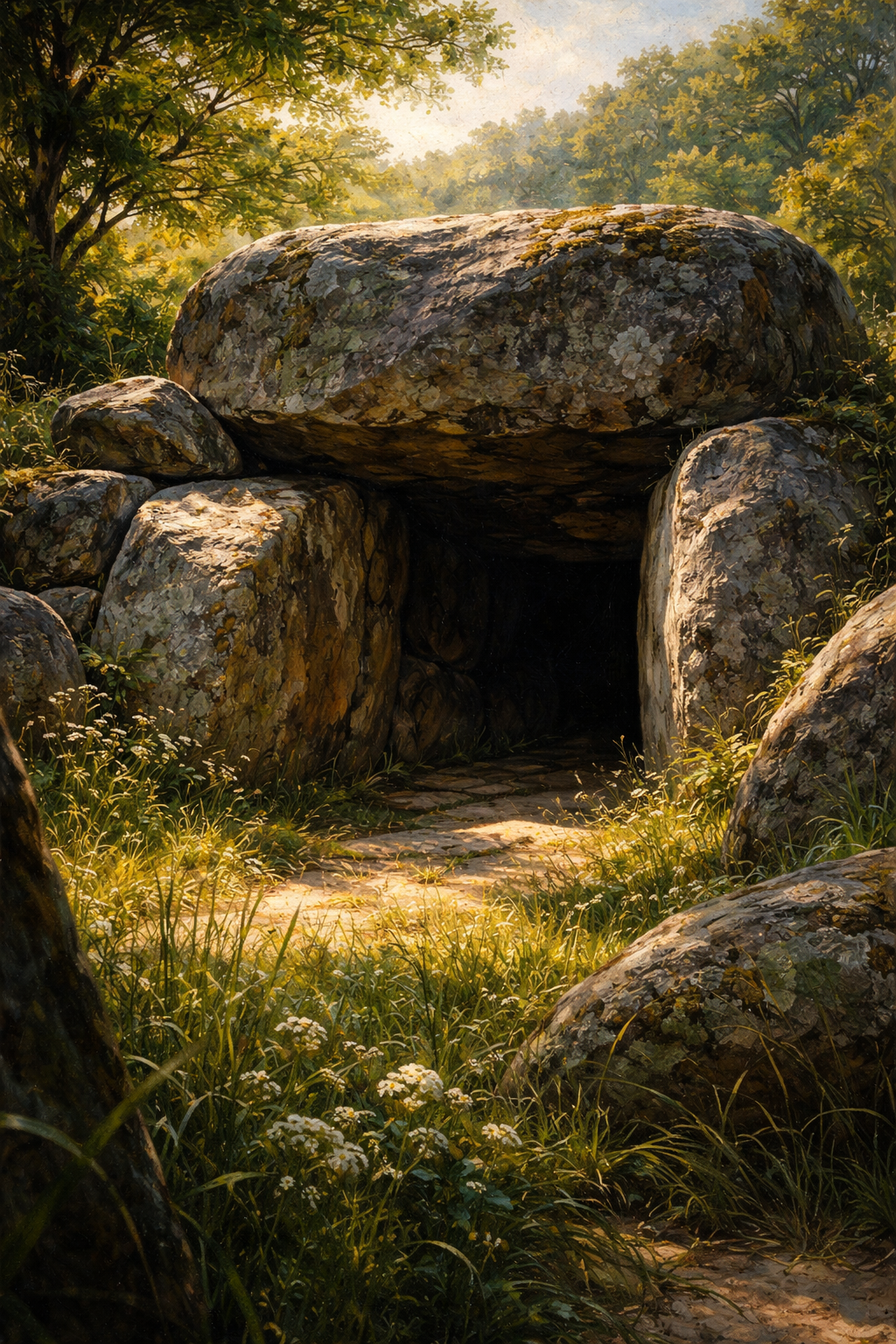
Echoes in the Mossy Stones
Critique
1. Introduction This landscape painting features a megalithic stone structure, likely a dolmen or the entrance to an ancient chamber tomb, hidden deep within a vibrant forest. The massive stones, weathered and mossy, appear as if they have become a natural part of the surrounding woodland environment over hundreds of years. The work captures a profound sense of antiquity and silence, using the interplay of light and shadow to dramatize the boundary between the historical structure and the living earth. 2. Description At the center of the composition is a dark, rectangular opening capped by a monumental flat stone. The textured surfaces of the rocks are covered with layers of lichen and moss, rendered with fine detail that suggests significant age. A stone-paved path, dappled with sunlight filtering through the canopy, leads the viewer's eye directly into the black interior. In the foreground, white wildflowers bloom amidst the tall grass, while the background is filled with lush trees basking in bright, diffused light. 3. Analysis The artist effectively uses chiaroscuro, with a strong contrast between the deep shadows of the stone chamber and the brilliant green foliage. The composition is centered on the dark entrance, which provides a strong focal point and creates a sense of depth and mystery. The color palette balances the desaturated grays and browns of the stone with the high-saturation greens and yellows of the sunlit forest, emphasizing the texture and weight of the megalith. 4. Interpretation and Evaluation This stone structure serves as both a cultural artifact and a naturalized element of the landscape, representing the enduring legacy of past civilizations. The dark opening can be interpreted as a symbolic threshold between the physical world and the ancestral past or the mysteries of the earth. The technical skill in rendering the varied textures of rock, leaf, and light is highly impressive, successfully evoking a tangible sense of presence and atmosphere in a still scene. 5. Conclusion Upon first glance, the painting seems like a quiet woodland encounter, but the silent, heavy presence of the megalith quickly dominates the viewer’s experience. The meticulous attention to detail and the masterful handling of light convey the physical weight and the historical depth of the site. Ultimately, the work is a powerful meditation on time and the seamless integration of human history into the natural world, executed with remarkable precision.
Same Subcategory
Similar Artworks
 Sanctuary Sealed in Golden Stone
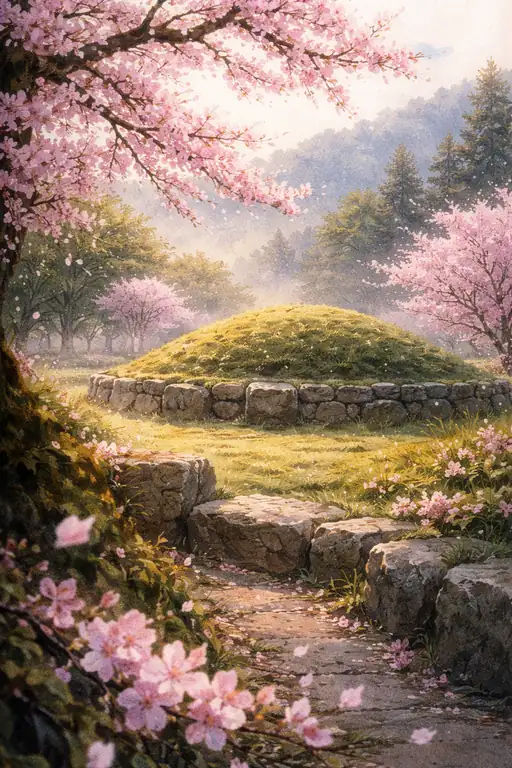 Spring's Gentle Embrace of Eternity
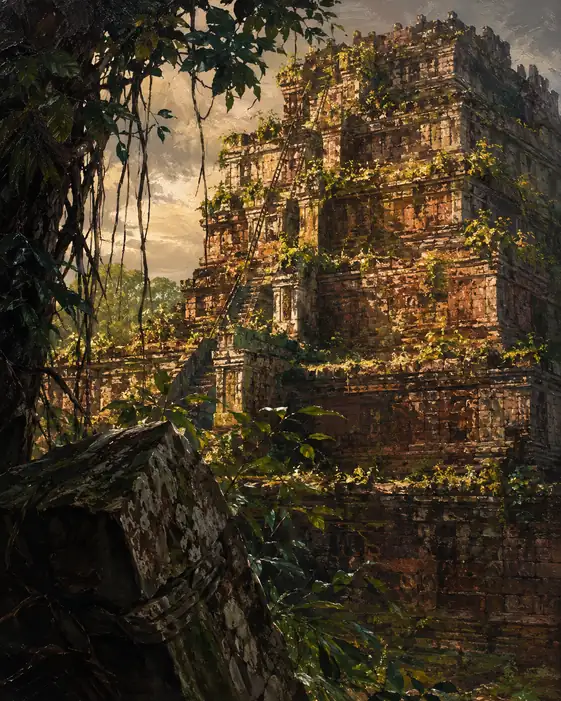 Where Empires Fade into Gold
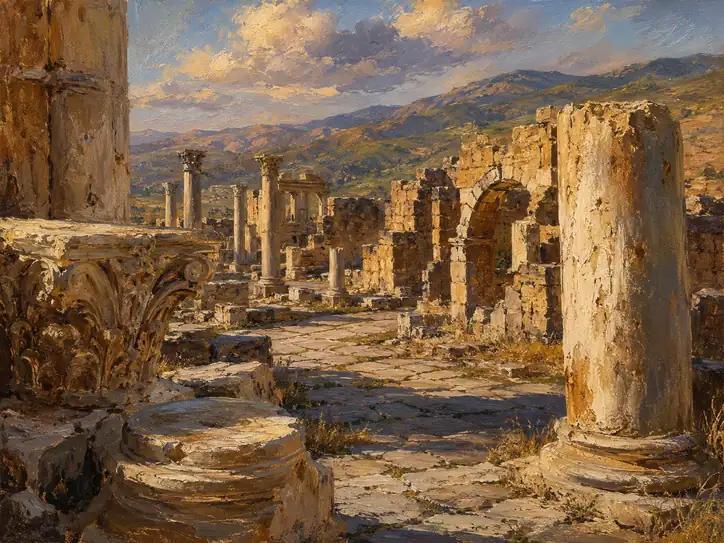 Where Glory Rests in Gold
 Sentinel of the Fading Ages
 Nature's Reclaimed Archway
 Nature's Embrace of the Ruined Tower
 Where Time Reclaims the Stone
 Reclaimed by the Emerald Jungle
 Conquest of Silent Time