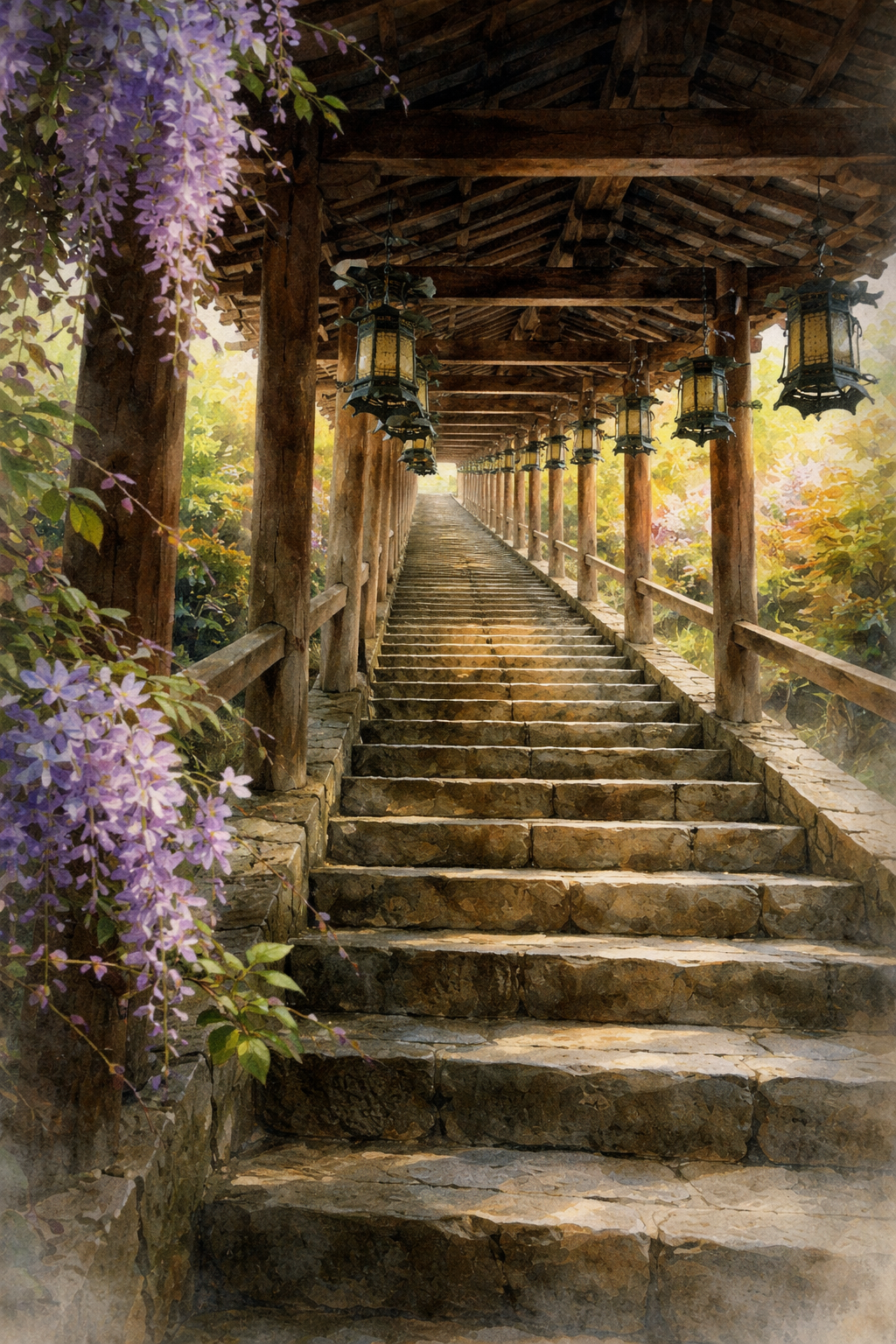
Wisteria Blooms Along the Stone Corridor
Critique
1. Introduction This architectural landscape painting depicts a long, covered stone stairway, a characteristic feature of Japanese temple shrines such as Hasedera's Noborirou. The corridor, framed by weathered wooden columns and beams, stretches upward toward a bright, sun-drenched summit, evoking a sense of spiritual progression and architectural grandeur. Set against a backdrop of lush spring greenery and cascading wisteria, the work captures a harmonious blend of traditional man-made structures and the surrounding natural world. 2. Description The composition is dominated by a central flight of heavy, textured stone steps that recede into the distance. A series of dark metal lanterns hang uniformly from the wooden roof, reinforcing the sense of rhythm and receding space. On the left foreground, clusters of vibrant purple wisteria blossoms hang delicately from the rafters and pillars, their soft petals providing a stark contrast to the rough stone and wood. Beyond the shaded corridor, the landscape is filled with bright, diffused light and dense foliage. 3. Analysis The artist utilizes a strong one-point perspective that draws the viewer’s eye irresistibly toward the top of the stairs, creating an immersive sense of depth and elevation. Chiaroscuro is masterfully applied, with deep shadows under the roof set against the brilliant, overexposed light at the exit. The brushwork alternates between the detailed, rugged textures of the stone and wood and the more fluid, luminous rendering of the wisteria and the distant sunlit trees. 4. Interpretation and Evaluation This ascending path can be interpreted as a metaphor for a journey toward enlightenment or a transition from the secular world to a sacred realm. The inclusion of wisteria adds a layer of seasonal poignancy and aesthetic elegance, softening the imposing presence of the massive stone stairway. The technical execution is highly successful, particularly in the handling of perspective and the atmospheric contrast between the cool shade and the warm exterior light. 5. Conclusion While the initial impression is one of dramatic spatial recession, the subsequent viewing rewards the observer with subtle details of texture and light. The balance between the physical weight of the stone and the ephemeral beauty of the flowers creates a lasting sense of tranquility and reverence. Ultimately, this painting is a masterful tribute to traditional Japanese aesthetics and the quiet power of sacred architecture, rendered with exceptional skill and sensitivity.
Same Subcategory
 Misty Sanctuary Amidst the Woods
 Tropical Reverence: Vermilion Gateway by the Shore
Similar Artworks
 Whispers of the Spring Sanctuary
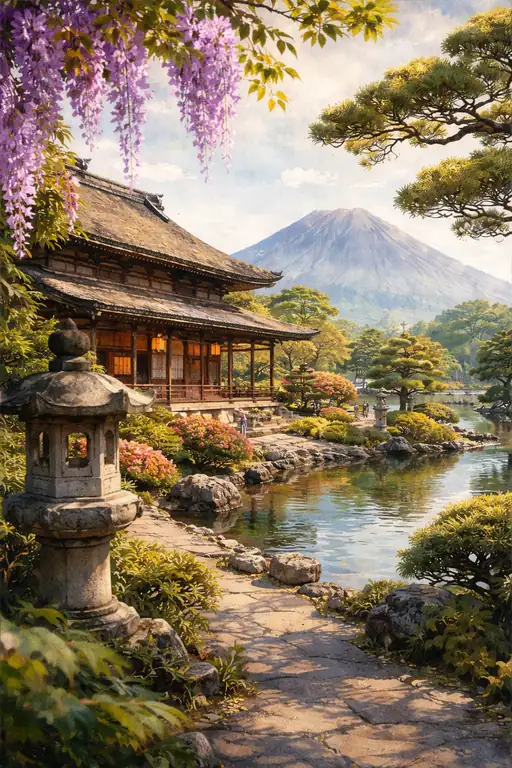 Fuji from the Wisteria Garden
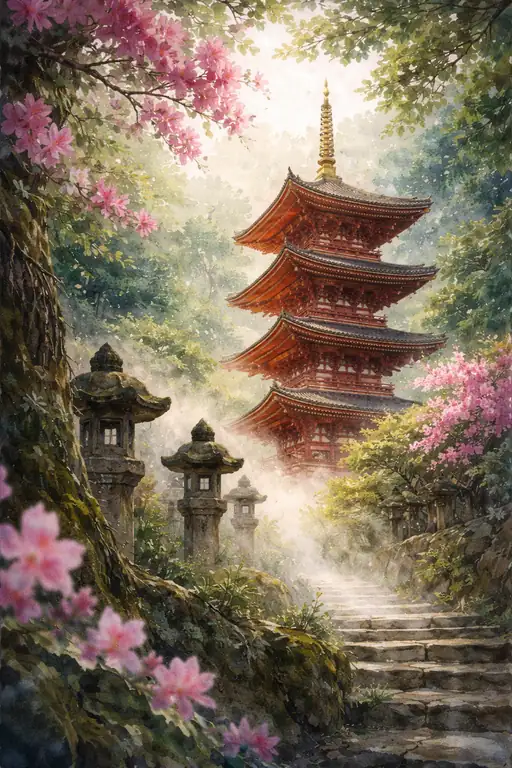 Sacred Pagoda Rising from the Morning Mist
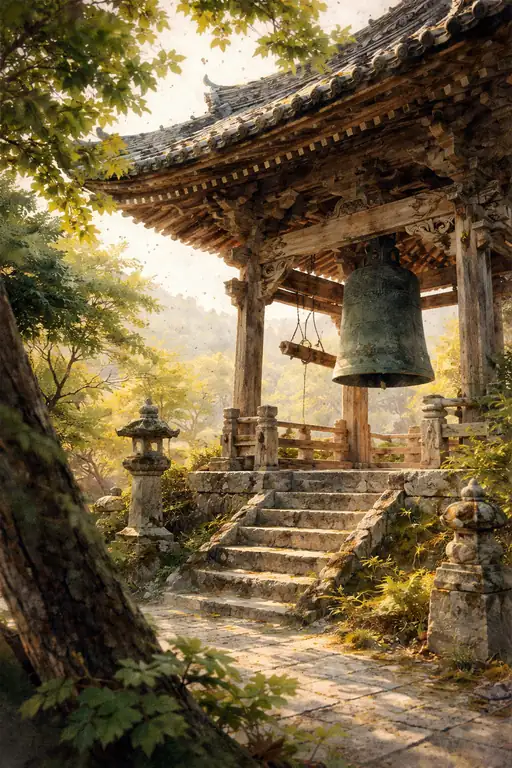 The Silent Wait of the Majestic Temple Bell
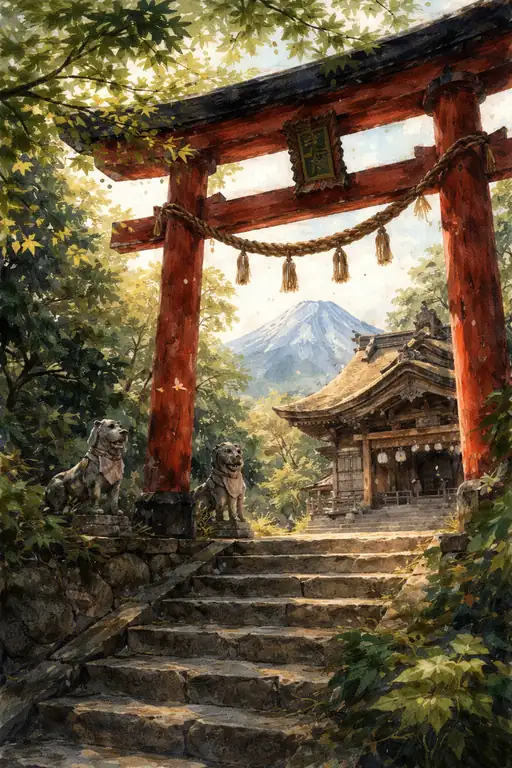 Sacred Portal to the Divine Peak
 Passage to the Forgotten Sanctuary
 Spring's Quiet Benediction
 Sunlit Steps to the Sacred Pond
 The Forest Opens Its Quiet Heart
 Whispers of the Weeping Sakura