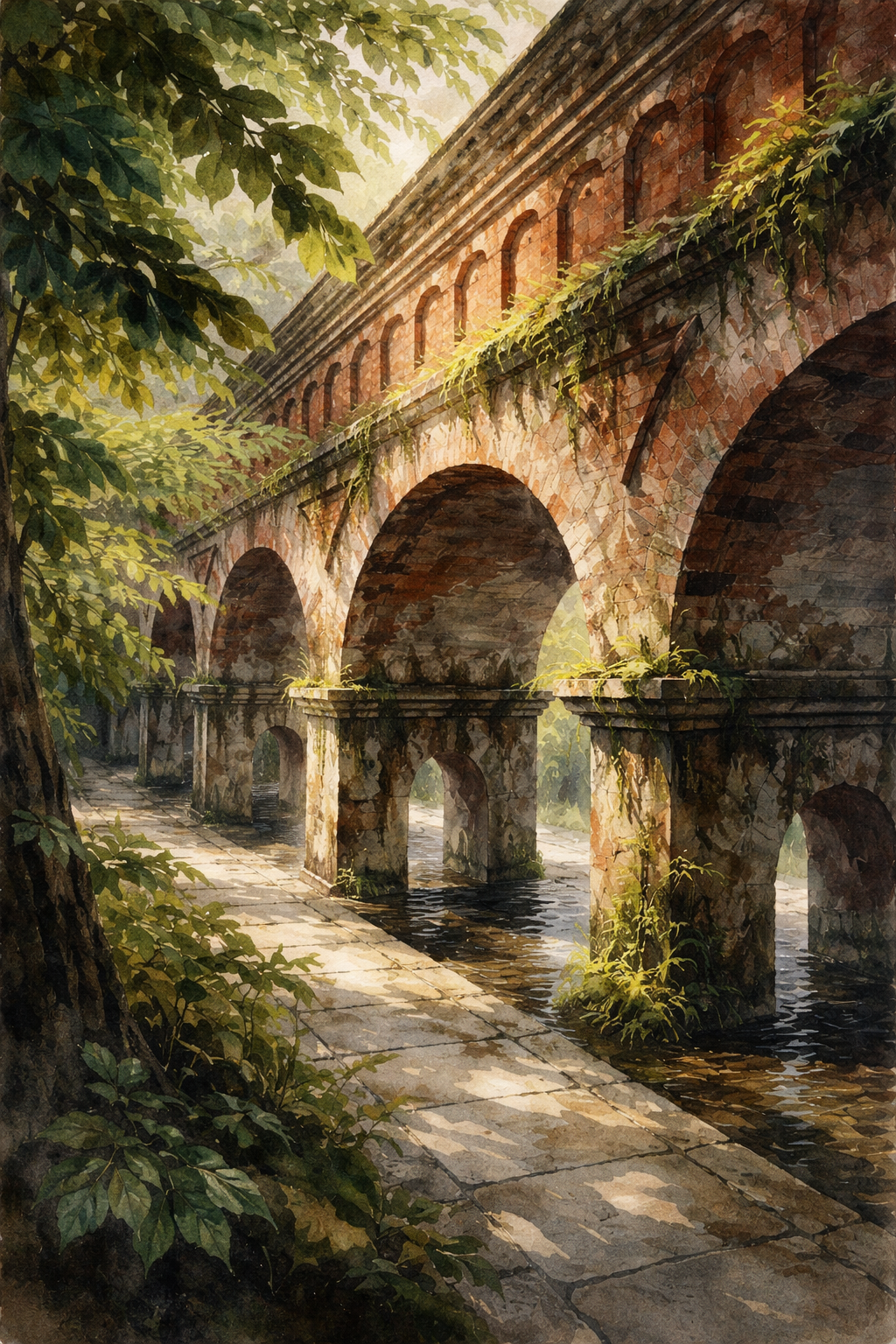
Time's Reclaimed Arches
Critique
1. Introduction This watercolor painting presents a striking architectural landscape, featuring a monumental brick aqueduct nestled within a verdant forest setting. The artist masterfully employs the luminous qualities of watercolor to capture the interplay of sunlight and shadow across aged, textured surfaces. The artwork successfully juxtaposes the imposing permanence of human engineering with the soft, encroaching vitality of the natural environment. 2. Description The composition is dominated by a sweeping, multi-arched aqueduct constructed from warm red bricks, which extends diagonally from the upper right into the distant center. The structure's sturdy pillars stand partially submerged in a calm, shallow stream. To the left, a stone-paved walkway parallels the water, heavily shaded by the dense, vibrant green foliage of trees reaching into the frame. Sunlight filters through this canopy, casting dappled, intricate shadows across the pavement and the aqueduct's pillars. Vines and small plants cling tenaciously to the weathered brick and stone surfaces, signaling nature's slow reclamation of the structure. 3. Analysis The artist effectively utilizes a strong diagonal perspective, employing the repeating arches of the aqueduct to draw the viewer's eye deep into the shaded background. The color palette relies on the complementary contrast between the rustic, warm orange-reds of the brickwork and the cool, varied greens of the surrounding vegetation. The fluid watercolor textures soften the rigid geometry of the architecture, seamlessly blending it into the organic landscape. The skilled handling of dappled light creates a dynamic pattern of illumination and shadow, breaking up the massive forms and adding a lively, atmospheric depth to the scene. 4. Interpretation and Evaluation The painting evokes a profound sense of historical continuity and melancholic beauty. The imposing aqueduct, partially reclaimed by creeping vines, stands as a testament to the enduring passage of time and the inevitable merging of human history with nature. The high level of technical proficiency, particularly in rendering the varied textures of crumbling brick, smooth stone, and rippling water, demonstrates excellent observational and technical skills. The artwork provides a compelling visual narrative about the harmonious coexistence of historical ruins and natural overgrowth. 5. Conclusion Serving initially as an architectural study, the painting slowly reveals a poetic meditation on endurance and the quiet power of nature. The atmospheric use of dappled sunlight and structured perspective effectively transforms a functional ruin into a captivating symbol of temporal beauty.
Same Subcategory
 Timeless Pillars Among the Poppies
Similar Artworks
 Spiritual Tranquility on the Autumnal Stone Path
 Spring's Gilded Reflection
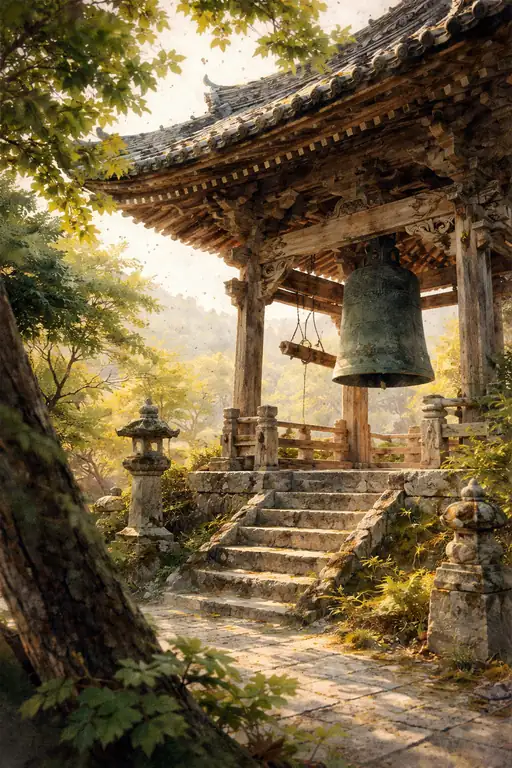 The Silent Wait of the Majestic Temple Bell
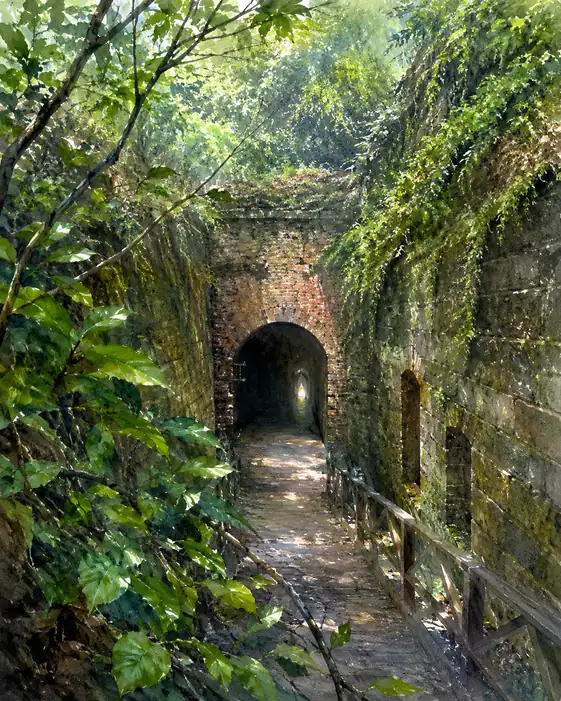 The Secret Path Through the Green Silence
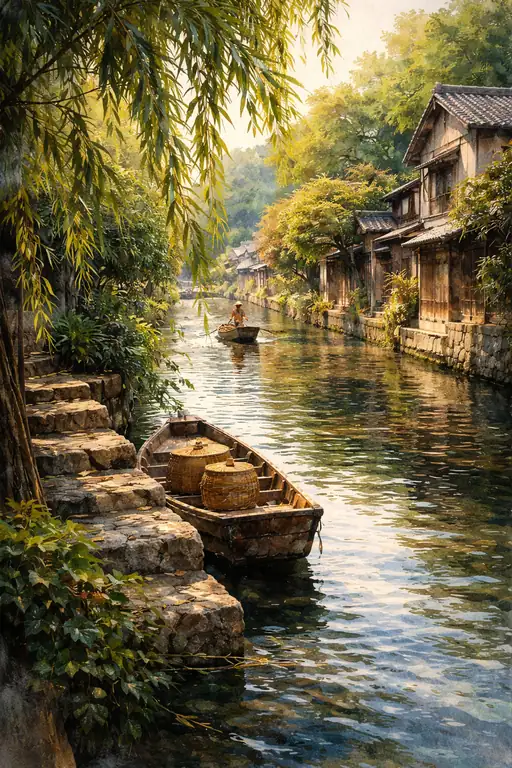 Peaceful Passage Through the Historic Water Town
 On the Water God's Riverbank, a Thousand Ice Blossoms Bloom
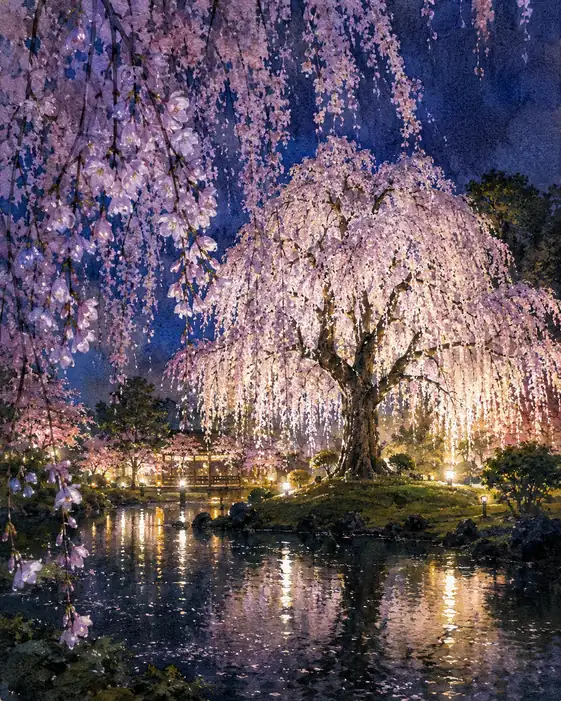 After the Crowd, the Cherry Tree
 Where Town Lights Drift Beneath Clouds
 Lanterns Teach the Castle to Glow
 The World Begins Beyond the Clouds