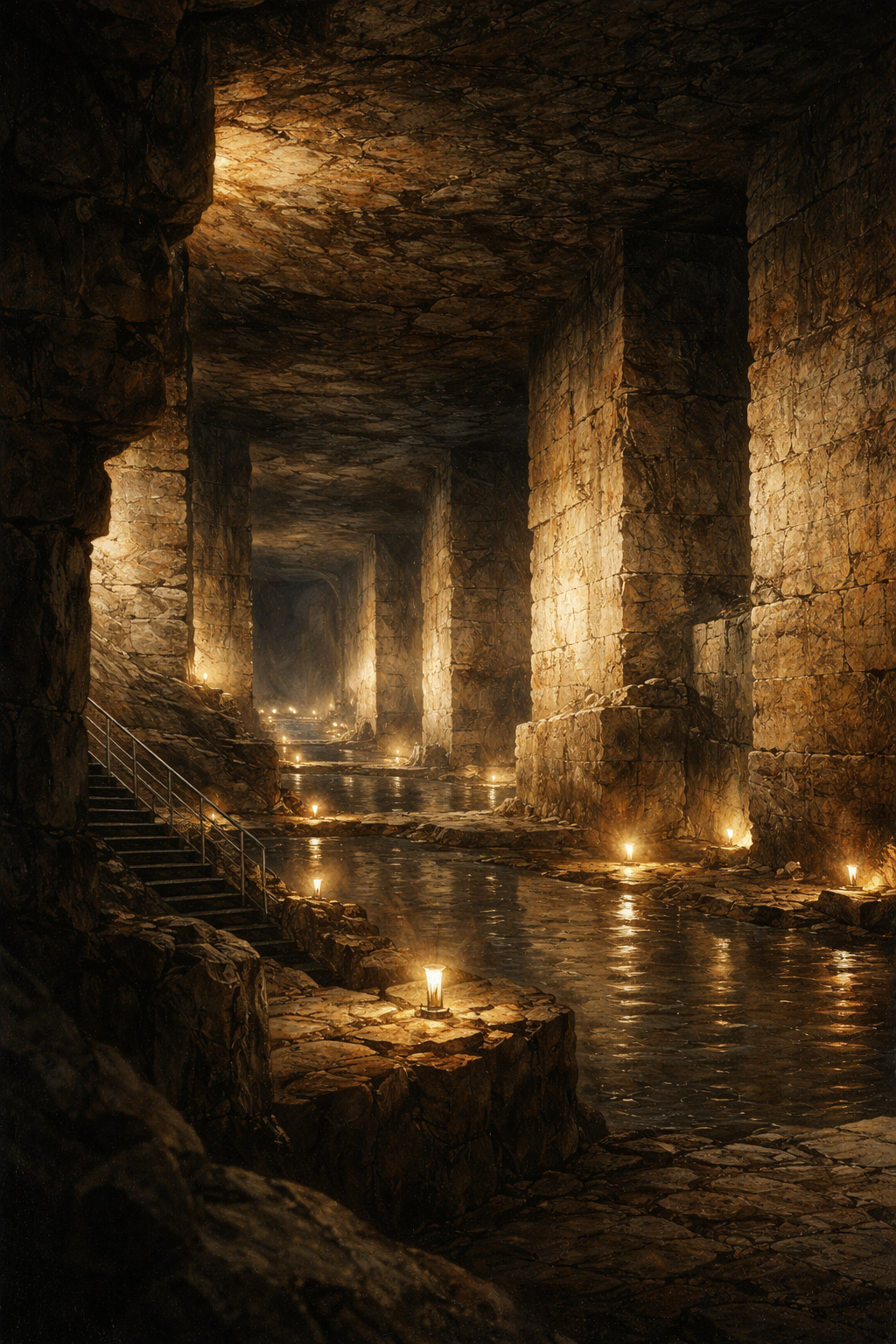
Golden Glow in the Stone Cathedral
Critique
1. Introduction This painting depicts a massive underground space, reminiscent of a vast subterranean quarry, with its exposed rock surfaces rendered dynamically. Numerous thick, geometric stone pillars line the area, and a waterway extending into the depth constructs a fantastical subterranean scene. A major characteristic is how scattered warm light sources illuminate the cold stone surfaces and reflect upon the water, fostering an atmosphere of profound silence and mystery. The heavy texture of the rock is expressed through countless rough brushstrokes, imparting an overwhelming sense of scale to the viewer. 2. Description The canvas reveals a dramatic space where gigantic rectangular stone pillars recede into the distance to support the ceiling. Calm water flows along the floor, bordered by small, evenly spaced lights placed along the banks and rocky shelves. On the left side, an artificial staircase equipped with a metal handrail guides the gaze down to the lower pathways. Regular marks, as if carved by chisels or machinery, are deeply etched into the rock faces, quietly narrating past industrial activities. 3. Analysis The composition simultaneously generates vertical strength and infinite depth through the linear arrangement of the colossal pillars and their convergence toward the background, resembling one-point perspective. Regarding color, the intense golden light from the lamps contrasts sharply against the inherent cold grey-browns and dark tones of the rock, forming striking chiaroscuro. The shimmering reflections of light on the water introduce the sole fluid element into an otherwise static, rigid stone environment. Bold and physical brushwork tangibly fixes the raw, jagged tactile quality of the rock walls onto the canvas. 4. Interpretation and Evaluation This work can be evaluated for masterfully capturing how the remnants of human industrial activity have ironically acquired a sublimity akin to a grand cathedral. Rather than depicting a cold, abandoned ruin, it reconstructs the underworld as a place of quiet contemplation suffused with warm illumination. The artist poetically expresses the enduring strength of natural materials and the passage of time harbored within artificially excavated voids. It demonstrates a high compositional ability to cohesively unify contrasting structures such as light and shadow, solid stone, and soft water. 5. Conclusion While initially overwhelmed by the sheer scale and oppressive weight of the continuous massive pillars, the viewer's consciousness gradually shifts toward the warm lights dotting the darkness. This space, where shimmering water reflections intersect with absolute stillness, possesses the power to detach the observer from the mundane and invite deep meditation. It stands as an excellent piece that successfully sublimates the unique aesthetic value of an industrial heritage site into a spatial artwork through oil painting.
Same Subcategory
 The Harmonious Pulse of Water and Brick
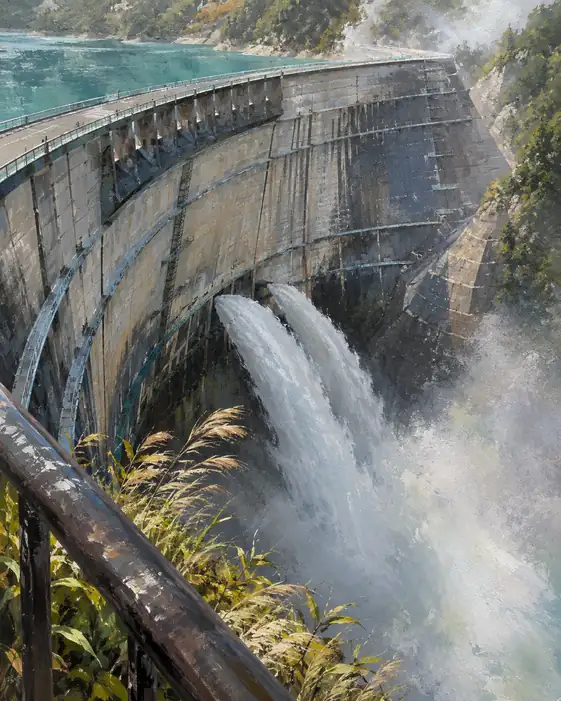 The Pulse of the Concrete Giant
Similar Artworks
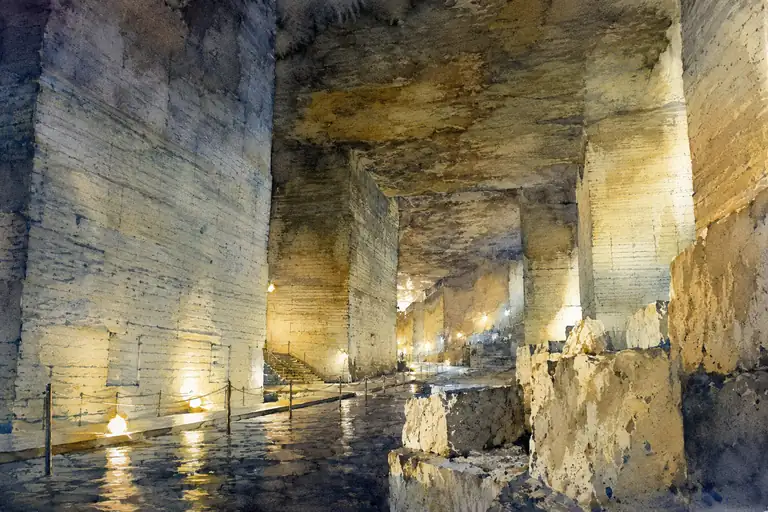 Lanterns in the Deep: The Quiet Majesty of Stone
 The Cathedral of Stone
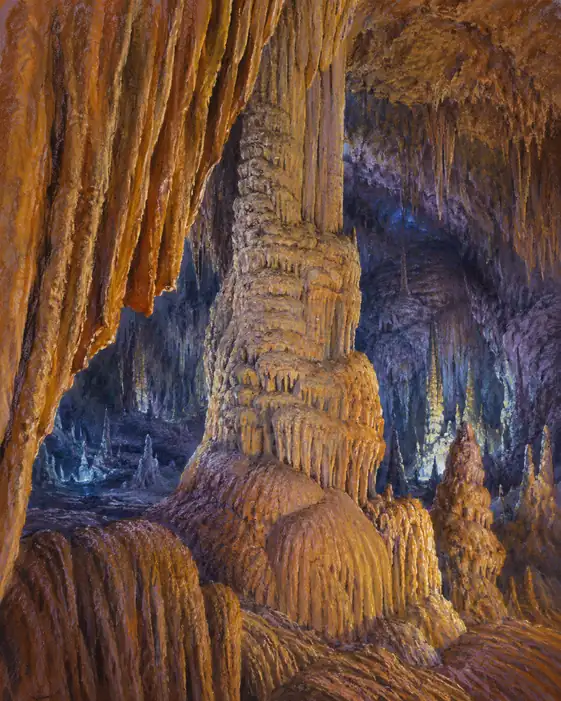 Pillars of the Eternal Depths
 The Cathedral of Salt and Light
 Sunset Bridge to Eternity
 Tears of the Earth
 Ascent from the Shadows of Stone
 At the Edge of the Lantern's Knowing
 The Golden Cathedral of Subterranean Time
 Cathedral of Sleeping Time