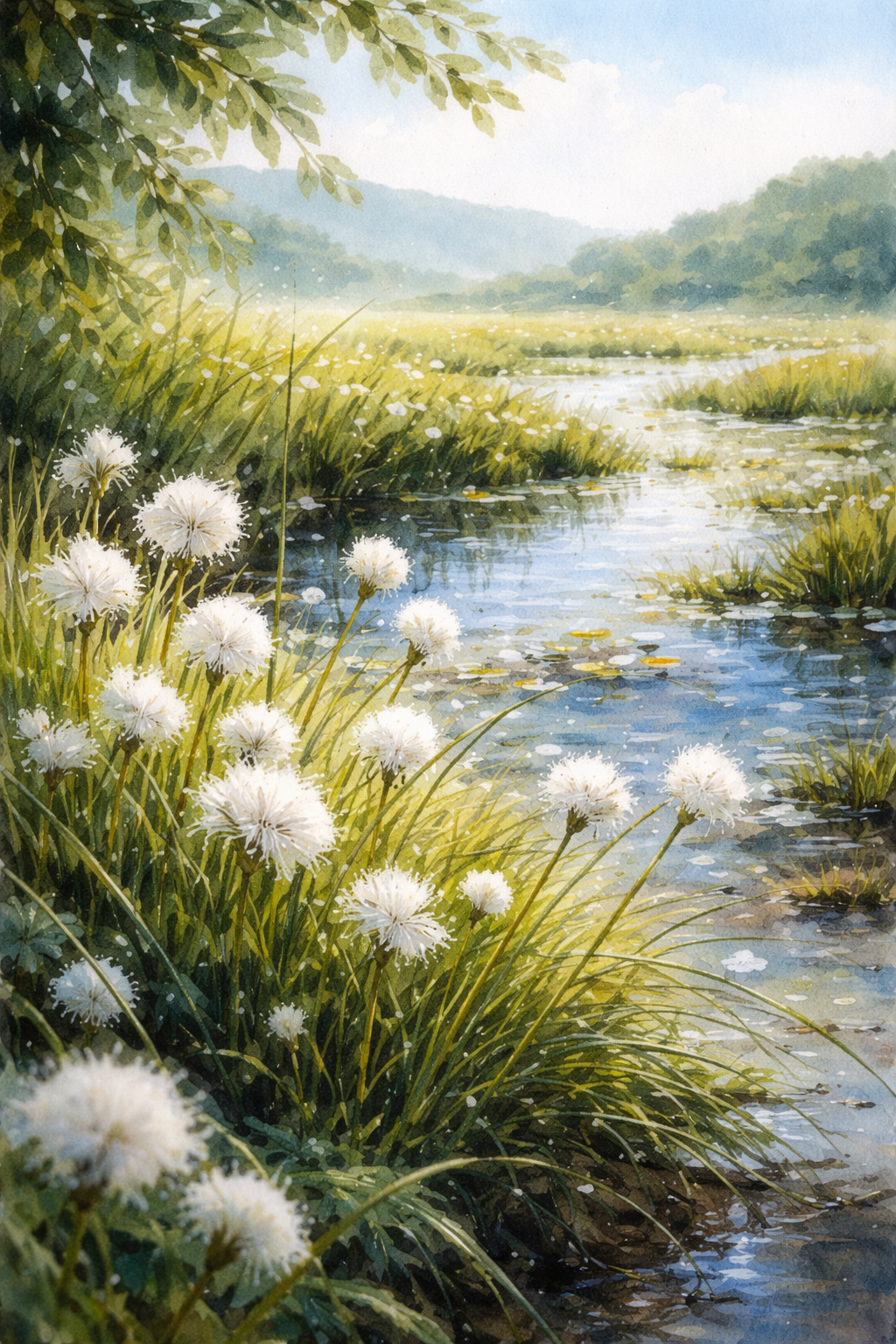
Dancing Cotton in the Summer Mist
Critique
1. Introduction This watercolor painting presents a serene and poetic depiction of a marshland scene, capturing a fleeting moment of natural tranquility. The composition features a cluster of delicate white, fluffy flowers in the foreground, juxtaposed against a calm stream that reflects the luminous sky. Through a masterful use of soft colors and refined brushwork, the artist evokes a sense of refreshing atmosphere and the gentle vitality of early summer. 2. Description In the foreground, numerous round, white blossoms resembling dandelion clocks or cottongrass emerge from a bed of vibrant green, needle-like foliage. These floral elements possess a soft, radiant quality as if catching the direct glow of the sun. The middle ground is dominated by a clear, gently meandering waterway, its surface shimmering with reflections of the surrounding greenery and the bright sky. The far background reveals misty, soft-edged hills that fade into a pale blue horizon, providing the piece with an expansive sense of depth. 3. Analysis The color palette is built upon a harmonious arrangement of lush greens, cool blues, and the pristine white of the flowers. The artist utilizes the inherent transparency of the watercolor medium to render the subtle diffusion of light and the complex interplay of shadows. A gentle luminescence seems to filter through the overhanging leaves from the upper left, casting a soft glow across the entire scene without creating harsh contrasts. The brushstrokes are meticulous in the central subjects yet become intentionally blurred toward the edges, enhancing the atmospheric perspective. 4. Interpretation and Evaluation This work elevates a simple corner of the natural world into a space of profound aesthetic beauty through exceptional observational skill. The balance between detailed realism and the fluid, spontaneous nature of the medium demonstrates a high level of technical proficiency. Structurally, the large floral elements in the lower left serve as a visual anchor that guides the viewer's eye toward the distant landscape. By capturing the quiet brilliance of life within a hushed environment, the painting achieves a unique emotional resonance that offers a sense of peace to the observer. 5. Conclusion Ultimately, the painting is a sophisticated exploration of the delicate relationships between light, water, and flora, executed with both technical precision and lyrical grace. While one is initially drawn to the charming detail of the white blossoms, the experience matures into an appreciation for the overarching harmony of the entire ecosystem. The work stands as a testament to the artist's ability to translate a quiet observation of nature into a compelling visual narrative, leaving a lasting impression of serene beauty.
Same Subcategory
 The Ethereal Beauty of Cascading Turquoise Springs in Autumn
 Light Found in Hidden Halls
Similar Artworks
 The Breath of Early Summer
 A Spring Brook Weaving Through the Flower Field
 Morning Light Over the Tranquil Waters
 Morning’s Golden Promise
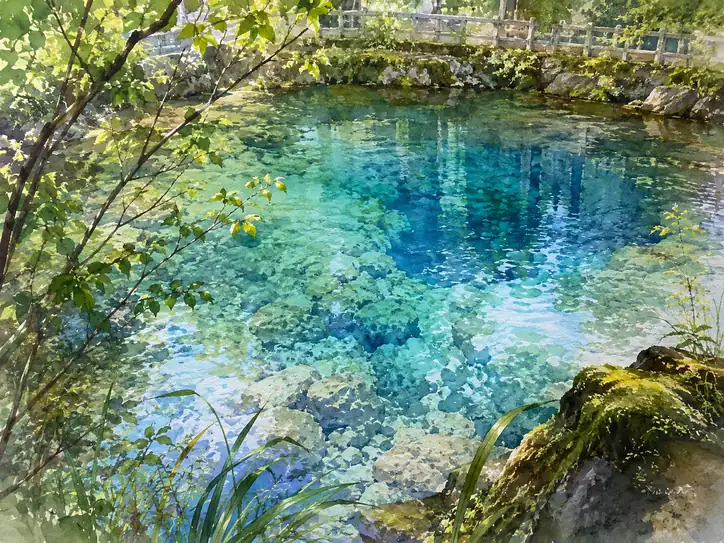 The Sapphire Heart of the Ancient Forest
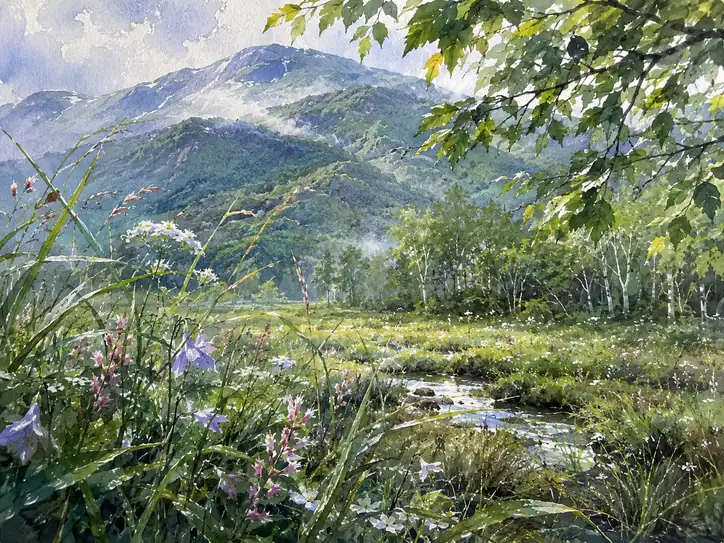 Whispers of the Meadow Stream
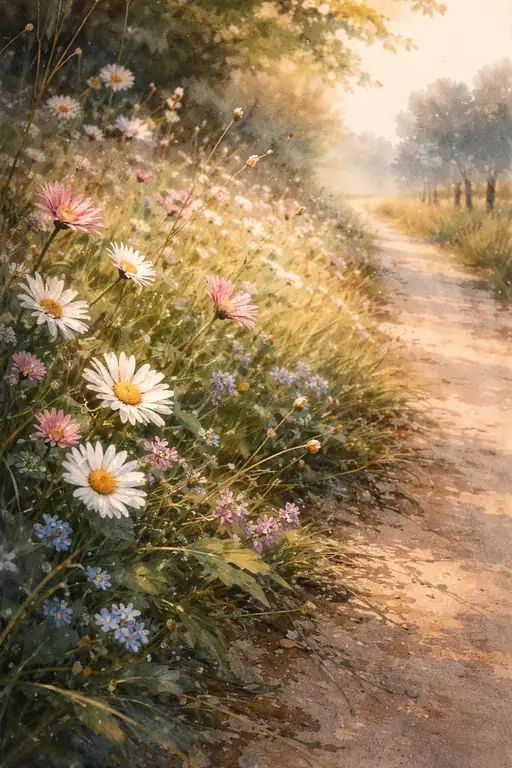 Path of Wildflowers
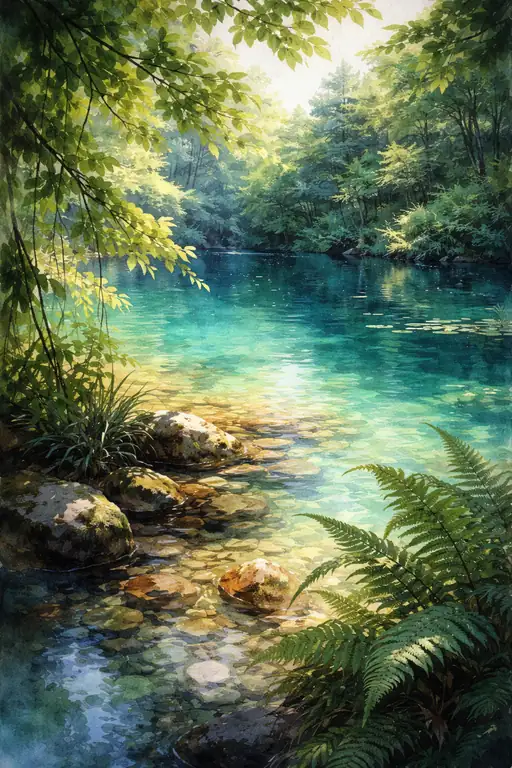 Whispers of the Emerald Sanctuary
 Lullaby of the Sun-Drenched Meadow
 Awakening in the Forest's Light