Where Time Sleeps Among the Ruins
Critique
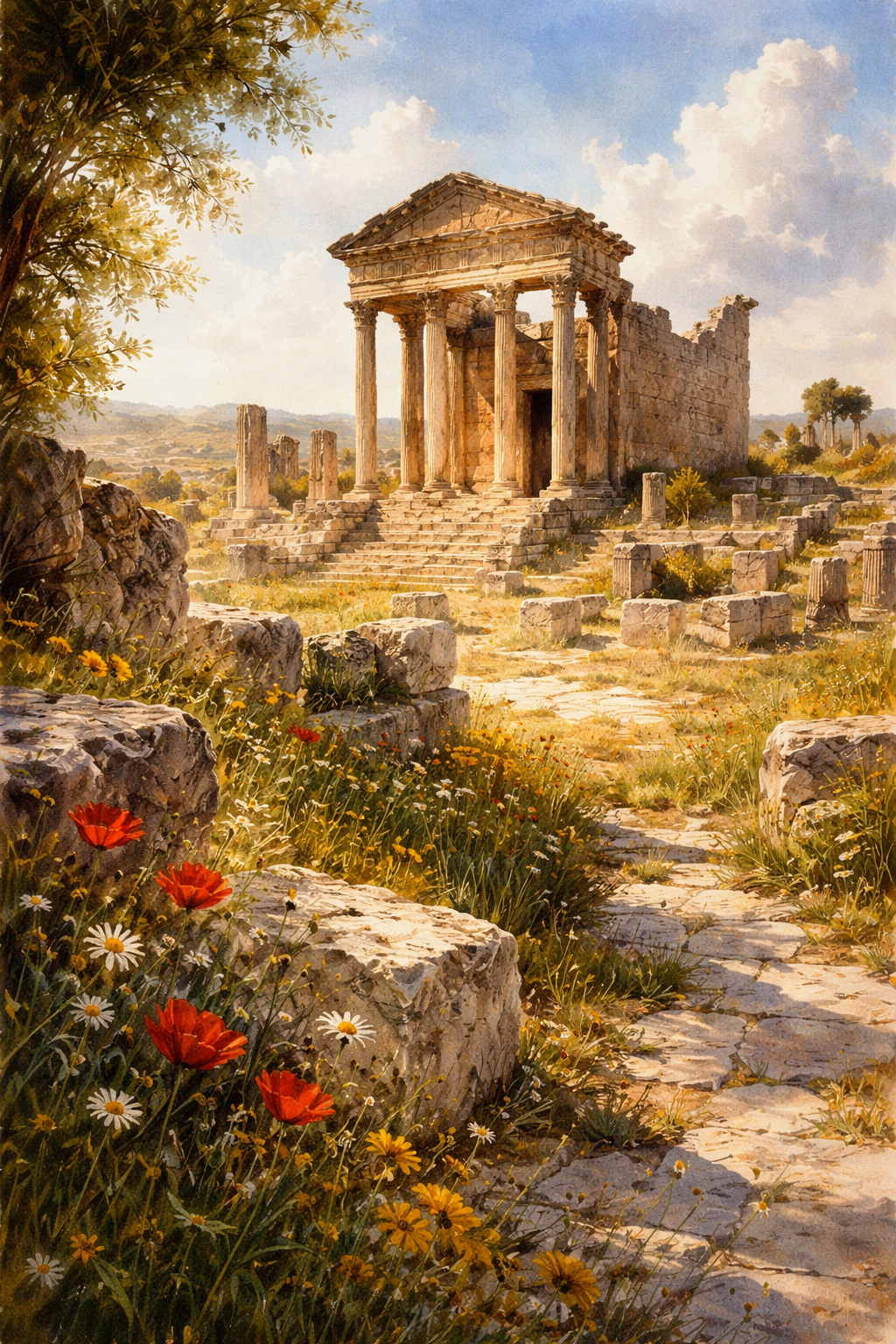
1. Introduction This vertical landscape painting presents a serene and evocative view of ancient temple ruins situated within a verdant, sun-drenched environment. The composition immediately captures the viewer's attention by juxtaposing the enduring grandeur of weathered stone architecture with the delicate, ephemeral beauty of flourishing wildflowers in the foreground. Sunlight bathes the entire scene, creating a warm and inviting atmosphere that bridges the gap between the distant classical past and the vibrant life of the present. 2. Description In the immediate foreground, a variety of red and yellow wildflowers, including poppies and daisies, grow among scattered, sun-bleached stones and a rugged stone path that leads the eye toward the center. The mid-ground is dominated by the majestic remains of a classical temple, characterized by tall Corinthian columns and a partially collapsed pediment that reveals the sky behind it. To the right of the main structure, further ruins lie in a state of decay, while the distant background features rolling hills and a bright blue sky filled with soft, white clouds. 3. Analysis The artist employs a warm and harmonious color palette, dominated by hues of ochre, terra cotta, and gold, which contrasts effectively with the cool blues and crisp whites of the sky. The lighting, emanating from the upper left, creates deep shadows and bright highlights that emphasize the rough textures of the ancient masonry and the soft petals of the flora. A linear perspective is established by the receding stone path and the diminishing size of the background elements, providing a strong sense of depth and three-dimensional space within the composition. 4. Interpretation and Evaluation The work explores the thematic relationship between human achievement and the relentless passage of time, suggesting a peaceful coexistence as nature gradually reclaims the monumental structures of antiquity. The technical execution is notable for its detailed rendering of textures, particularly in the weathered surfaces of the stone and the delicate translucency of the flora under direct sunlight. This balance between architectural precision and organic softness imbues the painting with a sense of contemplative nostalgia and quiet majesty that resonates with the viewer. 5. Conclusion This painting stands as a refined depiction of classical ruins that successfully integrates historical scale with a localized, intimate perspective on the natural world. Through a focused use of light and color, the artist transforms a scene of decay into one of enduring beauty and tranquility. The initial impression of a grand historical monument is deepened by the realization of the vibrant, living landscape that surrounds and supports it.
 Whispers of the Golden Stone
 Pillars of Antiquity Awash in Gold
 Where Glory Rests in Gold
 Guardians of the Eternal Sea
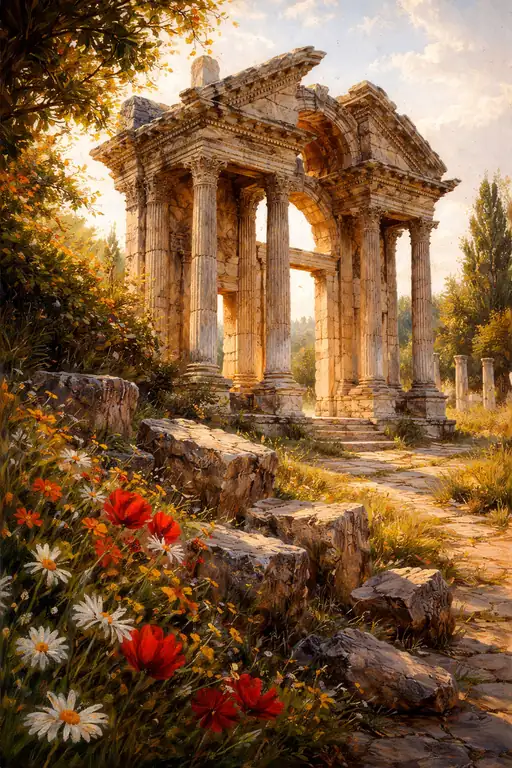 Timeless Pillars Among the Poppies
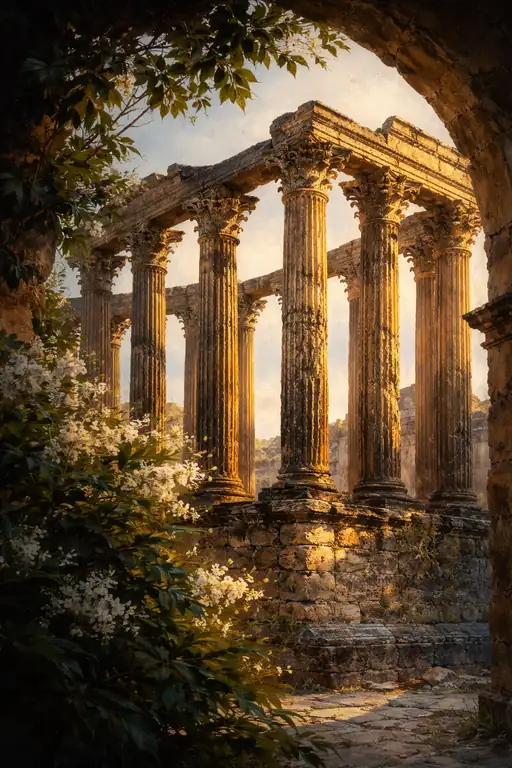 Echoes of Antiquity
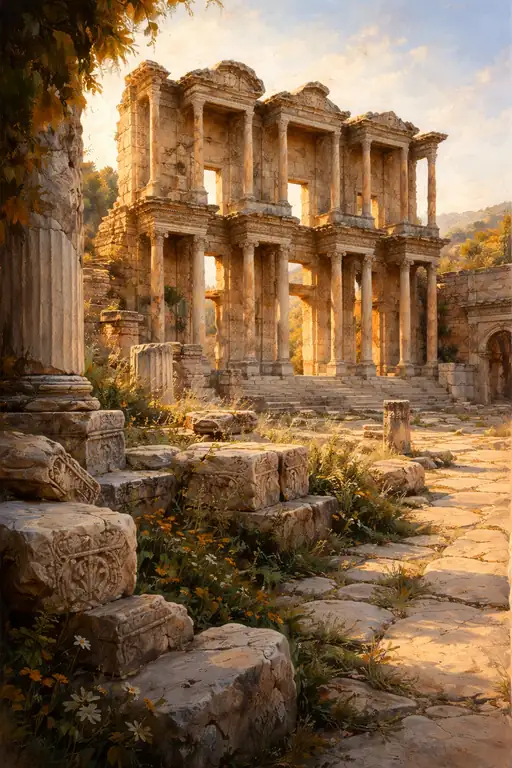 Golden Echoes of the Ages
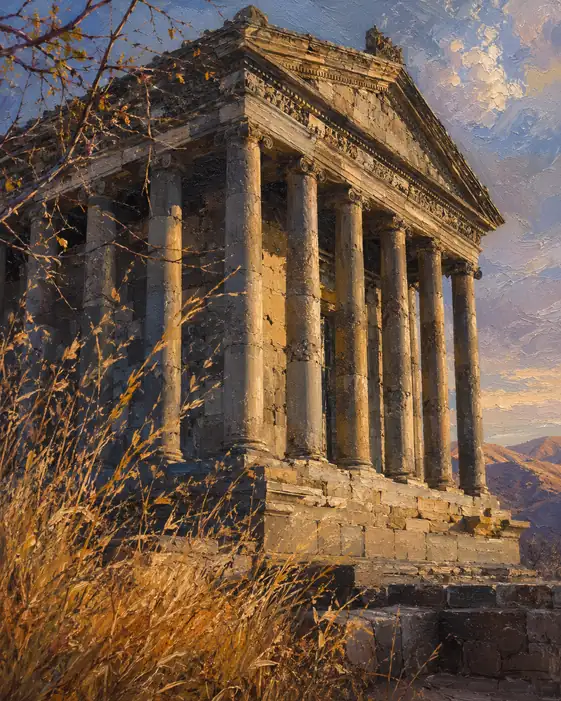 Symphony of Stone and Fading Light
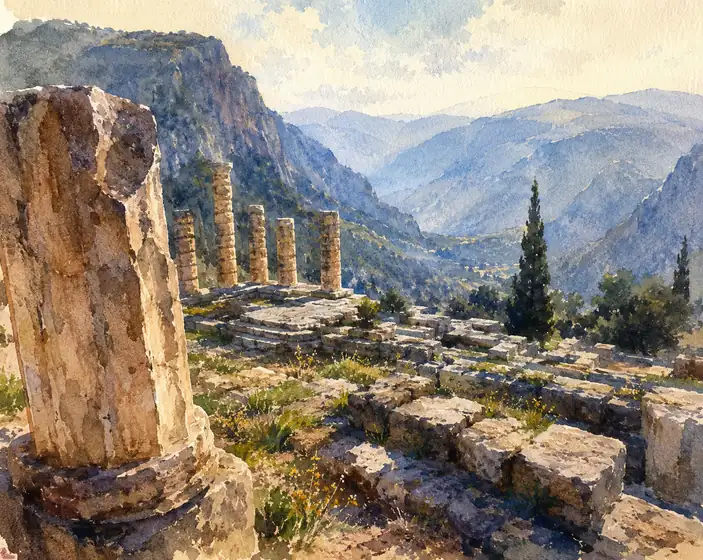 Where the Oracle Still Whispers
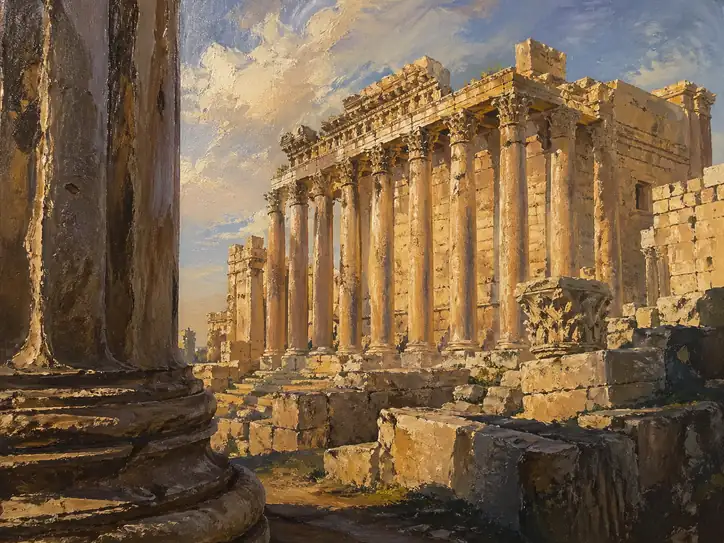 The Golden Echo of Antiquity