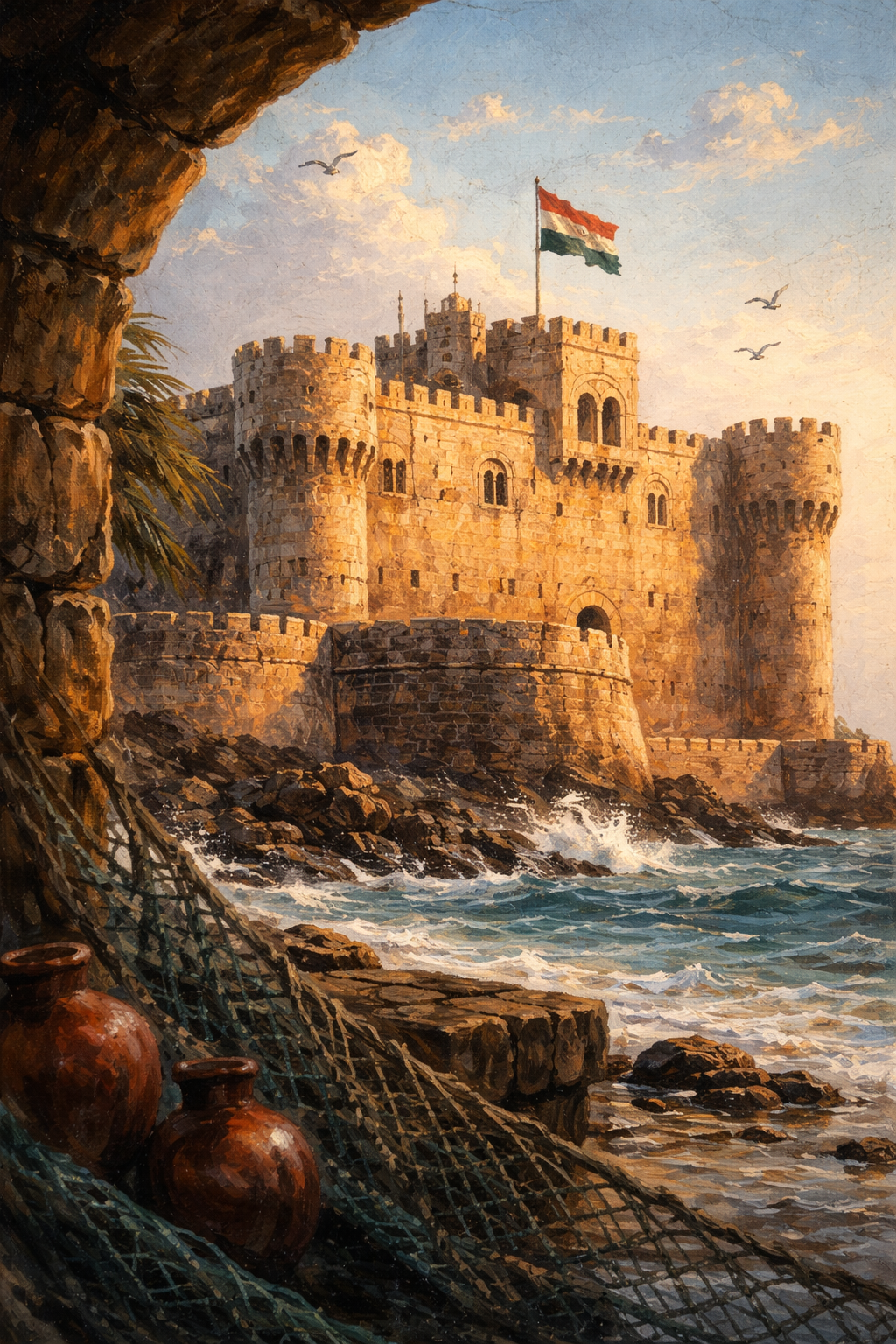
Standing Tall Against the Tides
Critique
1. Introduction This representational oil painting depicts a majestic stone fortress situated on a rugged coastline, illuminated by the warm, golden light of late afternoon. The work combines architectural precision with a dynamic maritime setting, creating a scene that feels both historically grounded and romantically atmospheric. By framing the central structure through a foreground archway, the artist invites the viewer into a specific, localized vantage point that emphasizes the scale and endurance of the fortification. 2. Description The composition is anchored by a large, multi-towered castle constructed from warm-toned masonry. The fortress features classical elements such as arched windows, crenellated battlements, and a prominent flag waving at its highest point. In the foreground, the edge of a stone arch is visible, beneath which lie tangled fishing nets and two large, glazed clay jars. The mid-ground reveals a turbulent sea with white-capped waves crashing against the jagged rocks that form the castle's foundation. A clear sky with scattered, soft clouds provides a backdrop for several seagulls circling the towers. 3. Analysis The artist utilizes a vertical format to emphasize the height of the castle walls and the dramatic slope of the coastline. Lighting is a crucial analytical element, as the low-angled sun casts long, soft shadows that define the three-dimensional volume of the towers and the texture of the individual stones. The contrast between the static, solid presence of the architecture and the fluid, energetic motion of the sea creates a rhythmic tension. Brushwork is particularly expressive in the rendering of the sea foam and the weathered surfaces of the foreground jars, where visible strokes suggest both movement and material density. 4. Interpretation and Evaluation The painting serves as a meditation on the relationship between man-made structures and the natural world. The fortress, while imposing, appears harmoniously integrated into the rocky terrain, suggesting a long history of protection and coexistence with the sea. The inclusion of the fishing nets and clay pots in the foreground adds a layer of human narrative, hinting at the daily life and industry that thrives in the shadow of such a monumental structure. Technically, the work is highly successful in its use of color harmony and atmospheric perspective, effectively conveying the salty air and the warmth of the sun-drenched stone. 5. Conclusion This coastal scene is a evocative synthesis of architectural grandeur and maritime vitality. It captures a timeless quality, where the permanence of the stone meets the eternal motion of the tides. The initial impression of a grand historical monument is enriched upon closer inspection by the terrestrial details of the foreground, leaving the viewer with a comprehensive sense of a living, breathing coastal environment.
Same Subcategory
 The Enduring Watch Over the Valley
Similar Artworks
 Fortress on the Golden Tide
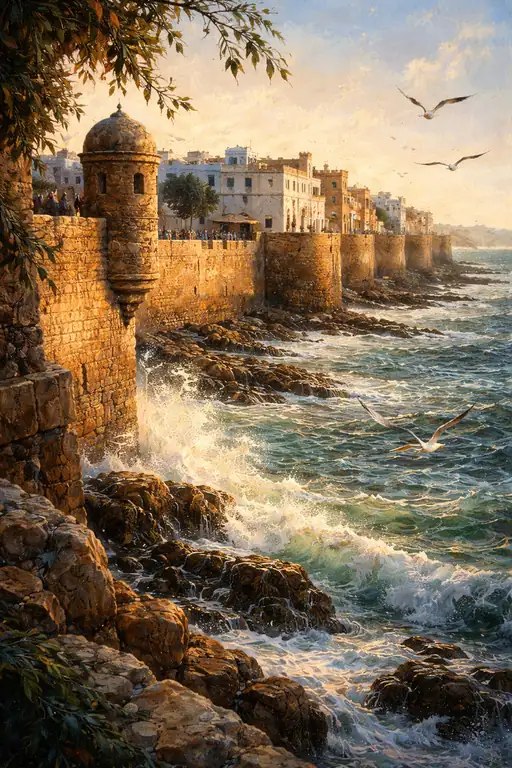 The Last Light Over the Bastion
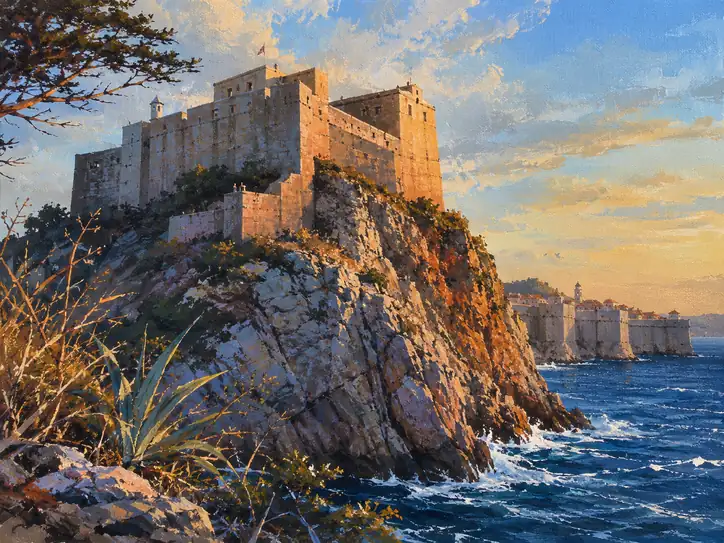 Bastion of the Sunlit Memories
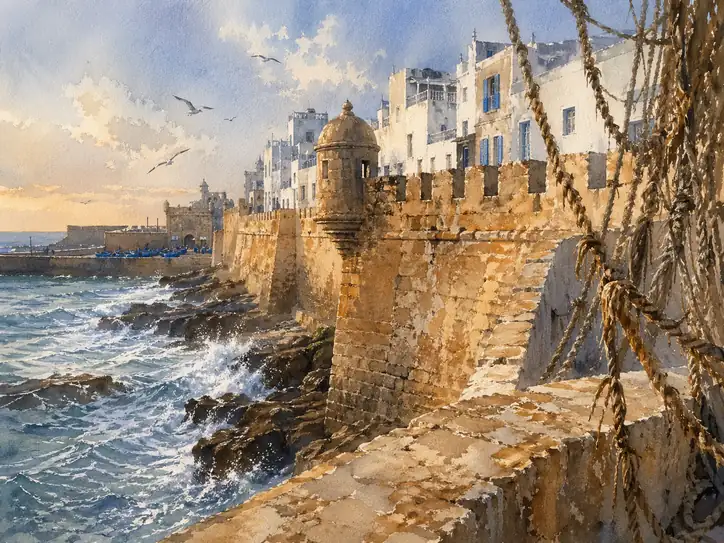 Eternal Rhythms of the Salt and Stone
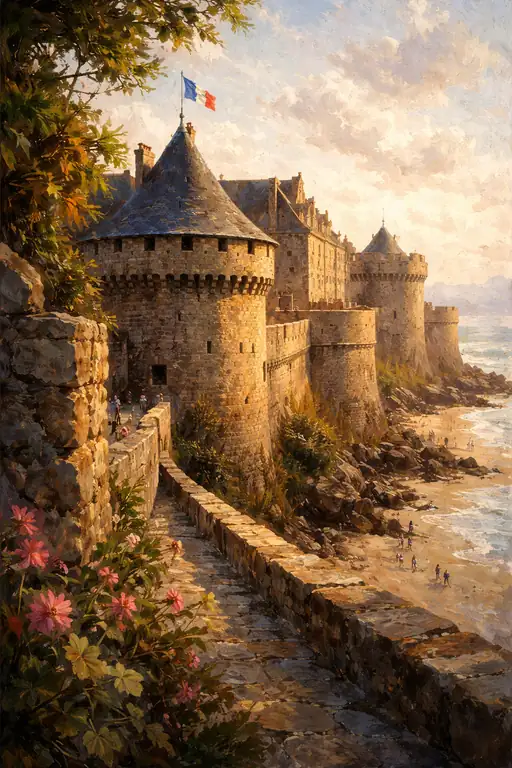 Whispers of the Eternal Sea
 Where the Waves Sing of Peaceful Stones
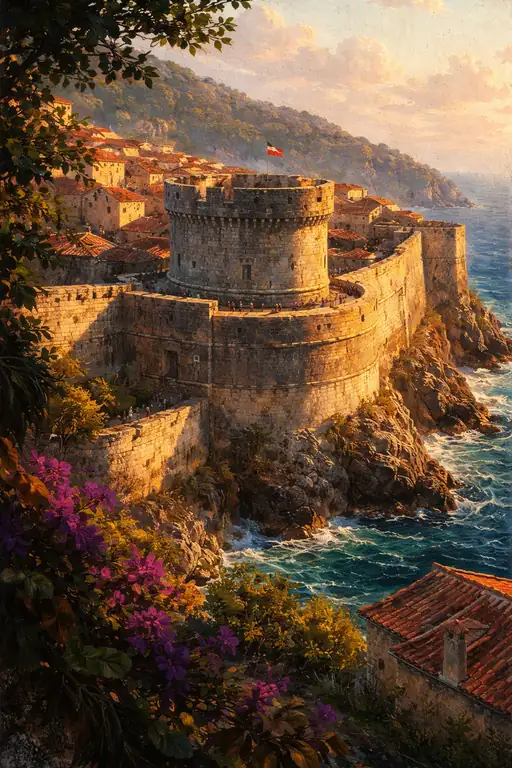 The Bastion's Golden Reverie
 Standing Against the Eternal Tide
 Guardian Against the Wild Tide
 Sentinel of the Golden Hill