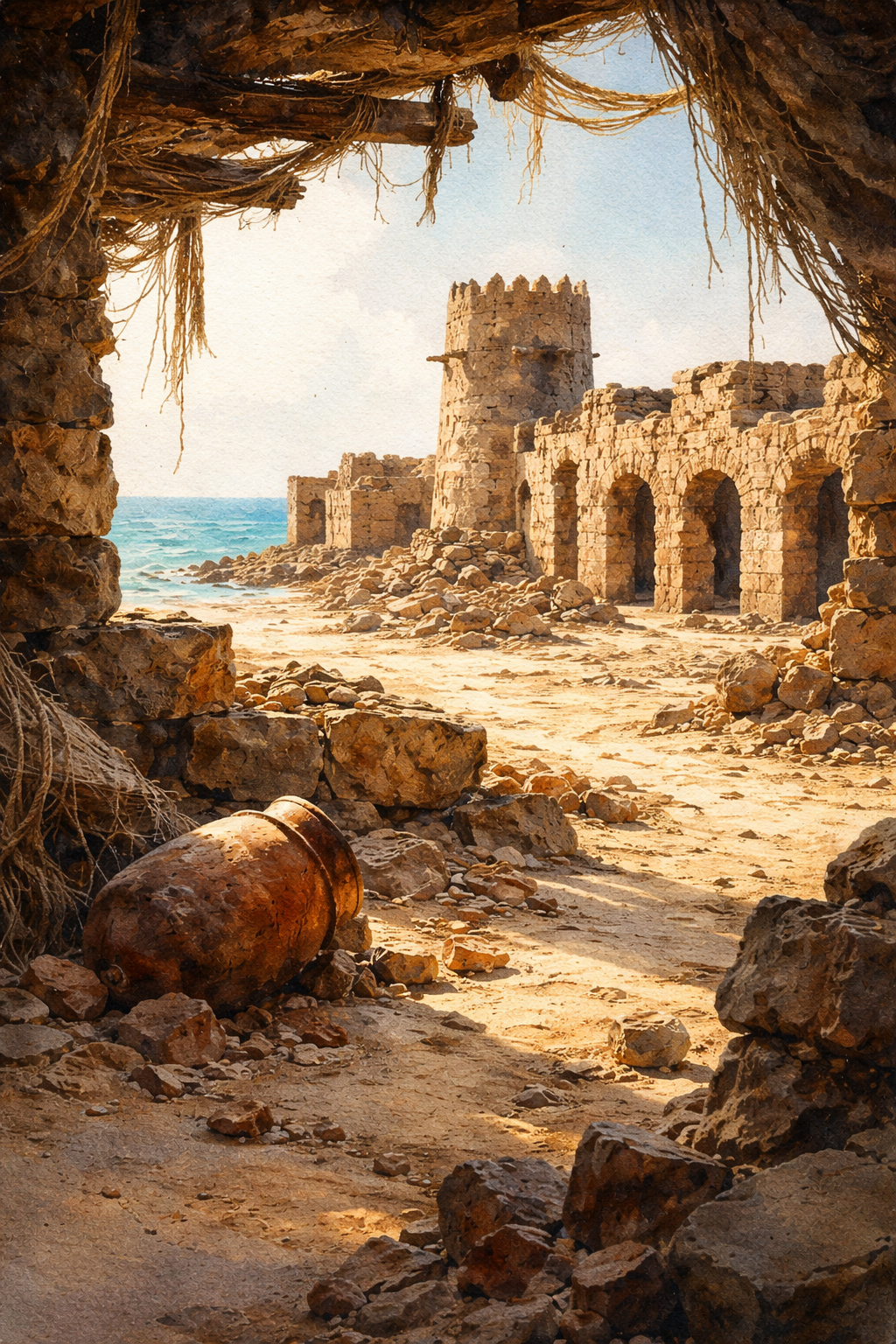
Lifeblood of the Sunlit Sands
Critique
1. Introduction This painting depicts a dramatic view of ancient stone ruins situated on a sun-drenched coastline. Framed from the dark interior of a crumbling structure, the scene reveals a vast sandy expanse leading to an imposing stone tower and a series of weathered arches. The work captures the poignant beauty of historical decay against the timeless backdrop of the sea and sky, inviting reflection on the passage of time. 2. Description In the foreground, a large, weathered clay amphora lies among scattered rocks and debris, tucked into the shadow of a rugged stone archway. Beyond this dark frame, a bright, sandy beach stretches toward a series of monumental stone structures, including a tall tower with crenelated tops and several sturdy arches. The turquoise sea is visible to the left, its gentle waves washing onto the shore under a clear, pale blue sky. Fine textures of rough stone, shifting sand, and frayed rope hanging from the ceiling are rendered with great attention to detail. 3. Analysis The artist uses a strong contrast between the dark, textured foreground and the luminous, expansive background to create a compelling sense of depth. The palette is dominated by warm ochre and sandy browns, which are beautifully offset by the cooling blues of the water and sky. Light is used effectively to define the solid volumes of the masonry and to emphasize the tactile quality of the crumbling surfaces. The composition follows a natural progression from the intimate, shadowy interior to the open, bright landscape, drawing the eye toward the distant tower. 4. Interpretation and Evaluation This work successfully evokes a sense of nostalgia and wonder through its masterful portrayal of architectural remnants. The technical proficiency is evident in the realistic rendering of stone textures and the subtle play of light that gives the ruins a sense of weight and history. By placing the viewer within the ruins looking out, the artist creates a bridge between the present and a forgotten past. The inclusion of the amphora serves as a silent witness to a long-gone civilization, lending the scene a quiet, meditative quality. 5. Conclusion Starting with a sense of isolation in the shadows, the viewer gradually discovers the grandeur of the coastal ruins. The painting is an exquisite study of light, texture, and historical narrative that elevates a simple landscape into a powerful statement on endurance. It leaves a lasting impression of the quiet majesty that resides in ruins, where the meeting of land and sea continues long after human hands have left the scene.
Same Subcategory
Similar Artworks
 Where the Turquoise Sea Remembers
 Sentinel of the Eternal Ocean
 Nostalgia in the Golden Tide
 Silent Guard of the Sapphire Sea
 The Silent Stupa under the Azure
 Gateway to the Silent Sea
 Arch of the Lost Empire
 Guardians of the Eternal Sea
 Echoes of the Sea in a Rusted Sphere
 Symphony of the Turquoise Crest