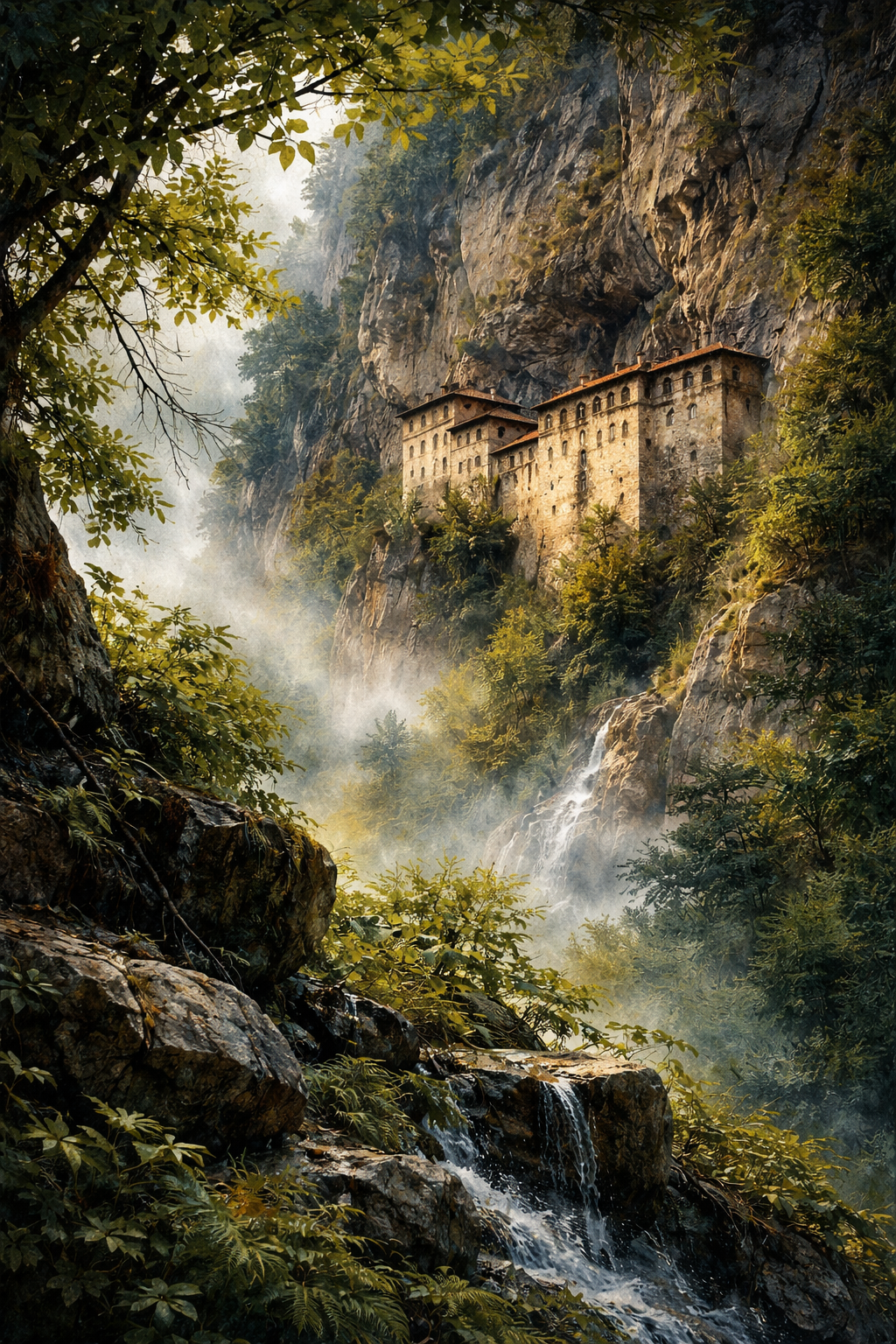
Sanctuary Within the Misty Cliffs
Critique
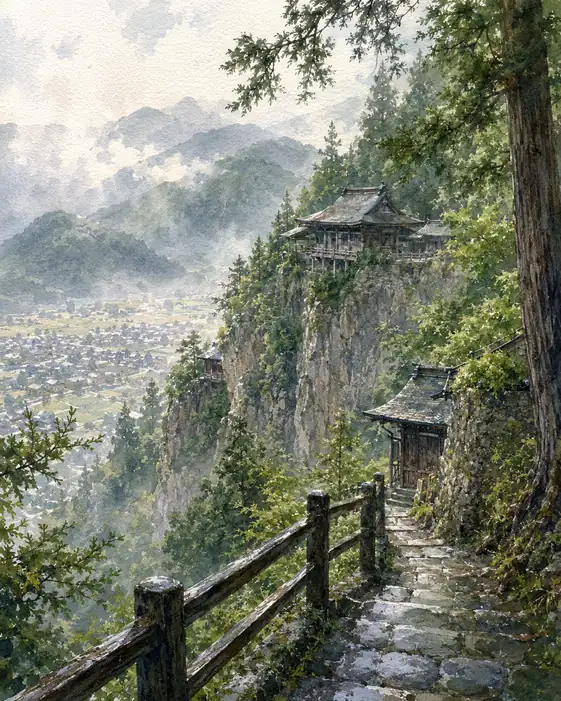
1. Introduction This landscape painting depicts a remarkable architectural structure built directly into the side of a steep, craggy cliff. Bathed in soft, atmospheric light and partially obscured by rising mist, the scene evokes a powerful sense of isolation and spiritual contemplation. The work focuses on the dramatic contrast between the massive scale of the mountain and the enduring presence of human construction. 2. Description The main subject is a large stone building with multiple rows of windows and red-tiled roofs, appearing to cling precariously to a massive gray rock face. Below the structure, several waterfalls cascade down through a lush, green gorge, creating a veil of mist that fills the lower half of the frame. In the foreground, large, detailed boulders and dense forest foliage provide a sense of scale and depth. 3. Analysis The composition is dominated by the strong verticality of the cliff and the waterfalls, which emphasizes the sheer height of the location. The color palette centers on earthy browns and grays, offset by the vibrant greens of the vegetation and the ethereal white of the mist. Dappled sunlight illuminates the walls of the building and the leaves in the foreground, creating a dynamic play of light and shadow. 4. Interpretation and Evaluation This work can be interpreted as a celebration of the human spirit and its ability to find sanctuary within the most formidable natural environments. The technical execution is highly effective, particularly in the rendering of the varied textures of rock, foliage, and moving water. The successful integration of architecture into such a rugged landscape conveys a feeling of profound mystery and timelessness. 5. Conclusion This painting offers a haunting and majestic vision of a remote sacred site where nature and architecture are inextricably linked. Initially appearing as a wild mountain scene, it slowly reveals the intricate details of the monastery and the deliberate order it brings to the rugged terrain. It stands as a powerful testament to the beauty and resilience found in the world’s most isolated places.
Same Subcategory
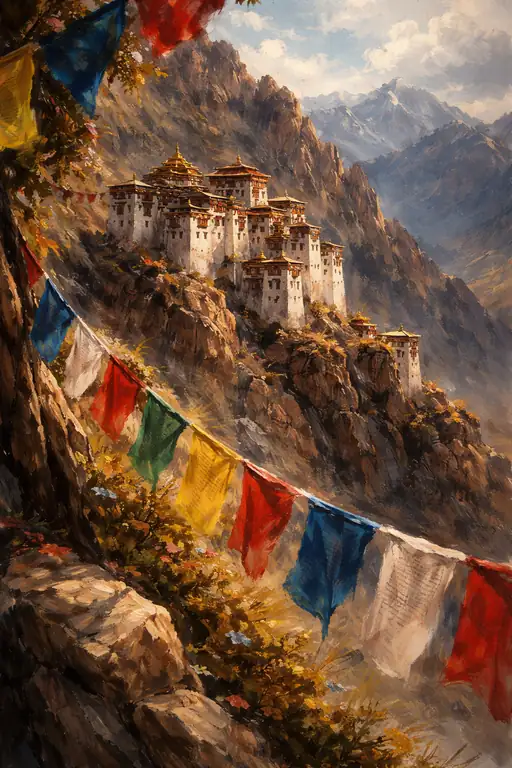 Sacred Serenity at the Edge of the Sky
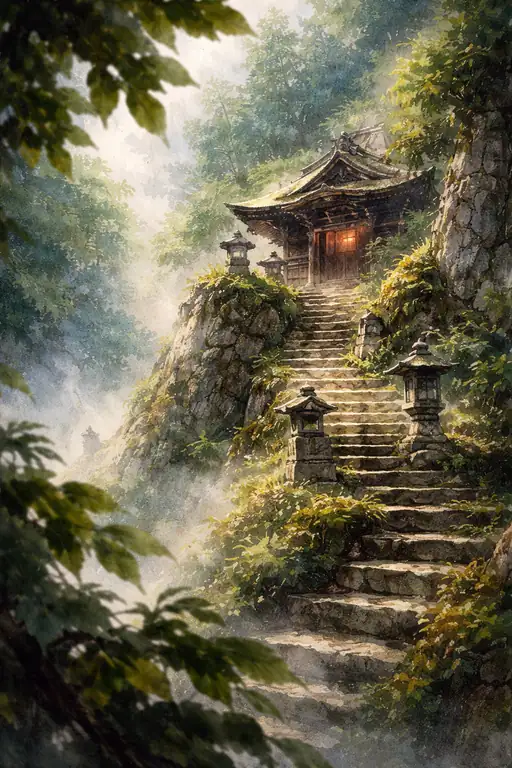 One Step Closer to the Divine
Similar Artworks
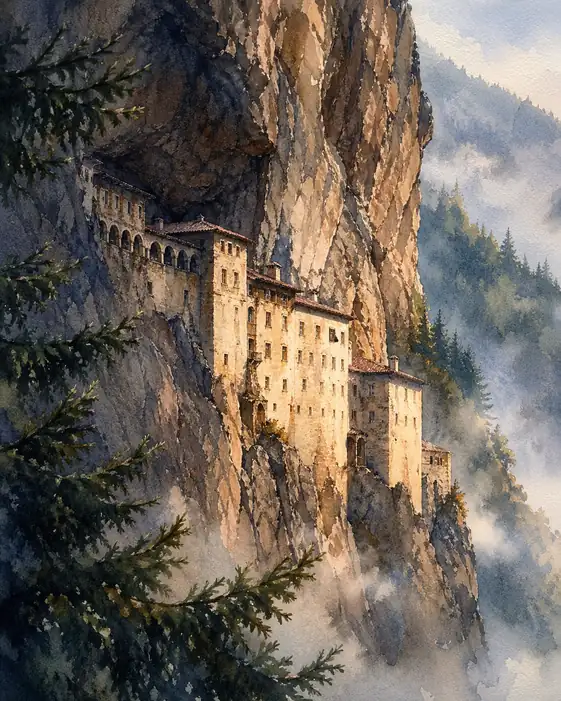 Majestic Solitude of Sumela
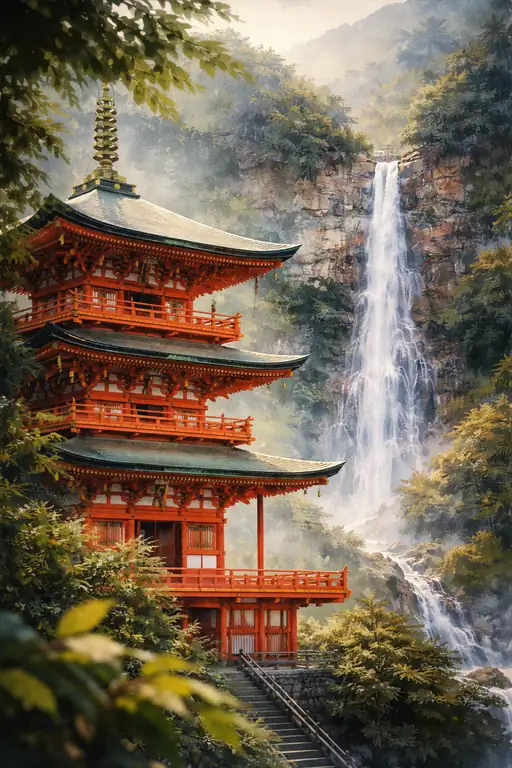 Harmony of the Sacred Falls
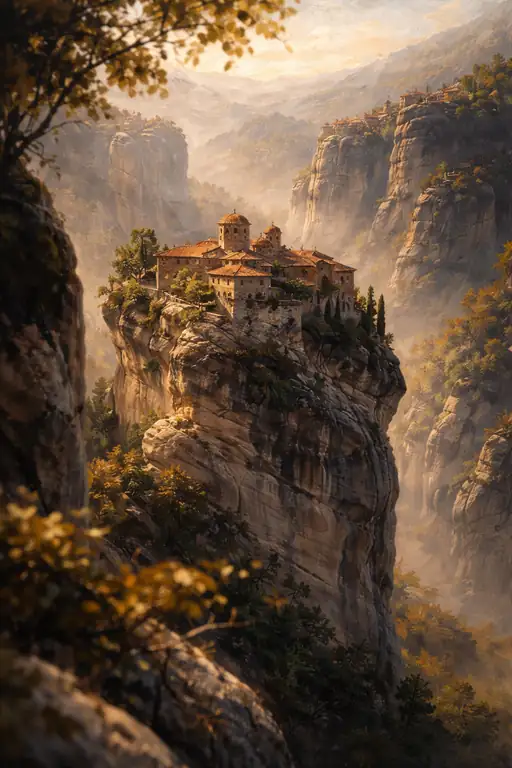 Sanctuary Above the Clouds
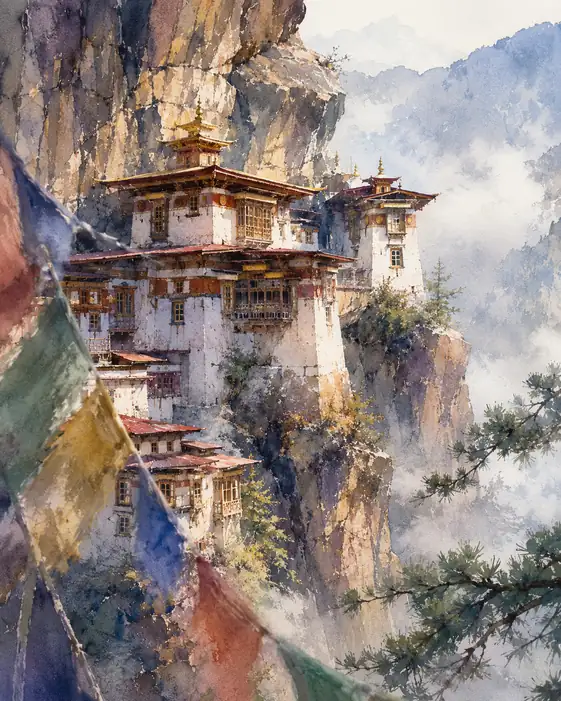 Sanctuary Clinging to the Clouds
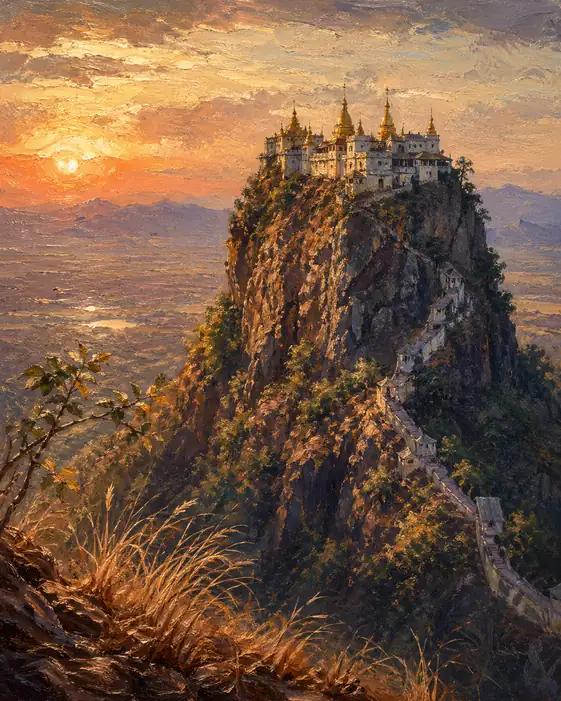 Where Silence Touches the Sky
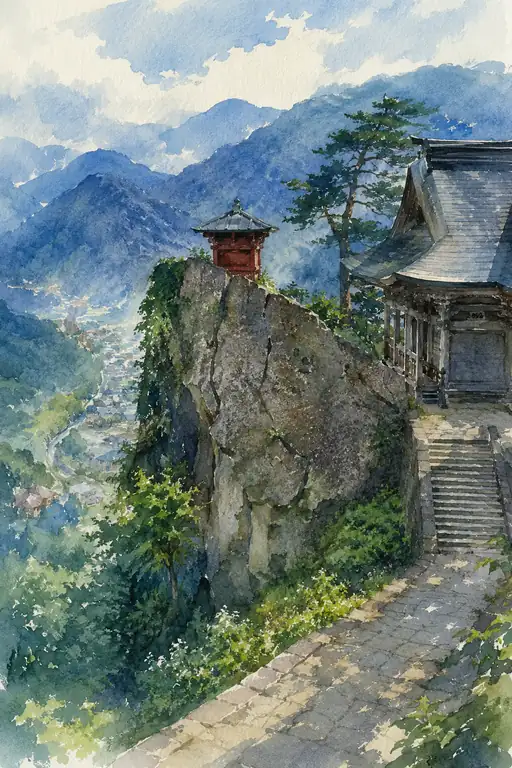 At the Edge Where Prayer Dwells
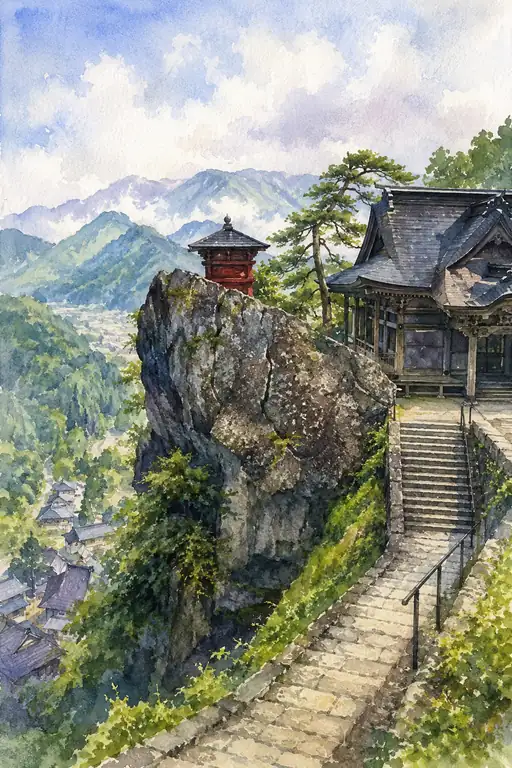 The Mountain Leaves No Easy Prayer
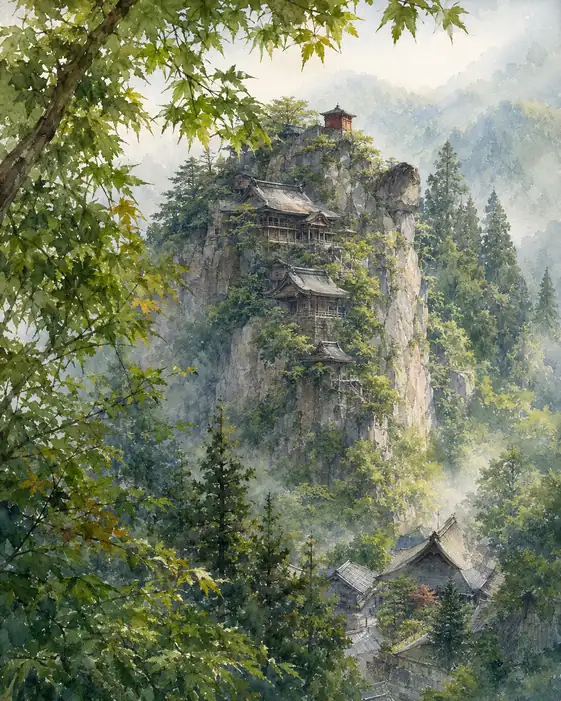 Every Roof Is Another Prayer
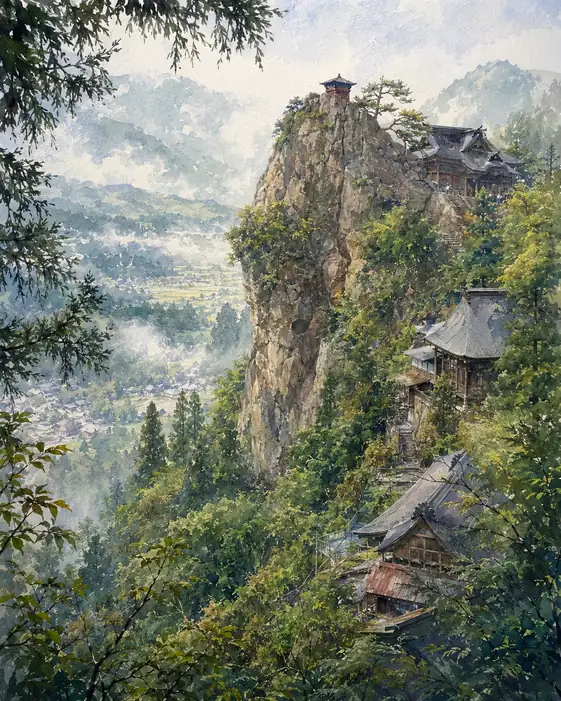 Faith Finds a Foothold in Stone
 The Path That Teaches the Sky