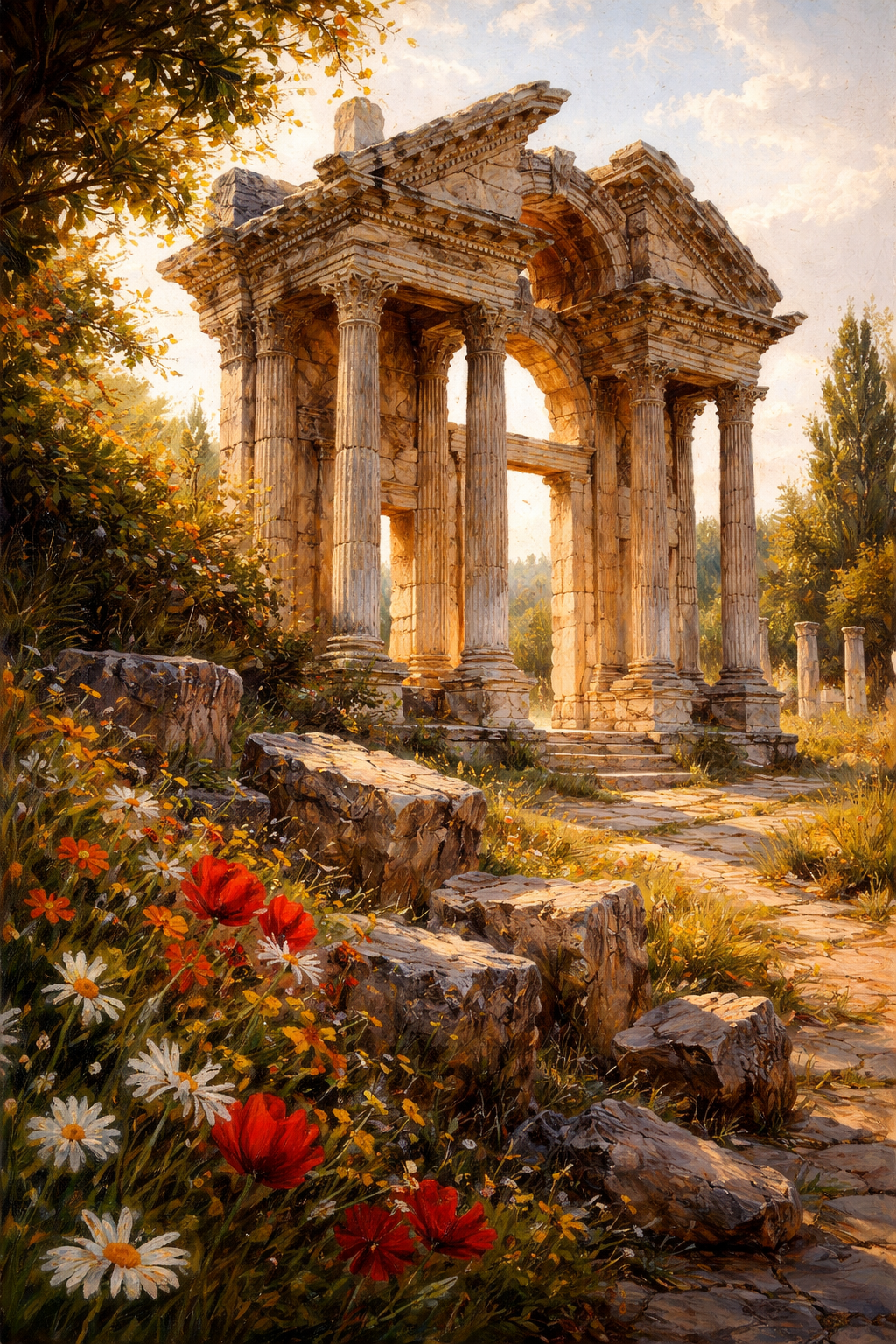
Timeless Pillars Among the Poppies
Critique
1. Introduction This landscape painting depicts the majestic ruins of a classical stone gateway standing amidst a vibrant meadow of wildflowers. Bathed in the warm, golden light of late afternoon, the scene offers a poignant reflection on the passage of time and the enduring legacy of ancient civilizations. It successfully balances the monumental scale of the architecture with the delicate, ephemeral beauty of the surrounding nature. 2. Description The central subject is a massive, partially ruined triumphal arch characterized by weathered Corinthian columns and a fragmented pediment. In the foreground, a tall cluster of red poppies and white daisies grows among scattered, mossy stone blocks that once belonged to the structure. A sun-drenched pathway made of ancient paving stones leads the viewer’s eye from the lower right toward the illuminated gateway and the soft, hazy forest beyond. 3. Analysis The artist employs a warm and harmonic color palette, where the golden ochre of the stone is complemented by the brilliant reds and whites of the flowers. The composition utilizes a strong diagonal line created by the path and the ruins to create a sense of depth and perspective. Detailed brushwork is used to capture the intricate textures of the cracked stone, the soft petals of the flowers, and the dappled light filtering through the foliage. 4. Interpretation and Evaluation This work can be interpreted as a contemplation of the relationship between human achievement and the unstoppable forces of nature. The technical execution is exceptional, particularly in the way the artist handles the complex interplay of light and shadow on the architectural surfaces. The juxtaposition of the permanent, unmoving stone with the vibrant, seasonal life of the wildflowers evokes a sense of both nostalgia and renewal. 5. Conclusion This painting presents a deeply atmospheric and masterfully rendered vision of a historic site integrated into a living landscape. Although the ruins represent a lost era, the warmth of the light and the vitality of the flora prevent the scene from feeling desolate. It stands as a beautifully realized tribute to the silent dignity of the past and the persistent energy of the natural world.
Same Subcategory
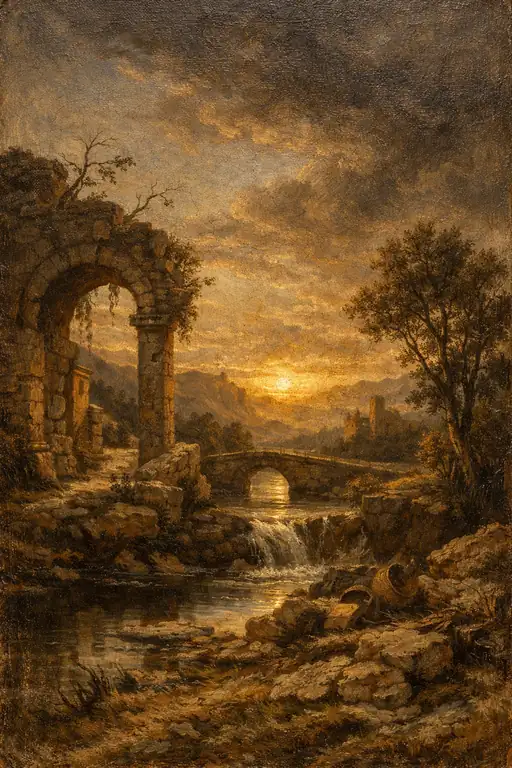 A Ruined Arch at Sunset
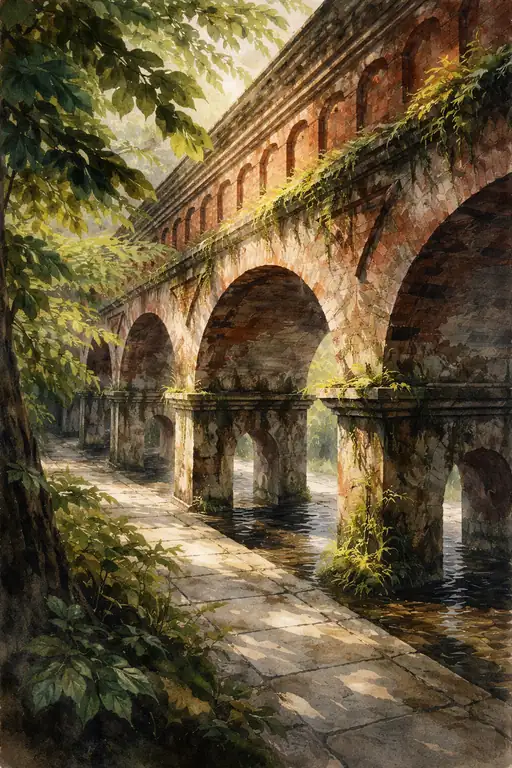 Time's Reclaimed Arches
Similar Artworks
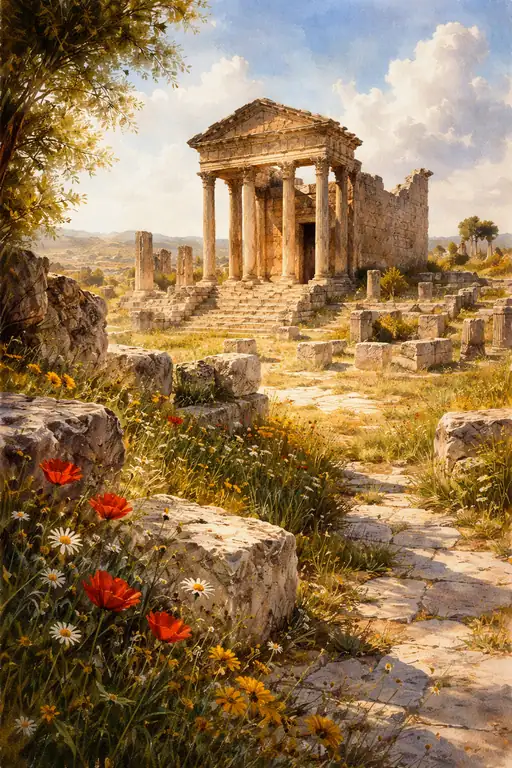 Where Time Sleeps Among the Ruins
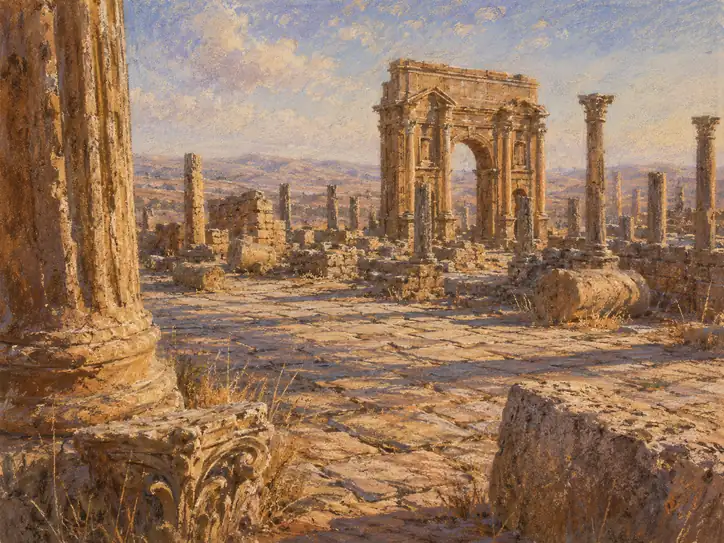 The Silent Dignity of Time
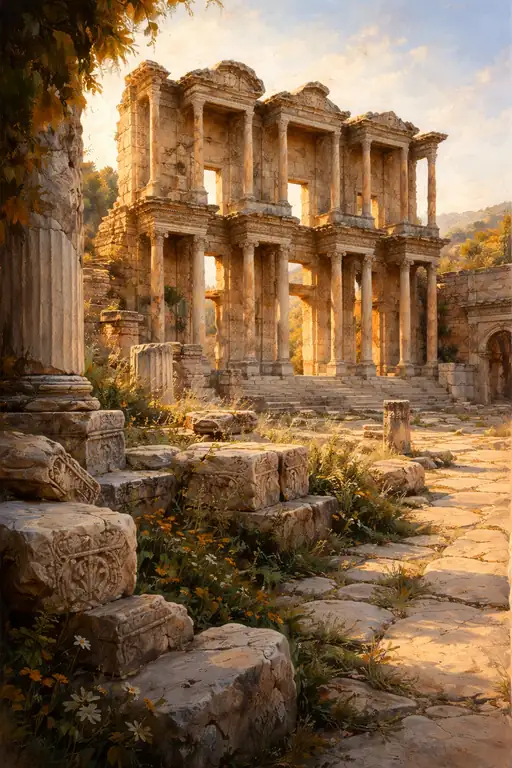 Golden Echoes of the Ages
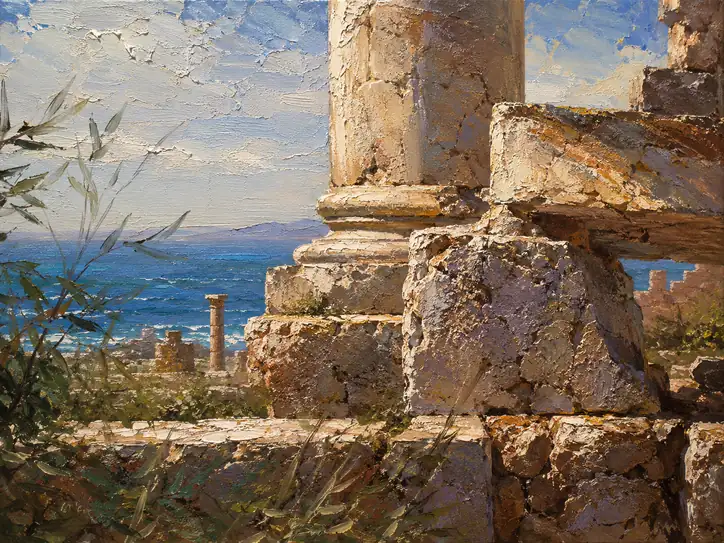 Sentinel of the Eternal Ocean
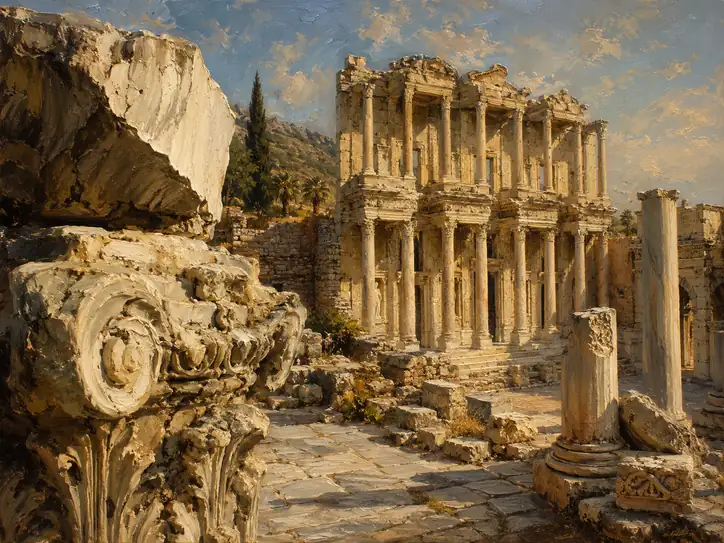 Where the Ancient Sun Still Remembers
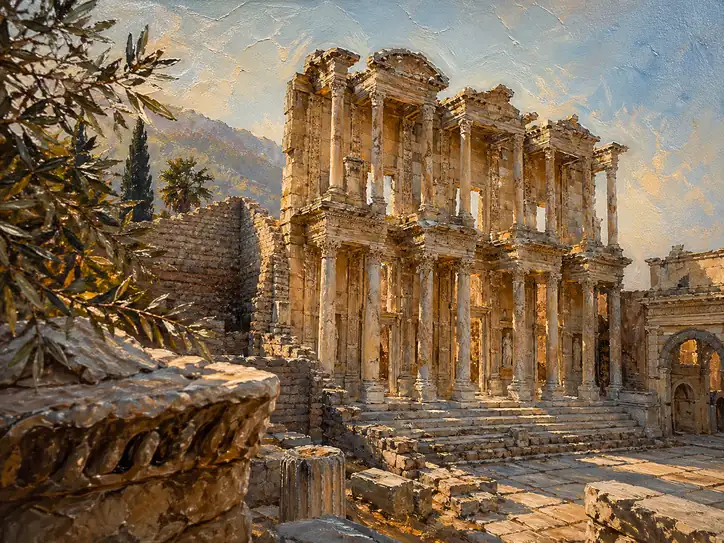 The Eternal Glow of Forgotten Wisdom
 Pillars of Antiquity Awash in Gold
 Timeless Pillars of the Mountain Sanctuary
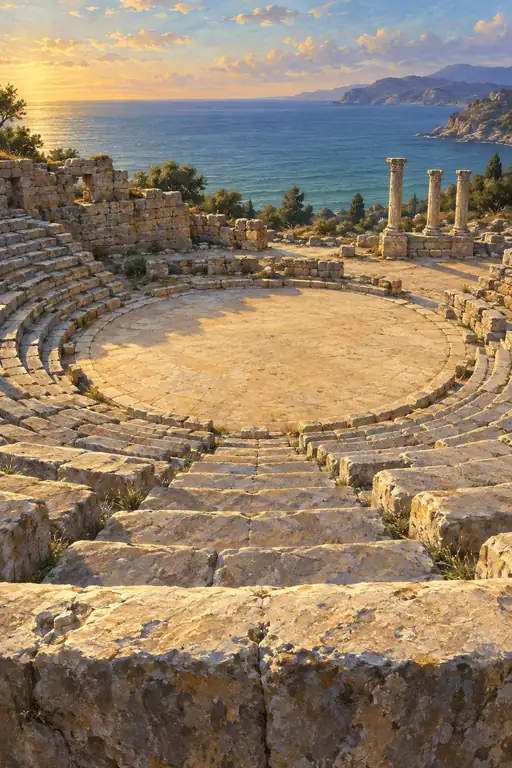 Theater of the Silent Sea
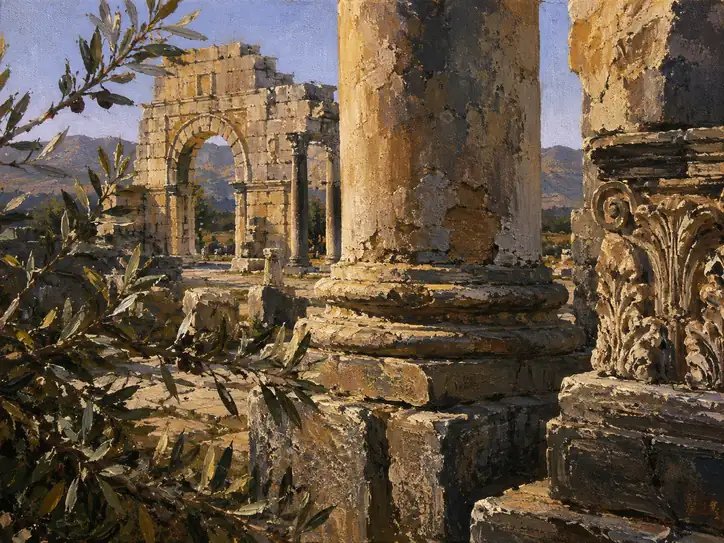 The Silent Witness of Ages