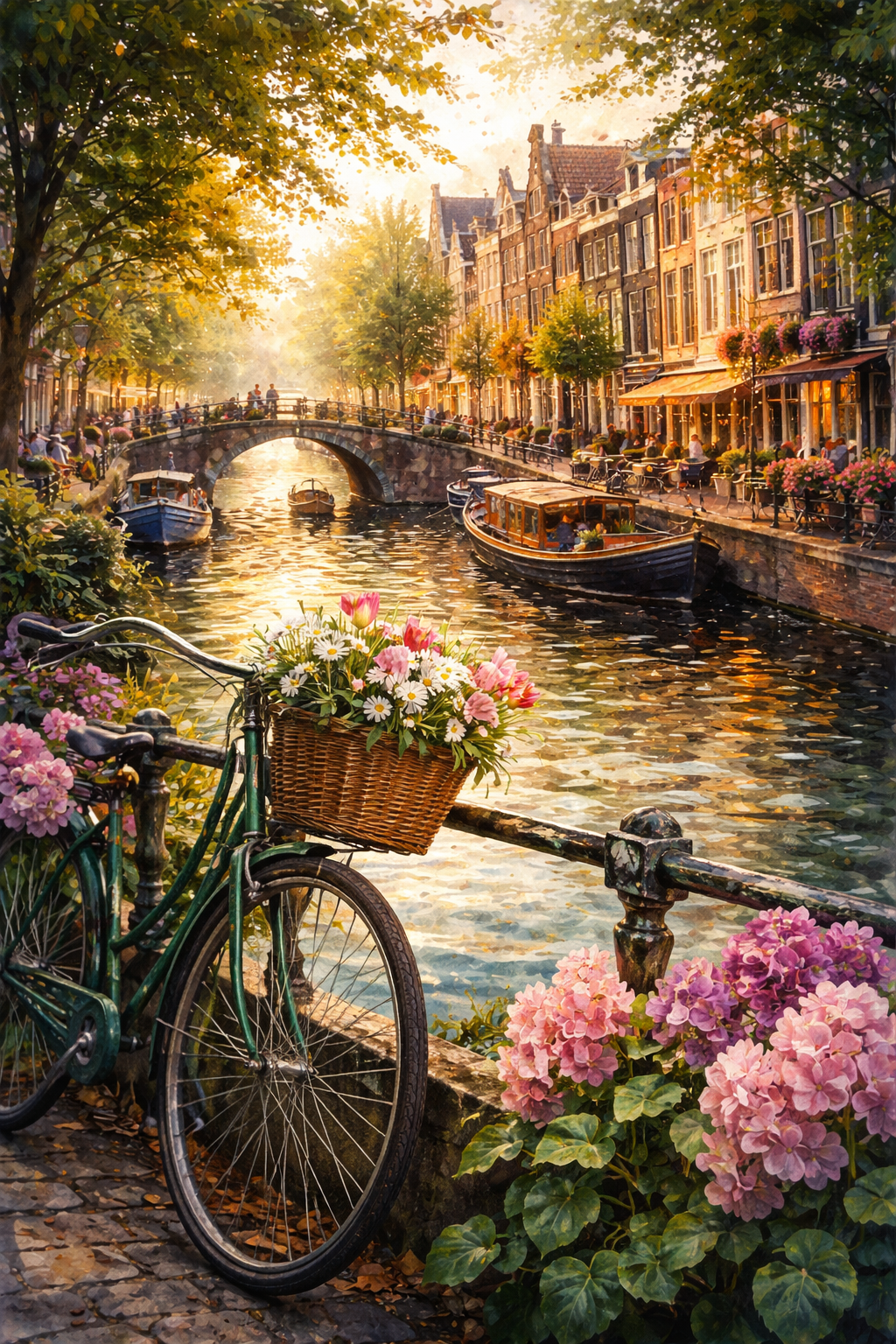
Golden Serenade of the Canal
Critique
1. Introduction This painting presents a serene and nostalgic view of an urban canal scene, likely set in a historic European city such as Amsterdam. The composition captures a moment of quiet repose, blending the architectural heritage of the city with vibrant botanical elements. The overall atmosphere is characterized by a warm, golden light that suggests either the beginning or the end of a peaceful day. 2. Description In the immediate foreground, a vintage green bicycle is parked against a metal railing, its front basket overflowing with a colorful bouquet of tulips, daisies, and hydrangeas. The middle ground features a shimmering canal where several small boats are moored or gently floating, reflecting the brilliant sunlight. Classical narrow houses with gabled roofs line the right bank, while a stone arched bridge spans the water in the distance under the shade of leafy trees. 3. Analysis The artist employs a strong one-point perspective that draws the viewer's gaze from the detailed bicycle in the foreground deep into the sun-drenched horizon. A warm color palette dominated by yellows, ochres, and greens creates a harmonious and inviting mood across the entire canvas. The application of paint is expressive and somewhat impressionistic, particularly in the reflective ripples of the water and the dappled light filtering through the overhead foliage. 4. Interpretation and Evaluation This work successfully evokes a sense of romantic tranquility and the simple beauty of everyday city life. The contrast between the rigid lines of the historic architecture and the organic forms of the flowers creates a balanced and aesthetically pleasing visual experience. The masterful handling of light serves as the primary unifying element, transforming a common urban vignette into an extraordinary and emotive scene. 5. Conclusion The initial impact of the painting is one of overwhelming warmth and charm, which is further reinforced by the meticulous attention to seasonal flora. It serves as a testament to the enduring appeal of traditional landscape subjects when executed with a modern, light-filled sensibility. Ultimately, the painting offers a comforting and idealized vision of harmony between man-made structures and the natural world.
Same Subcategory
 The Sacred Path of Golden Light
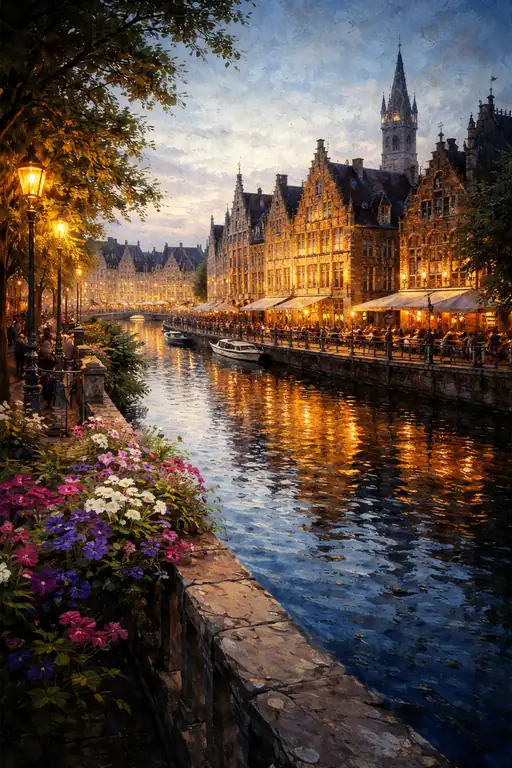 Twilight Echoes of Ghent
Similar Artworks
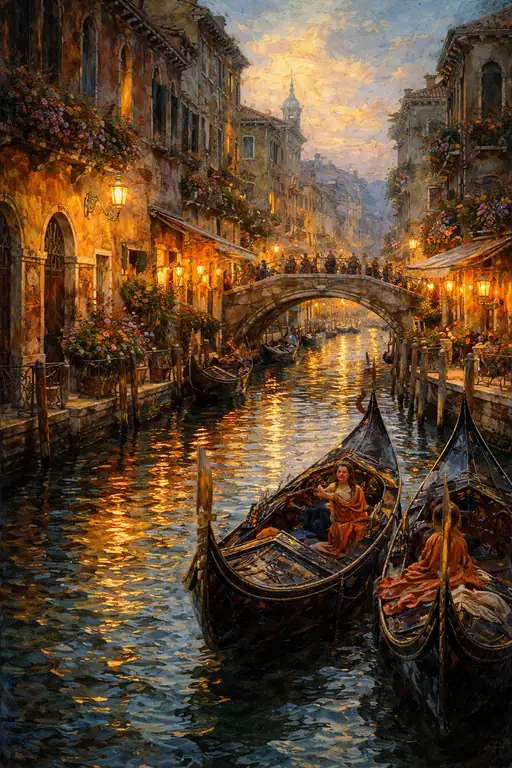 Golden Sighs of the Drowning City
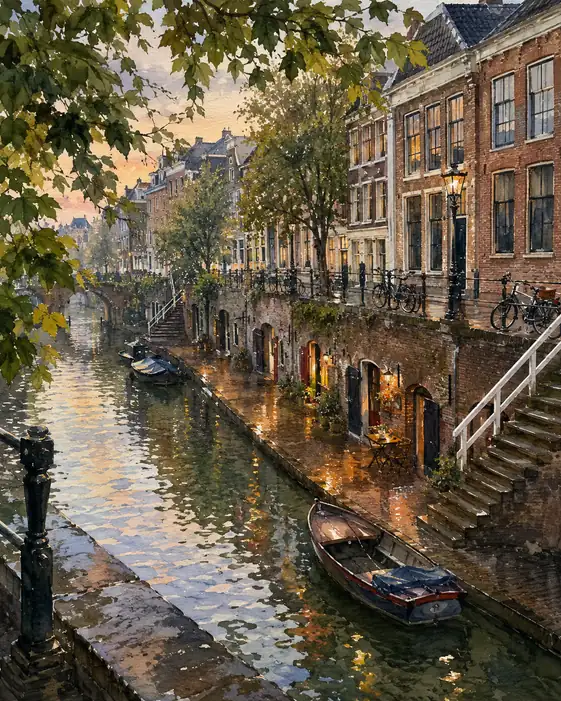 Gilded Dusk on the Ancient Canal
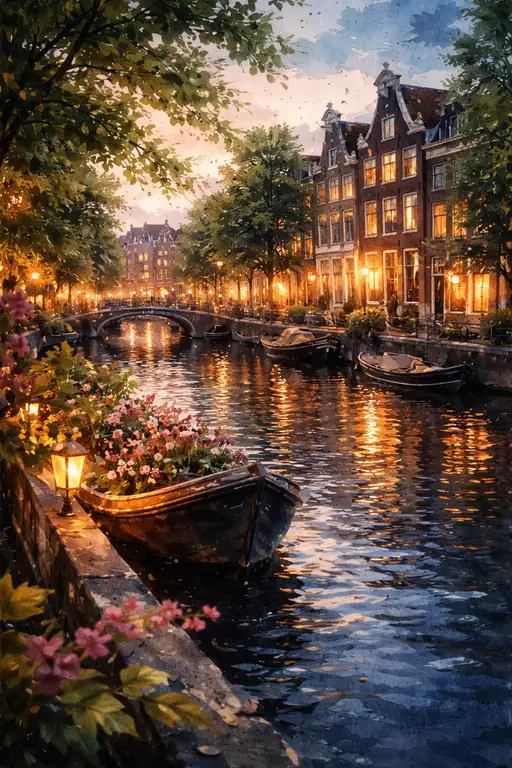 Embrace of the Evening
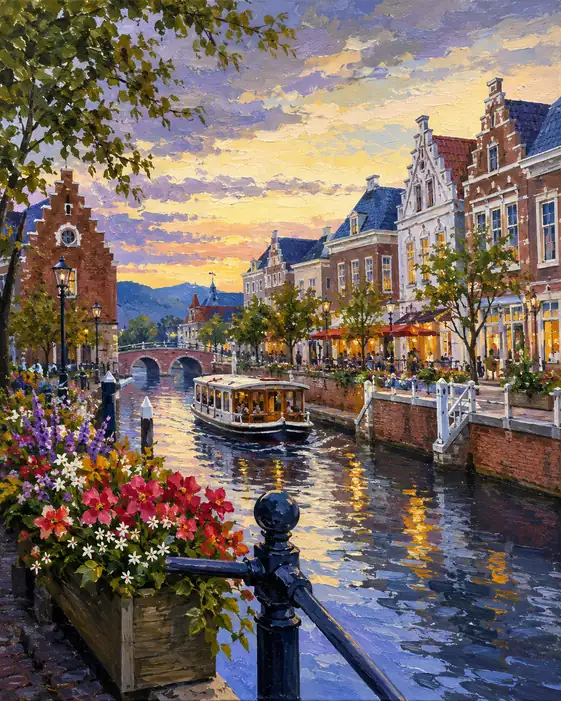 Twilight Glow along the Amsterdam Canal
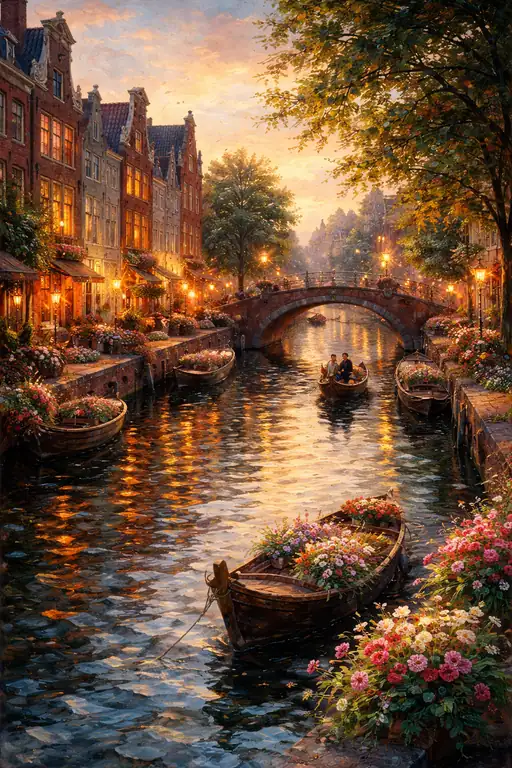 Golden Hour on the Tranquil Waters
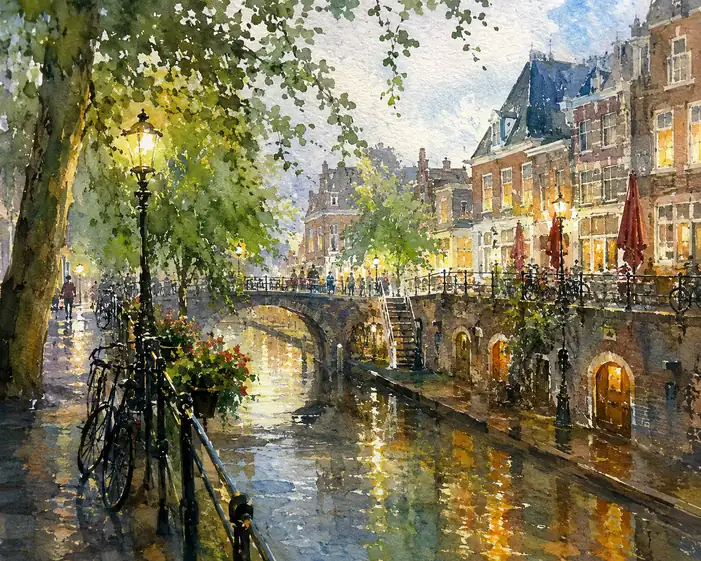 Where Twilight Lingers
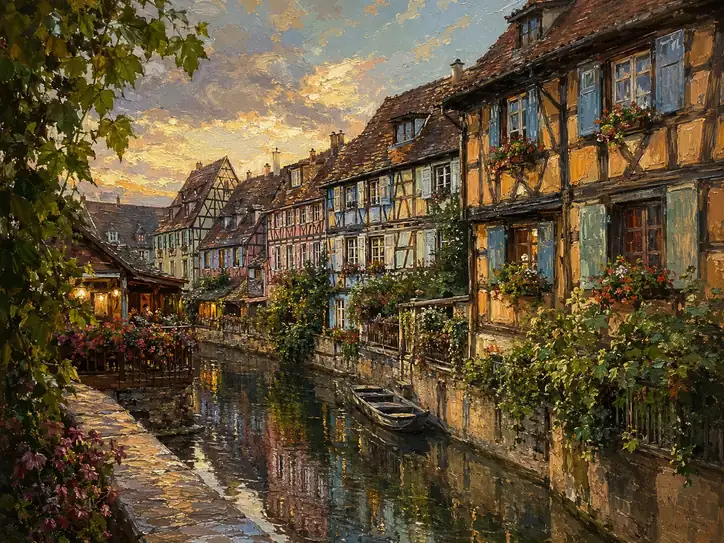 Sunset Serenade on the Canal
 Resonance of the Golden City
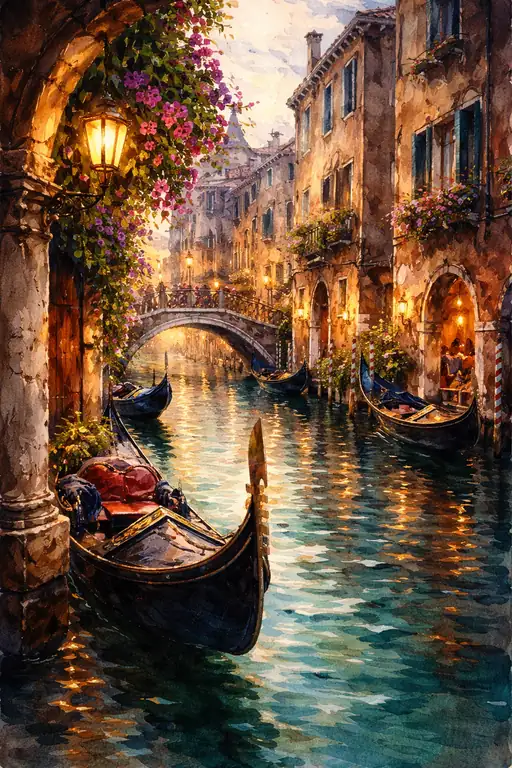 Twilight Rhapsody on the Venetian Canal
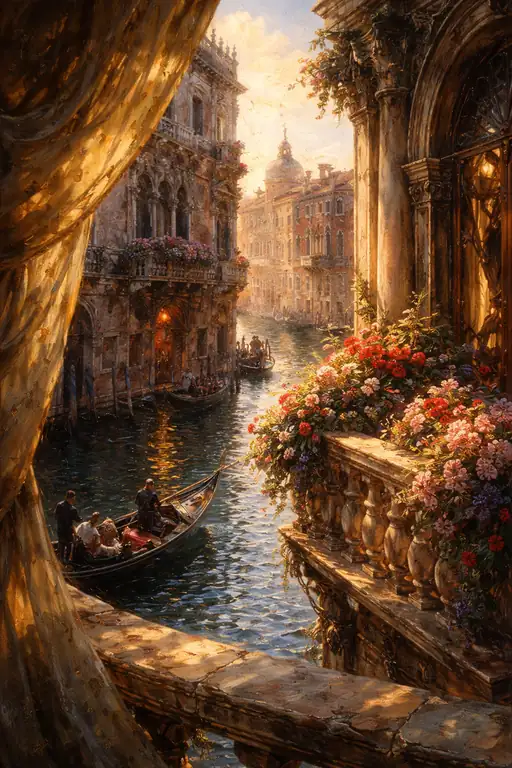 Serenade of the Floating City