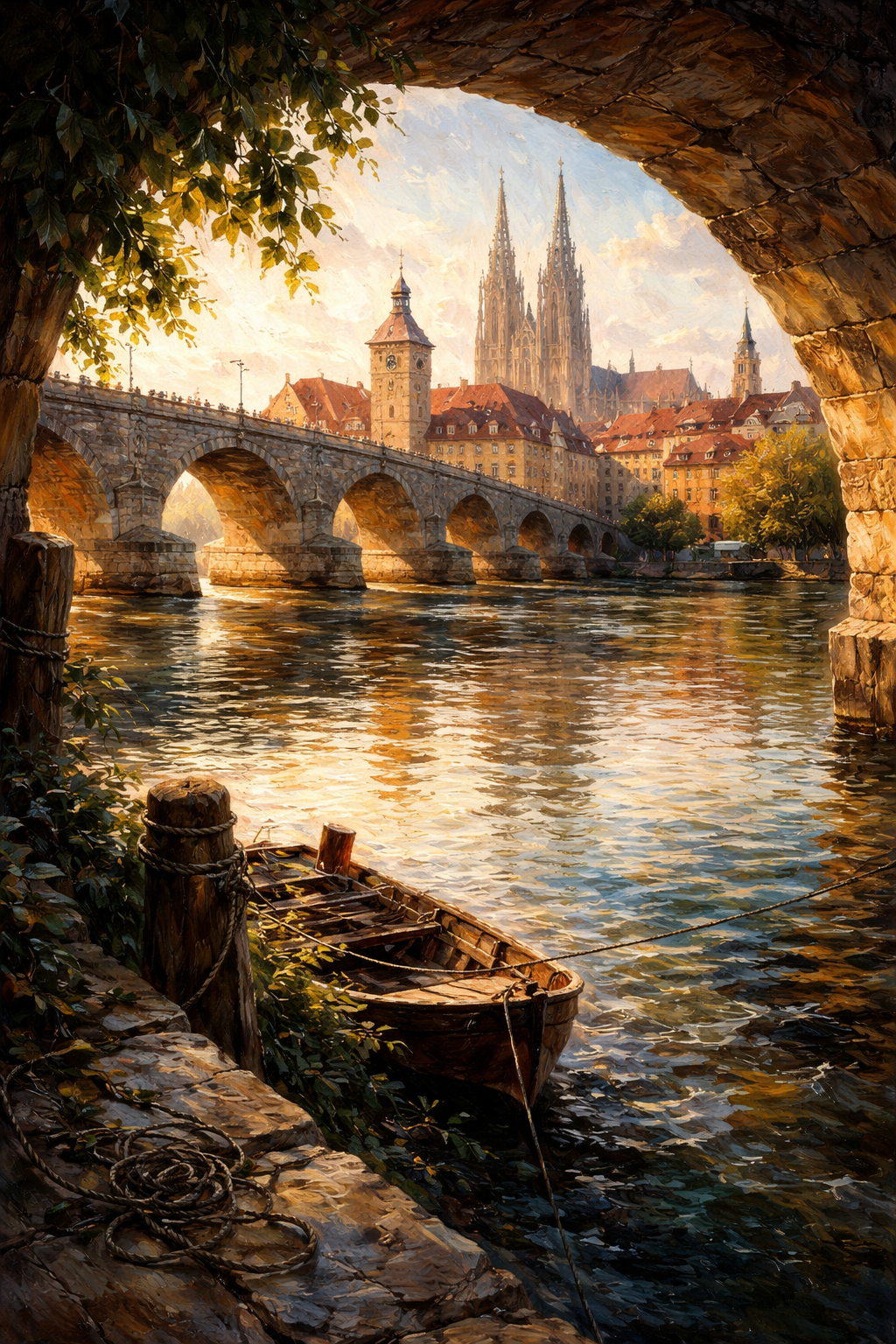
Archway to the Gilded Evening
Critique
1. Introduction This oil painting presents a captivating riverside scene of a historic European city, viewed through the framing device of a massive masonry arch. The composition captures a moment of quiet repose at twilight, where the built environment and the natural water element reflect a shared history. The artwork emphasizes the interplay between the immediate foreground and the distant architectural landmarks. It offers a sophisticated perspective on the relationship between time, structure, and memory. 2. Description The foreground is occupied by a weathered riverbank where a small wooden rowboat is tied to a sturdy mooring post. A large, dark stone arch frames the upper and right portions of the image, while leafy branches hang from the left. Beyond the river, which reflects the golden light of the sky, a multi-arched stone bridge stretches across the water. In the background, a series of red-roofed buildings lead toward a prominent clock tower and a majestic Gothic cathedral with twin spires, all bathed in soft, warm light. 3. Analysis The artist uses a rich variety of textures, from the rough grain of the wooden boat to the solid masonry of the bridge and the fluid reflections in the river. The color palette is centered on warm earth tones, particularly burnt sienna and intense yellow, contrasted with the darker values of the foreground arch. This framing technique creates a sense of depth and focus, drawing the viewer's eye toward the luminous city beyond. The light is used selectively to highlight the rhythmic quality of the bridge's arches and the verticality of the cathedral spires. 4. Interpretation and Evaluation This work demonstrates a masterful use of composition and light to convey a romanticized yet grounded sense of place. The inclusion of the solitary boat and the mooring rope adds a narrative layer of transit and arrival, grounding the monumental architecture in everyday life. The technical execution is exceptional, particularly in the handling of the reflective water surface and the subtle gradations of the sunset sky. The painting successfully balances the weight of the stone structures with the ephemeral quality of the light. 5. Conclusion In conclusion, the painting is a fine example of landscape art that utilizes classical framing techniques to create a contemporary mood. The dialogue between the shadowed foreground and the radiant distance provides a powerful visual metaphor for observation and discovery. The initial focus on the bridge expands into an appreciation for the entire urban ecosystem and its historical depth. This piece stands as a poetic and technically proficient tribute to the enduring charm of European riverside heritage.
Same Subcategory
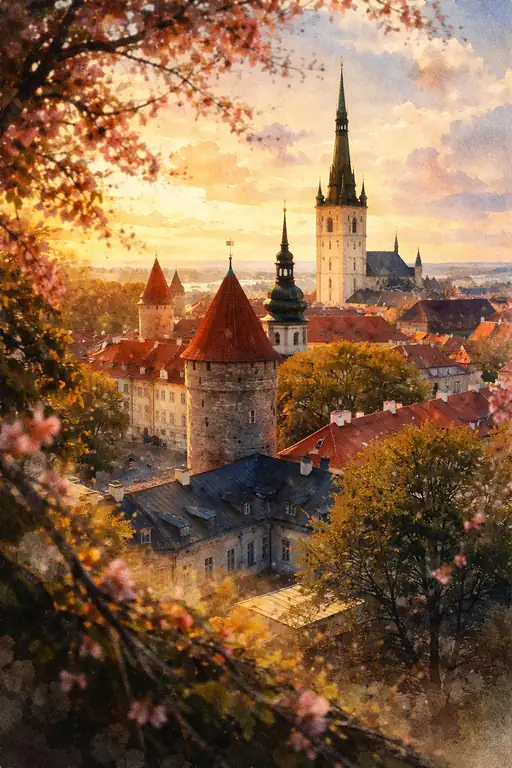 A Blossom's View of the Crimson Roofs
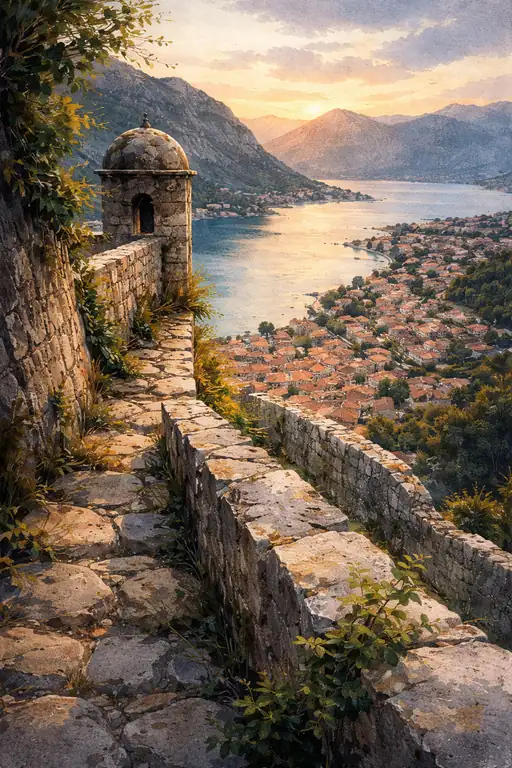 Golden Bastion Above the Adriatic
Similar Artworks
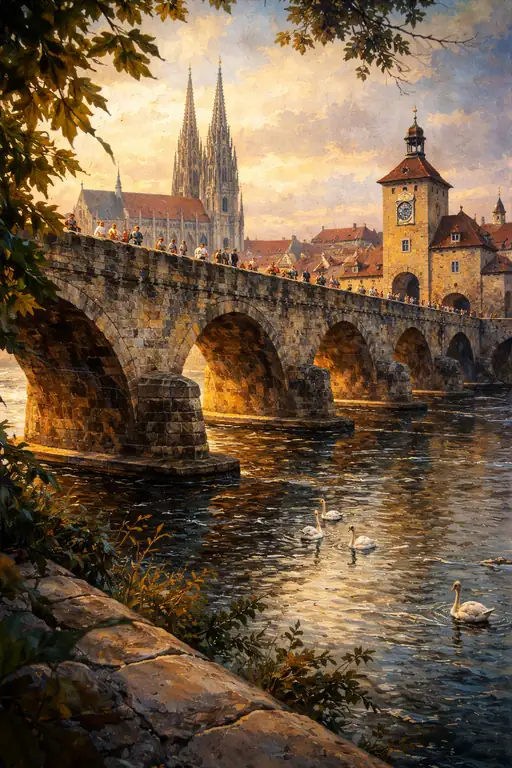 Rhythm of the Eternal River
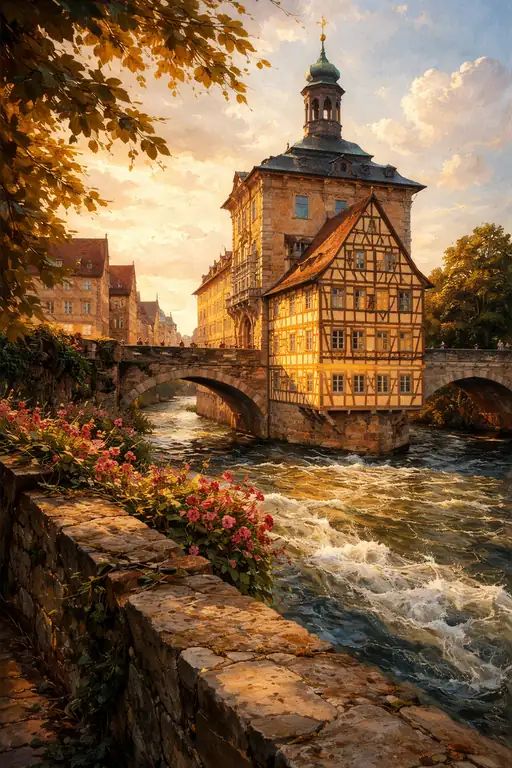 Vanguard of the Roaring River
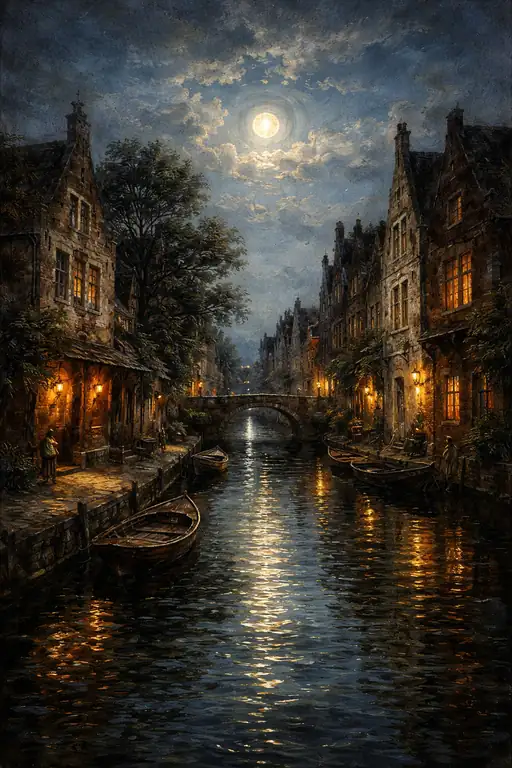 Silhouettes in Amber Light
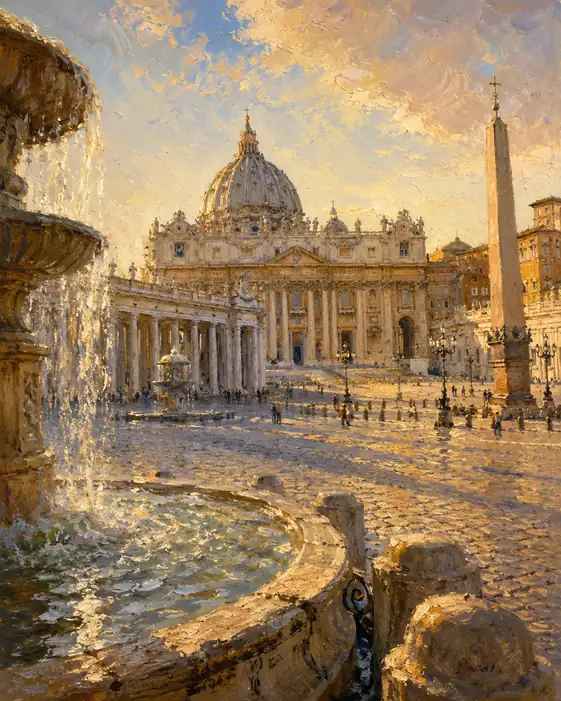 A Golden Vigil Over the Eternal Square
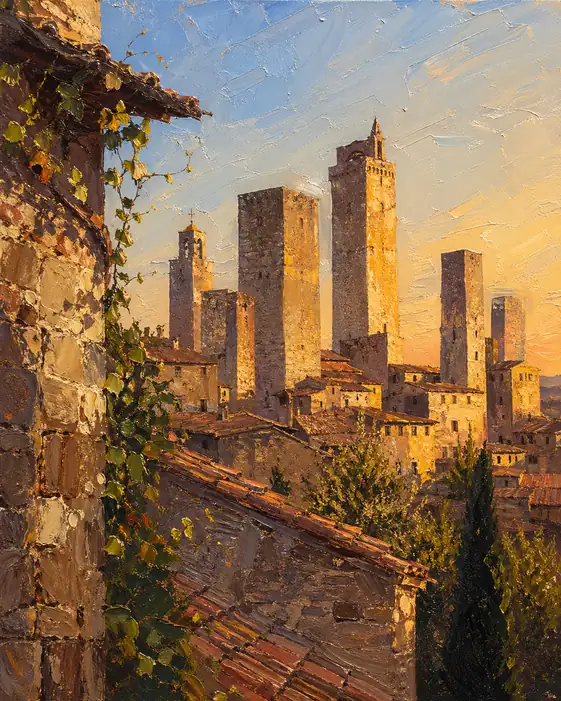 Golden Spires of the Eternal Town
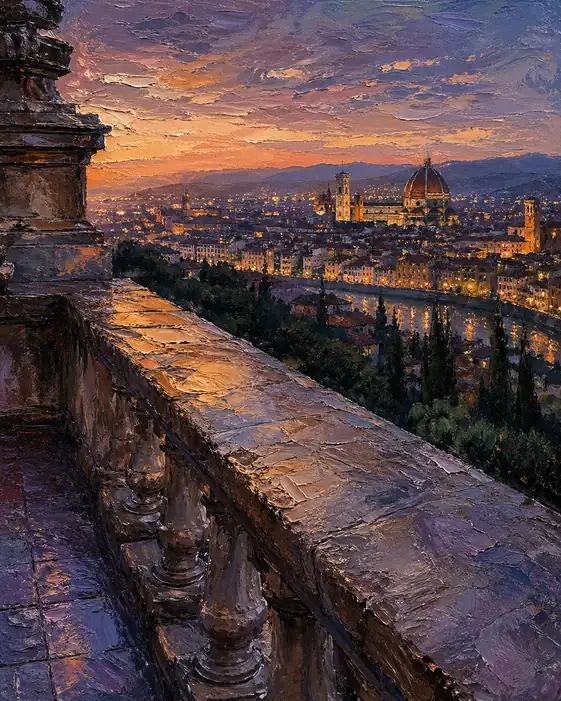 The Heart of Florence in a Gilded Veil
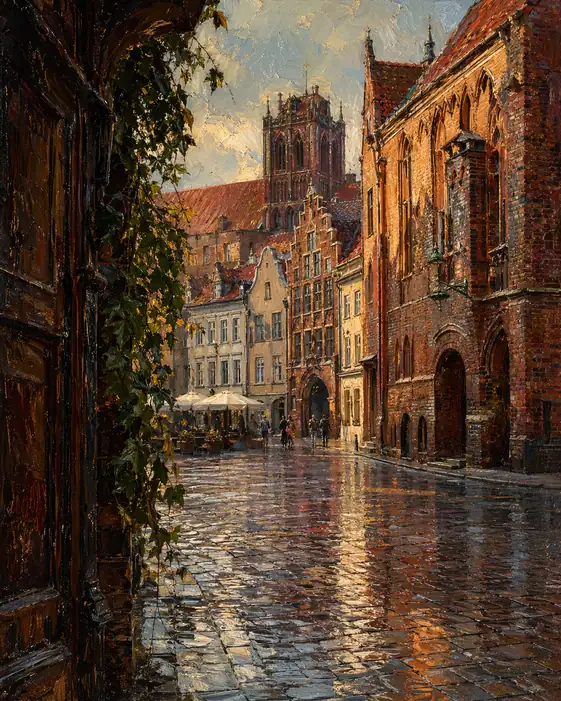 Echoes of the City: Rain and Brick
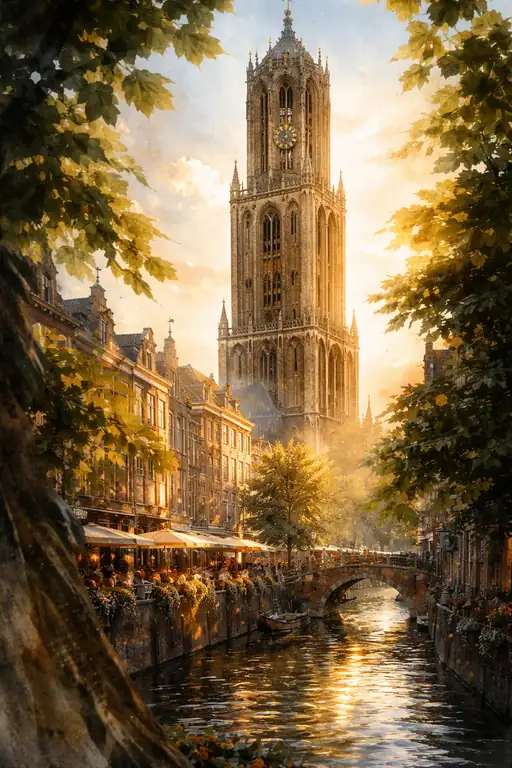 Sunset Over the Dom Tower
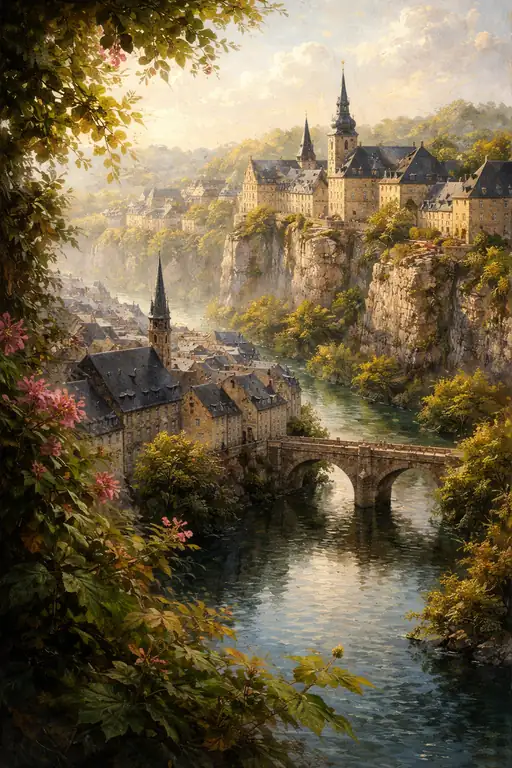
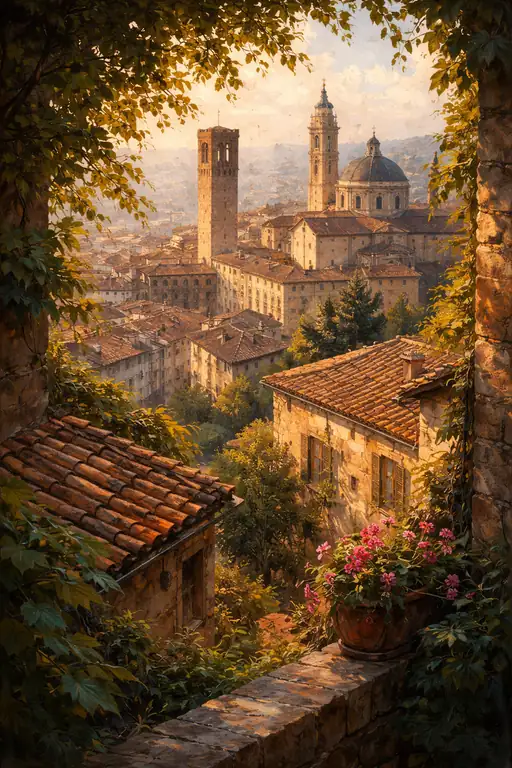 Golden City Through Ivy Leaves
 A Glimpse Through the Archway