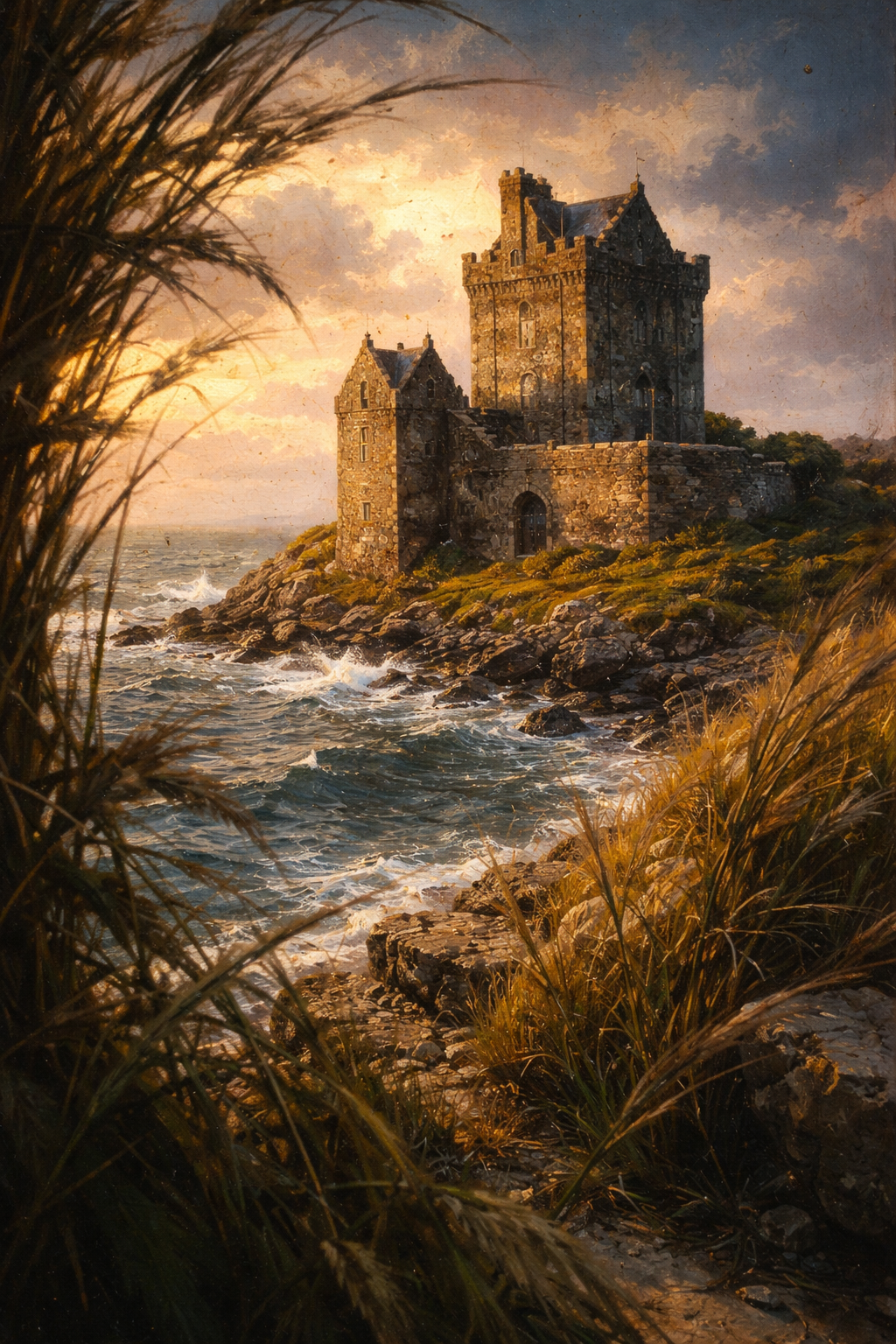
Standing Strong Against the Golden Tide
Critique
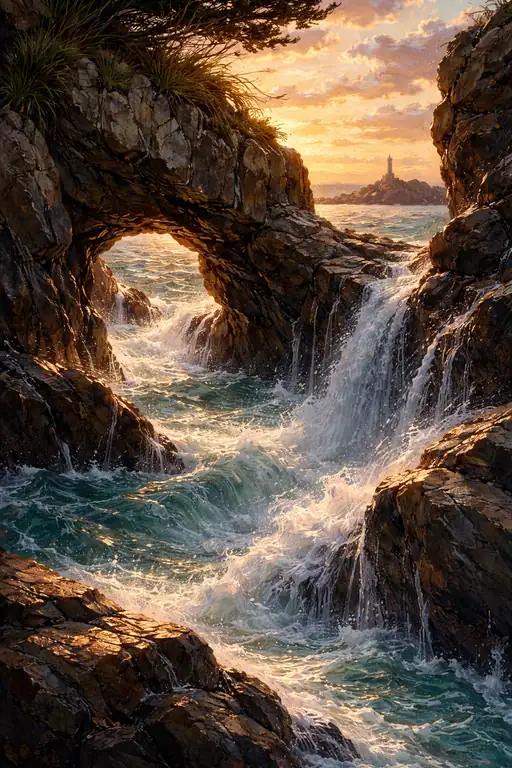
1. Introduction This evocative oil-on-canvas painting captures the stoic presence of a stone castle perched precariously upon a rugged coastline during the golden hour. The work utilizes a dramatic interplay of light and shadow to contrast the endurance of human architecture with the restless energy of the sea. It serves as a romanticized study of isolation and grandeur, employing a vertical composition that emphasizes the height of both the terrain and the structure. 2. Description The foreground features a cluster of tall, wind-swept golden grasses that frame the left side of the canvas, adding a sense of immediate depth. Centrally located, the weathered stone castle rises from dark, jagged rocks, its walls catching the vibrant orange light of a setting or rising sun. Below the cliff, the churned sea crashes against the shore in white, foamy waves, while the background consists of a tumultuous sky filled with heavy, radiant clouds in shades of gold and slate grey. 3. Analysis The artist demonstrates a sophisticated use of impasto and textured brushwork, particularly in the rendering of the castle's masonry and the frothy texture of the breaking waves. A warm, saturated palette of gold and amber dominates the scene, balanced by the cool, dark tones of the rocks and the turbulent water. The composition is carefully framed by the foreground reeds, which guide the viewer's eye toward the illuminated facade of the building and the distant horizon. 4. Interpretation and Evaluation This painting effectively conveys a mood of melancholic grandiosity, suggesting themes of time, solitude, and the resilience of history. The technical execution of the light is masterful, creating a sense of palpable heat and atmospheric thickness within the humid coastal air. The balance between the detailed architectural features and the more impressionistic treatment of the sky and sea creates a compelling visual tension that elevates the work beyond a simple landscape. 5. Conclusion A close study of the piece reveals that what initially appears as a serene sunset is actually a complex dialogue between the stillness of the stone and the constant motion of the elements. The overall execution reflects a high degree of skill in capturing both tactile texture and ephemeral light. This coastal scene remains a powerful example of how lighting can transform a familiar subject into a profound exploration of natural and historical endurance.
Same Subcategory
 Citadel's Luminous Twilight Reflection
Similar Artworks
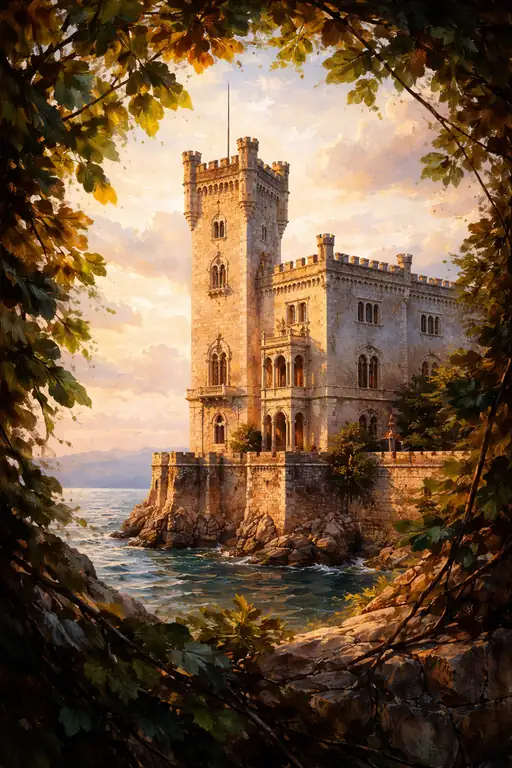 The Sea Fortress: Bastion of the Autumn Light
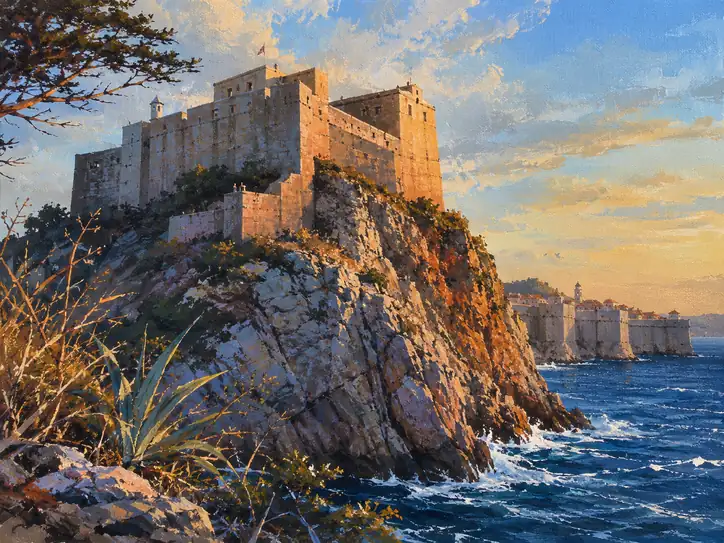 Bastion of the Sunlit Memories
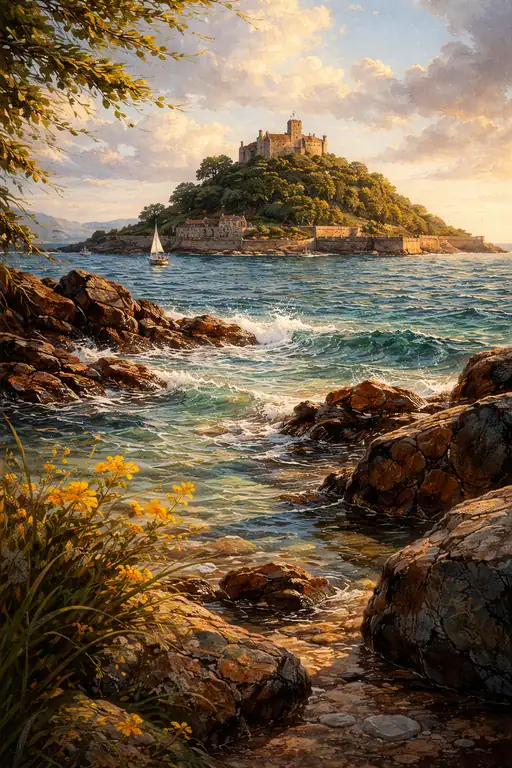 Golden Sunset Over the Island Fortress
 Sanctuary of the Winds
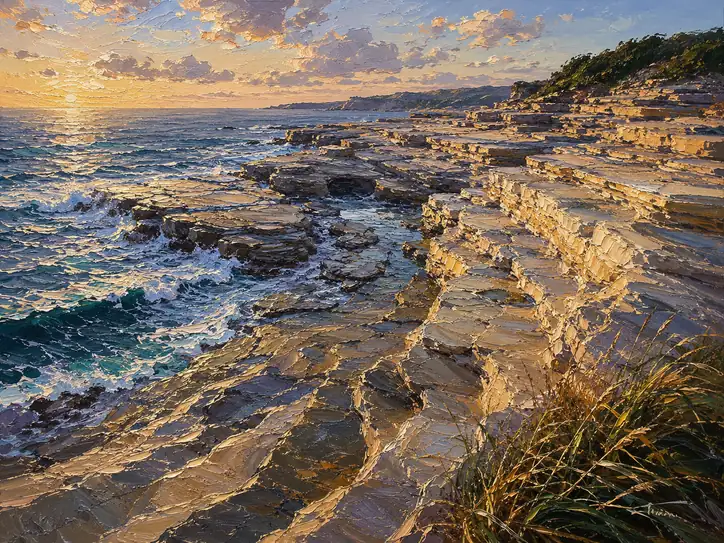 Golden Pulse of the Ancient Shore
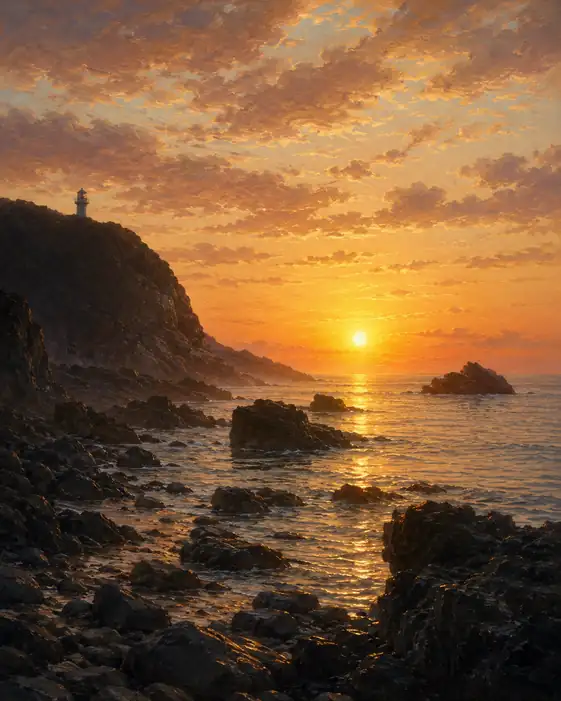 Cape Lighthouse Bathed in the Golden Horizon Sunset
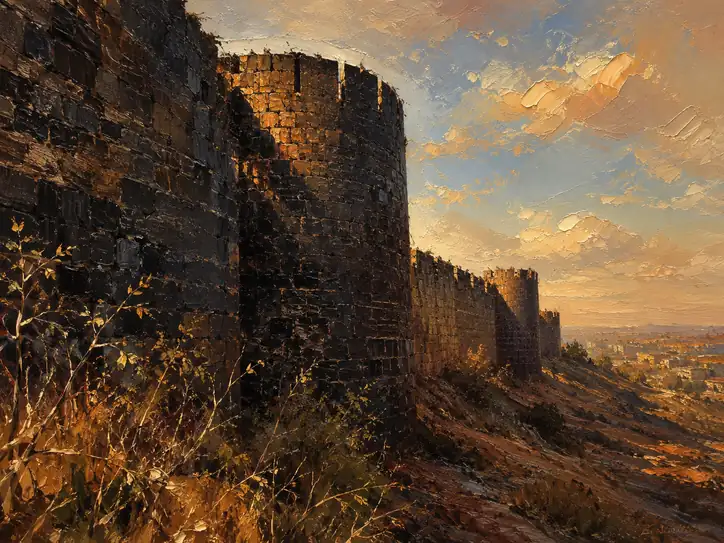 The Last Vigil at Dusk
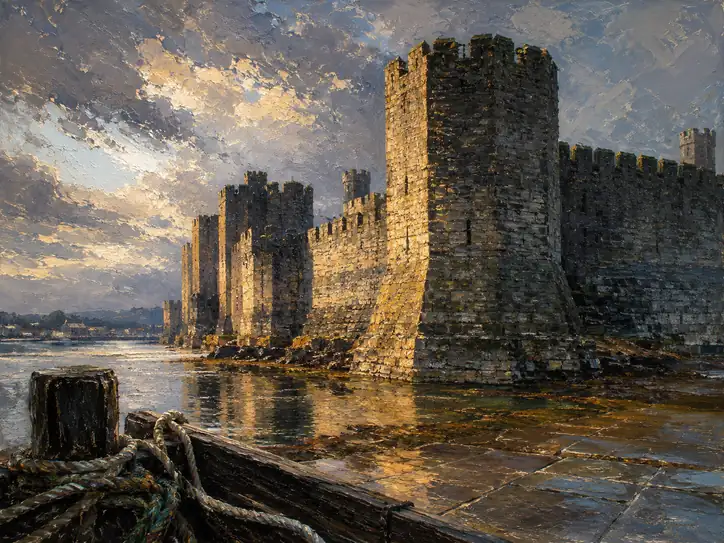 The Unyielding Sentinel of the Golden Hour
 Majestic Castle Ruins at Sunset
 Sublime Light of the Coastal Arch