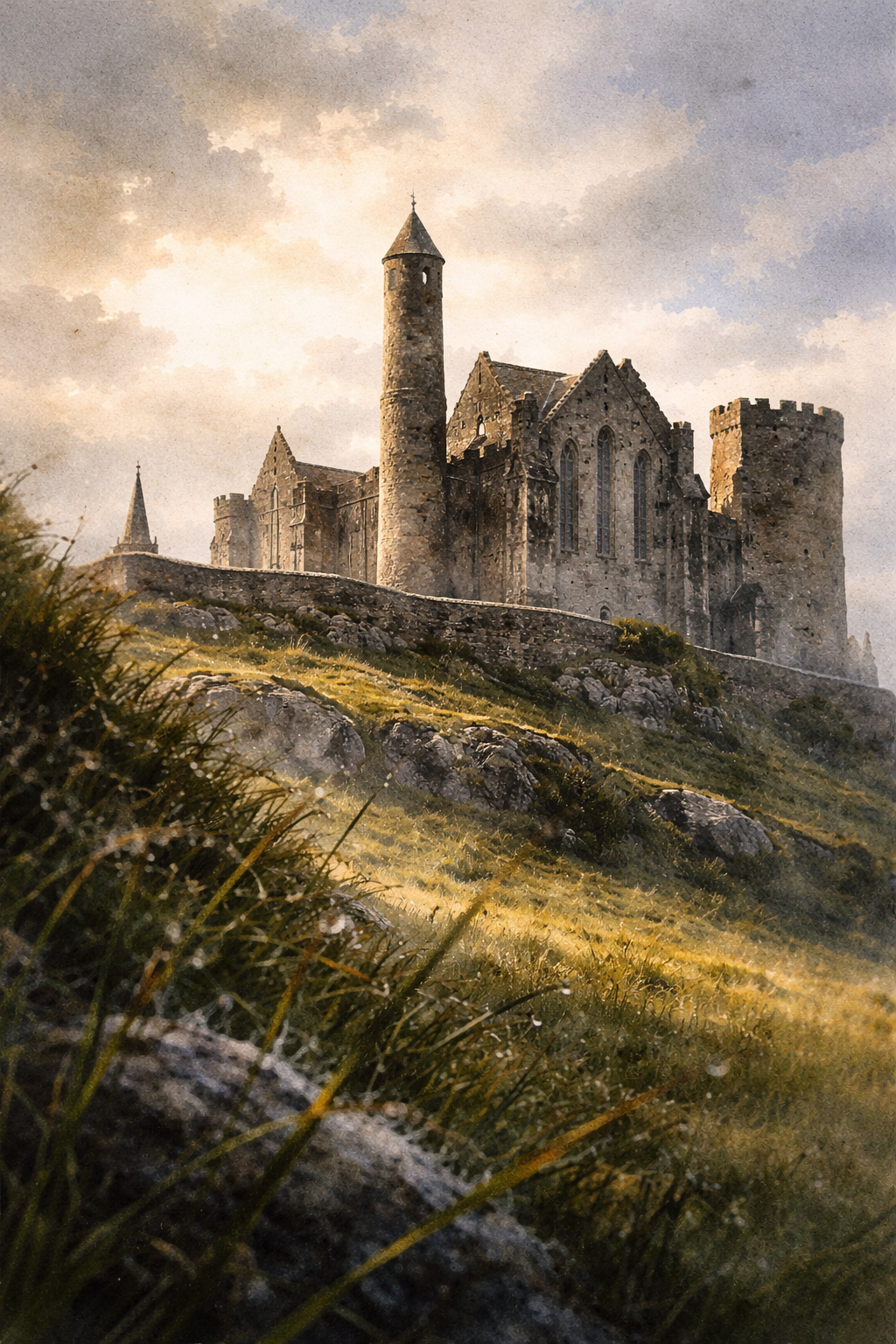
Silence of the Forgotten Abbey
Critique
1. Introduction This landscape painting depicts a grand stone structure perched atop a rugged hill, reminiscent of medieval Irish architecture. The composition emphasizes the historical weight of the edifice against a dramatic sky. This work invites viewers to consider the relationship between man-made permanence and the natural world. 2. Description In the middle ground, a massive stone complex featuring a prominent round tower and gabled roofs dominates the scene. The architecture is characterized by weathered grey stone and pointed lancet windows. A low stone wall encircles the structure, while the foreground consists of a steep, grassy slope littered with rocks catching the light. The background reveals a soft sky where pale sunlight filters through. 3. Analysis The artist employs a low-angle perspective, which enhances the monumental presence of the stone buildings. A palette dominated by earth tones—ochre, moss green, and slate grey—creates a sense of aged beauty. The lighting washes the hillside in a warm glow while casting subtle shadows that define the architectural volumes. Texture is achieved through visible brushstrokes, suggesting a tactile quality. 4. Interpretation and Evaluation This piece successfully evokes a sense of timelessness and historical solemnity. The contrast between the solid stone and the ethereal light in the sky serves as a metaphor for endurance. Technically, the rendering of light on the grass and the atmospheric perspective demonstrate a high level of skill. The subtle details add depth to the overall narrative of the landscape. 5. Conclusion Ultimately, the painting offers a serene yet powerful meditation on history and nature. The balance between architectural rendering and atmospheric effects results in a harmonious composition. This work leaves a lasting impression of the quiet dignity found in ancient ruins.
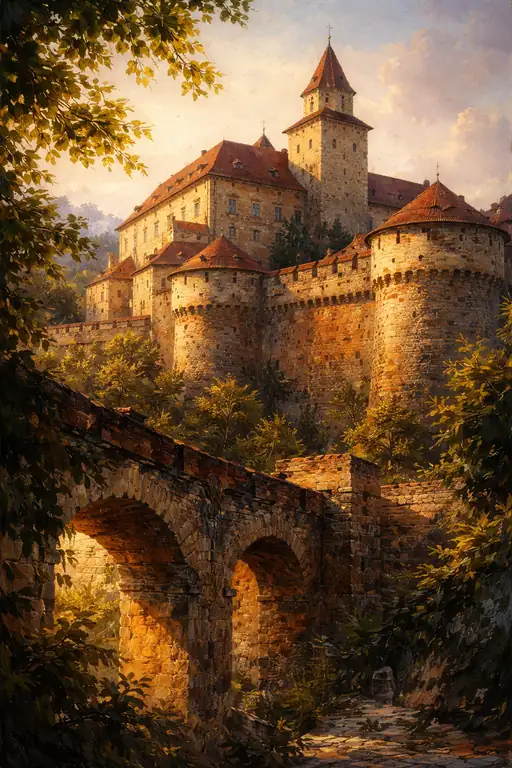 Golden Hour at the Ancient Fortress
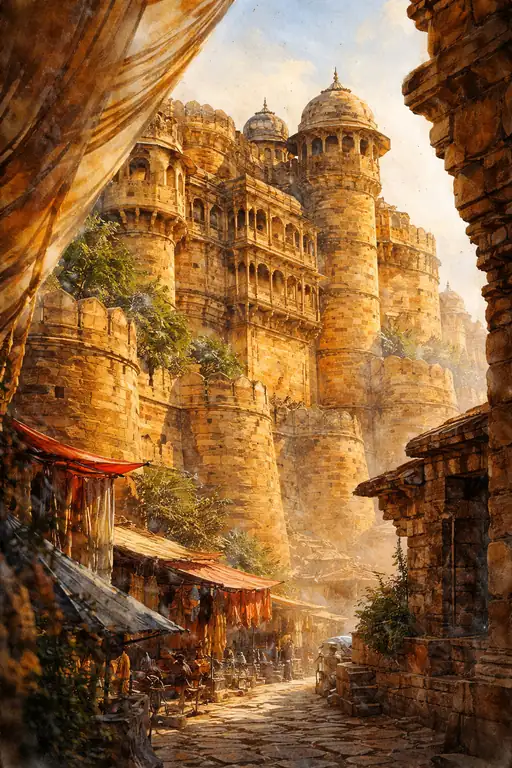 Golden Majesty of the Citadel Market
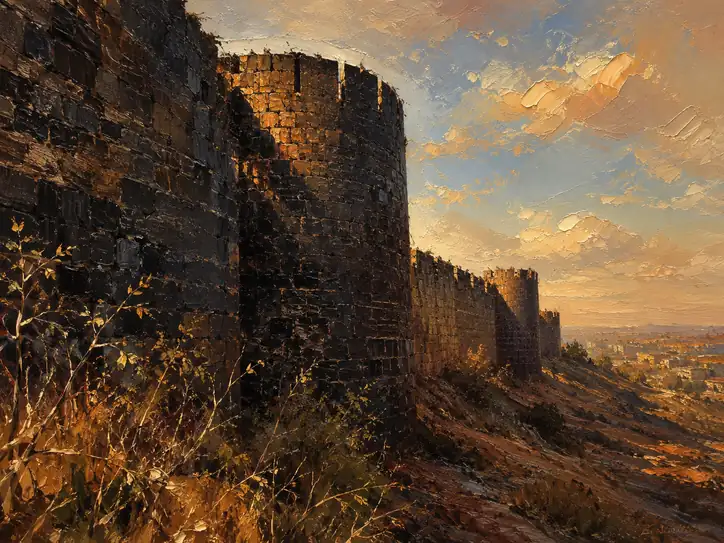 The Last Vigil at Dusk
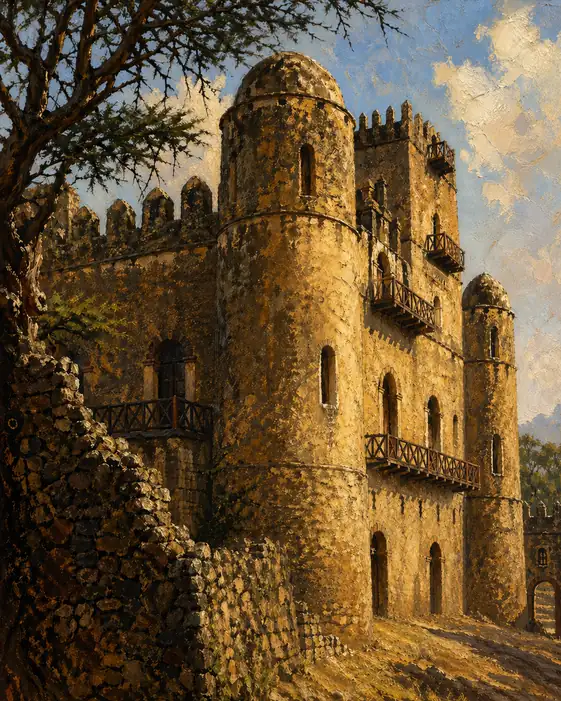 The Golden Echo of Ancient Kings
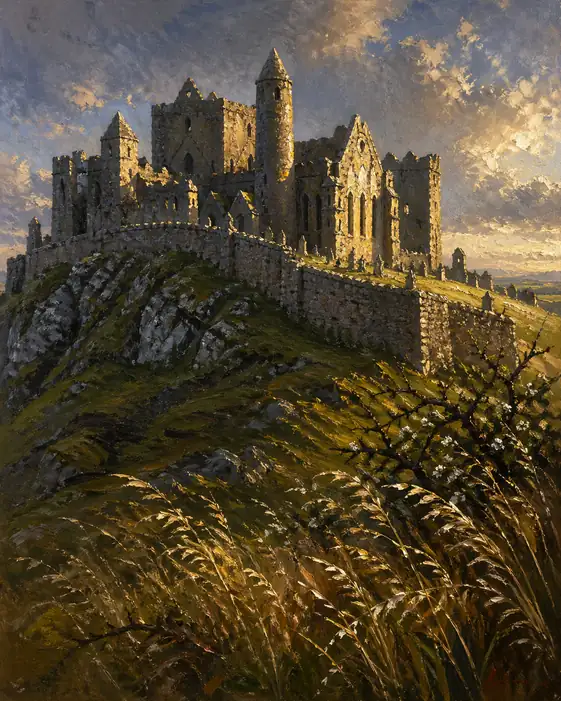 Majestic Castle Ruins at Sunset
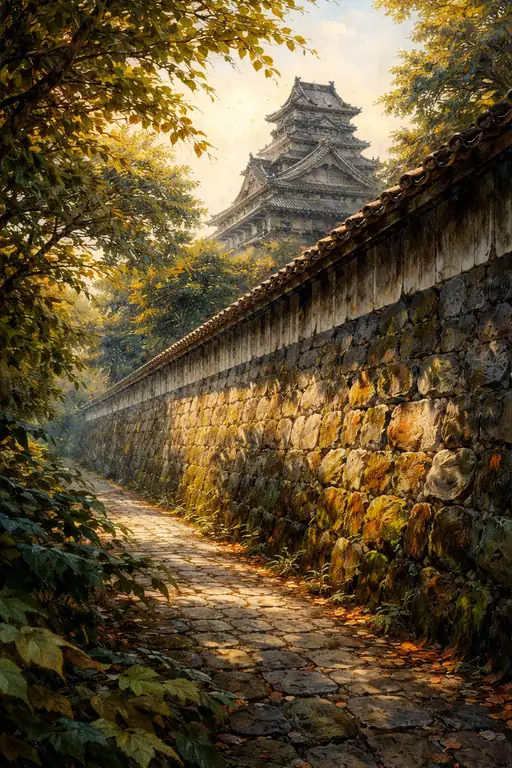 Golden Pathway to the Keep
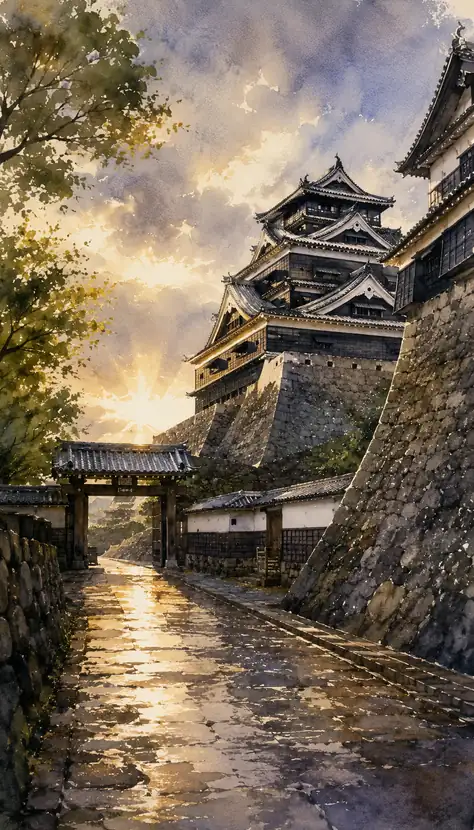 The Castle Climbs Out of the Rain
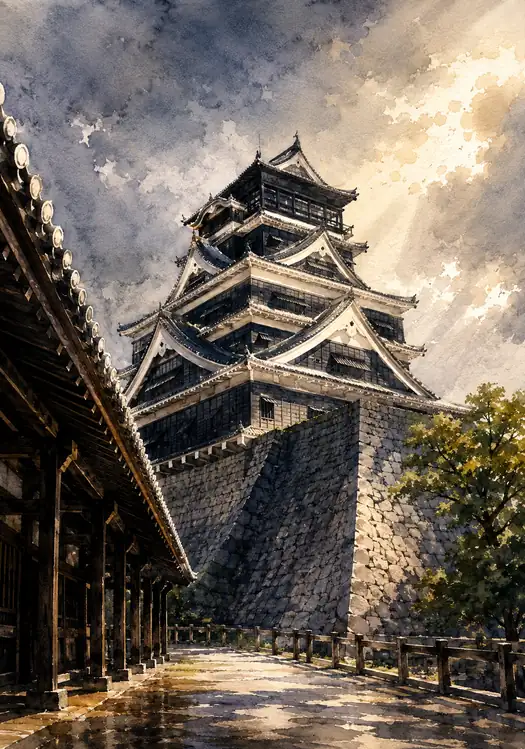 The Castle Gathers the Storm
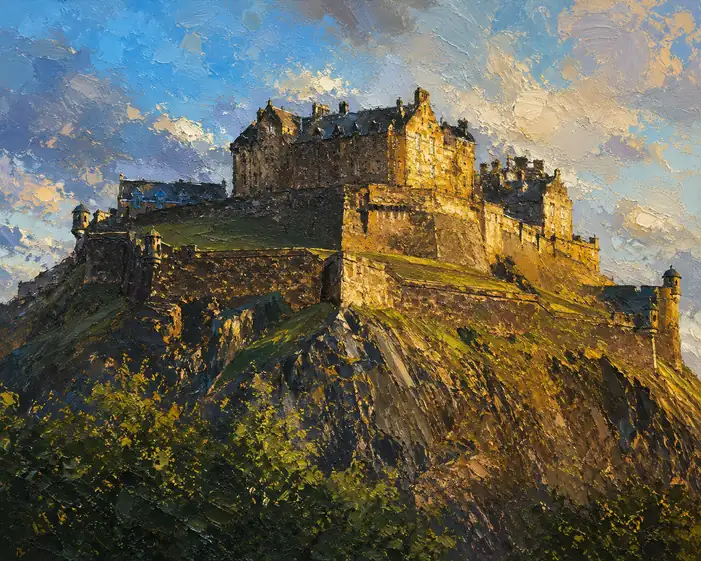 Crowned by Light
 Guardian of the Golden Solitude
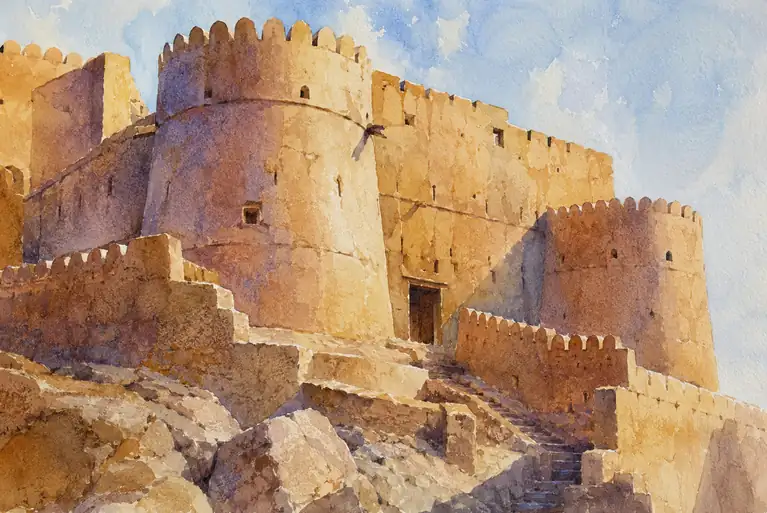 Fortress of Whispering Lights
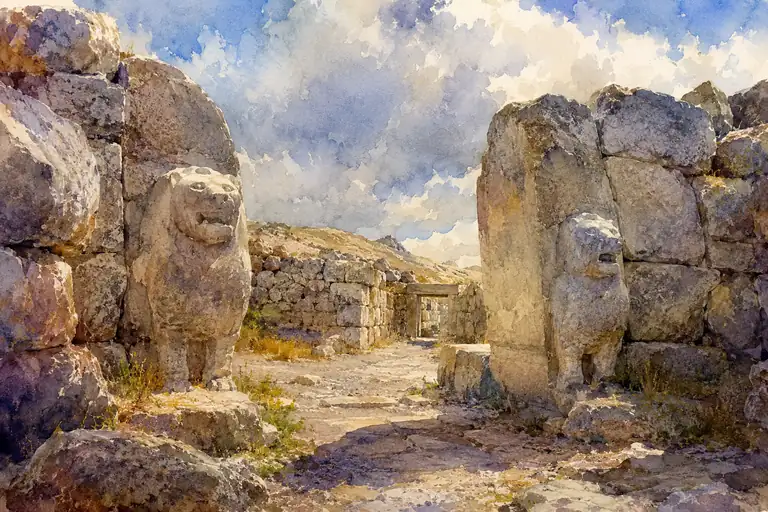 The Silent Roar of Hattusa