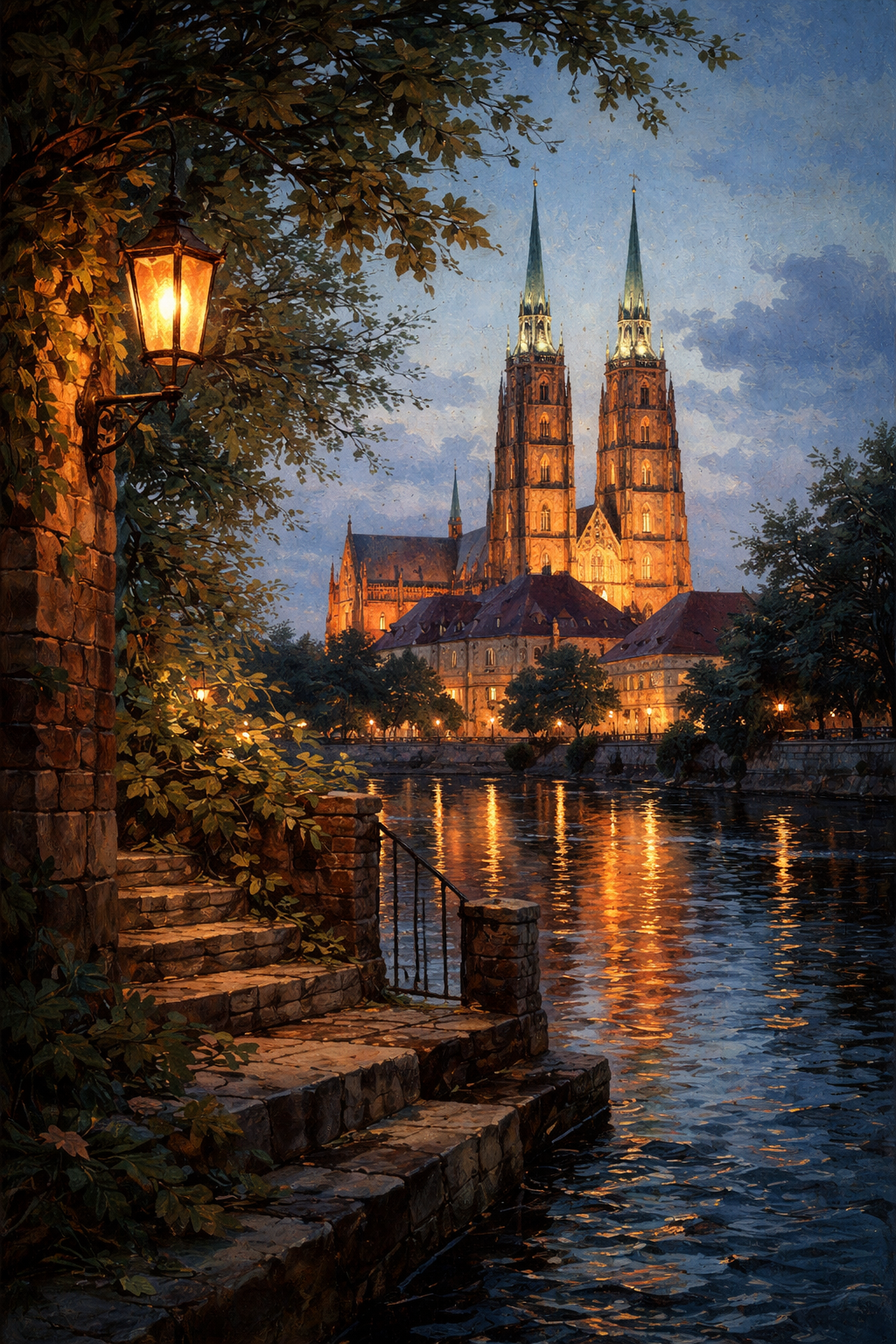
Riverside Reverie at Dusk
Critique
1. Introduction This vertical oil painting presents a serene European cityscape at twilight, focusing on a majestic cathedral situated along a riverbank. The composition is carefully structured to guide the viewer's gaze from the immediate foreground to the illuminated architectural landmarks in the distance. The overall atmosphere is one of stillness and historical resonance, capturing a specific moment when artificial lights begin to define the urban landscape against the fading natural light. 2. Description The foreground features a detailed stone staircase leading down to the water's edge, accompanied by a glowing lantern mounted on a rustic stone wall. Beyond the river, which reflects the warm glow of the city, stands a complex of traditional buildings and a prominent cathedral with two slender, illuminated spires. The sky is filled with soft, textured clouds in shades of blue and gray, while the foliage framing the scene adds a touch of natural vitality to the stone-heavy environment. 3. Analysis The artist effectively employs a strong color contrast between the cool, desaturated blues of the evening sky and the vibrant, warm oranges of the cathedral and street lamps. The use of light is the primary organizing principle, with the reflections on the water surface creating rhythmic patterns that break up the dark expanse of the river. Linear perspective is established through the receding line of the buildings and the relative scale of the foreground steps compared to the distant spires. 4. Interpretation and Evaluation This work demonstrates a sophisticated understanding of atmospheric perspective and the interplay between light and shadow. The technical execution of the stone textures and the shimmering reflections reveals a high level of craftsmanship and attention to detail. By isolating the cathedral as a beacon of warmth within the cool evening, the painting evokes a sense of protection and permanence. The balanced composition ensures that neither the rustic foreground nor the grand architecture overwhelms the other. 5. Conclusion In summary, the painting successfully captures the quiet transition from day to night in a historically rich setting. The meticulous lighting and structured composition transform a standard architectural view into a contemplative study of urban beauty. Upon closer inspection, the strength of the work lies in its ability to harmonize the rugged texture of the foreground stone with the ethereal glow of the distant city.
Same Subcategory
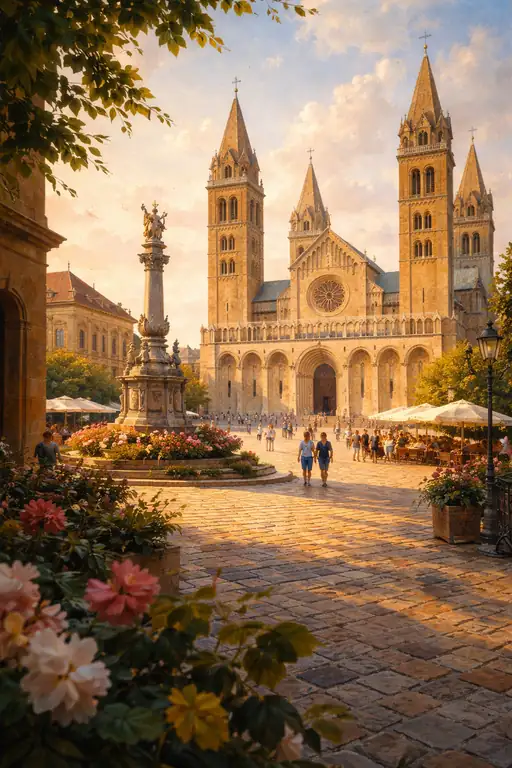 Golden Silence of the Square
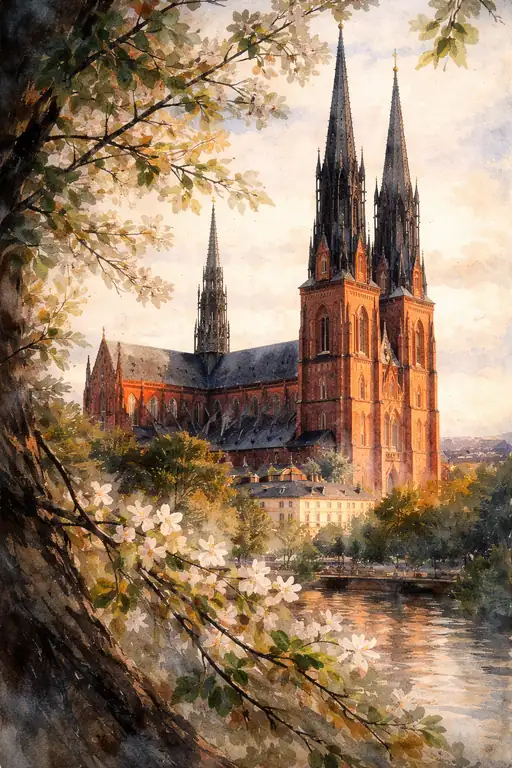 Spring's Gentle Embrace of the Ancient Stone
Similar Artworks
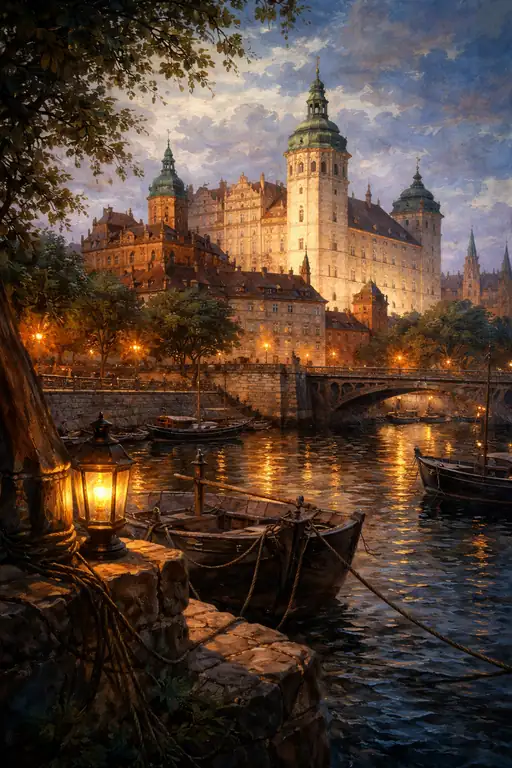 Lanterns and the Silent Quay
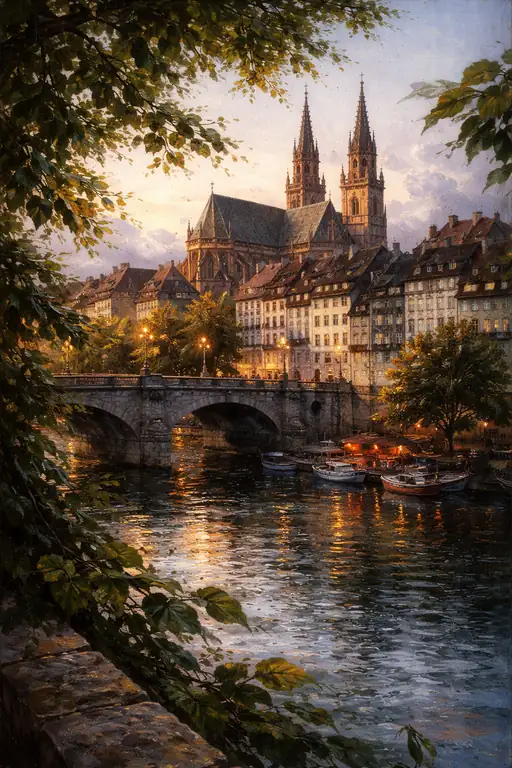 Cathedral's Lullaby in the Dusk
 Reflections of the Sacred Spires
 The Cathedral's Evening Prayer
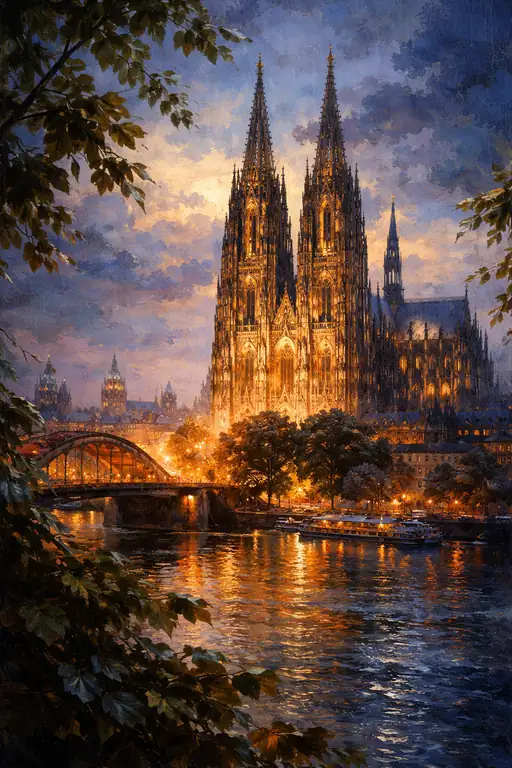 The Radiant Spires at Twilight
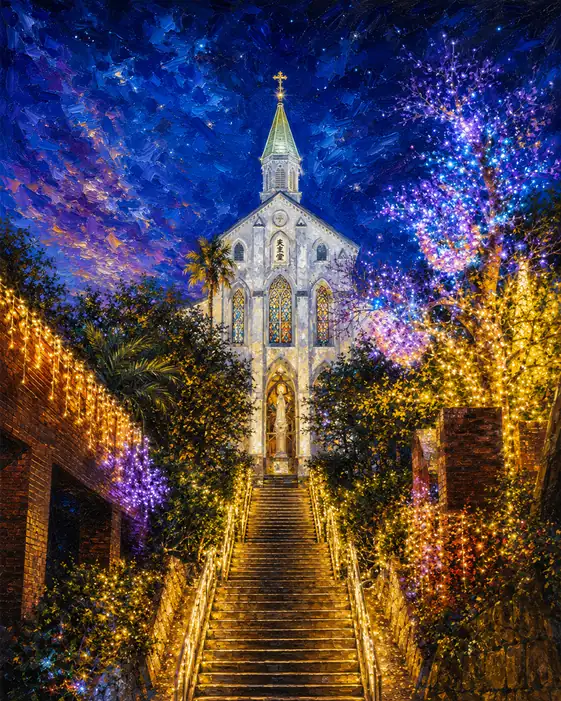 Sanctuary Beneath the Violet Flare
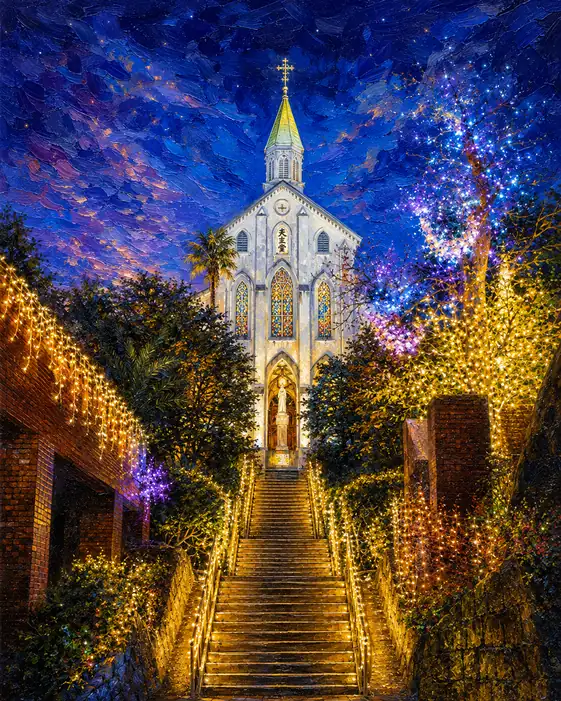 Hymn of the Illuminated Ascent
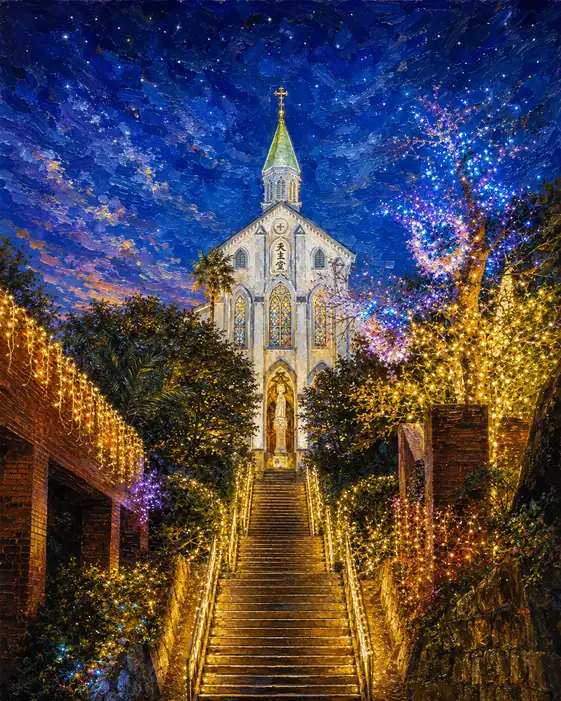 Cathedral of the Starry Vigil
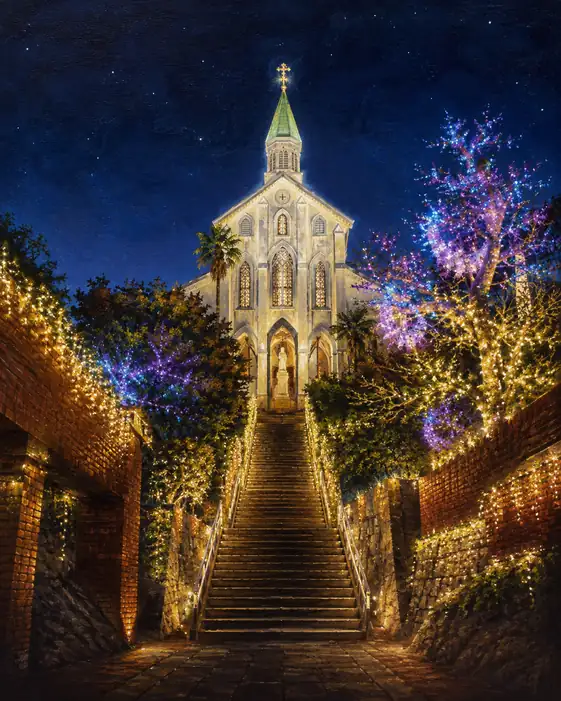 Ascent Toward the Sacred Light
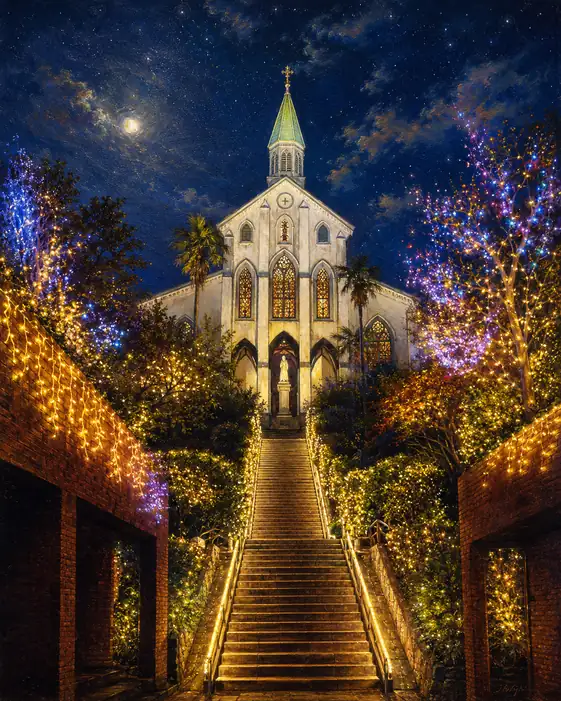 Stairway to the Starry Sanctuary