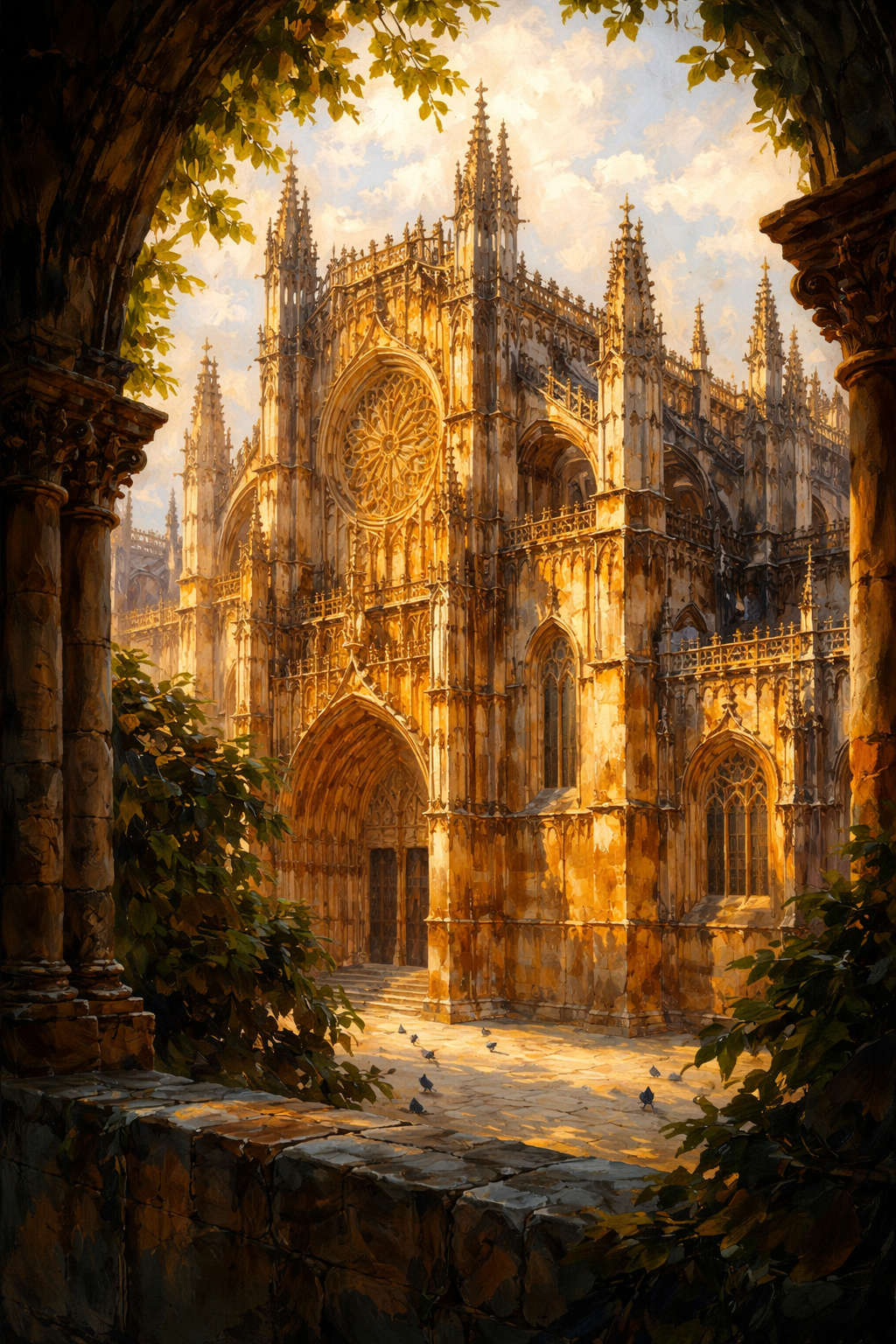
Gothic Illumination
Critique
1. Introduction This painting captures the majestic facade of a Gothic cathedral, bathed in the brilliant, warm glow of an afternoon sun. The work emphasizes the intricate architectural details and soaring verticality of the structure, framing it within a shaded stone archway that provides a sense of depth and perspective. This scene evokes a feeling of timelessness and spiritual grandeur, inviting the viewer to marvel at the intersection of human craftsmanship and natural light. It remains a powerful tribute to historical architecture and its enduring cultural significance. 2. Description The ornate cathedral dominates the composition, featuring multiple spires, heavy buttresses, and a prominent rose window above a recessed arched portal. The building’s stone surface is rendered in a wide range of golden and amber tones, with high-contrast shadows emphasizing the complexity of its carvings. In the foreground, the dark silhouette of a stone balcony and overgrown greenery frame the view, creating a layered visual field. A handful of pigeons are scattered across the sun-drenched courtyard, their small forms providing a sense of scale to the massive edifice. 3. Analysis The artist utilizes a strong vertical composition and a framing technique that draws the eye directly toward the central cathedral. A powerful light source from the upper left creates deep shadows within the building's recesses, highlighting the three-dimensional form of its Gothic elements. The color palette is remarkably warm, centered on a monochromatic-like scheme of yellows, oranges, and earthy browns, with cool shadows providing necessary balance. The brushwork is highly detailed, particularly in the rendering of the repetitive stone traceries and the delicate play of light on the courtyard tiles. 4. Interpretation and Evaluation The painting evokes a sense of sacred awe, with the golden illumination suggesting a divine or heavenly presence. The contrast between the dark, intimate foreground and the bright, expansive cathedral highlights the transition from the mundane to the extraordinary. Technically, the handling of direct sunlight on complex surfaces is masterfully executed, creating a dynamic surface that feels alive with reflected light. The inclusion of the pigeons adds a touch of realism and movement, preventing the scene from feeling like a static architectural study and instead making it a lived-in space. 5. Conclusion This architectural study is an evocative celebration of Gothic beauty and the transformative power of light. It effectively combines meticulous structural rendering with a sensitive understanding of atmospheric effects to create a compelling and immersive image. Upon closer inspection, the subtle variations in the stone’s texture and the rhythmic patterns of the spires reveal a deep appreciation for the art of masonry. Ultimately, the work stands as a vibrant and inviting portrayal of a cultural landmark that resonates with both historical weight and aesthetic brilliance.
 Ascent to the Sacred
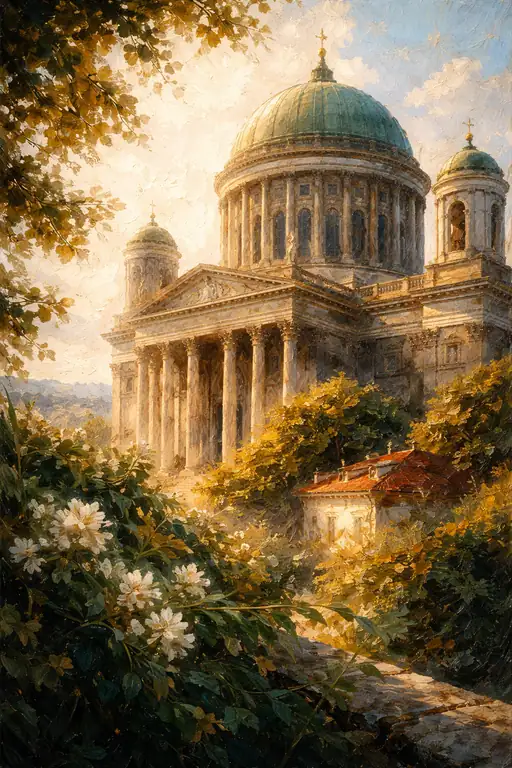 A Harmonious Encounter with Grandeur
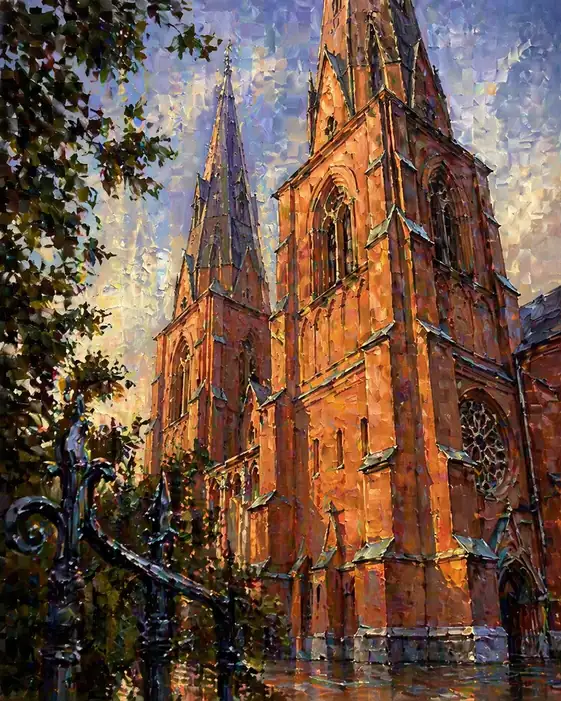 Dancing Bricks at Twilight
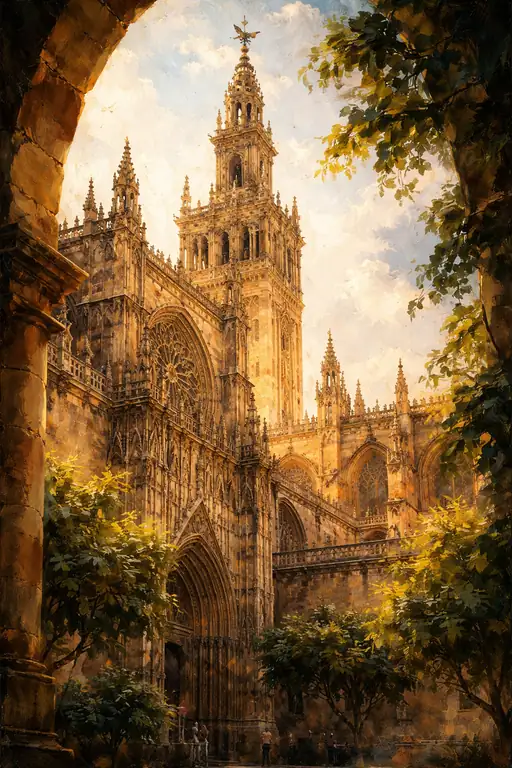 Golden Light Upon the Gothic Soul
 Whispers of the Golden Facade
 A Sanctuary in the Sunset Glow
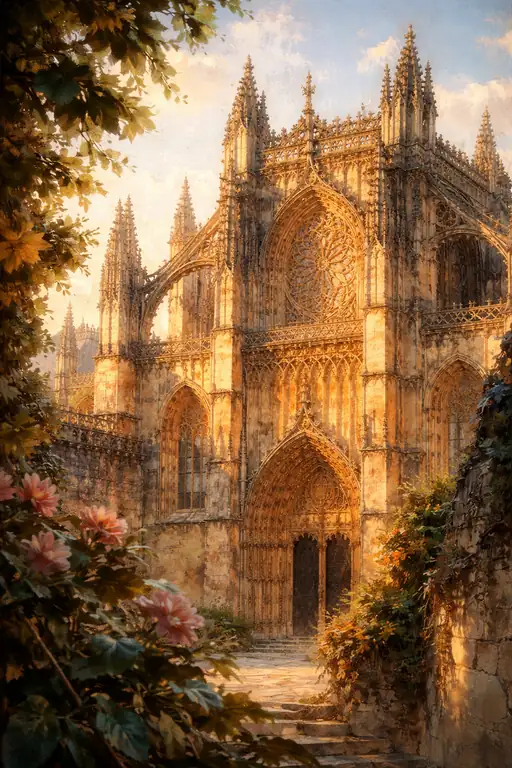 Grace in the Golden Hour
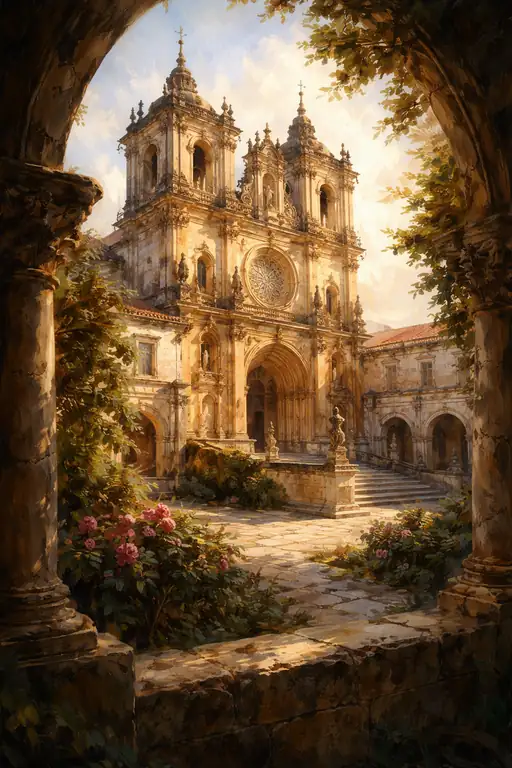 The Floral Portal to the Sacred Realm
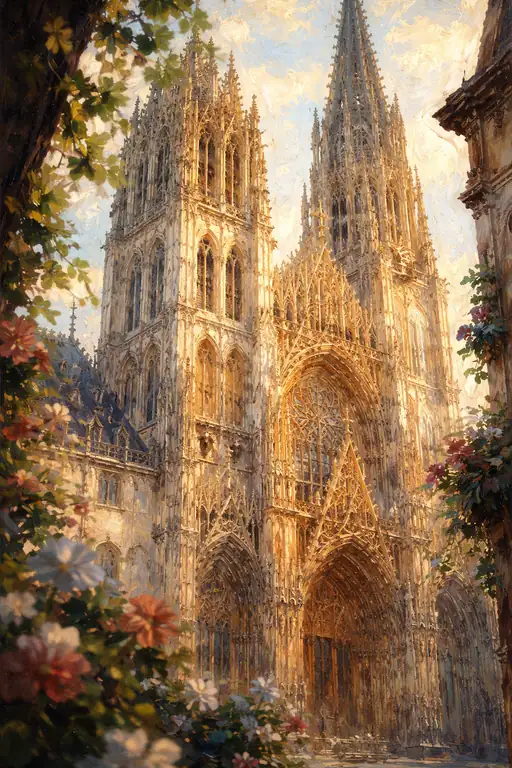 Luminous Splendor of the Gothic Facade
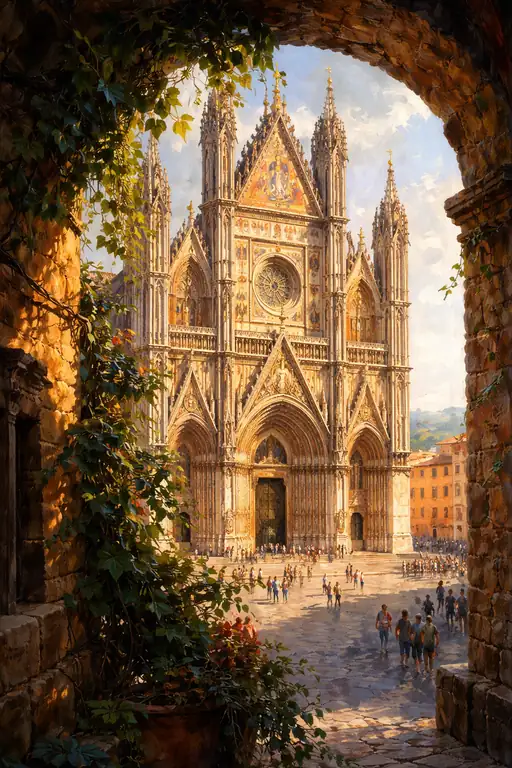 Golden Facade of Orvieto
 Spires of Silent Prayers