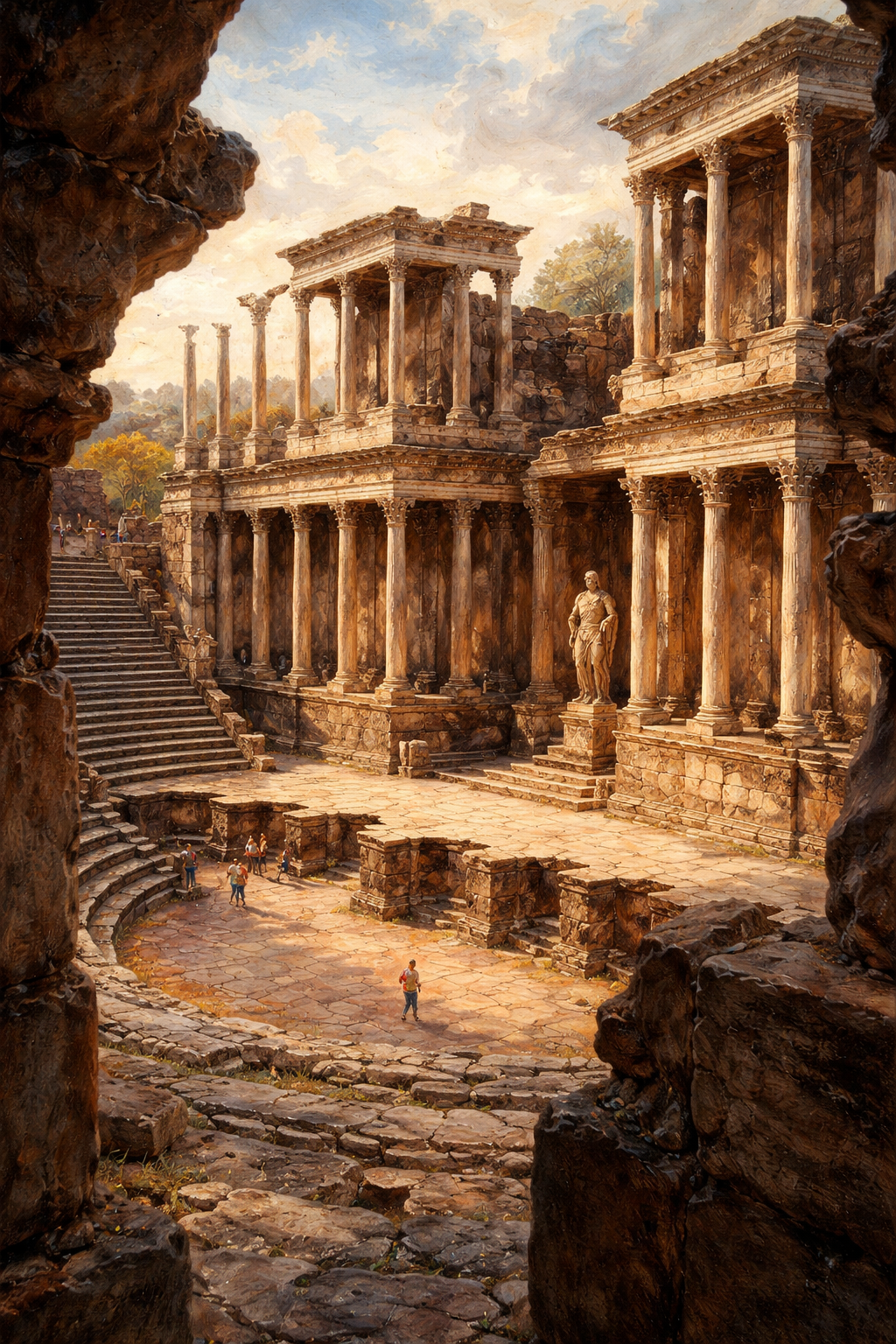
Echoes of Antiquity
Critique
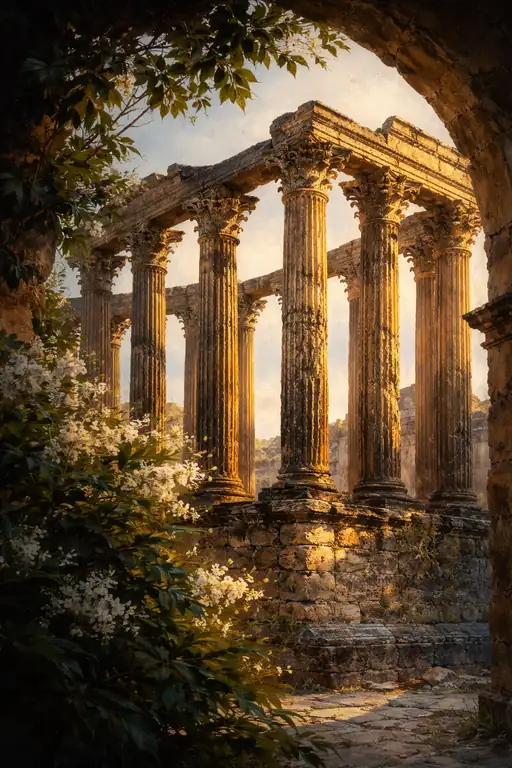
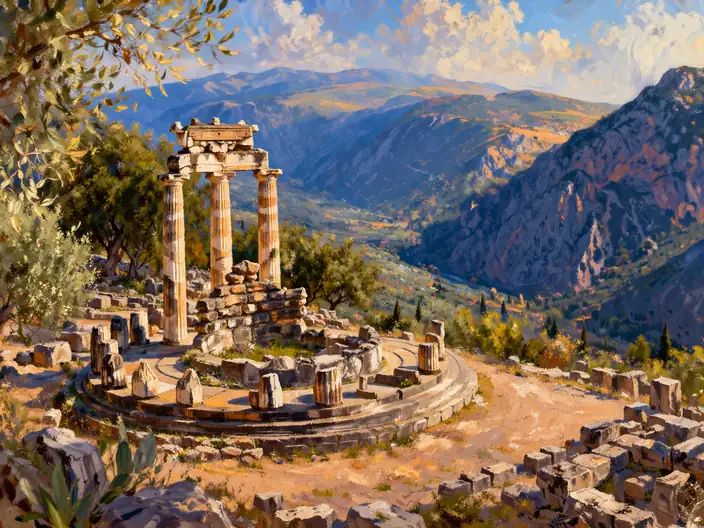
1. Introduction This painting presents an exceptionally grand and dramatic view of the Roman Theatre in Mérida, Spain, captured from a high-angle perspective within the weathered stone remains of the ancient seating area. The composition masterfully emphasizes the monumental scale and rhythmic harmony of the classical architectural backdrop (scaenae frons). Bathed in the warm, direct light of a clear afternoon, the scene radiates a sense of historical resilience and the enduring cultural significance of one of the world's most influential theatrical landmarks. 2. Description The foreground is uniquely framed by the massive, textured blocks of dark stone masonry on both the left and right, creating a tactile portal into the expansive theater. Through this natural boundary, the central focus is the semi-circular orchestra and the grand scaenae frons, featuring its iconic two-tiered arrangement of slender Corinthian columns and a central statue in a niche. On the left, a long, steep stone staircase rises, while several tiny tourist figures move across the sun-drenched stone floor under a pale, hazy sky. 3. Analysis The artist employs a sophisticated approach to light and shadow, using a color palette dominated by warm ochres and sun-washed tans that effectively convey the aged texture of the stone. The composition utilize the strong vertical repetition of the columns and the curved lines of the seating to create a profound sense of balanced, three-dimensional volume and monumental depth. The expressive, slightly textured brushwork effectively suggests the movement of life and the play of light on the diverse surfaces, from the rough masonry to the delicate sculptural details. 4. Interpretation and Evaluation This work can be interpreted as a celebration of the enduring vitality and strength of classical European heritage. The theater, standing as a lone monument to Roman engineering and communal focus amidst the modern-day presence of the town's tourists, suggests a deep connection between the distant past and the present. Technical proficiency is evident in the rendering of the complex lighting—specifically the way the sunlight appears to hit the stone floor with physical weight—demonstrating a high level of mastery in both architectural form and atmospheric mood. 5. Conclusion In summary, the painting successfully captures the radiant and serene spirit of a historic urban sanctuary with remarkable clarity and emotional strength. The artist has achieved a perfect balance between the rugged, human-scale foreground elements and the grand, monumental architecture of the main subject. The initial impression of a sun-soaked historical monument is reinforced by the consistent handling of light and perspective, resulting in a composition that feels both expansive and intimately significant.
Same Subcategory
 Echoes of the Past in Golden Light
 Golden Glory of the Forgotten
Similar Artworks
 A Glimpse Through Time's Window
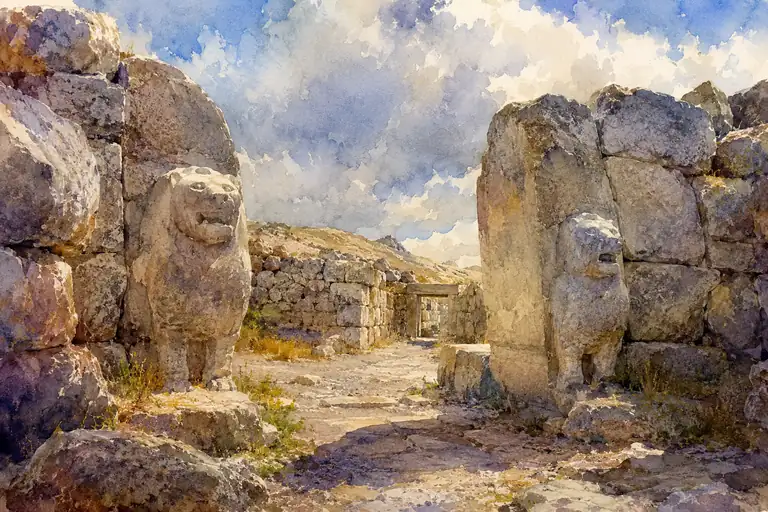 The Silent Roar of Hattusa
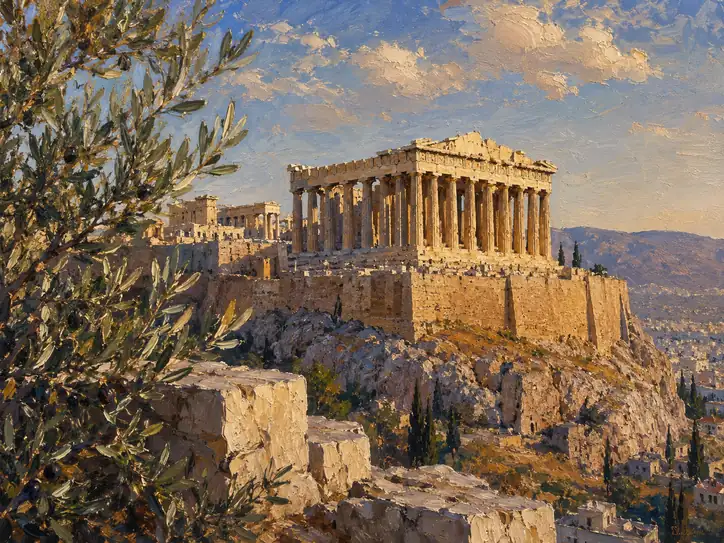 The Spirit of Ancient Gold
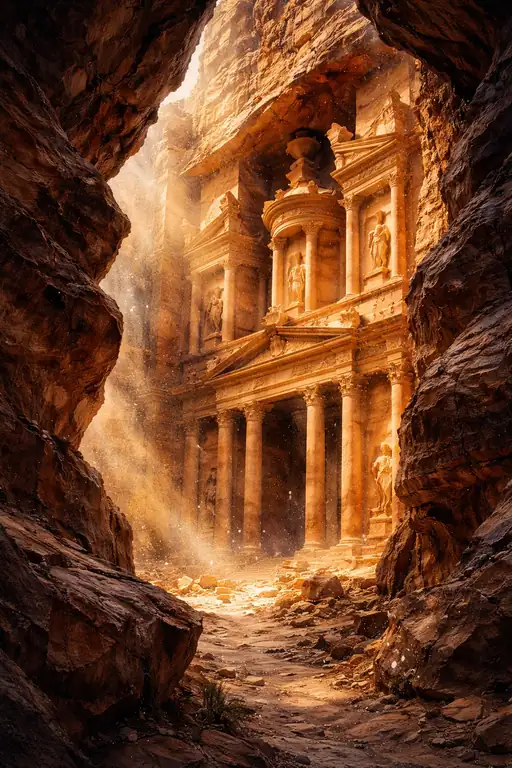 Sanctuary of the Sunlit Sands
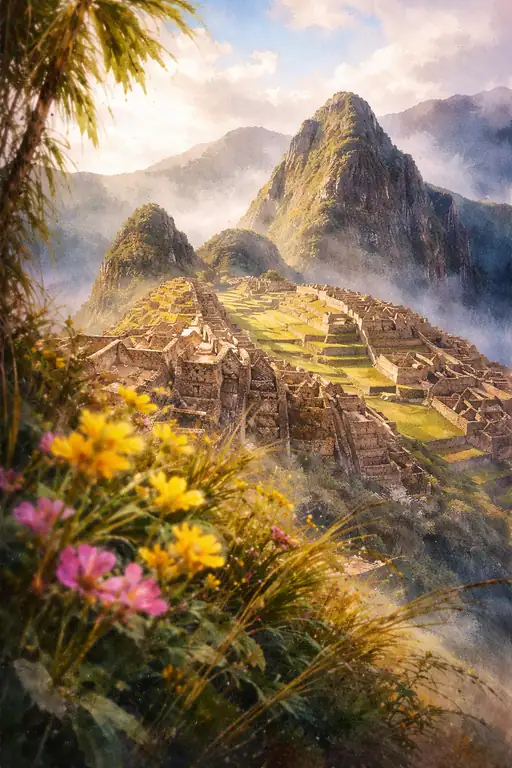 Crown of the Highland Whispers
 Sentinel of the Eternal Ocean
 Sand and Sky's Eternal Embrace
 Echoes of Antiquity
 Colossal Majesty Bathed in Golden Hues
 Timeless Pillars of the Mountain Sanctuary