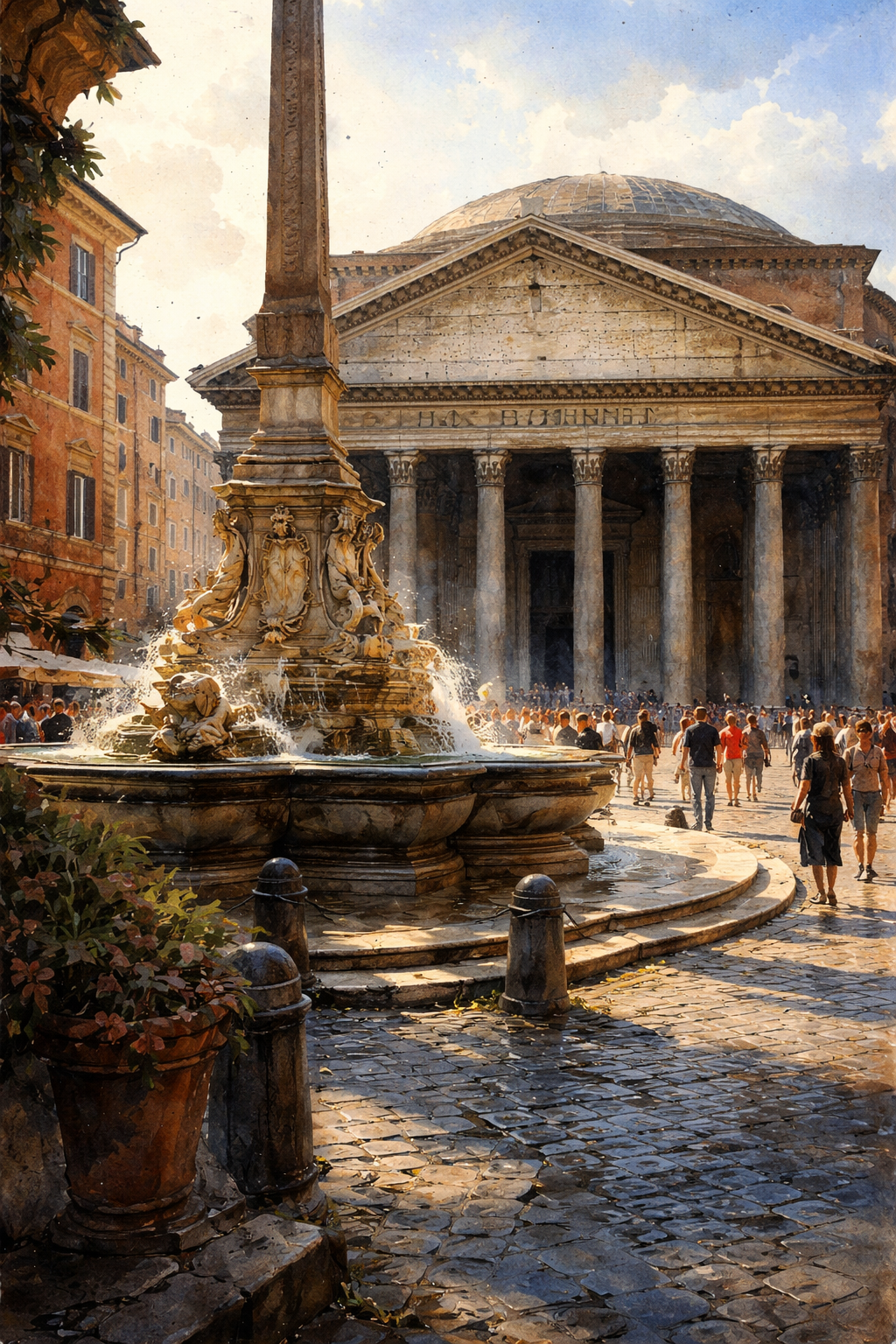
The Eternal Pantheon
Critique
1. Introduction This painting presents an exceptionally radiant and bustling view of the Pantheon in Rome, captured from a dynamic, low-angle perspective across the sun-drenched Piazza della Rotonda. The composition masterfully emphasizes the monumental scale of the ancient Roman temple and the vibrant energy of the modern crowds gathered before its massive portico. Bathed in the bright, clear light of a Mediterranean afternoon, the scene radiates a sense of historical continuity and the enduring cultural significance of one of the world's most influential architectural wonders. 2. Description The foreground is occupied by a large terracotta planter filled with green foliage on the left, alongside the tiered stone basin of the Fontana del Pantheon. Water sprays beautifully from the fountain, its surface shimmering on the wet, detailed cobblestones that reflect the direct sunlight. In the midground, the busy square is populated by numerous tiny figures, while the background is dominated by the immense, shadowed facade of the Pantheon, characterized by its rhythmic Corinthian columns and the vast, weathered dome rising above. 3. Analysis The artist employs a sophisticated approach to light and shadow, using a color palette of warm ochres, burnt oranges, and cool grays to effectively convey the aged texture of the stone. The composition utilize the strong verticality of the fountain's central obelisk and the church's columns to create a sense of balanced, three-dimensional volume and monumental depth. The fluid, atmospheric brushwork effectively suggests the movement of water and the lively activity of the city, demonstrating a high level of mastery in atmospheric mood. 4. Interpretation and Evaluation This work can be interpreted as a celebration of the enduring vitality and strength of classical European heritage. The Pantheon, standing as a lone monument to Roman engineering and religious focus amidst the shifting movements of global tourism, suggests a deep connection between the distant past and the present day. Technical proficiency is evident in the rendering of the complex textures—specifically the way the sun appears to highlight the weathered carvings on the temple's pediment—demonstrating a sophisticated understanding of both physical form and urban atmosphere. 5. Conclusion In summary, the painting successfully captures the radiant and exhilarating spirit of a historic urban sanctuary with remarkable clarity and mood. The artist has achieved a perfect balance between the detailed, human-scale foreground elements and the grand, monumental architecture of the main subject. The initial impression of a sun-soaked historical monument is reinforced by the sophisticated handling of light and perspective, resulting in a composition that feels both expansive and intimately significant.
Same Subcategory
 Azure Dreams in the Old Village
Similar Artworks
 Sun-Drenched Echoes of Eternity
 Radiant Continuity at the Pantheon
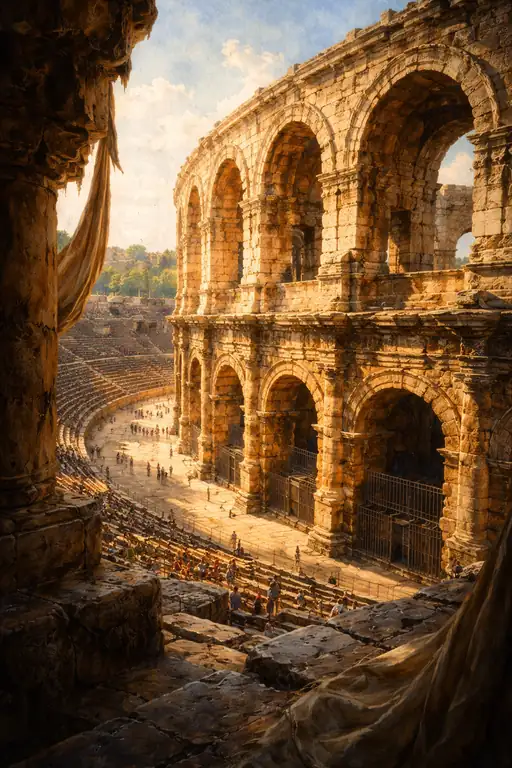 A Glimpse Through Time's Window
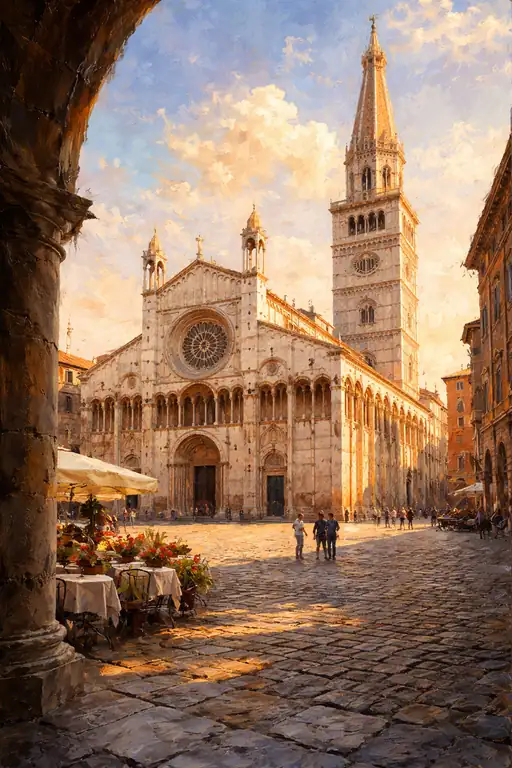 Bathed in Gold: A Moment in the Piazza
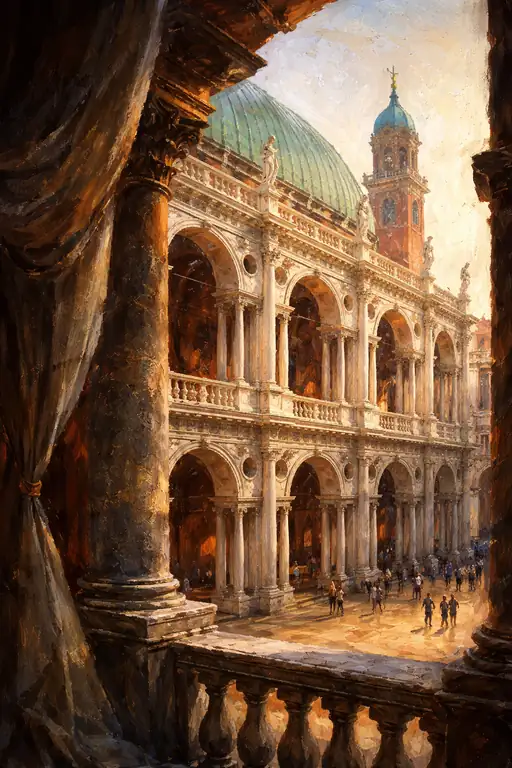 Palladio's Grandeur
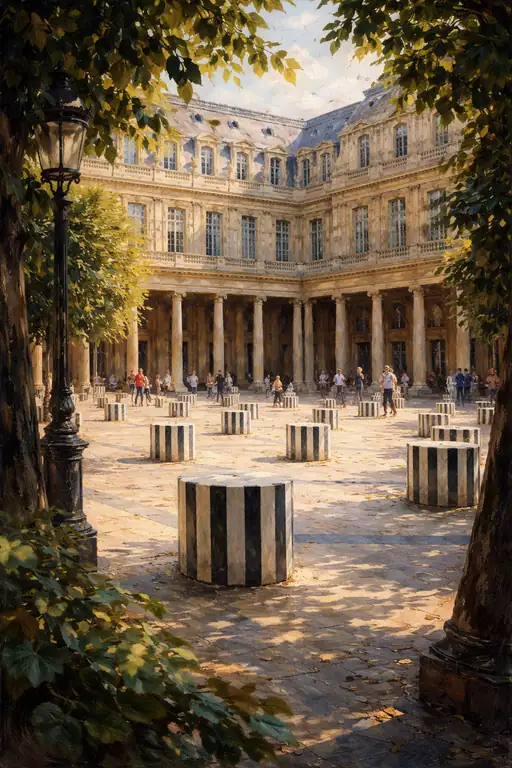 Symphony of Stripes and Shadows
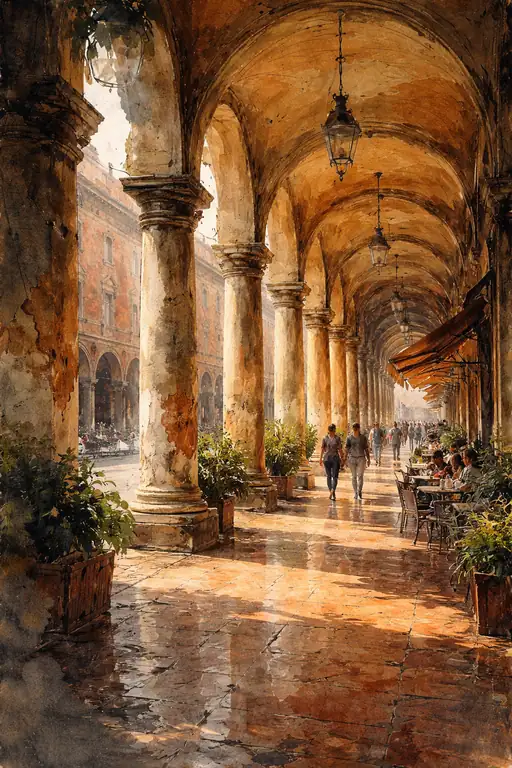 The Golden Corridor: A Symphony of Stone and Light
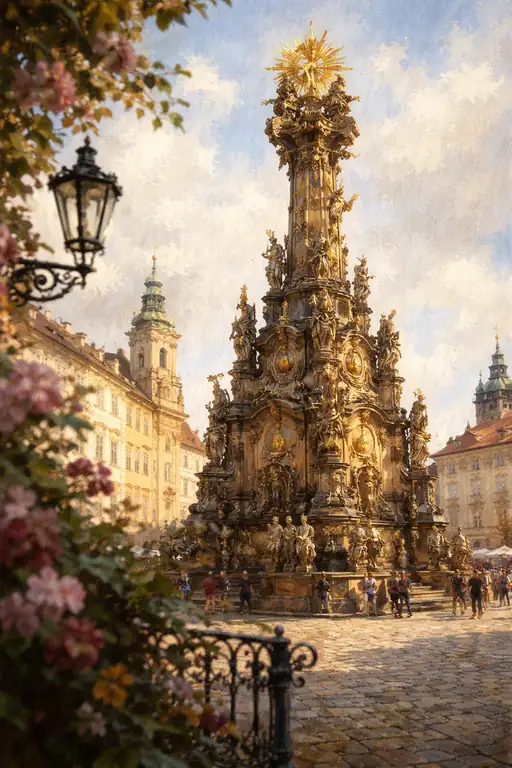 Baroque Whispers in the Sunlit Square
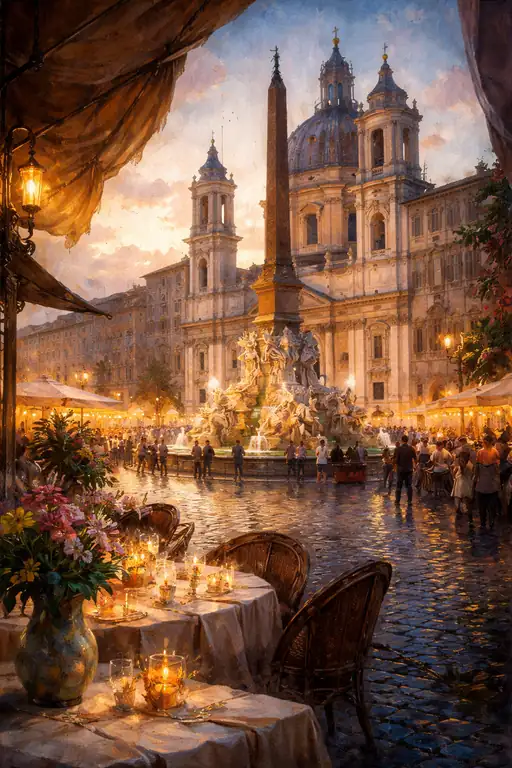 Twilight at Navona
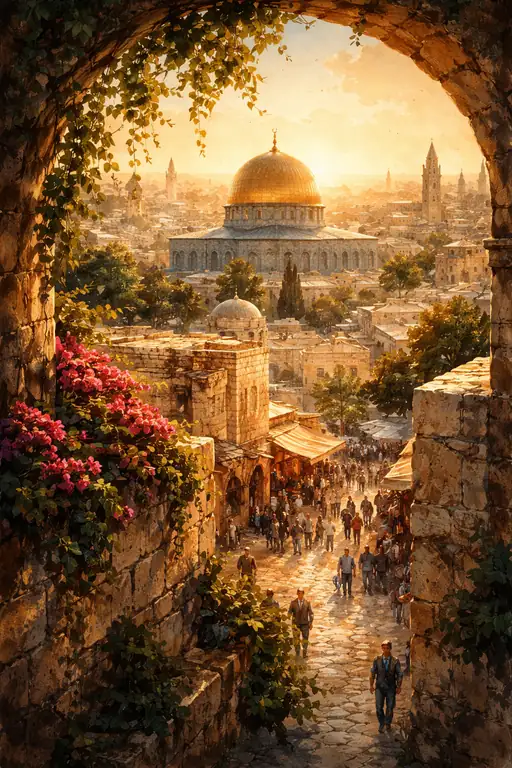 Gateway to the Golden Hour