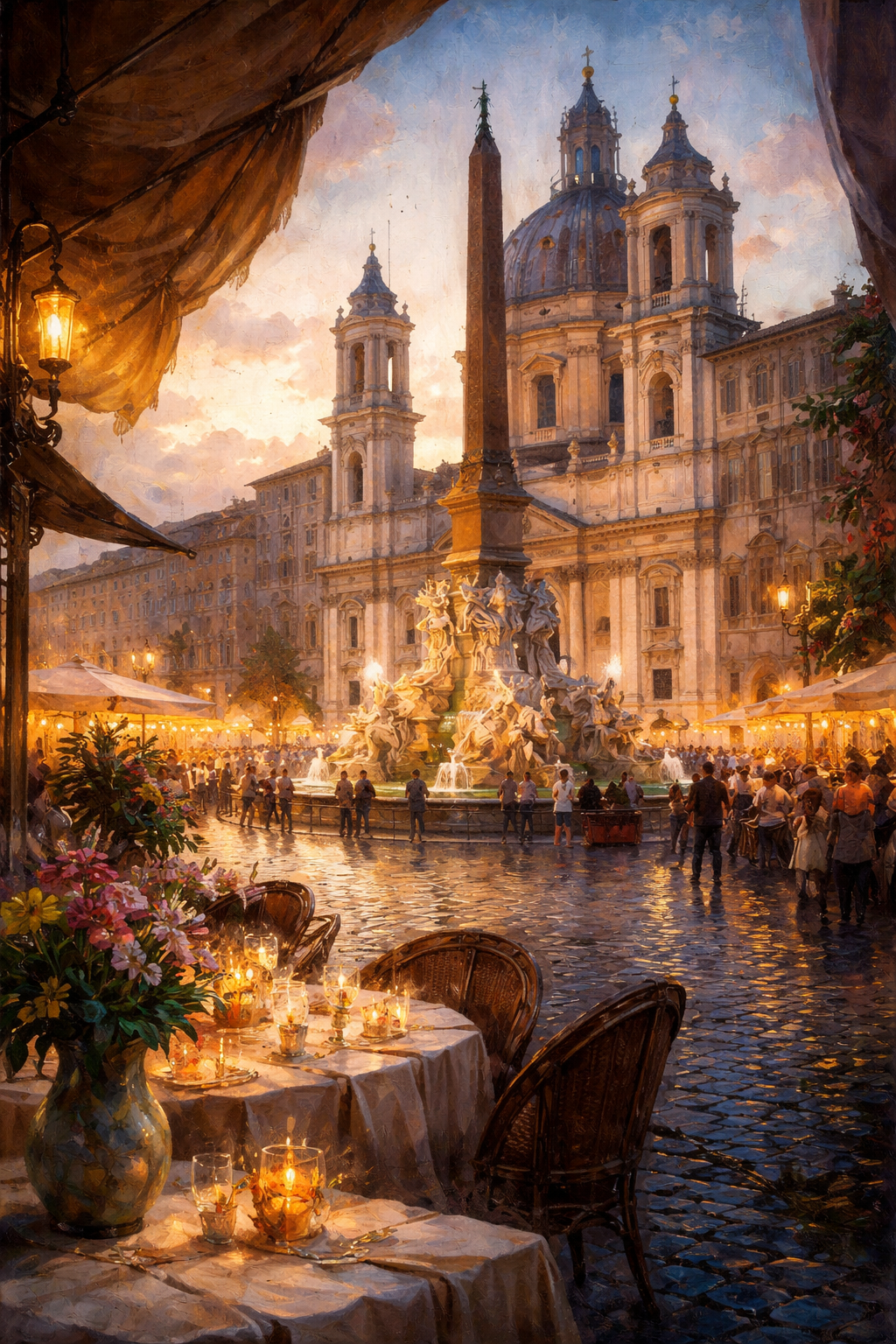
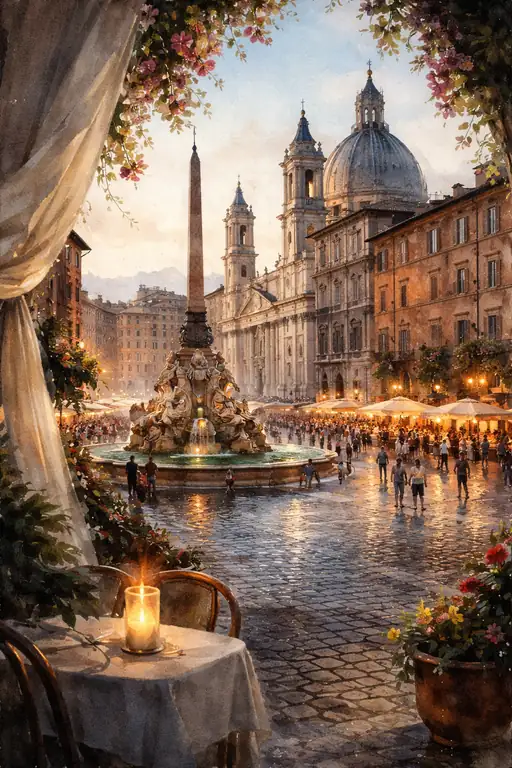
Twilight at Navona
Critique
1. Introduction This painting presents an exceptionally radiant and romantic evening view of the Piazza Navona in Rome, captured from the intimate perspective of a candle-lit outdoor cafe table. The composition masterfully emphasizes the dialogue between the delicate, human-scale foreground and the monumental Baroque grandeur of the surrounding monuments. Bathed in the warm, golden glow of the city's night lights, the scene radiates a sense of historical continuity and the enduring charm of the "Eternal City" at its most magical hour. 2. Description The foreground is occupied by a neatly set cafe table covered in a light-colored cloth, featuring a vase of colorful flowers and glowing candles that cast a soft light on nearby wicker chairs. From this vantage point, the viewer looks across the bustling, wet cobblestones of the square, which shimmer with golden reflections. In the midground, Bernini's majestic Fontana dei Quattro Fiumi with its central obelisk stands as a focal point, while the background is dominated by the twin towers and central dome of Borromini's Sant'Agnese in Agone, set against a dramatic twilight sky filled with orange and purple clouds. 3. Analysis The artist employs a sophisticated approach to light and shadow, using a color palette dominated by warm ambers and rich golds that contrast beautifully with the cool, dusky blues of the evening sky. The composition utilize the strong verticality of the obelisk and the church's towers to create a sense of balanced, three-dimensional volume and monumental depth. The expressive, slightly textured brushwork effectively conveys the diverse textures, from the smooth wicker of the chairs and the liquid reflections on the pavement to the intricate stone carvings of the fountain and facade. 4. Interpretation and Evaluation This work can be interpreted as a celebration of the "lived experience" of historic urban design. The decision to frame the view from a cafe table suggests a deep connection between the grand history of Roman architecture and the simple, daily pleasures of communal life. Technical proficiency is evident in the rendering of the complex lighting—specifically the way the candlelight in the foreground appears to harmonize with the professional illumination of the monuments—demonstrating a high level of mastery in both architectural form and atmospheric mood. 5. Conclusion In summary, the painting successfully captures the radiant and exhilarating spirit of a classic Italian square with remarkable clarity and emotional weight. The artist has achieved a perfect balance between the detailed, intimate foreground elements and the grand, rhythmic architecture of the main subject. The initial impression of a sun-soaked historical sanctuary is reinforced by the sophisticated handling of light and perspective, resulting in a composition that feels both expansive and intimately inviting.
Same Subcategory
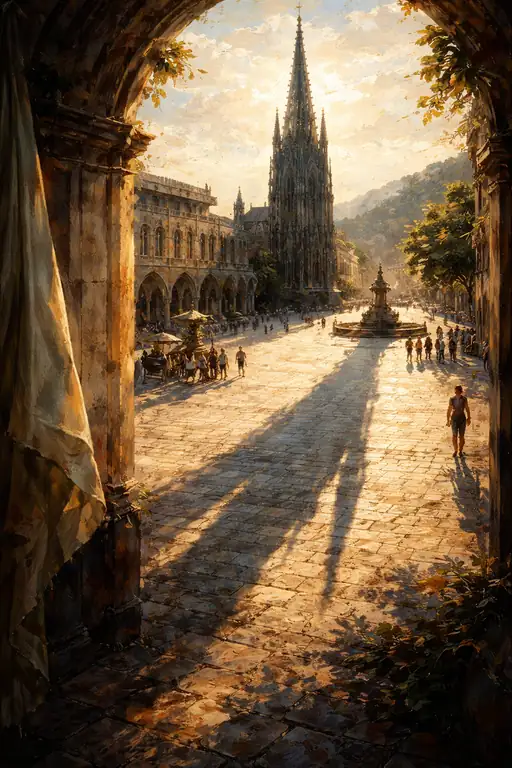 Twilight at the Gothic Spire
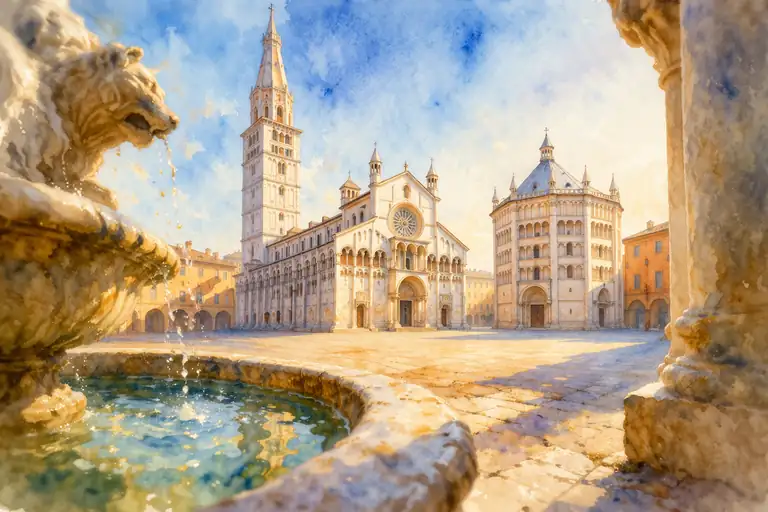 Serenity at Piazza del Duomo
Similar Artworks
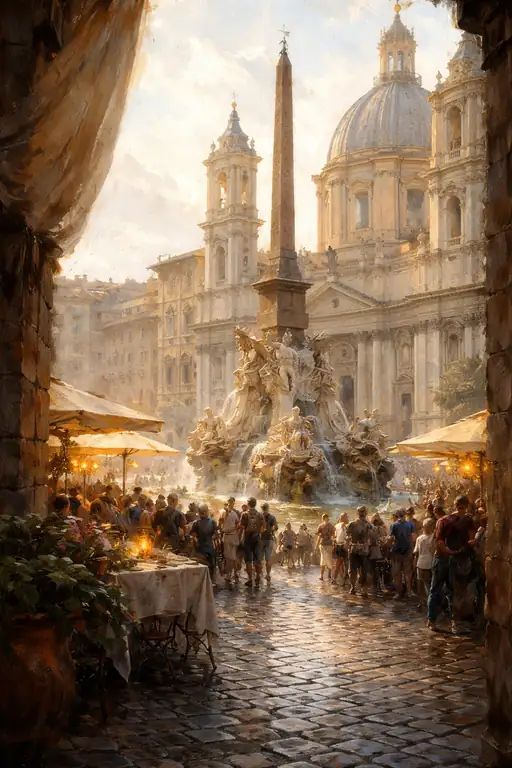 Echoes of Eternity in a Sunlit Square
 Twilight Gatherings by the Fountain
 Baroque Whispers in the Sunlit Square
 The Golden Hour Pathway
 Radiant Continuity at the Pantheon
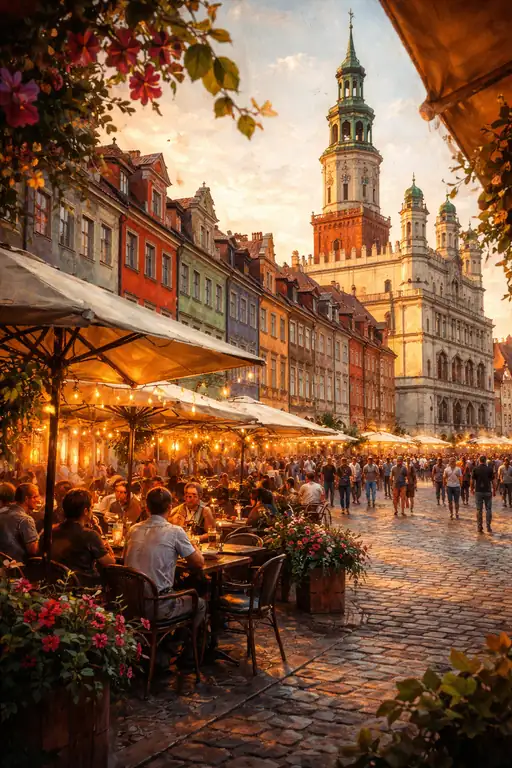 Echoes of the Golden Plaza
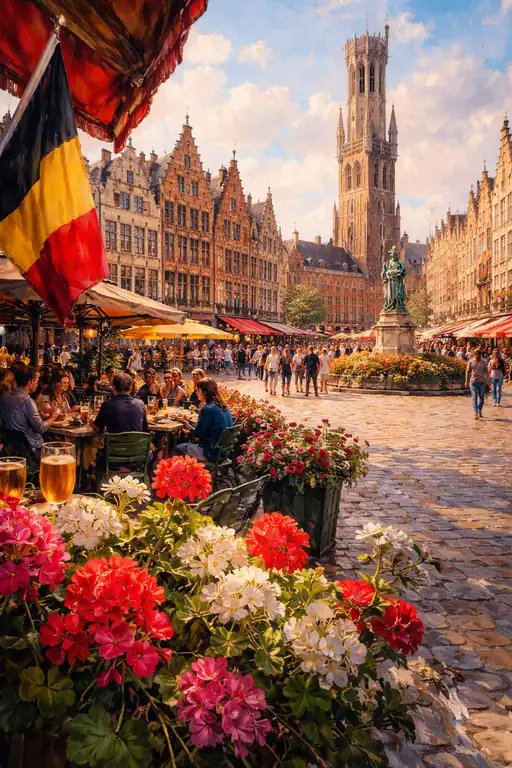 Echoes of the Ancient Arch
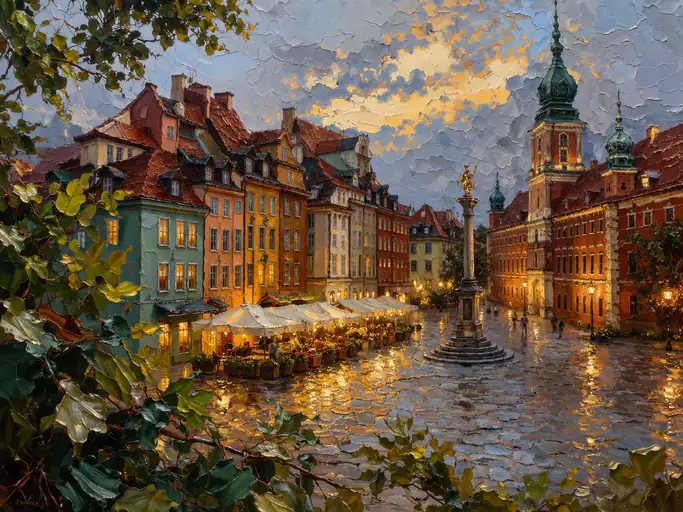 Twilight Reflections: The City's Golden Glow
 Nostalgia in the Rainwater
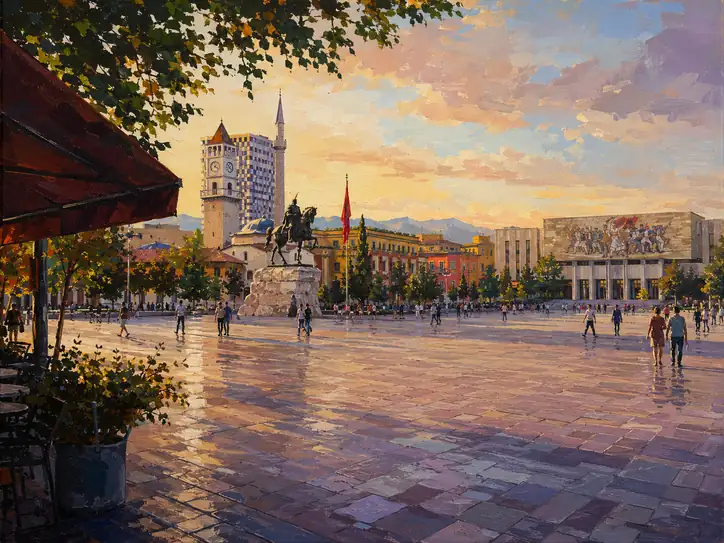 Twilight Symphony in the Square