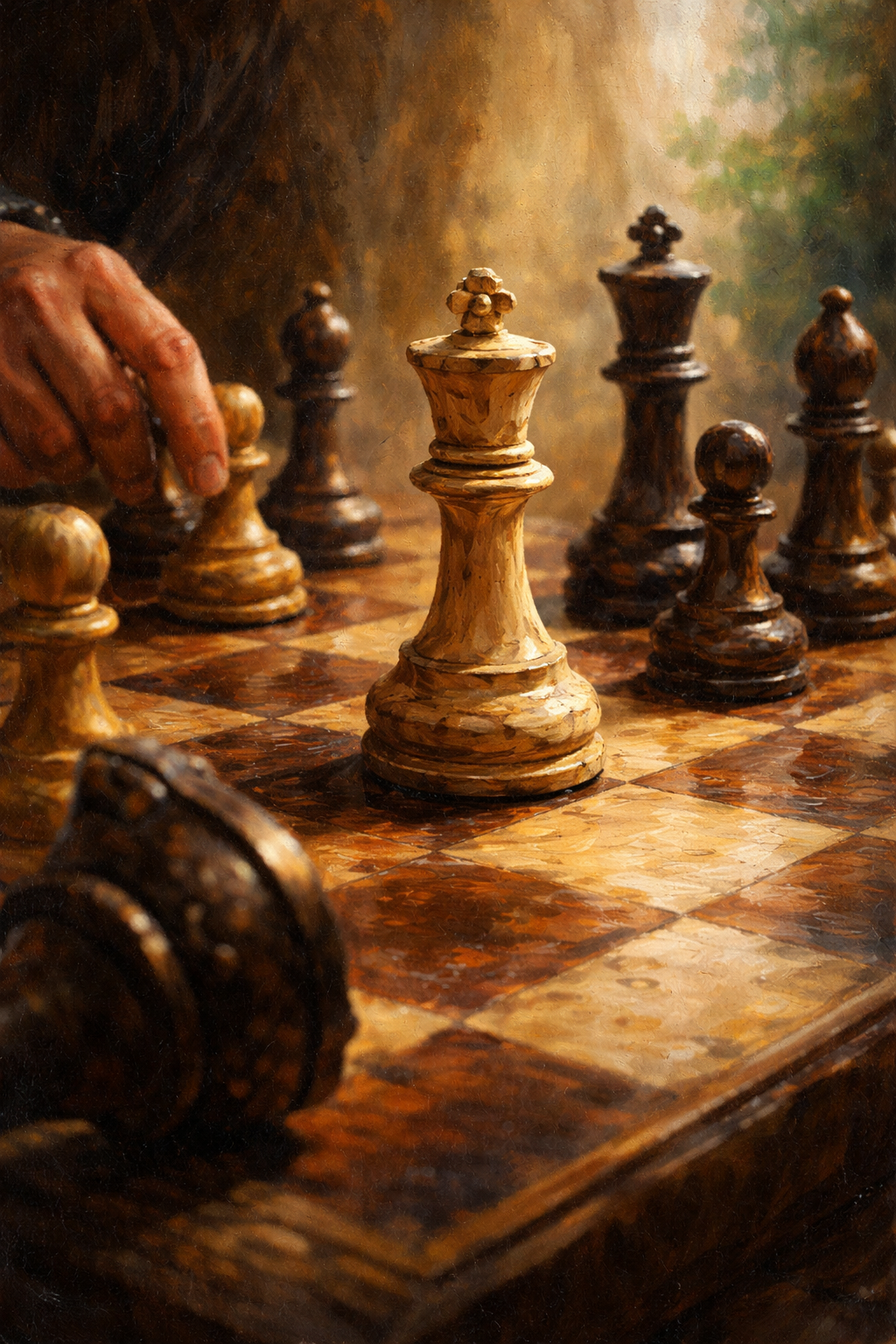
Silence Before the Storm
Critique
1. Introduction This painting presents an evocative close-up of a chess game in progress, capturing a moment of intense strategic deliberation. The composition centers on a majestic light-colored king, which stands as a silent protagonist amidst a field of various other game pieces. Through a rich, painterly style, the work explores the tactile qualities of the board and pieces while highlighting the intellectual weight of the game. The artist effectively uses lighting and perspective to draw the viewer into the psychological space of the competitors. 2. Description The primary focus of the work is the light king, rendered with detailed brushstrokes that suggest a polished wooden or ivory surface. To its left, several smaller pieces remain in blurred periphery, while on the right, dark chess pieces provide a sharp tonal contrast. In the upper left corner, a hand reaches toward the board, its fingers poised in mid-motion, indicating an imminent move. The background is composed of warm, golden hues that blend into a soft, textured haze, punctuated by hints of green foliage in the distance. 3. Analysis The artist employs a shallow depth of field, keeping the central king in sharp focus while allowing the foreground and background elements to soften. This technique emphasizes the importance of the piece and its position on the grid. Light flows from the upper right, casting long, dramatic shadows across the checkered surface of the board, which enhances the three-dimensional quality of the pieces. The brushwork is vigorous and expressive, visible in the textures of the wood grain and the skin of the hand, adding a layer of physical energy to the scene. 4. Interpretation and Evaluation This work can be interpreted as a metaphor for the complexities of decision-making and the gravity of leadership. The king, though isolated, remains the central pivot upon which the entire outcome of the game depends. The technical execution is masterly, particularly in the way the artist captures the reflective sheen of the chess pieces and the warm atmosphere of the room. The inclusion of the reaching hand introduces a narrative element of human agency, transforming a static arrangement of objects into a dynamic story of intellectual struggle and consequence. 5. Conclusion The initial impression of a simple still life is superseded by a sense of the dramatic tension inherent in the game. The use of warm tones and sharp focus creates a compelling and immersive visual experience that speaks to the enduring appeal of traditional strategy. Ultimately, the painting succeeds in elevating a familiar pastime into a profound meditation on the nature of conflict and the beauty of focused concentration.
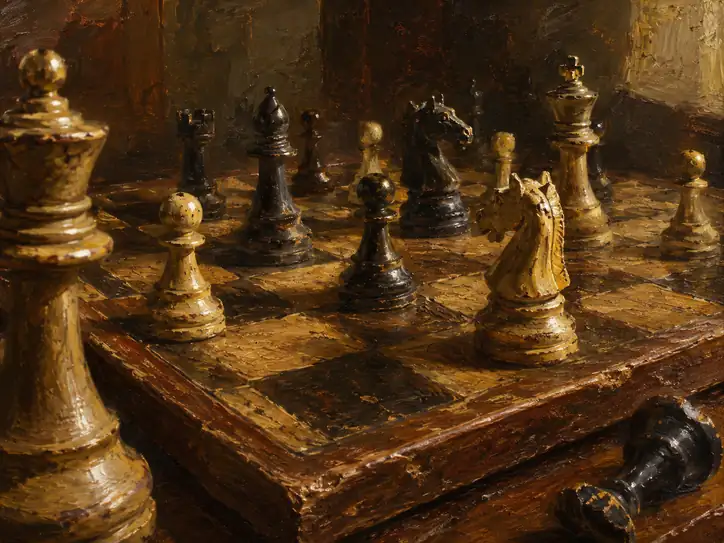 The Silent Duel of Fate
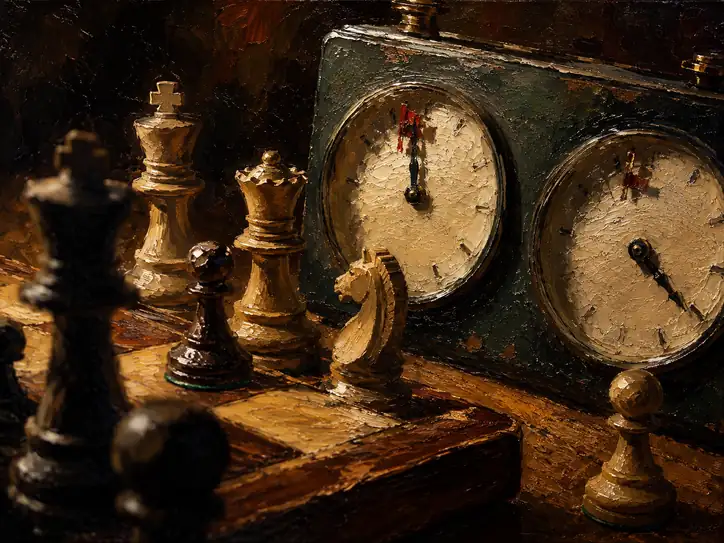 A Breath Before the Fall
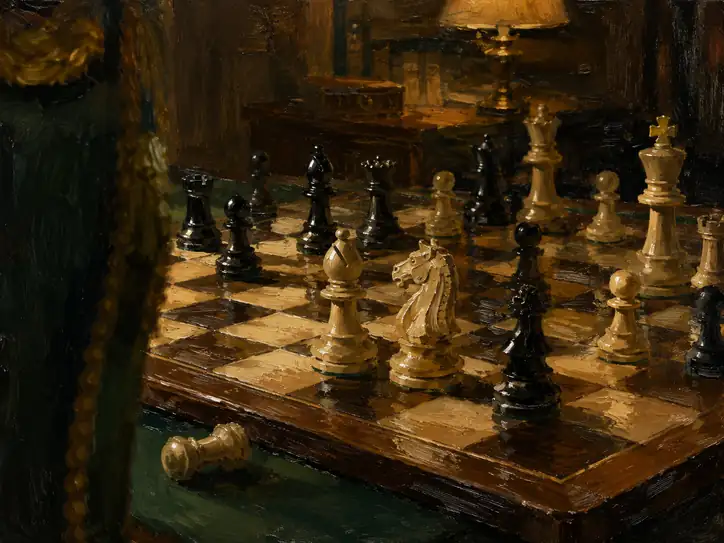 Decisions in the Warm Shadow
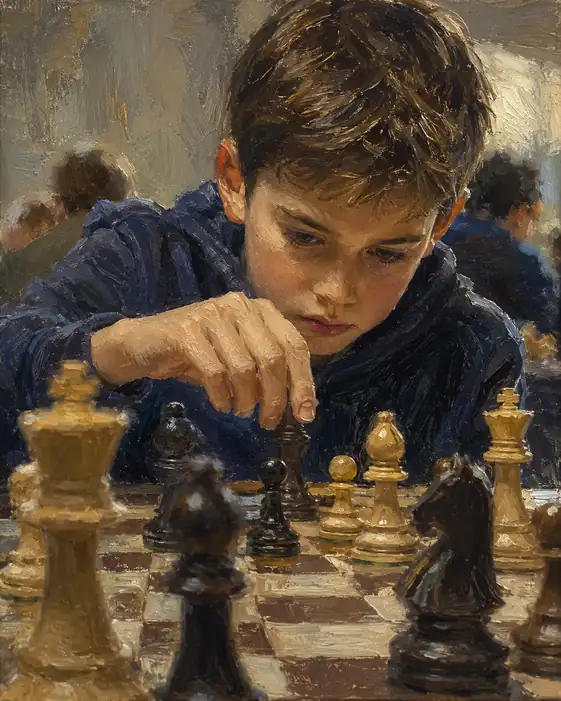 A Quiet Storm Within
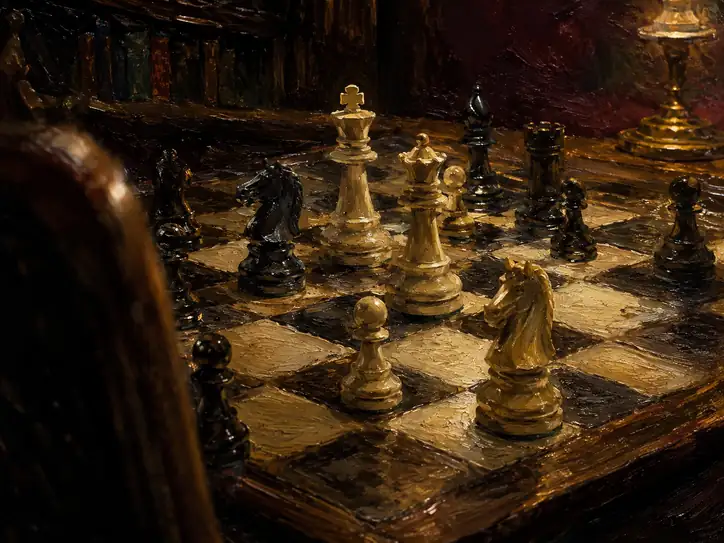 The Unfinished Game
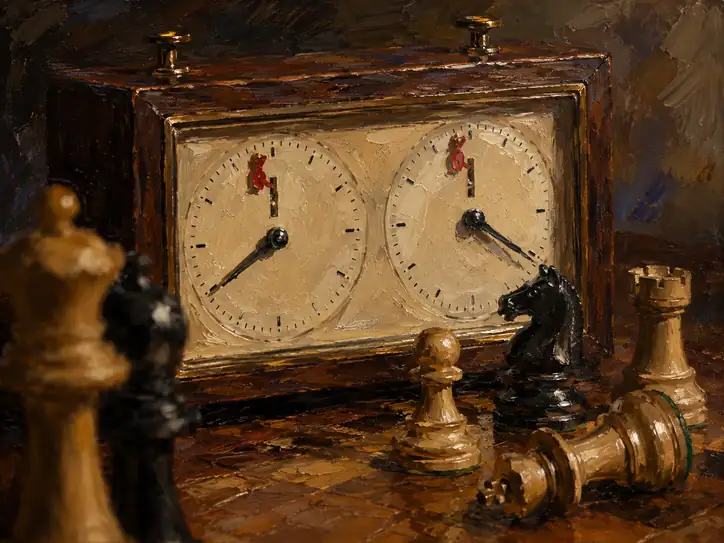 The Silent Resignation
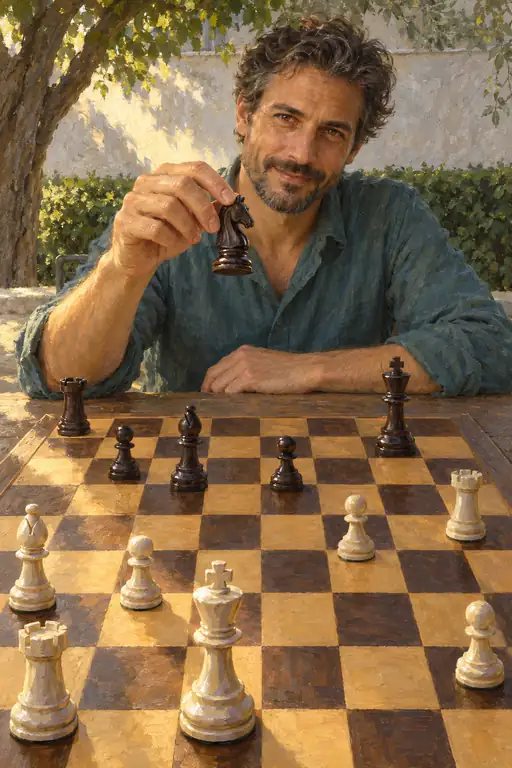 A Knight's Challenge in the Sun
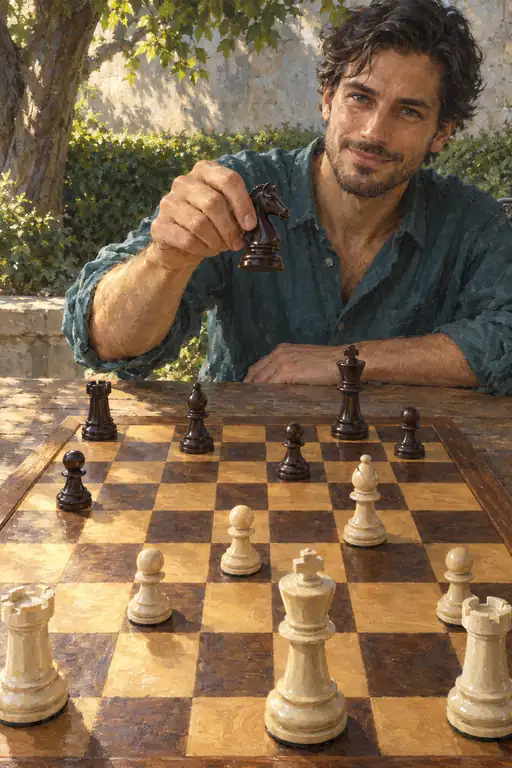 Your Move in the Dappled Shade
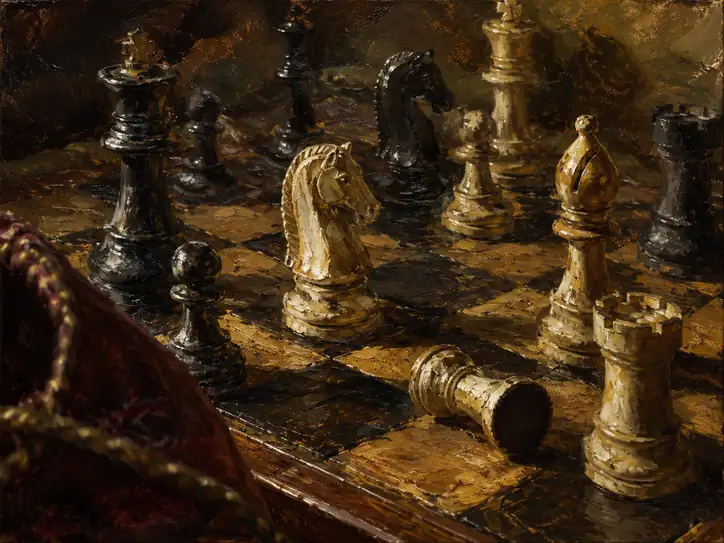 Fate Decided in Silence
 The Young Strategist