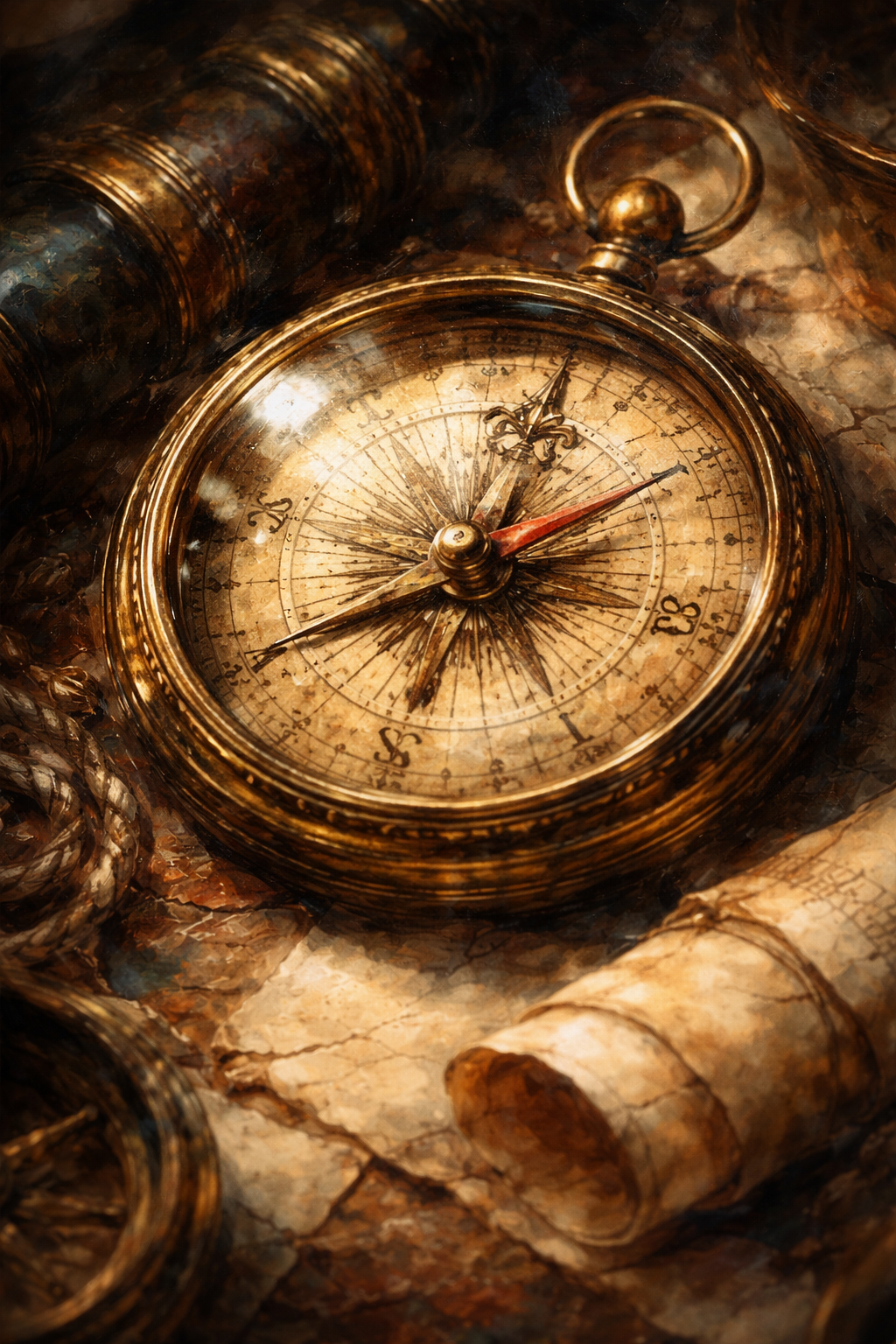
The Compass that Knows My Heart's Direction
Critique
1. Introduction This watercolor painting presents a nostalgic and warm study centered on an antique brass compass. The work captures the intricate scientific markings and weathered metallic texture of the instrument, surrounded by nautical artifacts like a rolled map and a coarse rope. Through a focus on earth tones and a soft, diffused light, the artist creates an atmosphere of exploration and historical adventure. The composition is intimate and dynamic, using the circular form of the compass to ground a dense arrangement of textures that immediately engages the viewer’s sense of discovery. 2. Description The primary subject is a large, polished brass compass with a detailed face featuring a fleur-de-lis at North and Roman-style numerals. It rests on a surface of aged, cracked parchment, accompanied by a tightly rolled map in the bottom right and a coiled hemp rope on the left. In the upper background, the dark cylindrical form of a telescope or map case adds a sense of scholarly tradition. Bright, warm light enters from the upper left, casting soft shadows that highlight the fine engravings on the brass and the rough, organic fibers of the rope and parchment. 3. Analysis The artist skillfully employs the transparent properties of watercolor to suggest the aged quality of the materials and the soft reflection on the compass’s glass cover. A key feature is the contrast between the sharp, precise lines within the compass face and the softer, more impressionistic rendering of the surrounding nautical tools. The color palette is dominated by warm ochres, burnt siennas, and deep browns, which ground the composition in an archaic and adventurous mood. Diagonal lines formed by the rolled map and the orientation of the telescope create a balanced arrangement that guides the viewer's eye through the complex layers of information. 4. Interpretation and Evaluation This work can be interpreted as a celebration of human curiosity and the Age of Discovery. The compass serves as a potent metaphor for guidance, orientation, and the search for new horizons, while the worn maps suggest the physical challenges of history’s greatest journeys. Technical execution is exceptional, particularly in the artist's ability to render the specific weight and reflective nature of the brass through delicate washes and fine detail. The painting successfully evokes a sense of wonder and profound respect for the past, inviting the viewer to contemplate the material history of maritime exploration. 5. Conclusion The initial impression of a radiant and detailed instrument eventually gives way to a deeper appreciation for the subtle interplay of light and fine tactile detail. The masterful rendering of textures and the warm tonal balance create an immersive and reflective visual experience. Ultimately, the painting stands as a powerful testament to the beauty of navigational arts and the enduring inspiration found in the artifacts of a life dedicated to discovery.
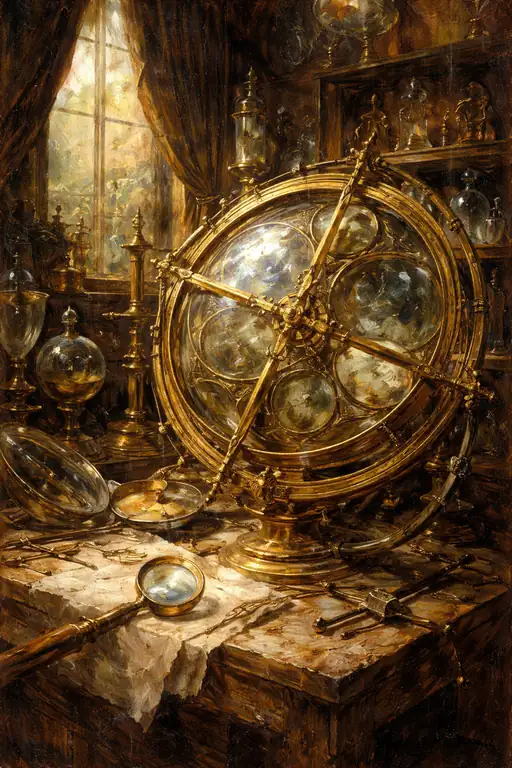 Gleaming Relics of the Astral Study
 The Astronomer's Jewel Box
 Whispers of the Uncharted Sea
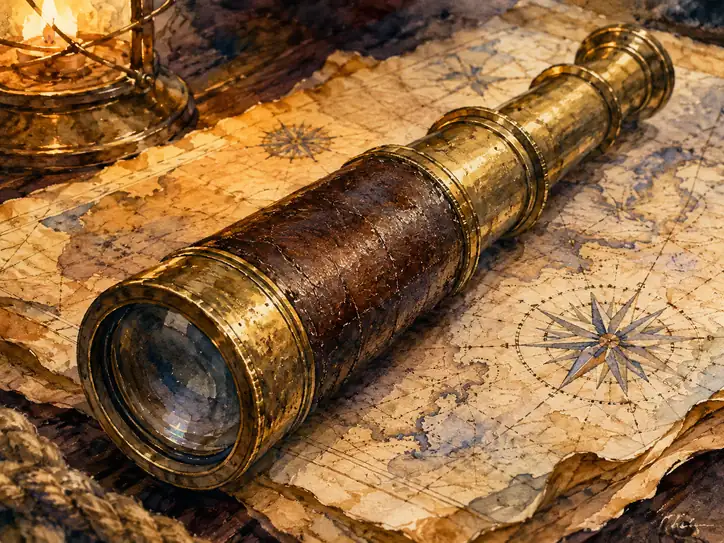 The Navigator's Nostalgia
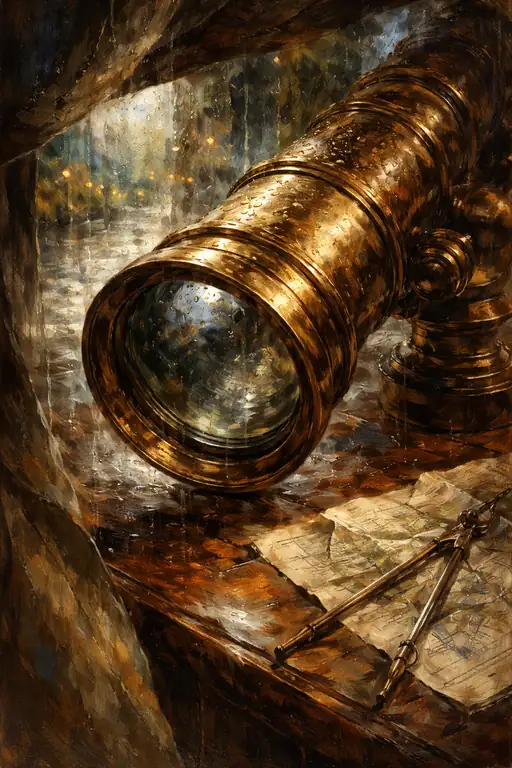 The Horizon of Longing
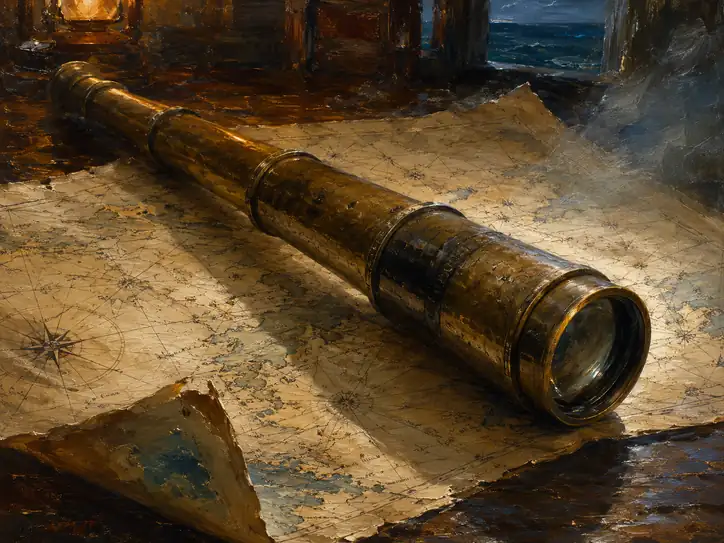 The Silent Call of the Infinite Sea
 The Voyager's Silent Resolve
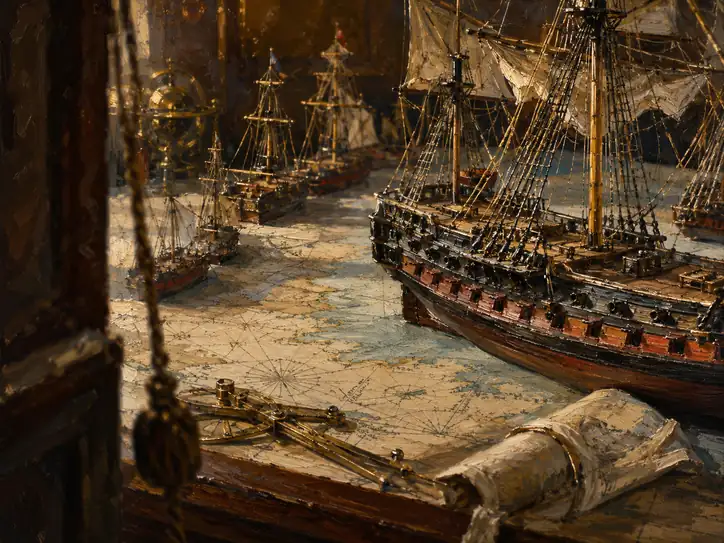 Dreams of the New World
 The Silent Guide
 The Silent Potential of Strings
 Navigating the Unknown
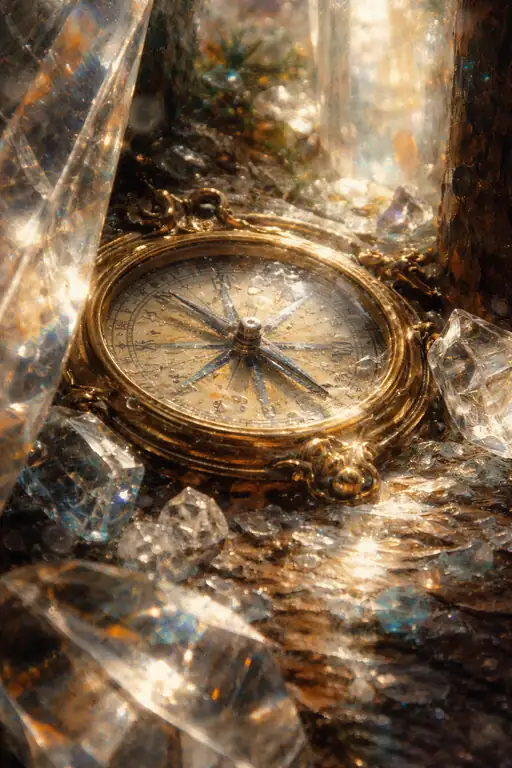 Guiding Light in the Deep