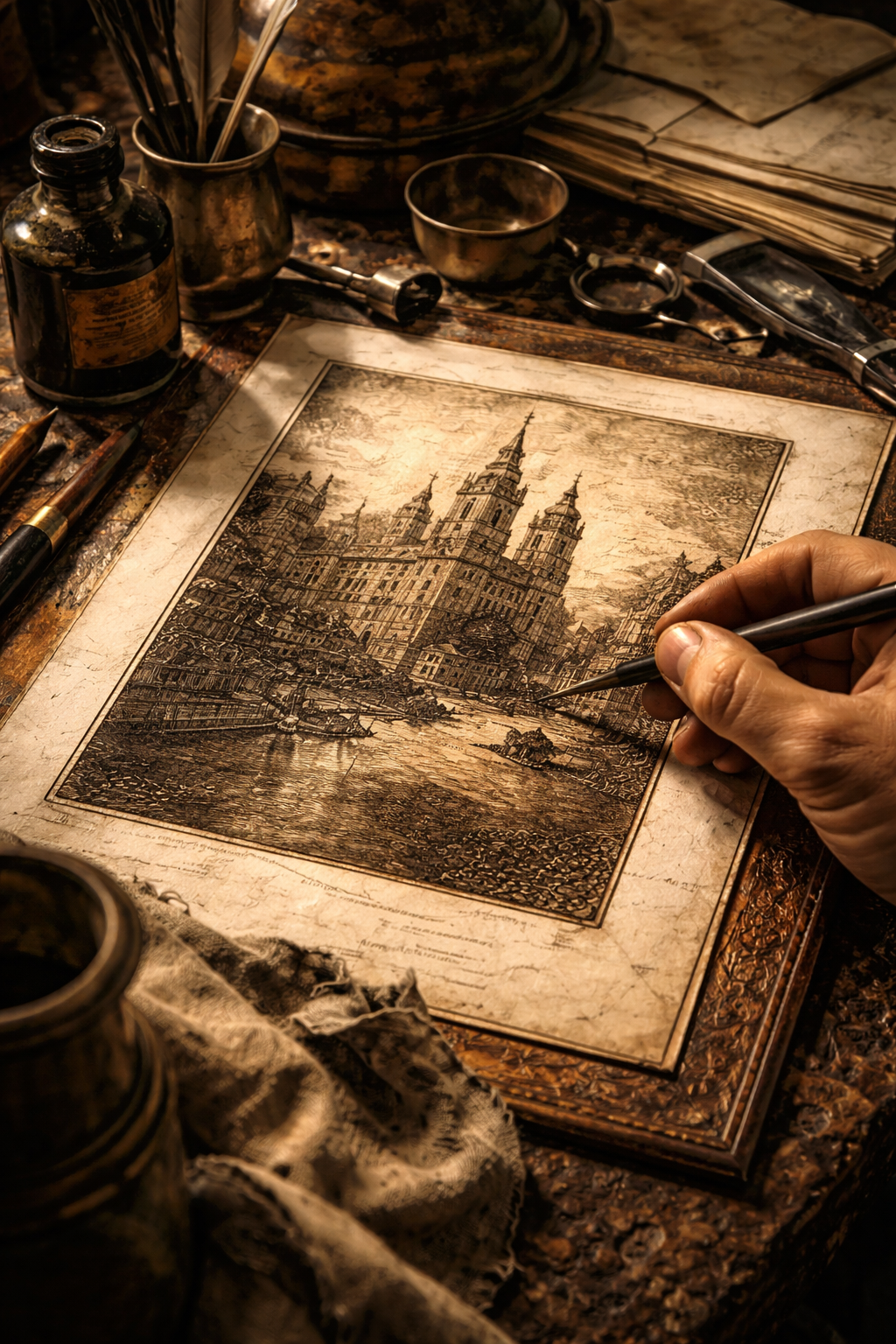
The Creator's Hand in Ink and Time
Critique
1. Introduction This oil painting presents a compelling and tactile study of an artist at work, specifically focusing on the creation of a detailed architectural etching or drawing. The work captures the precise movement of a hand wielding a stylus over a complex rendering of a cathedral city. Through a rich application of paint and a focus on warm, sepia-toned light, the artist creates an atmosphere of deep concentration and traditional craftsmanship. The composition is intimate and dynamic, using the diagonal of the artist’s arm and the textured tools to guide the viewer’s eye into the intricate details of the cityscape, immediately engaging the viewer in the creative process. 2. Description The primary subject is a hand holding a fine drawing tool, positioned over a highly detailed etching of a large cathedral with multiple spires, overlooking a waterfront with small boats. Surrounding the artwork are various scholarly and artistic artifacts: a jar of dark ink, a holder with feathered quills, a stack of old parchment, and a small metal bowl. The scene is illuminated by a warm, lateral light source from the upper left, which casts long shadows and highlights the rough grain of the wooden desk and the mottled textures of the surrounding objects. A crumpled piece of dark fabric or lace in the bottom left adds to the sense of a busy, lived-in studio. 3. Analysis The artist utilizes a heavy impasto technique, particularly in the rendering of the wooden desk and the metal tools, to simulate the physical three-dimensionality of the objects. A key feature is the sophisticated control of line and tone within the "etching" itself, which maintains its own distinct graphic quality while being integrated into the painterly environment of the studio. The color palette is harmoniously restricted to warm earths, deep ochres, and charred browns, punctuated by the stark black of the ink. Diagonal lines formed by the arm and the quill holder provide a structural framework that balances the composition while adding a sense of active creation. 4. Interpretation and Evaluation This work can be interpreted as a meditation on the labor of art and the preservation of history through documentation. The act of drawing a historic cathedral suggests themes of continuity, the passage of time, and the intellectual effort required to capture complex reality. Technical execution is exceptional, particularly in the artist's ability to render the specific weight and tension of the human hand and the varied opacities of the different materials through expressive brushwork. The painting successfully evokes a sense of solemnity and profound respect for the artist’s craft, inviting the viewer to contemplate the material history of human expression. 5. Conclusion The initial impression of a radiant and focused creative act eventually gives way to a deeper appreciation for the subtle layers of light and fine tactile detail. The masterful rendering of textures and the warm tonal balance create an immersive and reflective visual experience. Ultimately, the painting stands as a powerful testament to the beauty of the graphic arts and the enduring charm of the traditional studio, where thought is physically transformed into form.
Same Subcategory
 Reviving the Sole
Similar Artworks
 Awakening the Petals
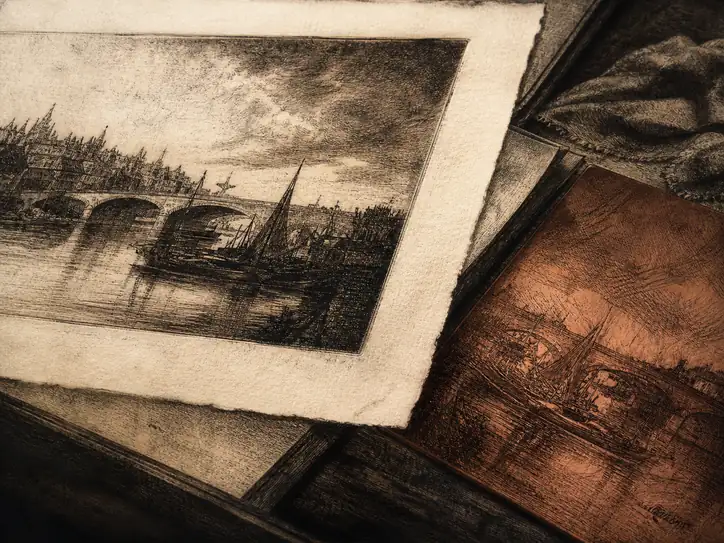 The Cradle of Etched Time
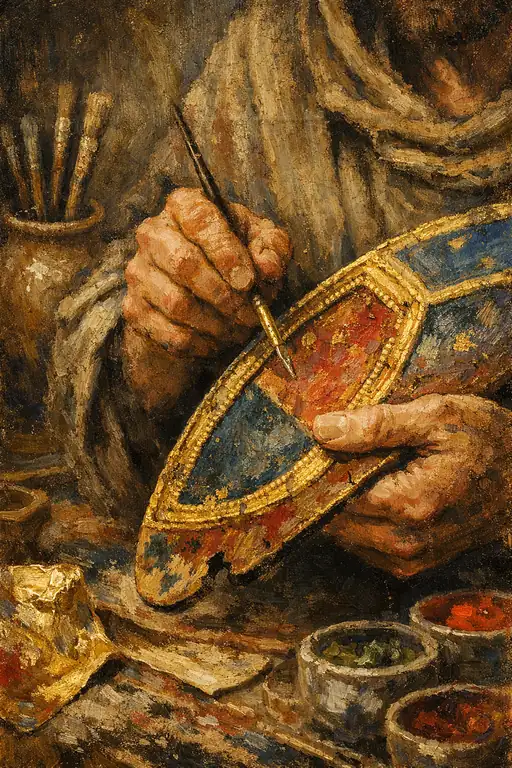 The Devotion of an Artisan's Touch
 The Blueprint of Conquest
 The Unfinished Symphony of Silence
 Whispers of the Cobalt Quill
 The Keeper of Timeless Tales
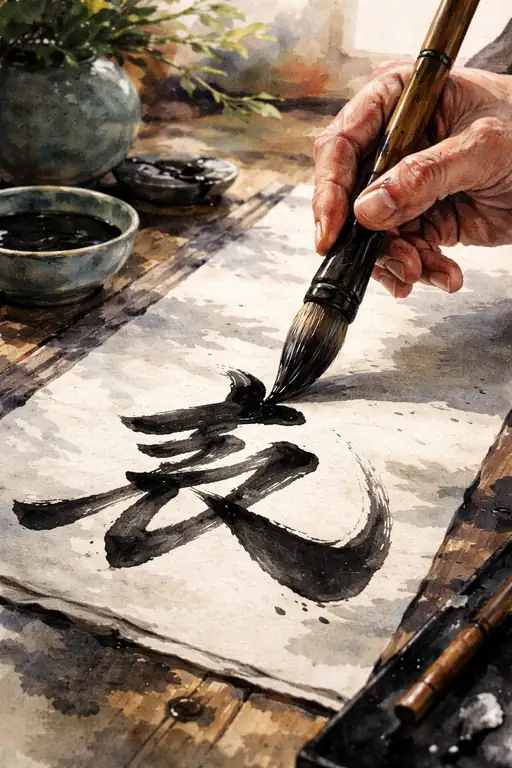 The Soul's Imprint: A Breath in Black Ink
 The Master's Vision Captured in Color
 Sailing Seas Within a Glass Bottle