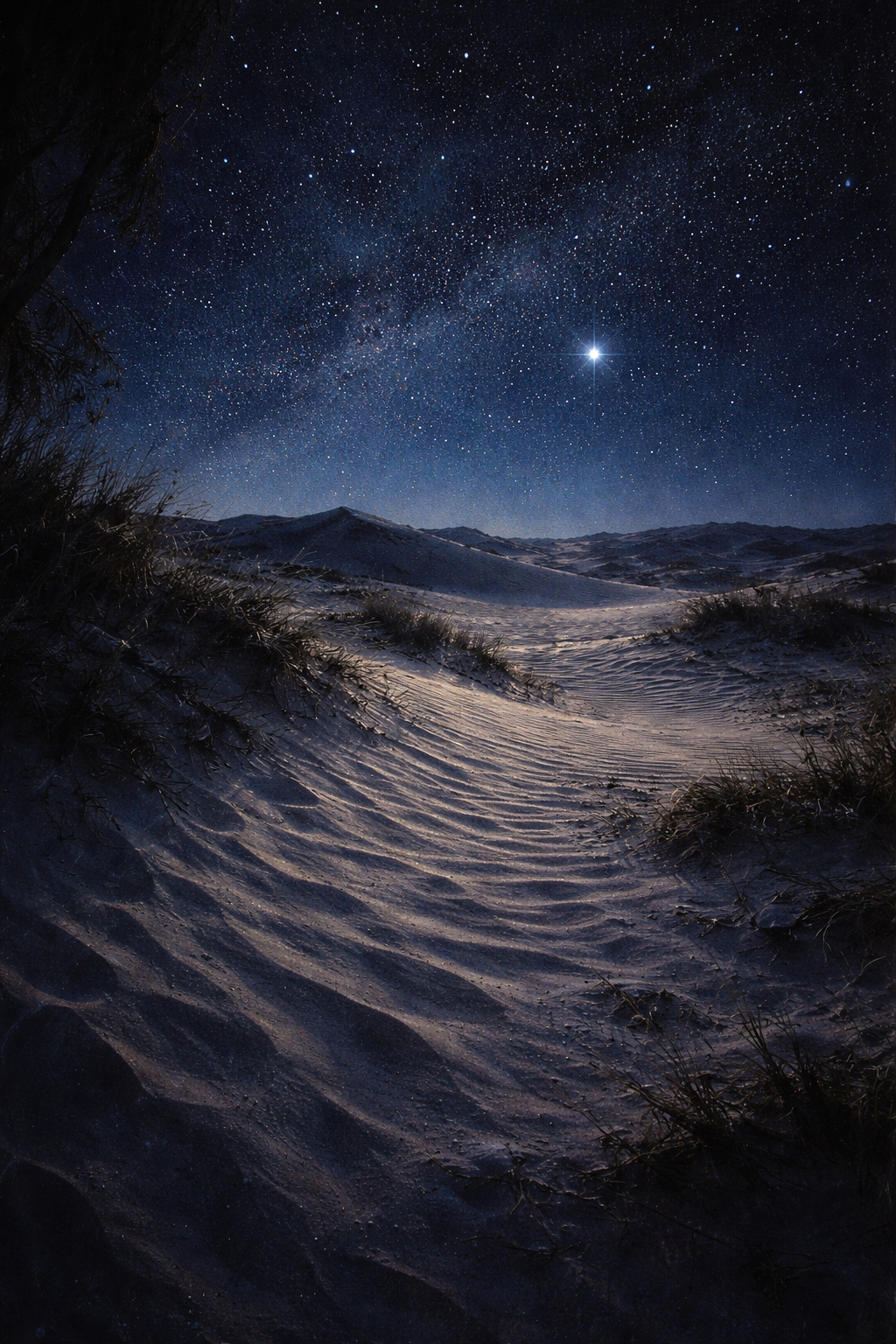
Wandering Through the Celestial Desert
Critique
1. Introduction This watercolor painting presents a serene and atmospheric study of a starlit desert landscape, capturing the quiet brilliance of the Milky Way over a field of sand dunes. The work focuses on the intense, singular brilliance of a prominent star and the complex, rhythmic ripples in the wind-swept sand. Through a masterful application of transparent washes and a palette of deep indigos and cool, silvery whites, the artist creates an atmosphere of tranquil solitude and celestial wonder. The composition is elegantly balanced, using the diagonal path of the sand ripples and the low horizon to anchor a sense of vast, open space, immediately engaging the viewer in a sense of peaceful immersion in the desert night. 2. Description The primary subject is a vast desert of rolling sand dunes under an expansive night sky. The sky is filled with a dense field of stars and the soft, cloud-like luminescence of the Milky Way, with one exceptionally bright star serving as a central focal point. In the foreground, the sand dunes feature intricate, wave-like ripples created by the wind, with sparse clumps of desert grass growing along the ridges. Soft, cool light from the starlit sky illuminates the ridges of the sand, casting deep, rhythmic shadows that emphasize the desert’s three-dimensional form and the fine, granular texture of the surface. 3. Analysis The artist skillfully utilizes the inherent transparency and fluid properties of watercolor to suggest the softness of the celestial light and the shimmer of the sandy landscape. A key feature is the sophisticated control of tonal transitions; the deep, cold blues of the dunes contrast beautifully with the warm, crystalline light of the stars. The color palette is harmoniously restricted to deep indigos, charcoal grays, and brilliant whites, which enhances the work’s sentimental and refined mood. Organic lines formed by the sand ripples and the curve of the dunes provide a structural framework that guides the viewer's eye through the atmospheric and material layers. 4. Interpretation and Evaluation This work can be interpreted as a meditation on the vastness of the universe and the profound peace found in the most remote corners of the natural world. The choice of a starlit desert suggests themes of isolation, eternity, and the spiritual connection between the earth and the heavens. Technical execution is exceptional, particularly in the artist's ability to maintain the luminosity of the stars while managing the deep, saturated blues of the desert night through layered washes. The painting successfully evokes a sense of serenity and refined charm, inviting the viewer to appreciate the poetic qualities found in the quiet, frozen moments of a desert night. 5. Conclusion The initial impression of a radiant and simple display eventually gives way to a deeper appreciation for the meticulous rendering of light and fine material detail. The masterful use of transparency and the balanced tonal composition create a deeply immersive and poetic visual experience. Ultimately, the painting stands as a beautiful testament to the elegance of romantic landscape traditions and the enduring allure of the wilderness as a place of spiritual reflection and celestial wonder.
Same Subcategory
 Whispers of the Winter Galaxy
 Glowing Lanterns Adorn the Gentle Hanoi Night
Similar Artworks
 Stardust Harmony in the Desert Silence
 Starlight Sanctuary in the Whispering Woods
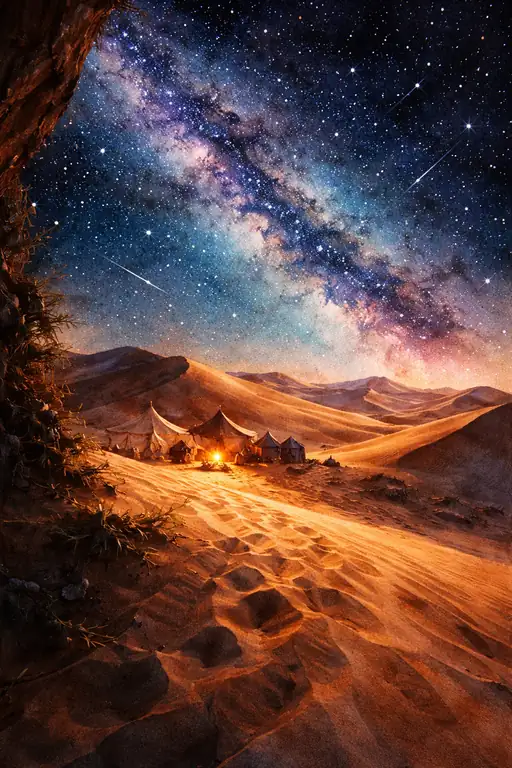 Milky Way Over the Desert Camp
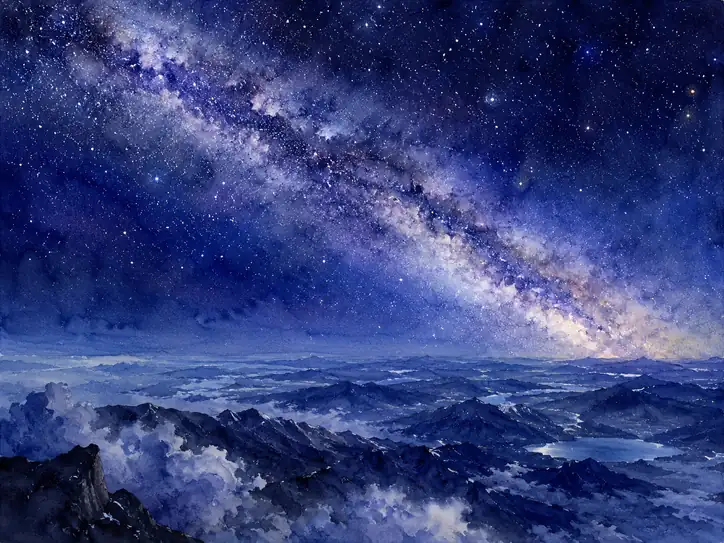 River of Dreams and Dust
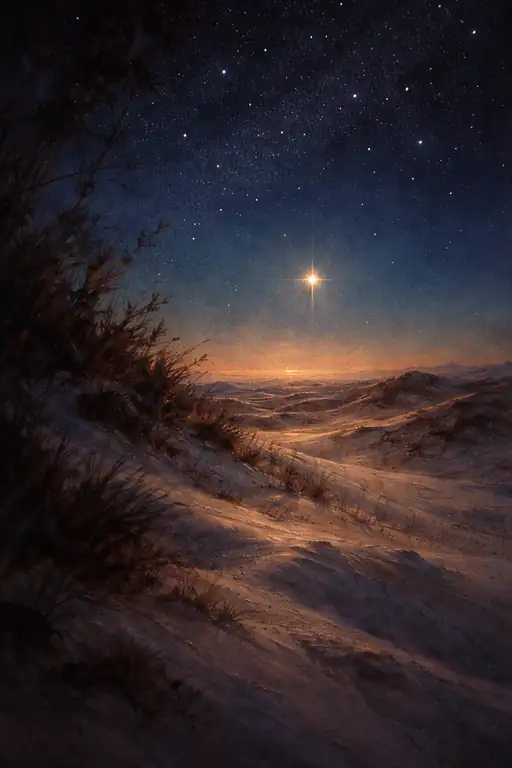 A Solitary Star Over the Frozen Sands
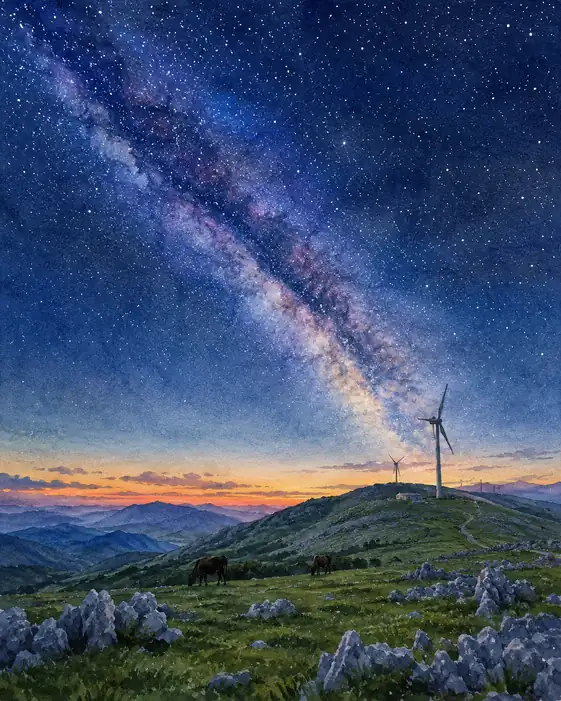 The Milky Way Turns the Silent Hills
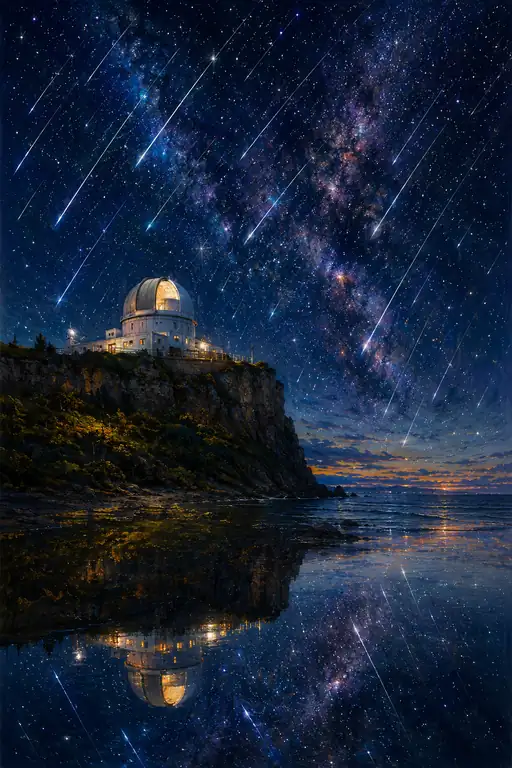 Dialogue with the Cosmos
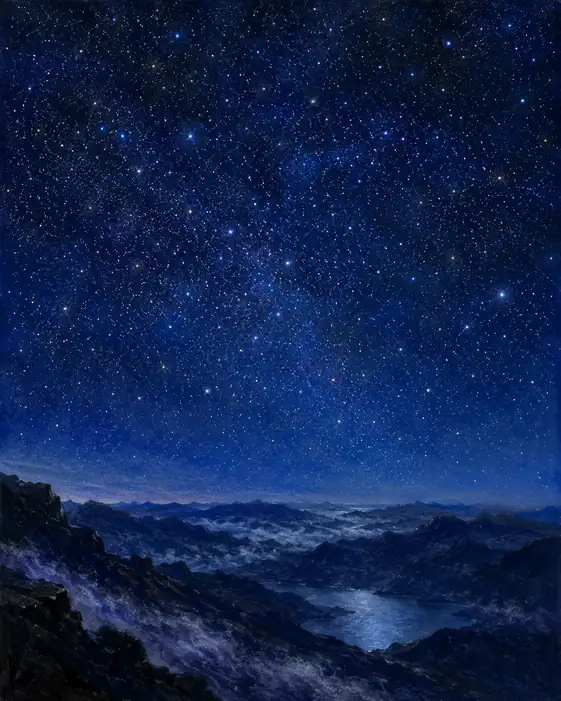 Whispers of the Eternal Canopy
 A Silent Conversation on a Starry Night
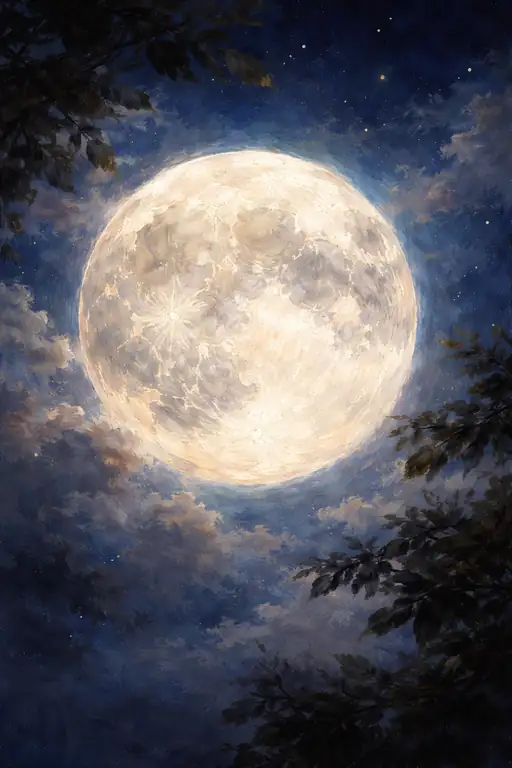 The Silent Watcher of the Cosmos