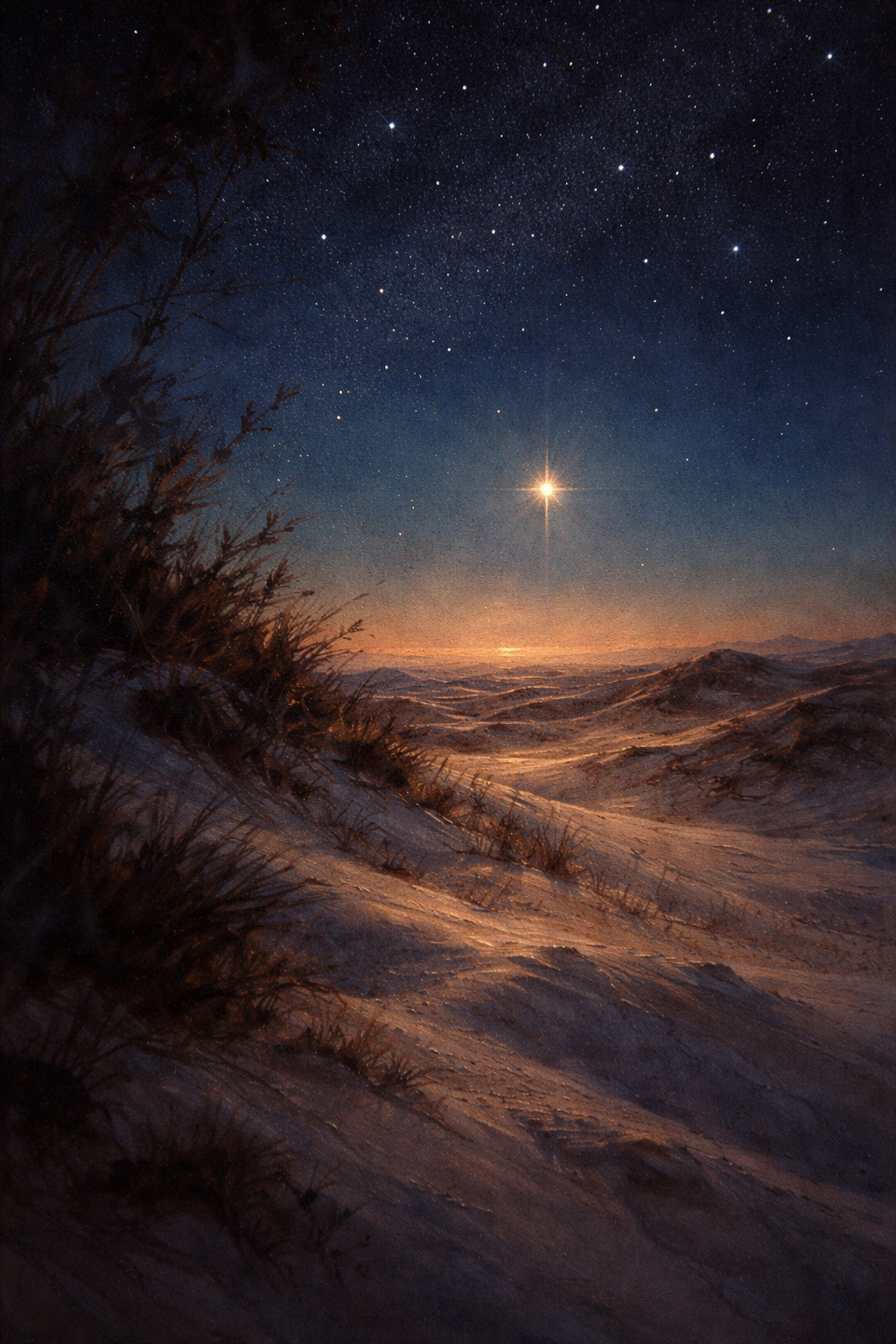
A Solitary Star Over the Frozen Sands
Critique
1. Introduction This oil painting presents a serene and atmospheric study of a desert landscape at dawn, specifically focusing on the moment when a brilliant celestial body—likely Venus or a rhythmic star—rises over a series of snow-dusted sand dunes. The work captures the quiet transition from night to day, creating a sense of crystalline beauty and profound stillness. Through a heavy, expressive application of paint and a focus on saturated ambers and deep, stormy indigos, the artist creates an atmosphere of terrestrial upheaval and spiritual renewal. The composition is elegantly balanced, using the diagonal slope of a foreground dune and the framing dark brush to guide the viewer’s eye through the luminous layers of the desert, immediately engaging the viewer in a sense of peaceful immersion. 2. Description The primary subject is a series of rolling dunes, rendered with thick, tactile brushstrokes that suggest both the granular texture of sand and a thin coat of frost. To the left, a dark, silhouetted clump of desert scrub enters the frame, providing significant depth. A low, brilliant sun or star sits on the horizon, partially obscured by a soft, orange-hued sky. Above, the sky transitions to a deep indigo, filled with a dense field of stars. Intense, warm light from the horizon illuminates the ridges of the dunes, casting long, rhythmic shadows that emphasize the desert’s three-dimensional form. 3. Analysis The artist utilizes a heavy impasto technique throughout the piece, particularly in the rendering of the dunes and the foreground brush, to suggest the physical material reality of the landscape. A key feature is the sophisticated control of light and dark (chiaroscuro); the brilliant, divine light from the horizon contrast beautifully with the deep, saturated shadows of the dunes and the starlit sky. The color palette is harmoniously restricted to warm golds, deep orchres, and cool, nocturnal blues, which enhances the work’s sentimental and epic mood. Strong diagonal lines formed by the dunes provide a structural framework that guides the viewer's eye through the atmospheric layers. 4. Interpretation and Evaluation This work can be interpreted as a meditation on new beginnings and the profound peace found in the most remote corners of the natural world. The choice of a starlit desert at dawn suggests themes of resilience, eternity, and the spiritual connection between the earth and the heavens. Technical execution is exceptional, particularly in the artist's ability to render the specific weight and texture of the dunes through expressive, almost sculptural brushwork. The painting successfully evokes a sense of solemnity and refined charm, inviting the viewer to appreciate the poetic qualities found in the quiet, frozen moments of a desert morning. 5. Conclusion The initial impression of a radiant and simple display eventually gives way to a deeper appreciation for the meticulous rendering of light and fine material detail. The masterful use of texture and the balanced tonal composition create a deeply immersive and poetic visual experience. Ultimately, the painting stands as a powerful testament to the beauty of the romantic landscape tradition and the enduring allure of the wilderness as a place of spiritual reflection and celestial wonder.
 The Fiery Heart of the Ancient Earth
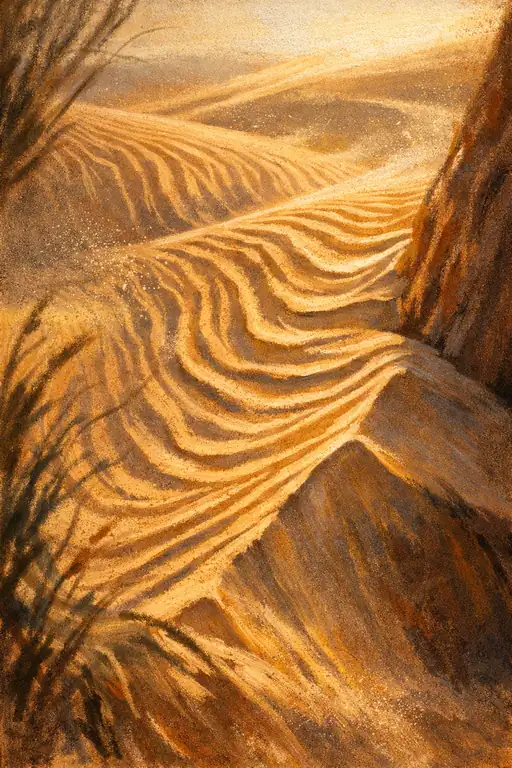 Dunes of the Sleeping Gold
 Twilight Whispers on White Dunes
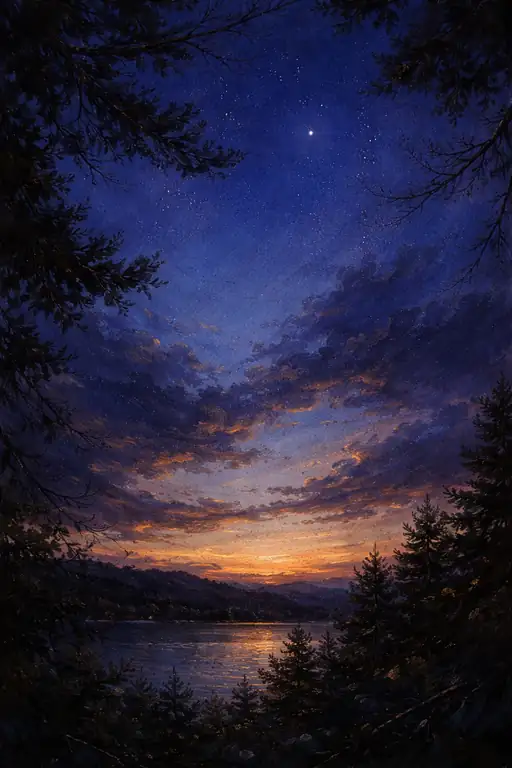 Whispers of the Twilight Lake
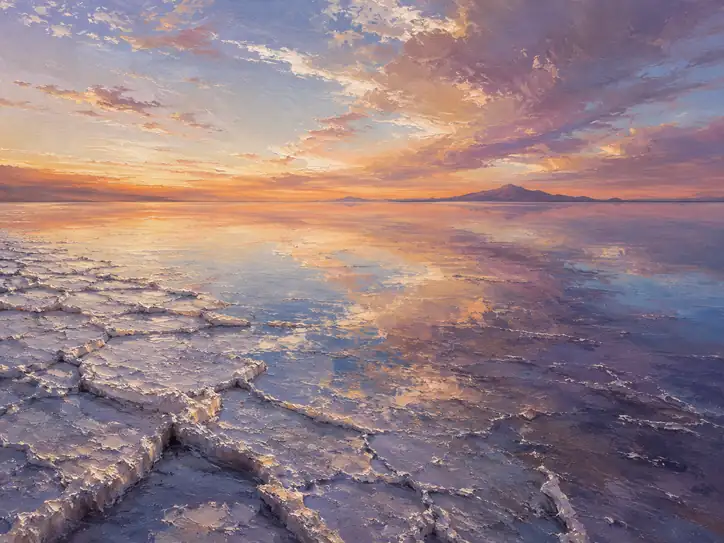 Where Earth and Heaven Converge
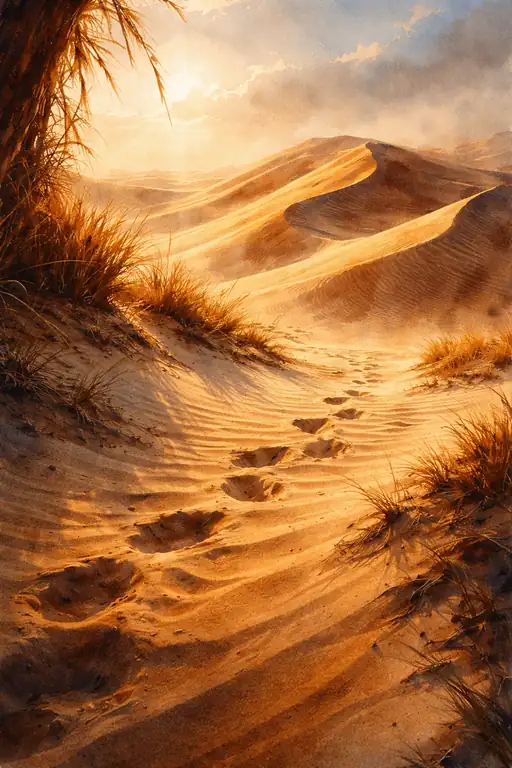 Footsteps in the Golden Sand
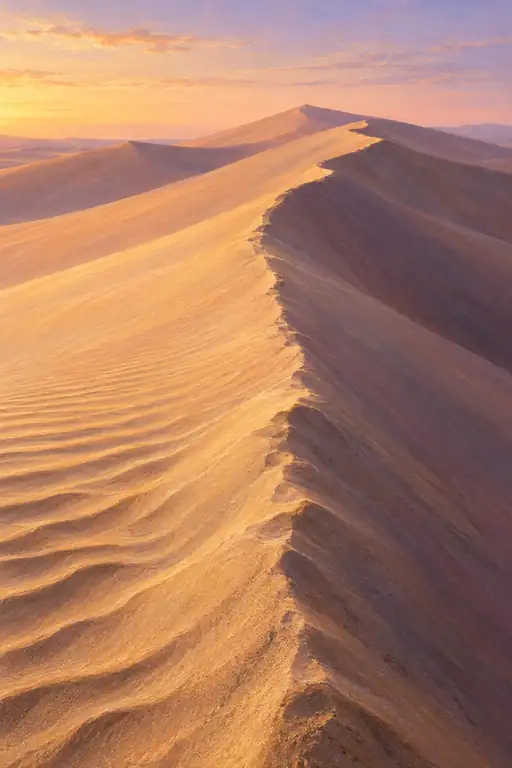 Where the Wind Traces Silence
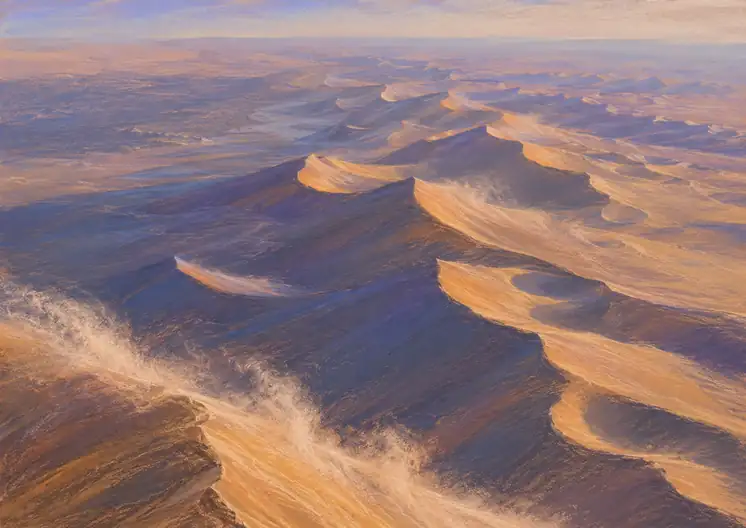 Where the Wind Carves the Earth
 Divided by Light
 Mirror of the Infinite Sky
 Divided by Light and Shadow
 Where the Wind Dances on Golden Slopes