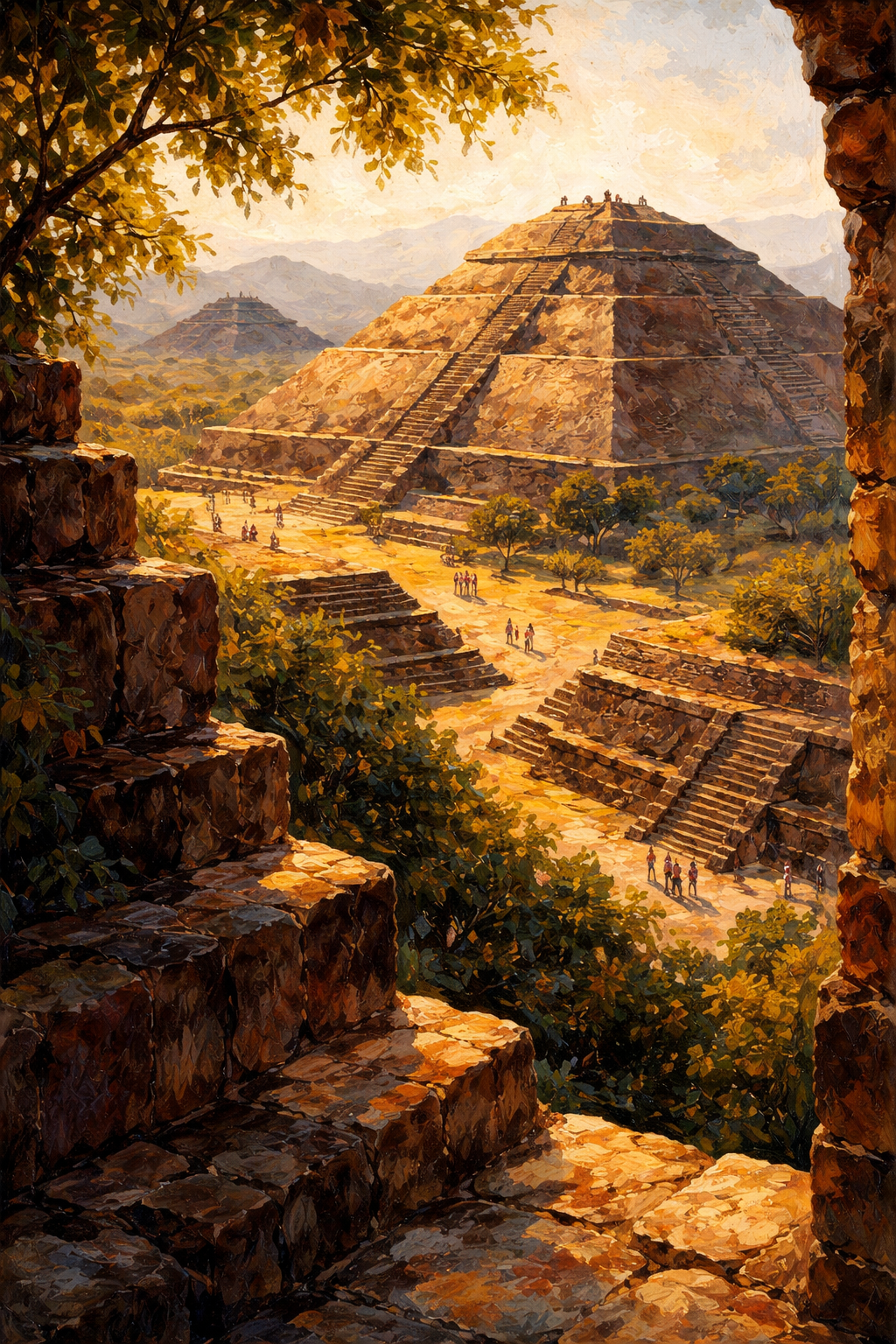
Echoes of the Sun: Steps of the Ancients
Critique
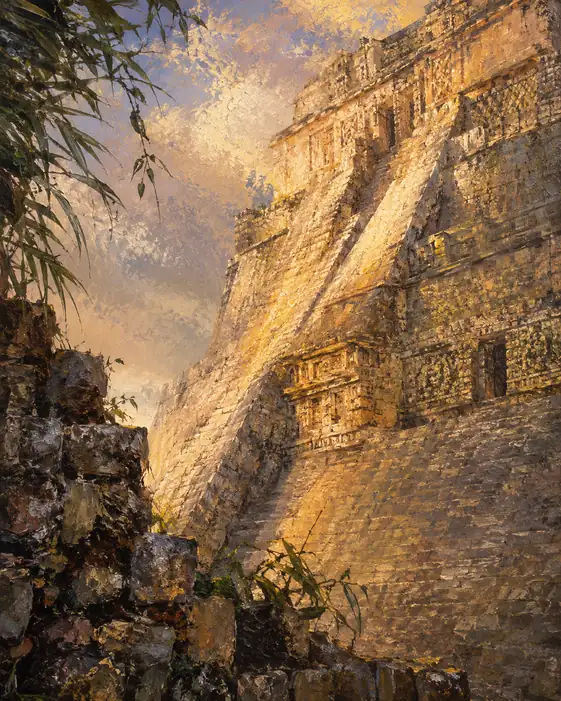
1. Introduction This evocative painting presents a dramatic view of an ancient stepped pyramid, observed from the height of an adjacent stone structure. The vertical composition utilizes a tight foreground frame to create a sense of discovery, immersing the viewer in the historical grandeur of a Mesoamerican archaeological site at sunset. 2. Description The main pyramid rises prominently in the center, its weathered stone surfaces catching the golden light of the declining sun. In the foreground, large, roughly hewn stone blocks and dense foliage provide a textured boundary, while smaller ruins and distant mountains extend the scene’s depth. Tiny figures of people are scattered along the pathways and stairs, emphasizing the monumental scale of the architecture. 3. Analysis The artist employs a rich palette of earth tones, including ochre, sienna, and deep amber, contrasted with the dark greens of the surrounding vegetation. Bold, thick brushstrokes enhance the tactile quality of the stone, while the strong diagonal lines of the pyramid’s tiers and staircases create a rhythmic and stable structure. 4. Interpretation and Evaluation This work effectively communicates a sense of timelessness and the enduring power of human civilization. The expert handling of light transforms the rugged stone into a source of warmth and radiance, though some of the smaller details in the middle ground appear slightly obscured by the heavy impasto. 5. Conclusion Consequently, the painting is a powerful tribute to architectural history and the evocative qualities of natural light. It successfully balances a massive, static subject with the dynamic energy of light and textured surface application.
Same Subcategory
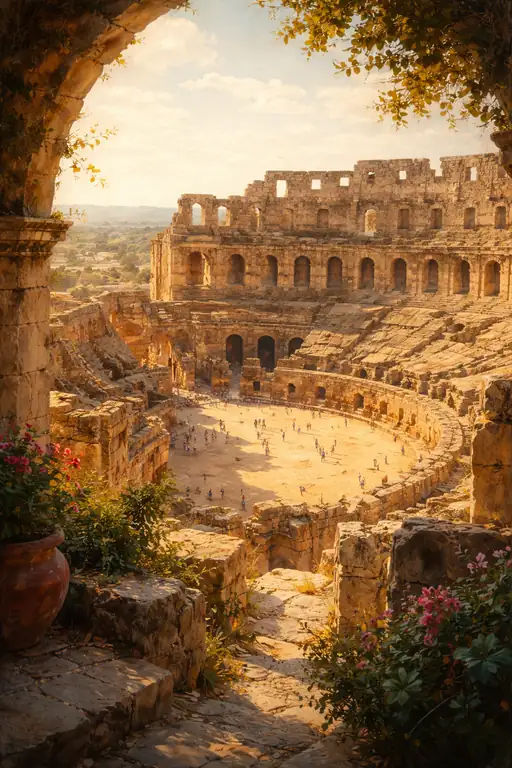 The Sunlit Arena of Time
Similar Artworks
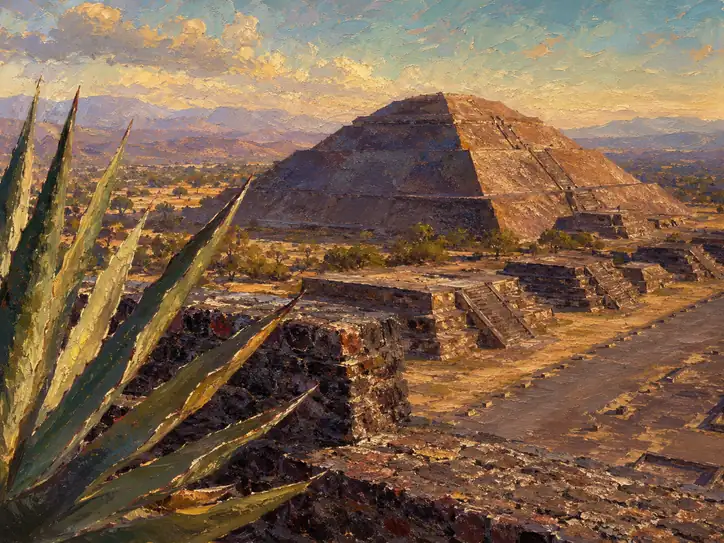 Altar of the Eternal Sun
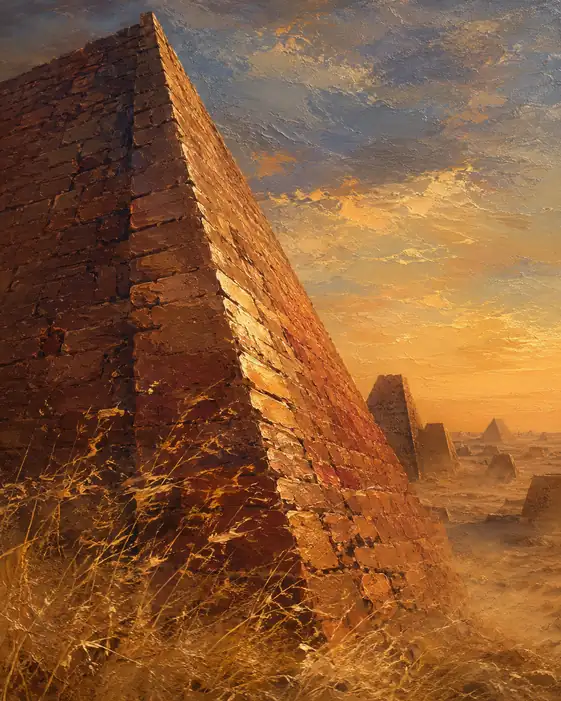 Eternity in Golden Silence
 The Last Ray of a Forgotten Empire
 Golden Reverie of the Ancient Sanctuary
 Echoes of the Golden Empire
 Steps to the Azure Sky
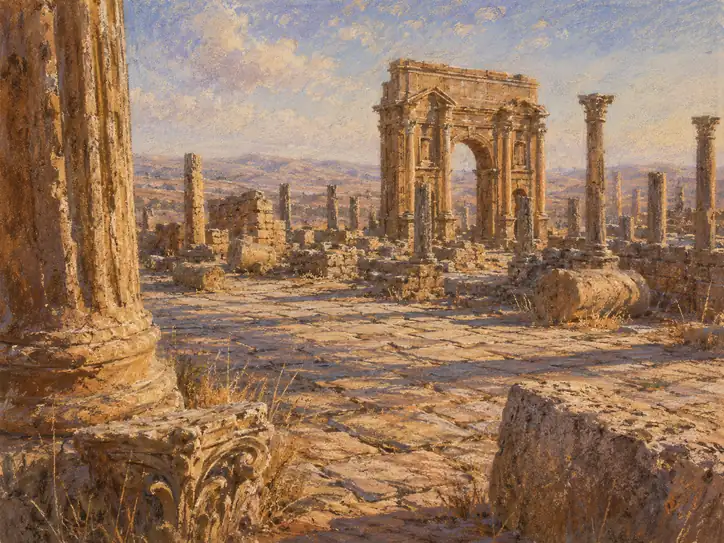 The Silent Dignity of Time
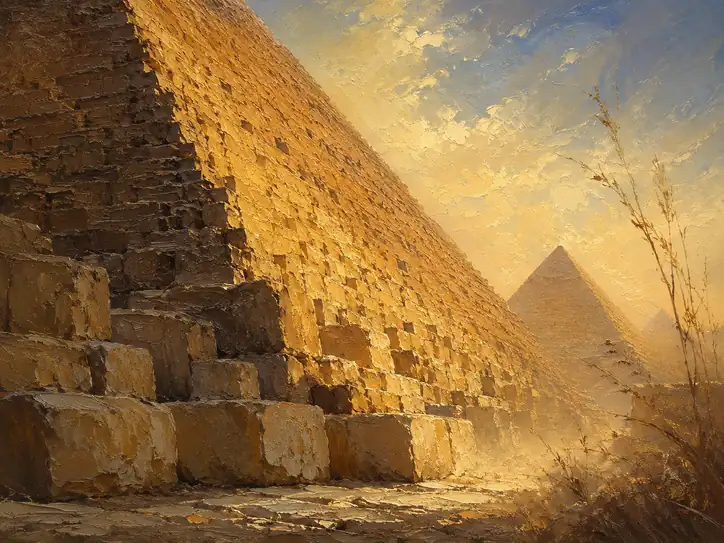 Eternity in Golden Dust
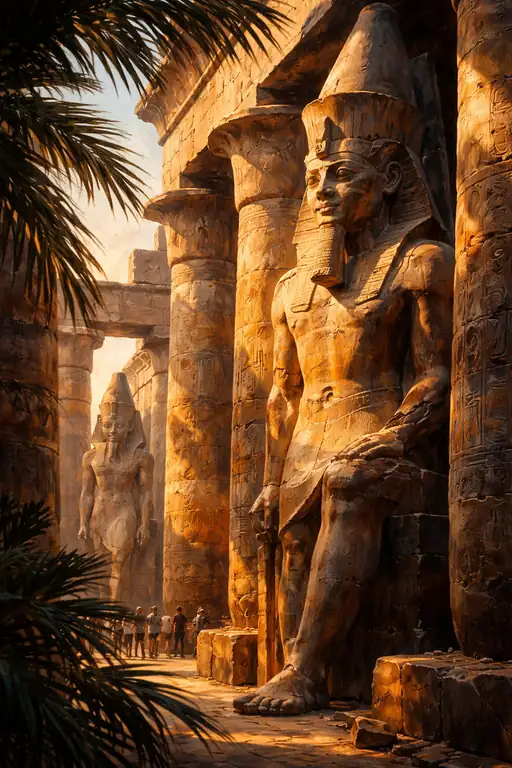 Sunlit Shadows Among the Monumental Pharoahs
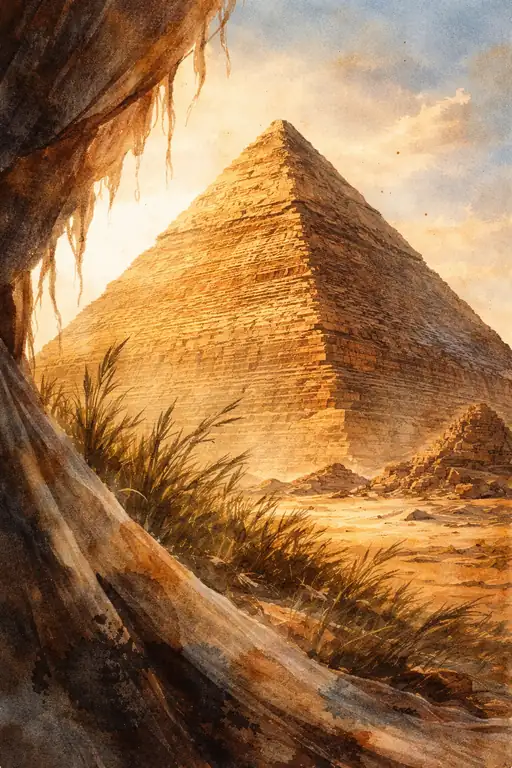 Eternal Sentinel of the Golden Sands