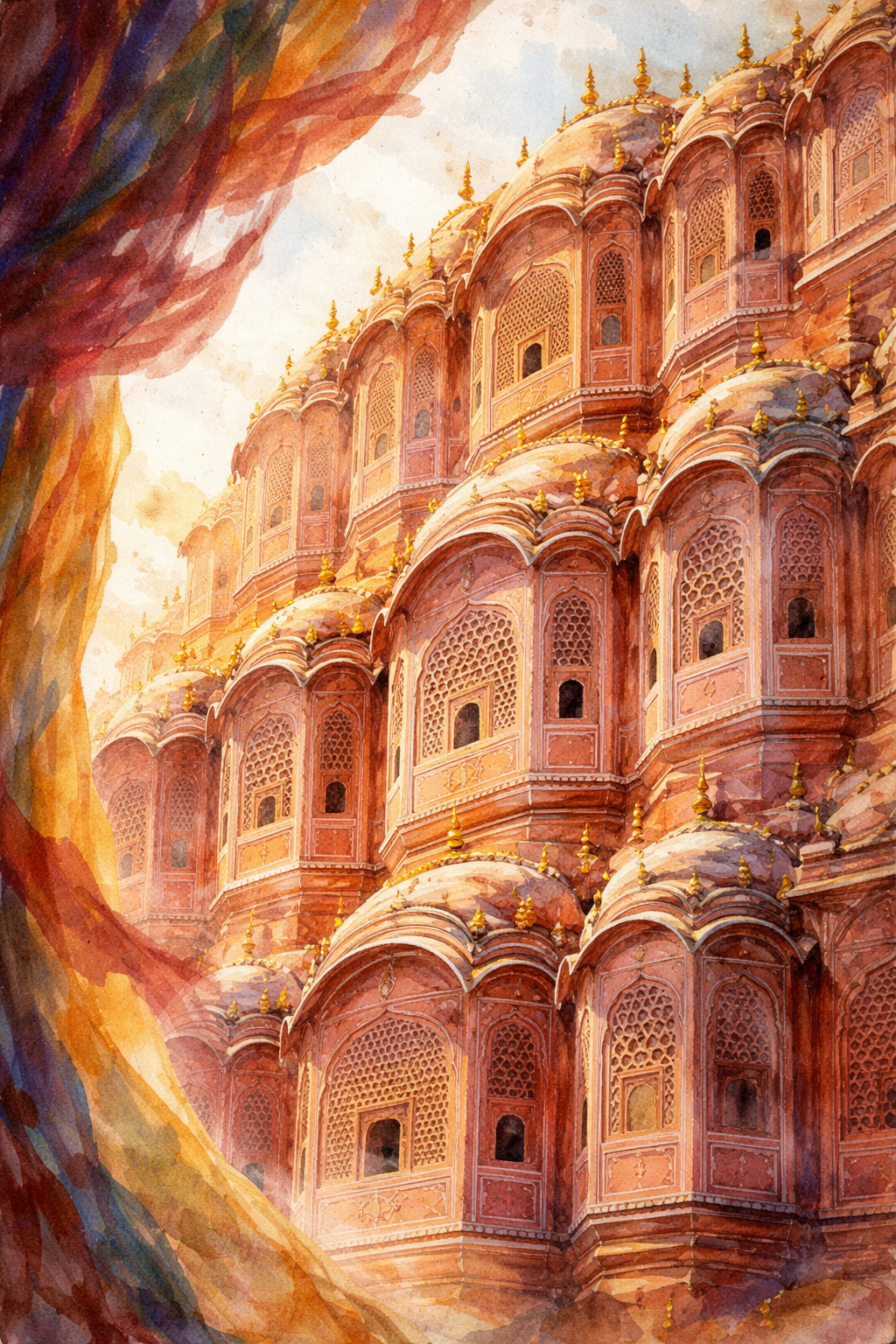
Whispers of the Palace of Winds
Critique
1. Introduction This watercolor painting presents a detailed and vibrant depiction of the Hawa Mahal, the iconic "Palace of Winds" in Jaipur, India. The artwork capture the intricate beauty of Rajput architecture through a delicate use of layers and a warm color palette. A distinctive framing element on the left side guides the viewer’s eye toward the majestic facade, creating an immersive atmosphere. 2. Description The composition is dominated by the palace's facade, featuring numerous small windows and domed structures rendered in shades of salmon pink, orange, and gold. On the left foreground, a flowing, multi-colored fabric hangs diagonally, its translucent layers blending reds, blues, and yellows. The palace itself is bathed in warm light, with subtle purple and blue shadows defining its architectural depth and complex geometrical patterns. 3. Analysis The artist effectively utilizes the transparency of watercolor to create a sense of glowing luminosity across the stone surfaces. Vertical lines of the architectural columns contrast with the soft, organic curves of the drapes, providing a balanced visual rhythm. The use of stippling and fine linework for the window screens adds a tactile quality to the painting, emphasizing the craftsmanship inherent in the subject. 4. Interpretation and Evaluation The work succeeds in transforming a static architectural monument into a dynamic study of light and color. The decision to include the decorative fabric as a foreground element showcases the artist's original perspective, adding a sense of intimacy to the grand scale. The technical execution is exceptional, demonstrating a mastery of the medium that captures both the majesty of the heritage site and the ephemeral quality of light. 5. Conclusion A profound balance between meticulous detail and atmospheric expression gives this piece a lasting impact. While the viewer is initially struck by the complexity of the ornate windows, the subtle orchestration of light eventually reveals the true emotional depth of the scene. It is a highly accomplished work that honors its subject with both precision and artistic flair.
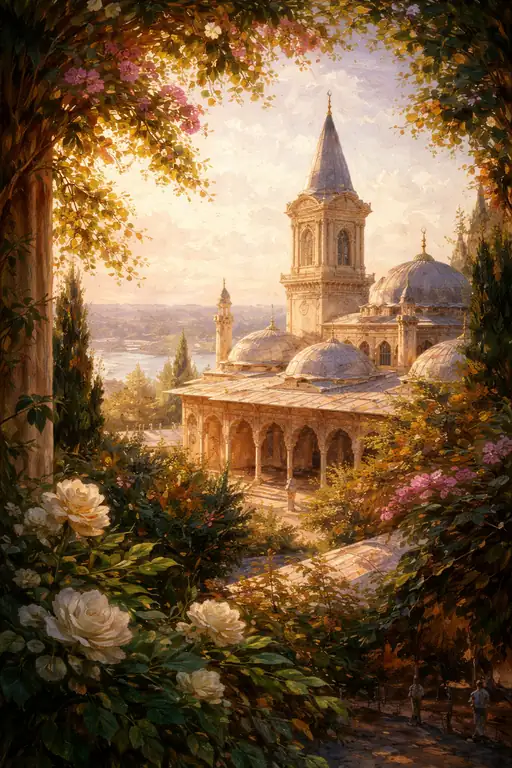 Palace of Eternal Spring
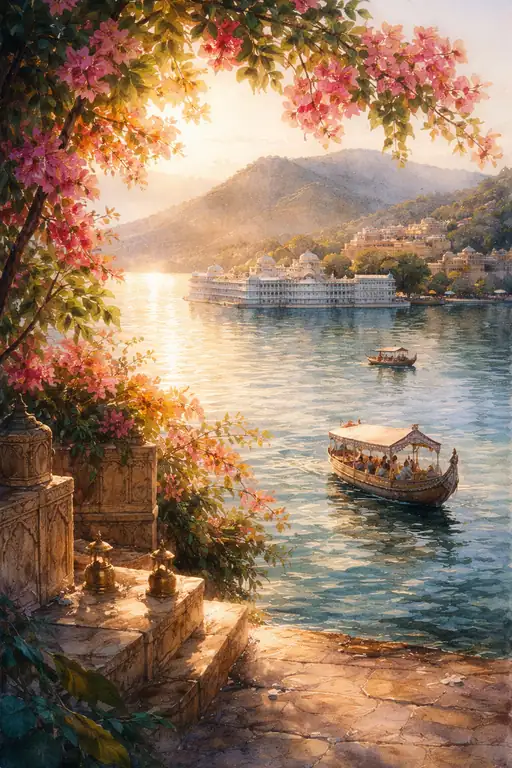 Twilight at Pichola
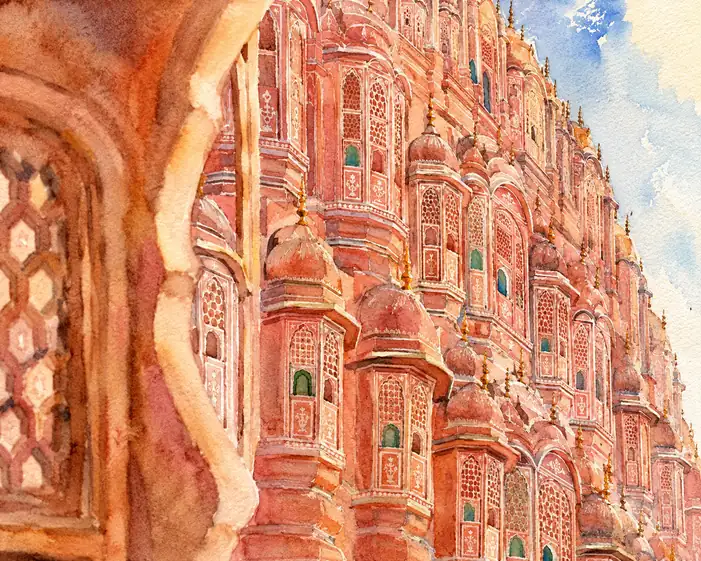 Melody of the Latticed Winds
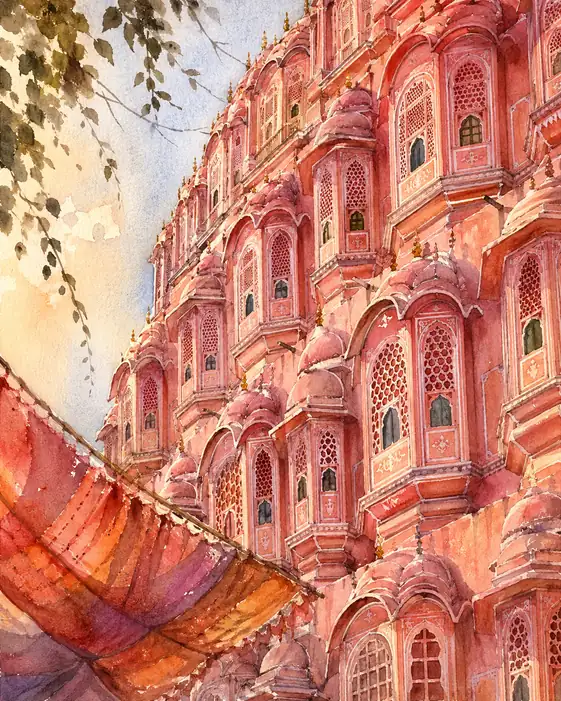 Lullaby of a Thousand Breezes
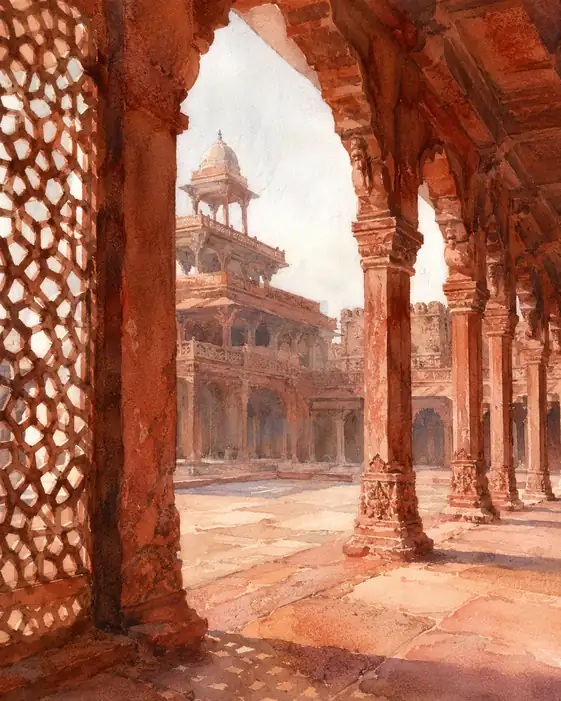 The Courtyard of Whispering Shadows
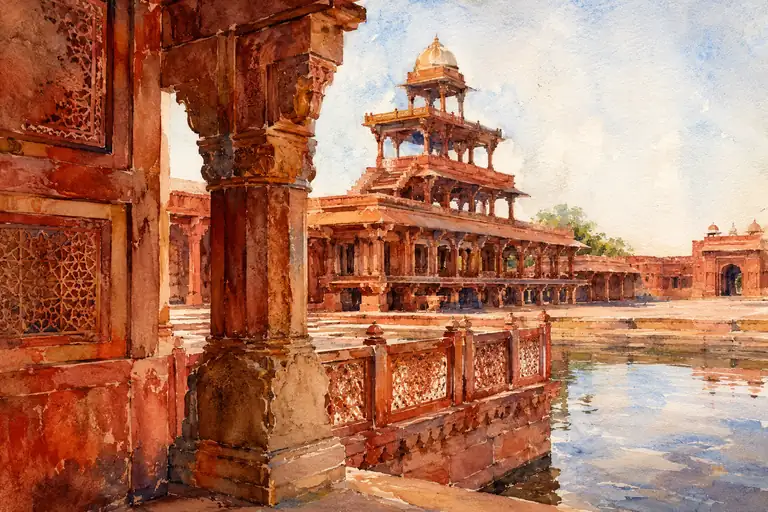 The Palace of Liquid Mirrors
 Where Stone Meets the Wind
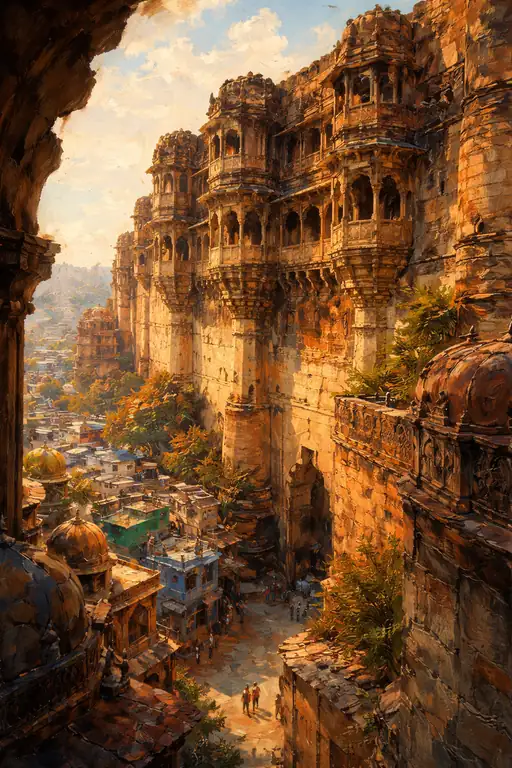 Echoes of Empire: The Sunlit Metropolis
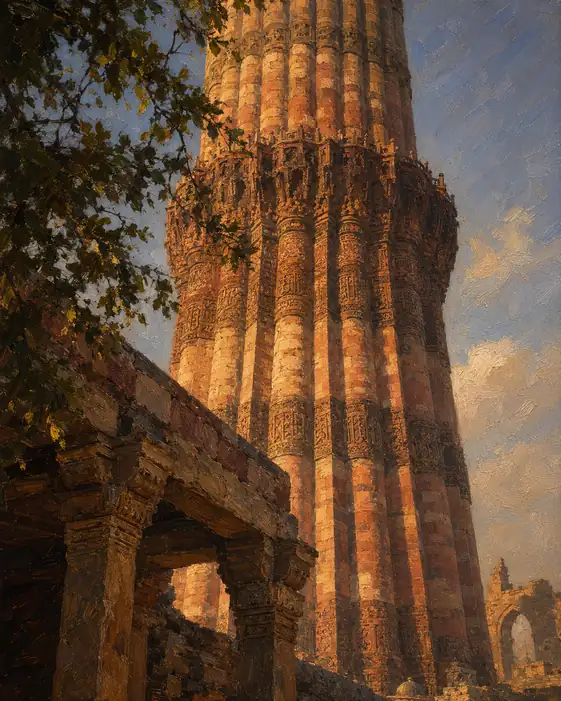 Whispers of the Eternal Minaret
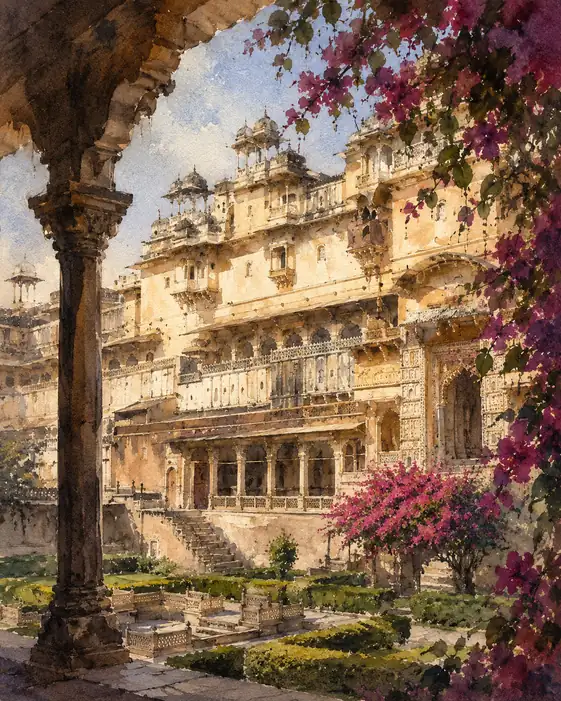 Echoes of a Royal Spring
 Beyond the Sacred Veil