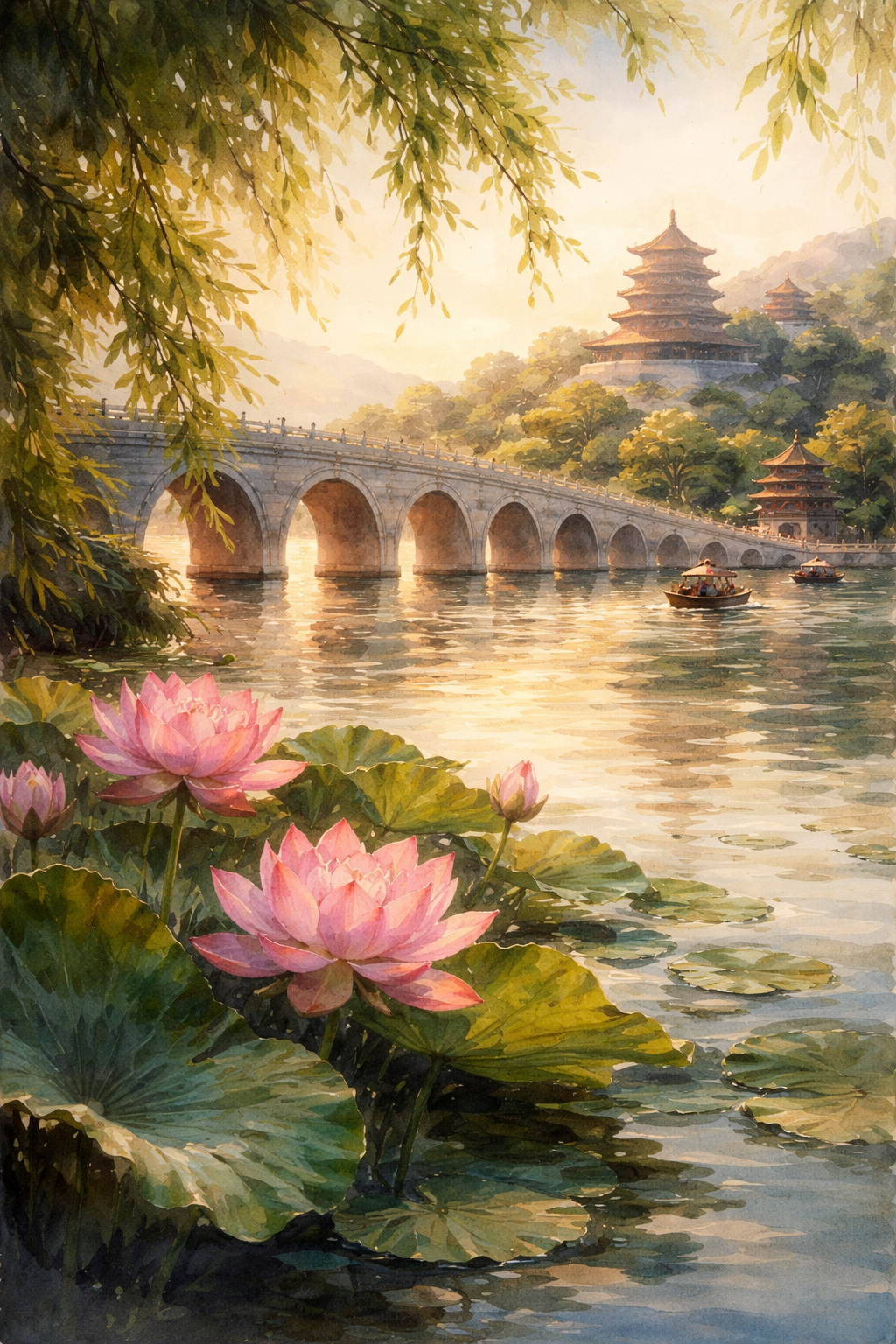
Golden Lotus in the Imperial Garden
Critique
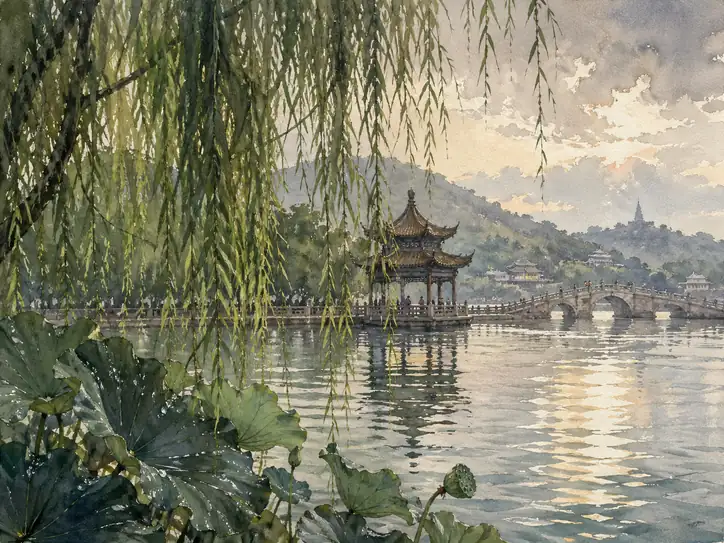
1. Introduction This painting, rendered in a sophisticated watercolor style, depicts a tranquil and idealized Chinese garden landscape during the golden hour. The composition skillfully integrates several iconic architectural and botanical elements, such as a multi-arched bridge and towering pagodas, set amidst a blossoming lotus pond. This work serves as a prime example of a landscape that emphasizes harmony, balance, and the serene beauty of traditional East Asian aesthetic principles. 2. Description The foreground is dominated by large, vibrant pink lotus flowers and their broad, green leaves, which rise from the reflective surface of the water. In the middle ground, a long, multi-arched stone bridge gracefully spans the river, where small wooden boats carry passengers through the golden reflections. The background features a majestic, multi-tiered pagoda situated on a lush, wooded hillside, with additional smaller structures visible further into the hazy distance. Overhanging willow-like branches at the top frame the entire scene beneath a warm, luminous sky. 3. Analysis The artist makes exceptional use of light and color, employing a warm, monochromatic glow that suggests the soft light of a setting sun. The rhythmic repetition of the bridge's arches creates a strong horizontal movement that contrasts with the verticality of the pagodas and the foreground lotus stems. Atmospheric perspective is achieved through the use of softer edges and lighter values for the distant hills and structures. The detailed rendering of the lotus petals and leaves in the foreground provides a tactile contrast to the more fluid, wash-like treatment of the water and sky. 4. Interpretation and Evaluation This work successfully evokes a sense of peace and nostalgia for a classical era of landscape design. The technical execution is highly proficient, particularly in the artist's ability to capture the specific quality of golden light reflecting on various surfaces. While the subject matter is traditional, the composition is expertly balanced, leading the viewer's eye from the intimate detail of the lotus blossoms to the grand scale of the architectural landscape. The painting demonstrates a profound understanding of both the structural properties of the architecture and the delicate forms of the natural world. 5. Conclusion An initial impression of overwhelming warmth and serenity is supported by the intricate details found in both the natural and man-made elements of the scene. The painting masterfully balances the organic, flowing forms of the lotus and willow with the geometric precision of the stone bridge and pagodas. Its success lies in its ability to transport the viewer into a timeless, harmonious world where nature and architecture coexist in perfect unity. Ultimately, this work remains a beautiful and technically accomplished celebration of cultural heritage and natural grace.
Same Subcategory
Similar Artworks
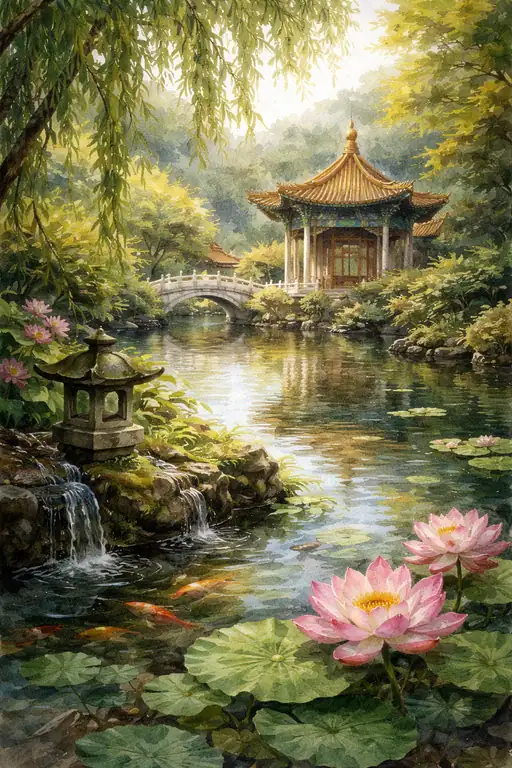 Serenity of the Gilded Pavilion
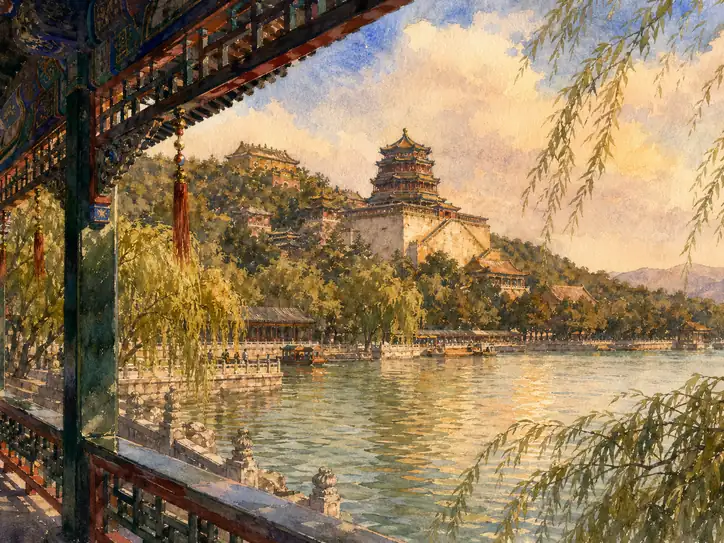 Golden Reflections of a Timeless Garden
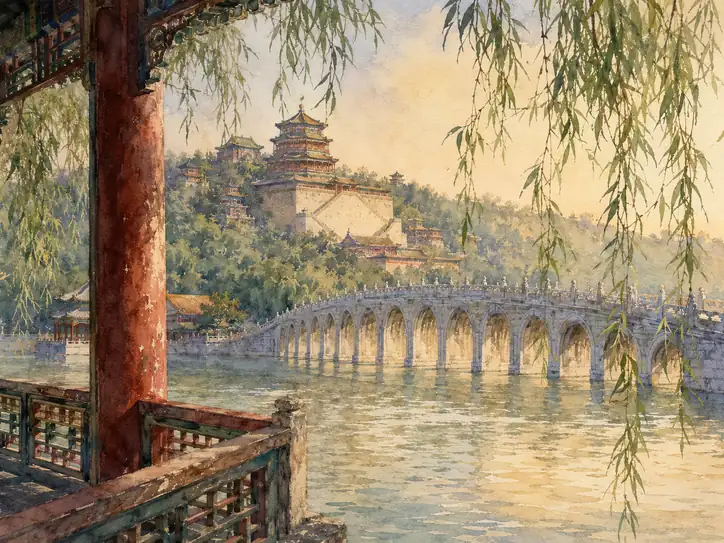 Where the Willow Whispers to the Bridge
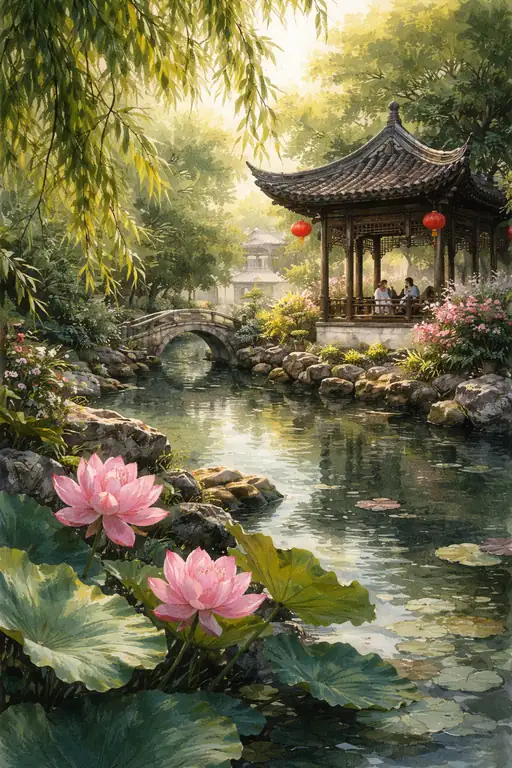 Tranquility in Bloom: The Lotus Pavilion
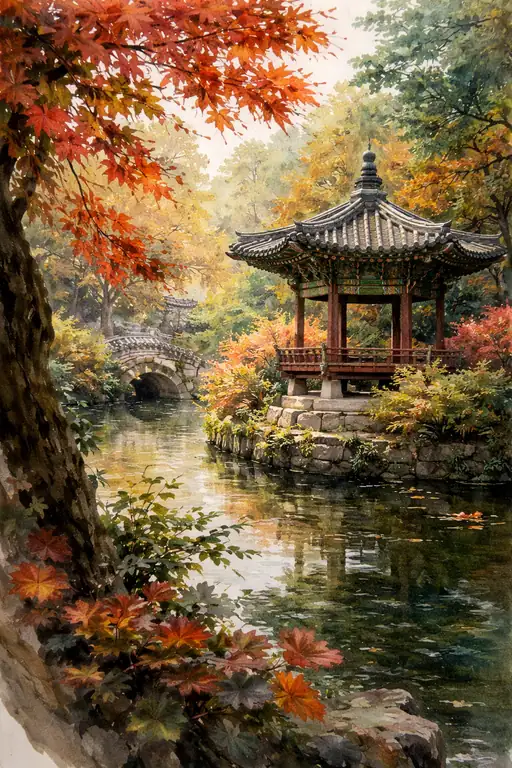 Crimson Leaves Reflected in Autumn's Mirror
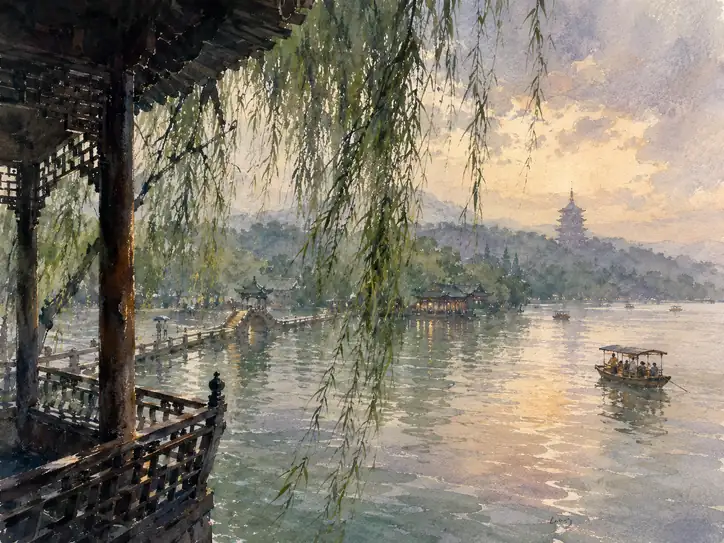 Eternity Painting the Dusk
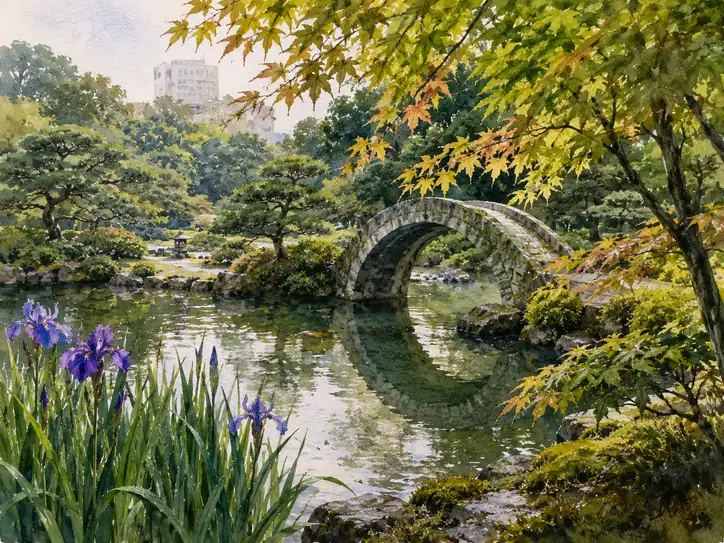 Where the Heart Finds Its Circle
 Golden Harmony at West Lake
 Sunset Harmony in the Temple Garden
 Whispers of the Water Court