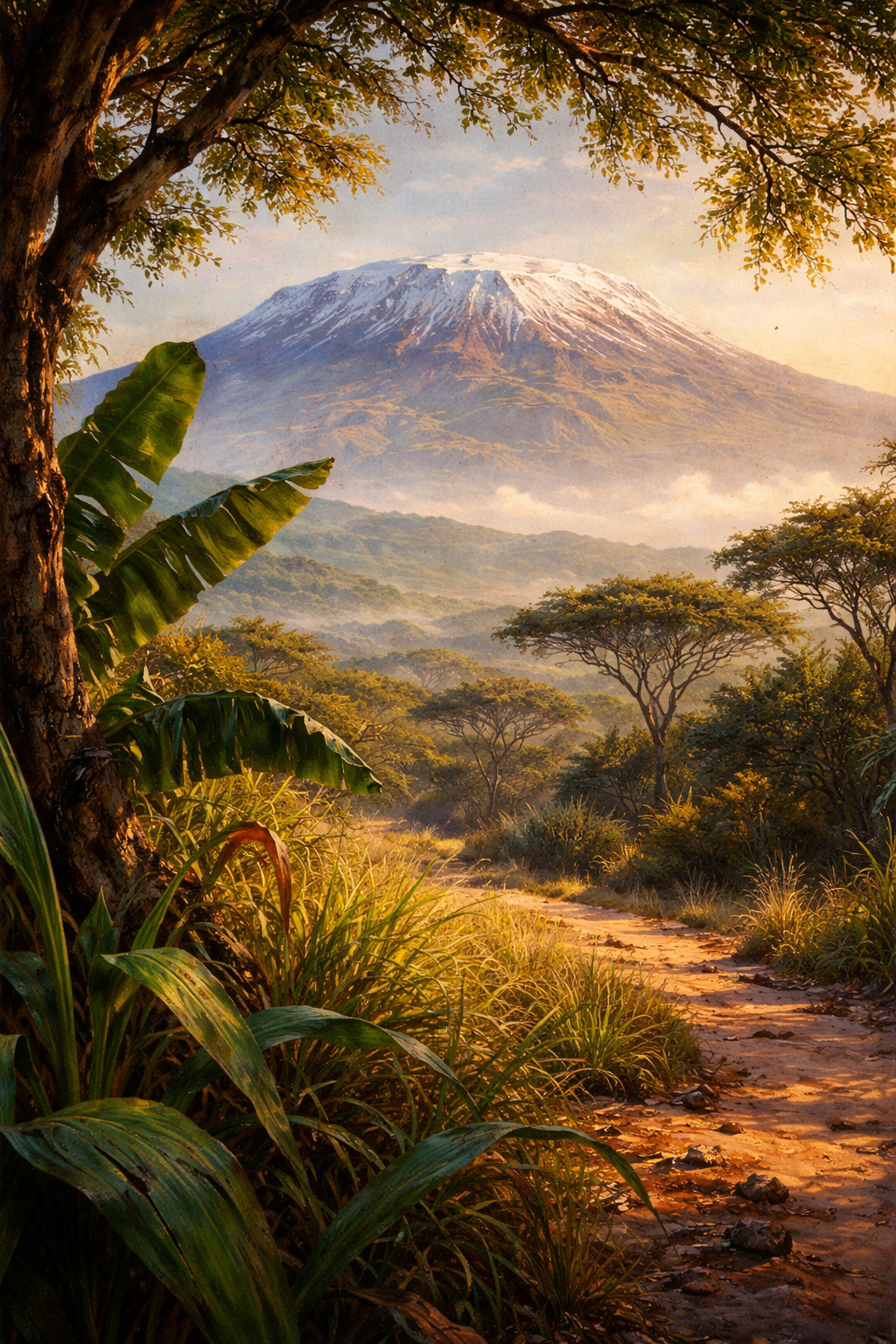
The Kilimanjaro View: A Path to the Snow-Capped Peak
Critique
1. Introduction This oil painting presents a breathtaking expansive view of a snow-capped peak rising dramatically above a lush savanna landscape. The work captures a serene moment where the untamed beauty of the foreground meets the monumental stillness of the distant heights. The artist effectively utilizes natural framing to draw the viewer into a meticulously detailed world of vibrant vegetation and atmospheric depth. It serves as a romanticized depiction of a diverse ecosystem, blending the tropical and the alpine in a single, harmonious frame. 2. Description In the foreground, a rugged dirt path winds from the bottom right into the center, flanked by dense tropical foliage including large banana-like leaves and tall, golden grasses. A large, gnarled tree on the left provides a dark, textured vertical element that arches over the top of the scene, its leaves catching the warm light. The middle ground is filled with a rolling savanna dotted with acacia-like trees and low shrubs, bathed in a soft mist that blurs the transition to the background. Dominating the upper third of the canvas is a massive, broad-shouldered mountain with its upper slopes covered in brilliant white snow, standing against a pale, luminous sky. 3. Analysis The composition is classicly structured, employing a strong foreground "repoussoir" through the framing tree on the left to create an immediate sense of three-dimensional space. One can observe a masterful use of atmospheric perspective, as the vibrant greens and earthy browns of the path gradually give way to the hazy blues and soft purples of the mid-distance hills. The lighting is remarkably consistent, suggesting a warm golden hour where the low sun casts long shadows and illuminates the textures of individual leaves and the rugged facets of the mountain. These technical choices direct the eye along the path, inviting a visual journey toward the majestic peak. 4. Interpretation and Evaluation This artwork can be interpreted as a celebration of the sublime in nature, juxtaposing the temporary life of tropical flora with the eternal presence of the snow peaks. The execution displays a high level of technical proficiency, particularly in the rendering of light and the complex textures of the savanna’s varied vegetation. The artist successfully manages to balance the high contrast of the shaded foreground with the high-key brillance of the snow caps without losing detail in either. The work possesses a nostalgic quality, echoing the spirit of 19th-century landscape explorers who sought to capture the grandeur of newly discovered terrains. 5. Conclusion Ultimately, the painting is an evocative study of natural harmony and scale, where every element contributes to a sense of overwhelming beauty. The initial impression of a simple landscape matures into a deep appreciation for the carefully balanced ecological narrative presented by the artist. It is a work that highlights the delicate relationship between the small, lived-in details of the path and the incomprehensible scale of the mountain. This piece effectively conveys a feeling of wonder and respect for the natural world’s diverse and majestic manifestations.
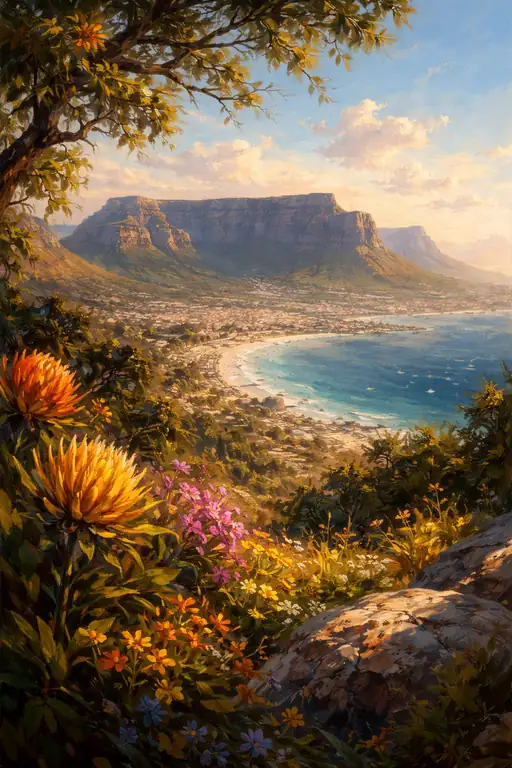 Where Wildflowers Meet the Sea
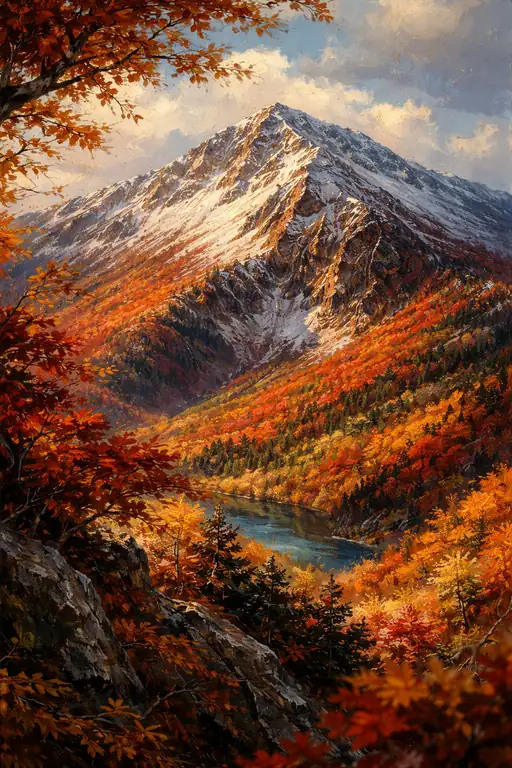 Autumn's Embrace Beneath the Frozen Peak
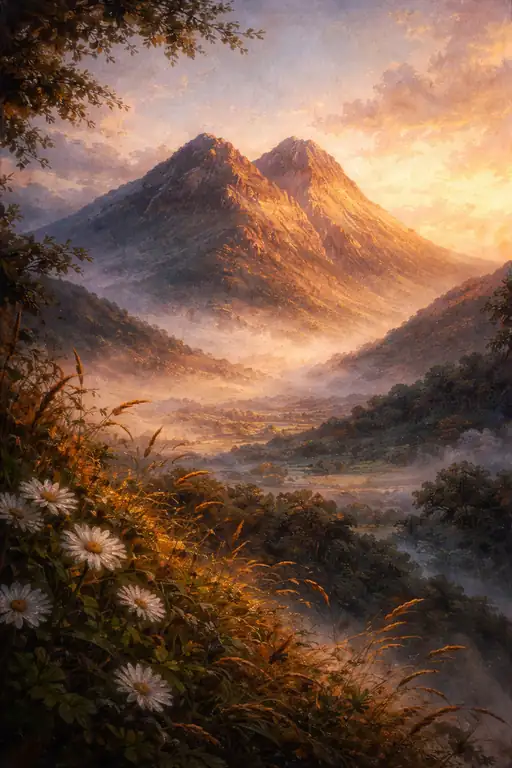 Daisies' Dream: Under the Twin Peaks
 Breath of the Primordial Earth
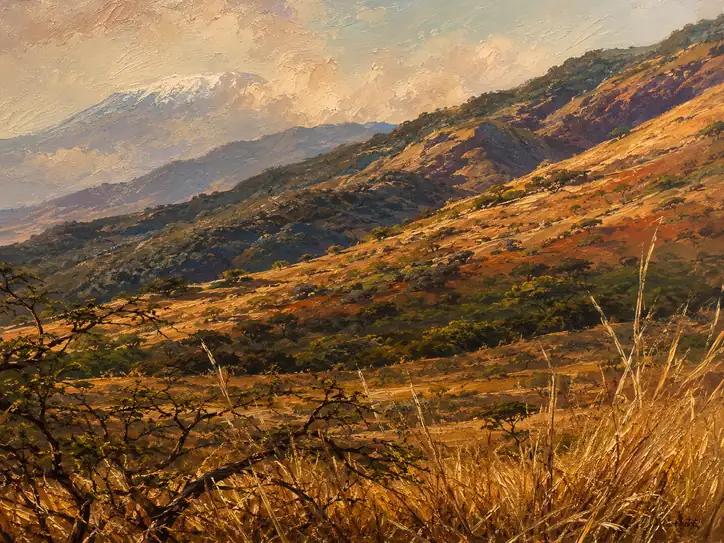 The Eternal Crown
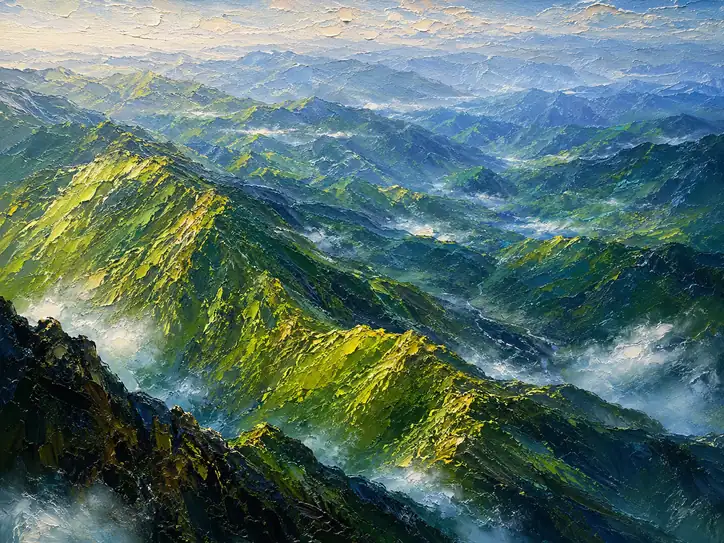 The Titan's Golden Crest
 Kingdom Above the Clouds
 Above the Sea of Clouds
 The Ascent of Glowing Twilight
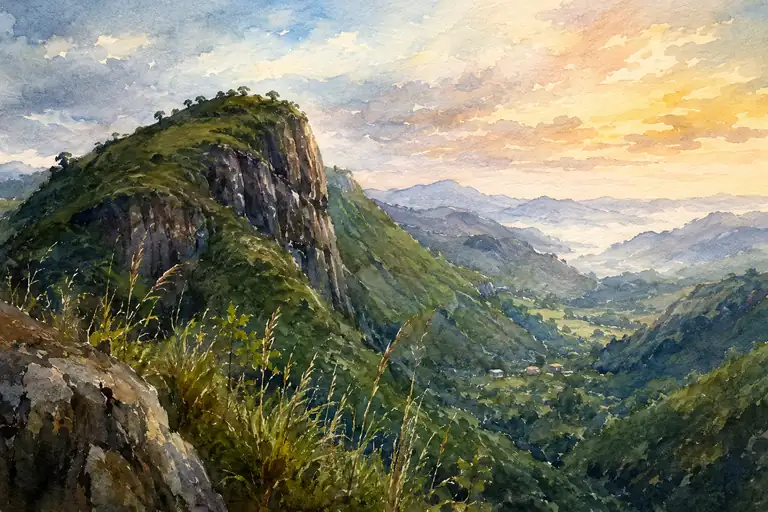 Whispers of the Waking Valley
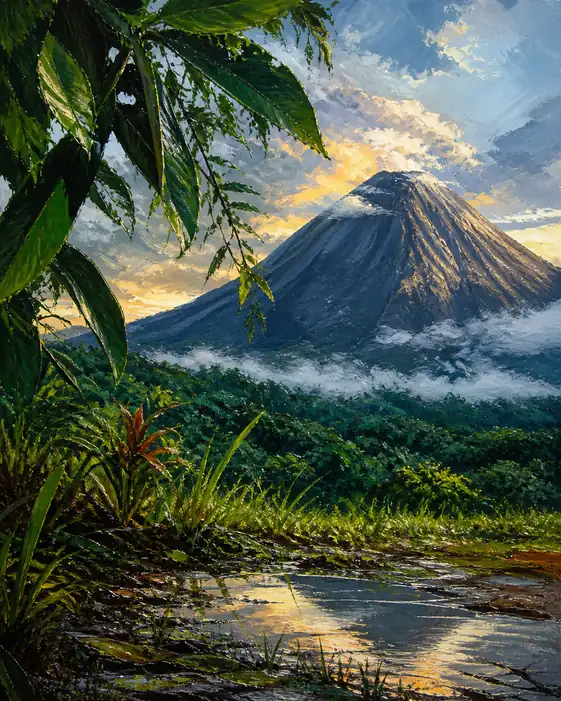 Majesty of the Golden Peak
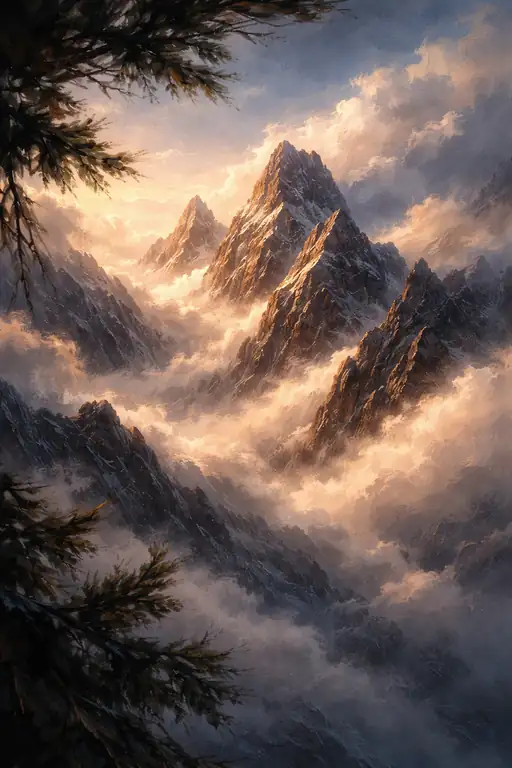 Eternity Above the Mist