Faith Carved in Light
Critique
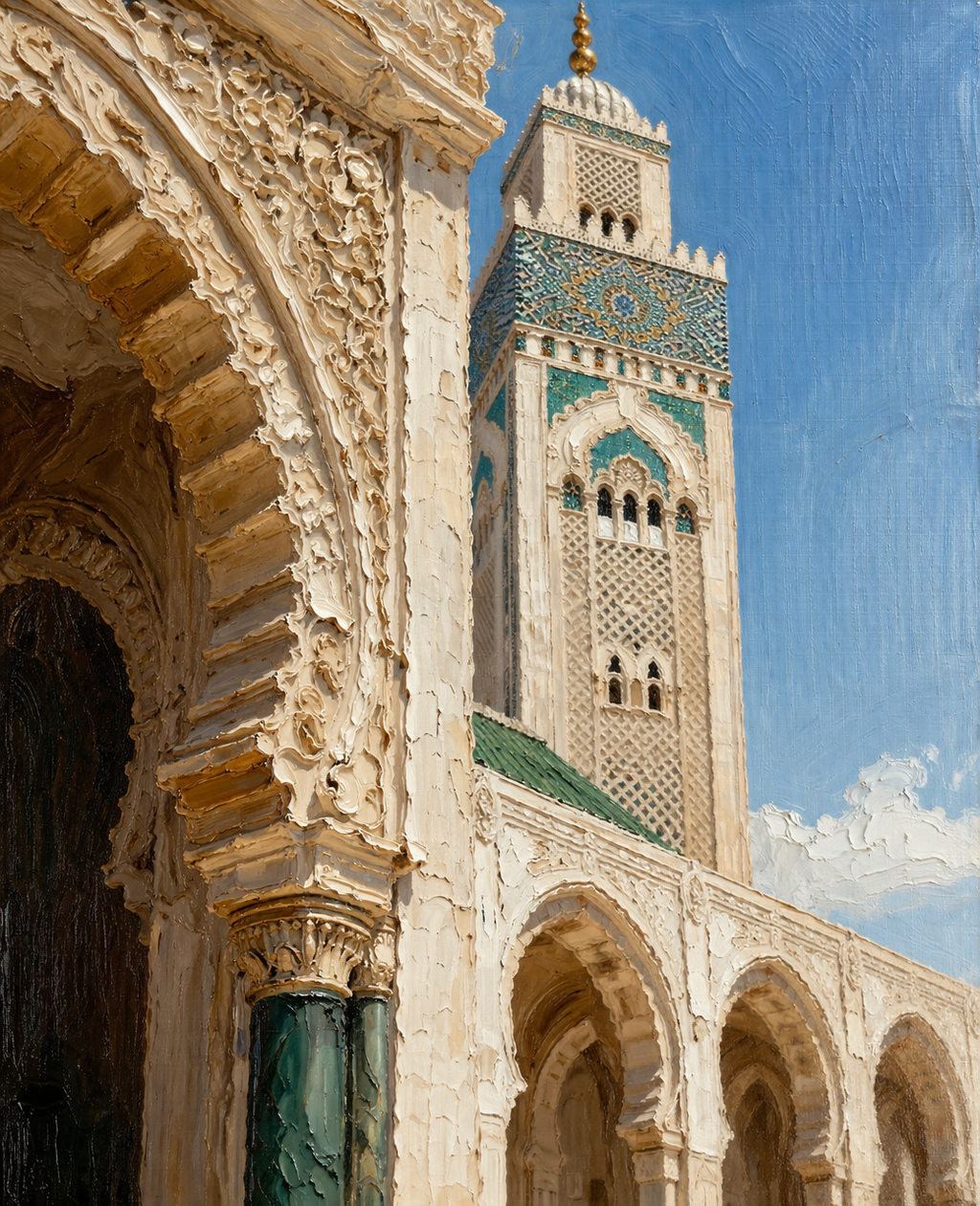
1. Introduction This oil painting provides an intimate and highly textured architectural study of the Hassan II Mosque in Casablanca. The artist focuses on the interplay between the intricate decorative elements of the structure and a vigorous impasto technique that adds a three-dimensional quality to the canvas. By narrowing the field of vision to a close-up perspective, the work emphasizes the monumental scale and the repetitive geometric beauty of Islamic design and Moroccan craftsmanship. 2. Description The composition is dominated on the left by a massive, sculpted arch rendered in pale cream tones with exceptionally thick paint. Below it, a dark green column base appears with visible, swirling brushstrokes. In the middle ground, the tall minaret rises against a bright blue sky, showcasing detailed "zellige" tile patterns in turquoise and green, alongside delicate lattice-like stone carvings. A row of smaller arches recedes into the lower right, further emphasizing the grandiose spatial arrangement of the mosque’s plaza. 3. Analysis Formally, the painting is characterized by the tension between the precision of the architectural patterns and the raw, expressive application of the oil paint. The thick ridges of paint on the arch catch the light, creating actual shadows on the surface of the canvas that enhance the sense of physical depth. The artist uses a selective color palette, where the neutral tones of the stone are punctuated by vibrant greens and the saturated blue of the sky. This contrast directs the viewer’s focus toward the decorative crown of the minaret. 4. Interpretation and Evaluation The work successfully transforms a traditional architectural subject into a modern tactile experience, highlighting the complexity of the mosque through bold, confident strokes. The choice to utilize extreme impasto allows the artist to bridge the gap between representational painting and sculpture, making the stone’s weathered texture feel palpable. The execution demonstrates a high degree of technical control, as the artist manages to maintain the structural integrity of the complex patterns even while using a heavy, laden brush. 5. Conclusion In conclusion, this architectural detail study is a powerful celebration of both religious monumentality and the physical properties of oil paint. The juxtaposition of the sharp geometric tiles and the spontaneous, organic ridges of paint creates a unique visual rhythm. Upon closer inspection, the way light dances across the uneven surfaces reveals a sophisticated understanding of atmospheric conditions. It stands as a compelling testament to the enduring beauty of Moroccan architecture viewed through a contemporary expressionist lens.
Same Subcategory
 Mirage of the Amber Domes
 Golden Echoes of Bagan's Heritage
Similar Artworks
 Monolith of Faith and the Resolute Sea
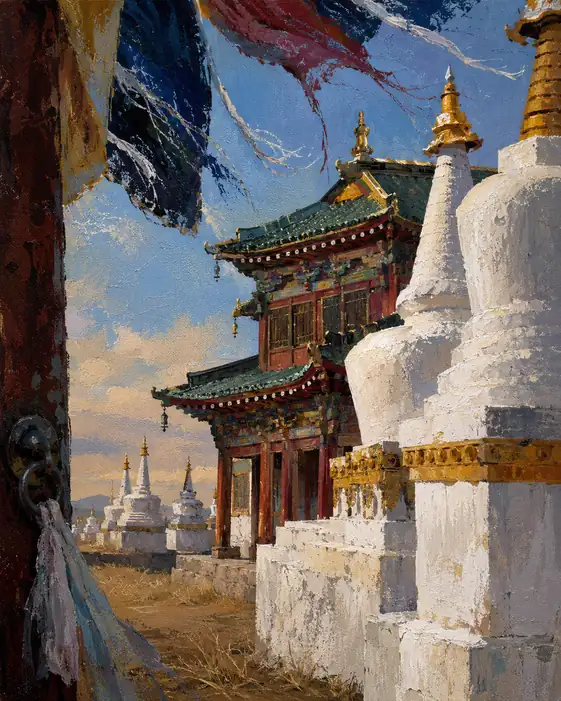 Prayers Carried by the Wind
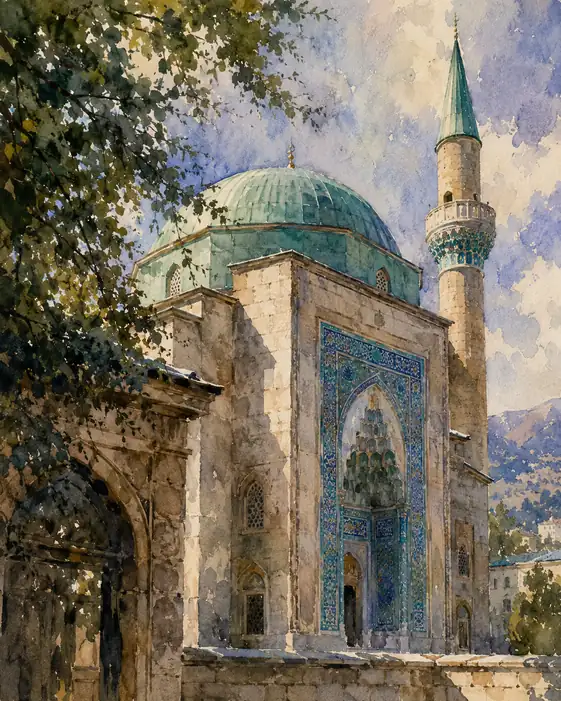 Sanctuary of the Emerald Dome
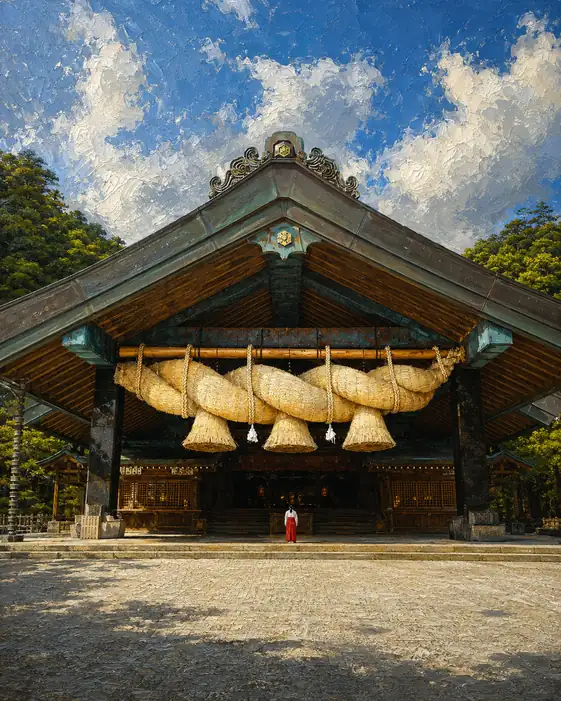 Summer Clouds over the Grand Shimenawa Sanctuary
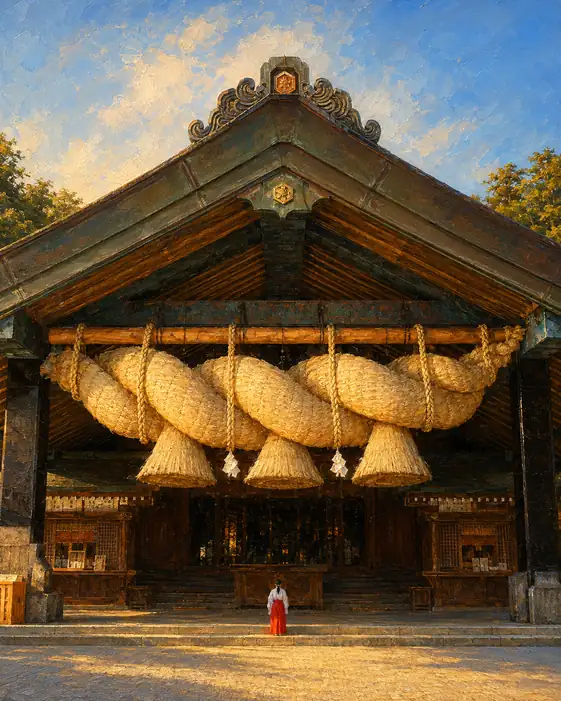 Golden Radiance on the Great Shimenawa
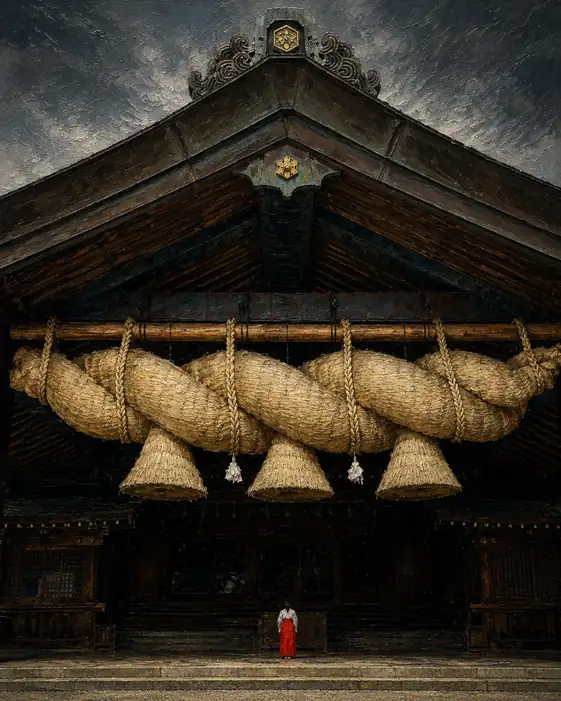 Solemn Gables and the Great Shimenawa
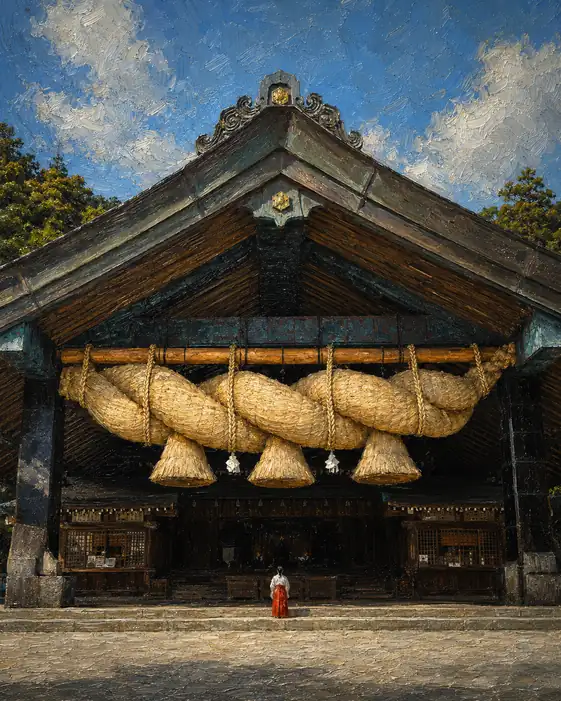 Maiden before the Sacred Shimenawa
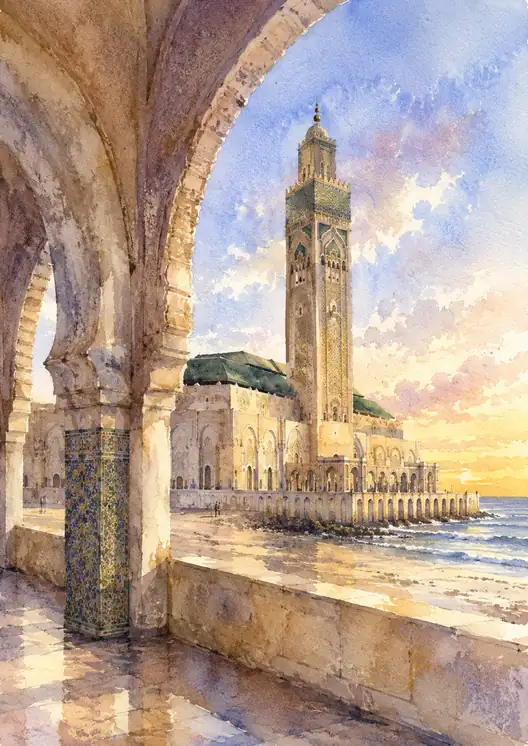 A Prayer at Golden Hour
 Ascending Splendor Under Violet Skies
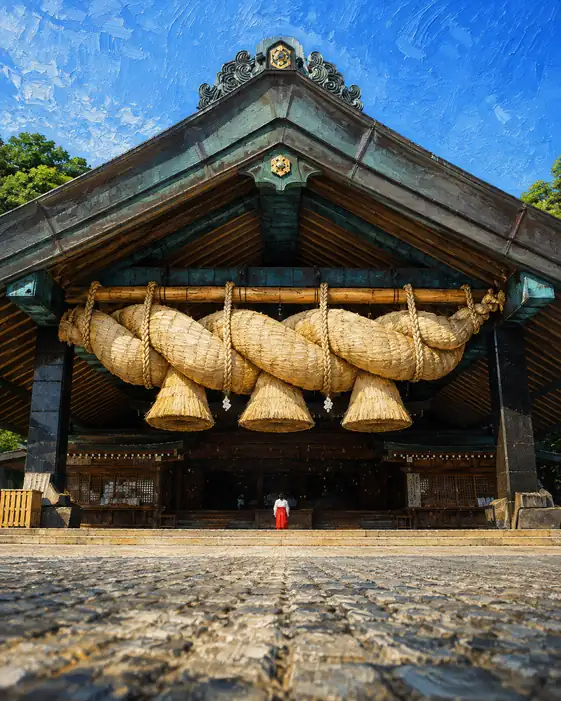 Izumo, a Prayer Binding the Sacred Realm