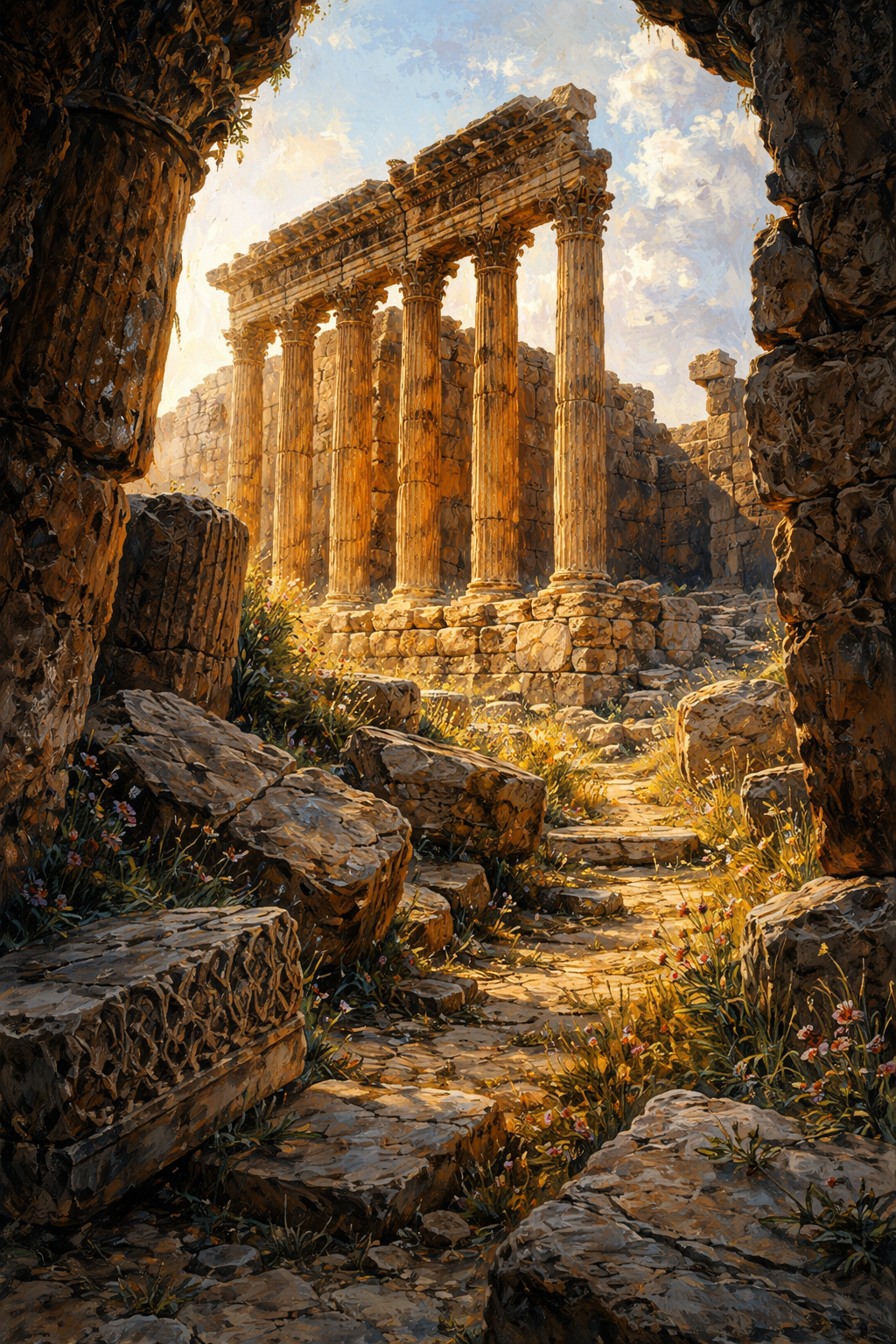
Whispers of the Golden Stone
Critique
1. Introduction This painting offers a majestic view of ancient architectural ruins, capturing the enduring grandeur of classical antiquity. The scene utilizes a dramatic interplay of light and shadow to emphasize the monumental scale of the surviving structures. 2. Description Framed by dark, rugged stone walls in the immediate foreground, the view opens onto a series of towering Corinthian columns standing atop a weathered stone platform. A path of scattered blocks and earth, overgrown with small wildflowers, leads the eye toward these golden-hued pillars. Above, a bright sky filled with soft, textured clouds provides a luminous backdrop that contrasts with the heavy stone elements below. 3. Analysis The composition is defined by a "frame within a frame" technique, which enhances the sense of discovery and three-dimensional depth. The artist employs a heavy, textured brushwork that mimics the aged surface of the stone and the organic complexity of the wild flora. Intense sunlight from the left side of the frame creates a brilliant glow on the pillars, while deep, cool shadows in the foreground heighten the dramatic tension of the vista. 4. Interpretation and Evaluation The work successfully conveys a sense of timelessness and the persistent beauty of historical remnants. The technical skill in rendering the intricate details of the column capitals and the varied textures of broken stone is highly commendable. By juxtaposing the immovable weight of the ruins with the fragile vitality of the wildflowers, the painting explores the relationship between human achievement and the natural passage of time. 5. Conclusion This piece serves as a powerful meditation on the legacy of the past, presented through a lens of both awe and tranquility. Ultimately, the painting invites the viewer to reflect on the permanence of architectural vision amidst the inevitable decay of physical form.
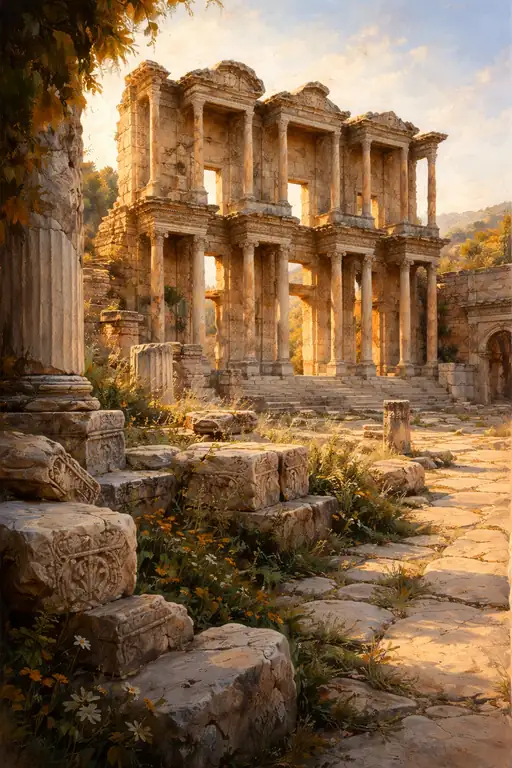 Golden Echoes of the Ages
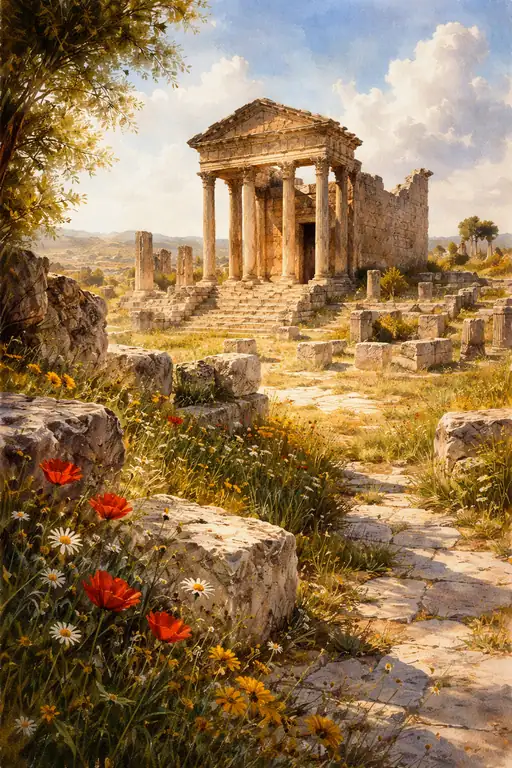 Where Time Sleeps Among the Ruins
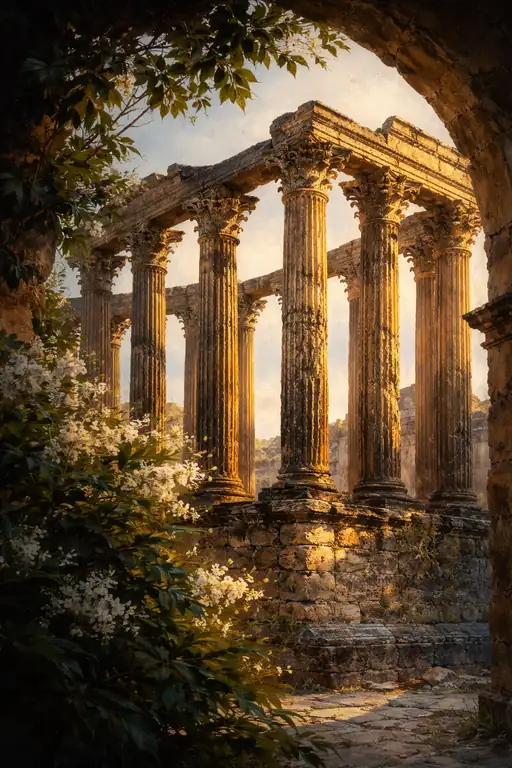 Echoes of Antiquity
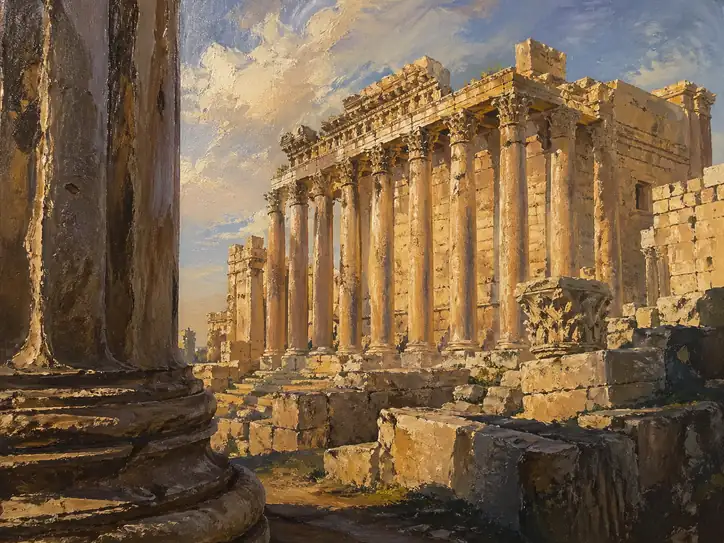 The Golden Echo of Antiquity
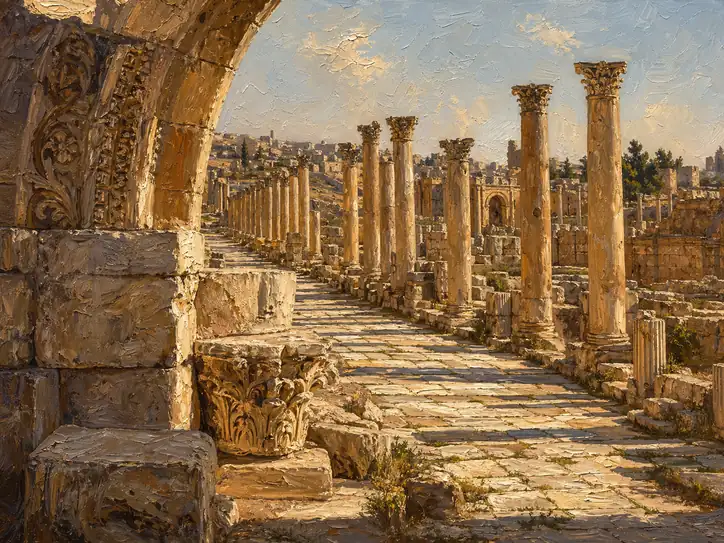 Echoes of the Corinthian Path
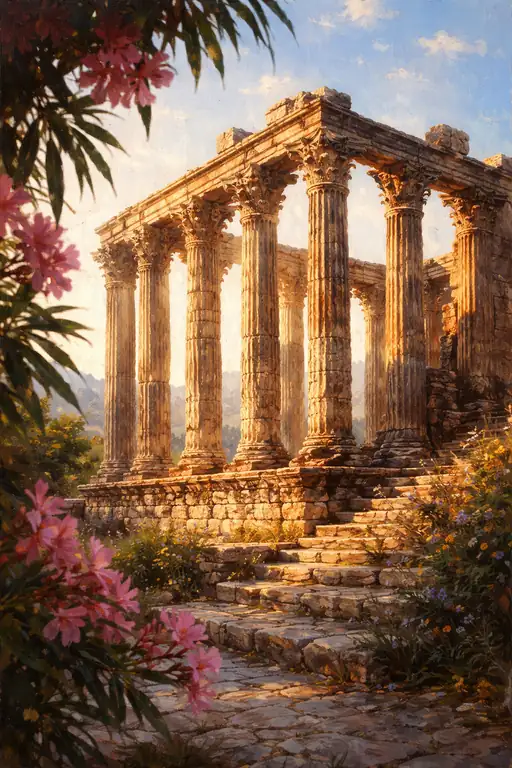 Pillars of Antiquity Awash in Gold
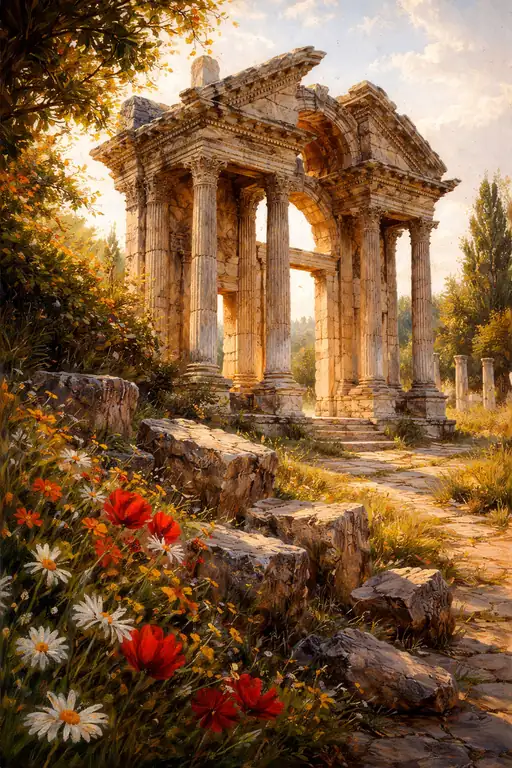 Timeless Pillars Among the Poppies
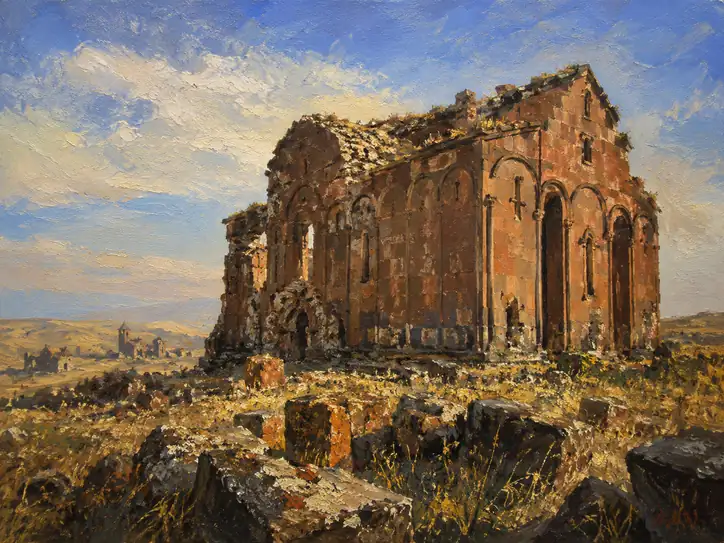 Where the Stone Remembers
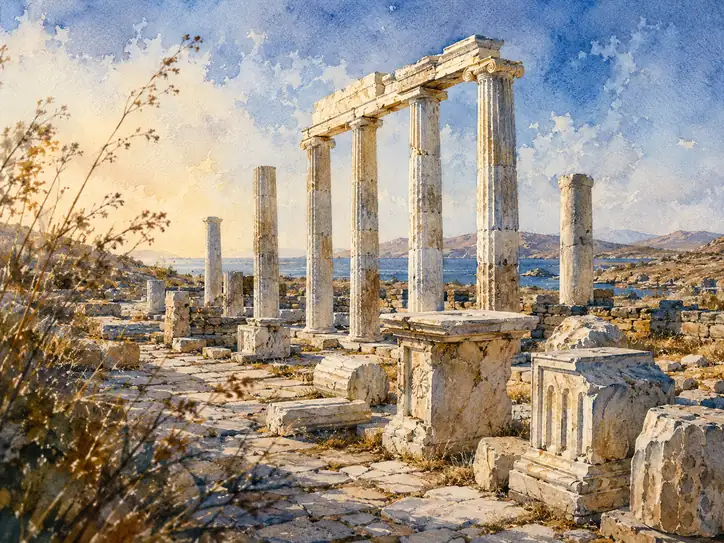 Guardians of the Eternal Sea
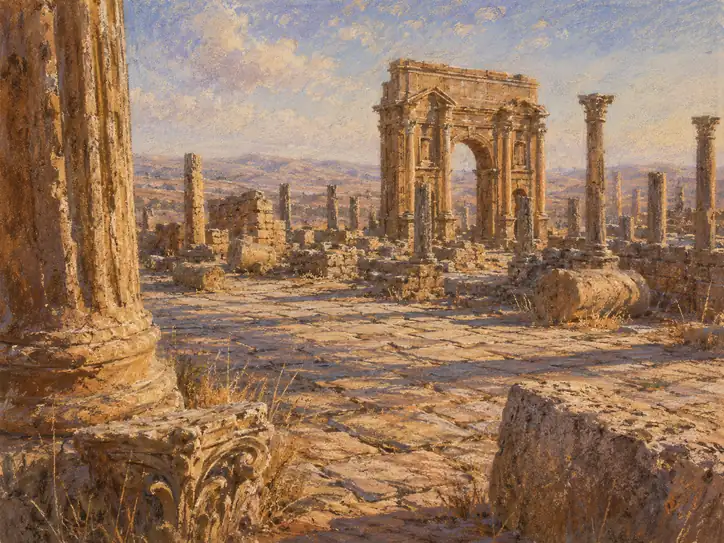 The Silent Dignity of Time