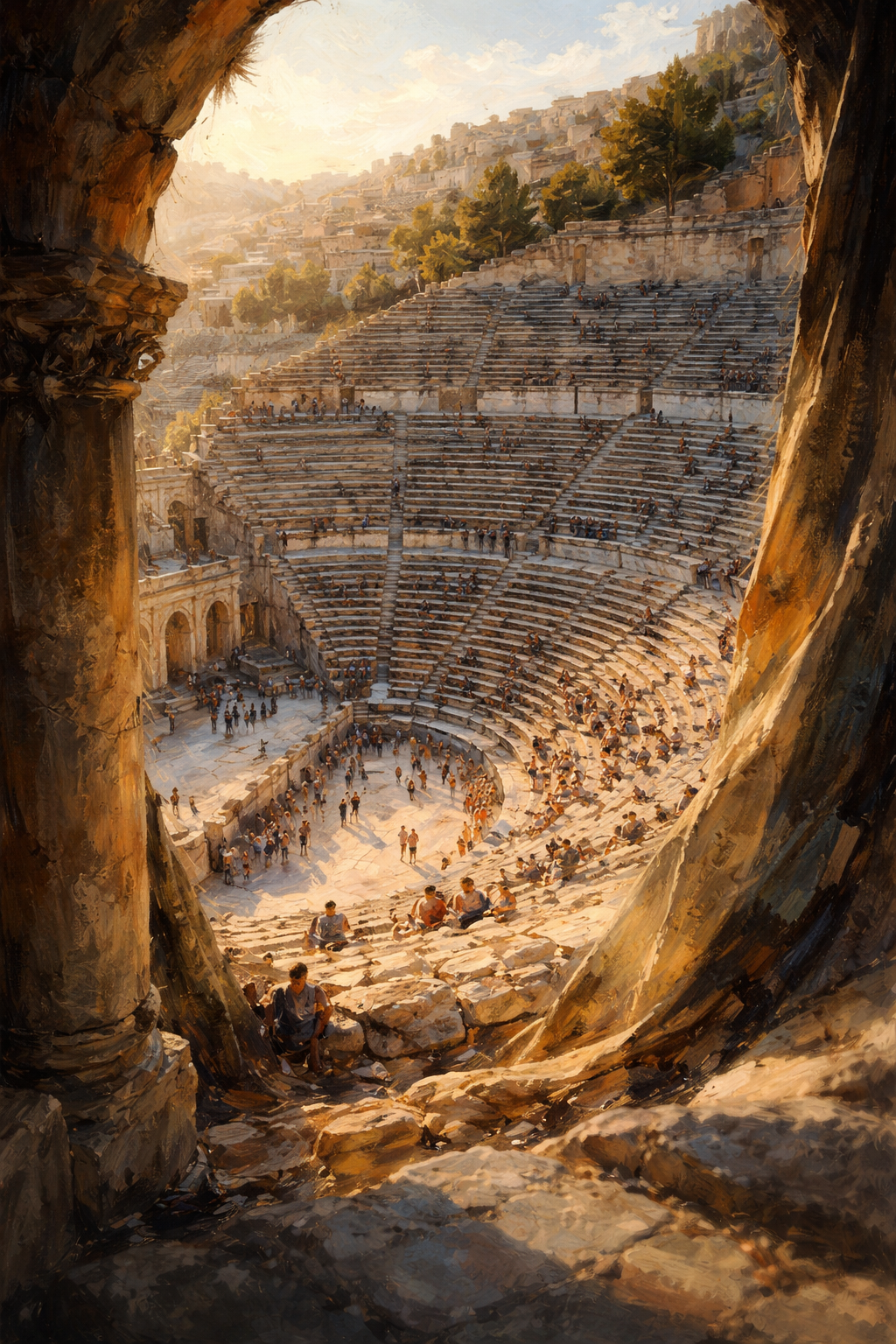
Echoes in Stone: A Portal to the Ancient Theater
Critique
1. Introduction This painting offers a grand and atmospheric view of an ancient Roman amphitheater, capturing the intersection of historical grandeur and contemporary life. The composition utilizes a dramatic framing technique, with two massive, weathered columns in the foreground serving as a portal into the past. By focusing on the vast scale of the architecture and its continued relevance as a public space, the work highlights the enduring power of classical design to facilitate communal experiences across millennia. 2. Description The dominant subject is the semicircular stone seating of the theater, which rises steeply towards a sun-drenched hillside. Dozens of small figures are depicted throughout the stone tiers, reflecting the site's ongoing popularity as a gathering place. In the background, modern or historical buildings are visible atop the hill, integrated into the urban landscape. The entire scene is bathed in the warm, low-angled light of a late afternoon sun, which casts long, dramatic shadows and emphasizes the rugged texture of the stone masonry. 3. Analysis The artist employs a strong one-point perspective that draws the viewer's eye from the shadowed, intricately detailed columns in the foreground towards the brightly lit orchestra and seating area. The contrast between the dark, silhouetted architecture in the immediate foreground and the luminous theater creates a powerful sense of depth and volume. A warm color palette of ochres, siennas, and soft golds dominates the work, with the painterly brushwork adding a sense of movement and vitality to the crowd. The rhythmic patterns of the stone rows provide a visual framework for the composition. 4. Interpretation and Evaluation This work can be interpreted as a celebration of human continuity and the persistent utility of ancient public spaces. The framing of the scene suggests the perspective of a modern observer looking back through time, yet the presence of the lively crowd reminds us that these stones are still very much a part of the present. Technically, the rendering of light and its effect on the weathered stone surfaces is highly successful, successfully capturing a specific, nostalgic moment in time. The scale of the architecture is conveyed with significant skill, avoiding a purely documentary approach in favor of an atmospheric, expressive interpretation. 5. Conclusion Through its combination of architectural precision and evocative lighting, the painting provides a compelling tribute to the enduring legacy of classical amphitheaters. While the initial impression is one of visual warmth and historical majesty, closer inspection reveals a nuanced study of space and human interaction. Ultimately, the work stands as a testament to the artist's ability to blend monumental architecture with the ephemeral quality of late afternoon light, leaving the viewer with a profound sense of temporal and cultural interconnectedness.
Same Subcategory
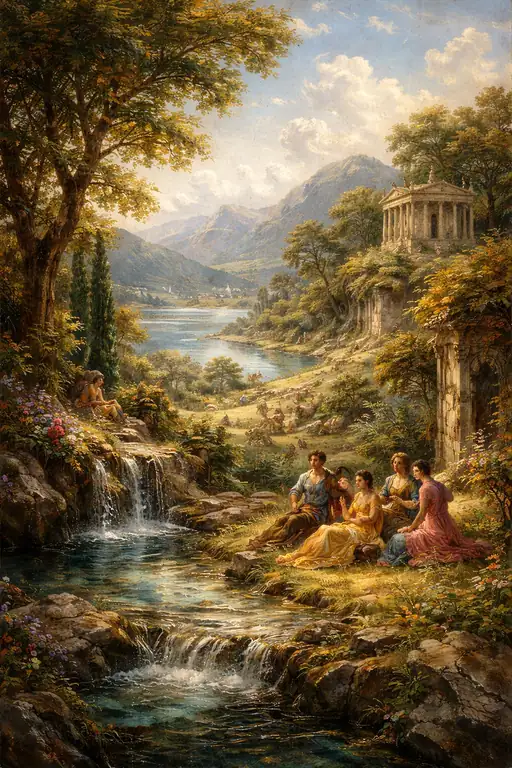 Serenade to the Golden Arcadia
 Eternal Sentinel of the Golden Sands
Similar Artworks
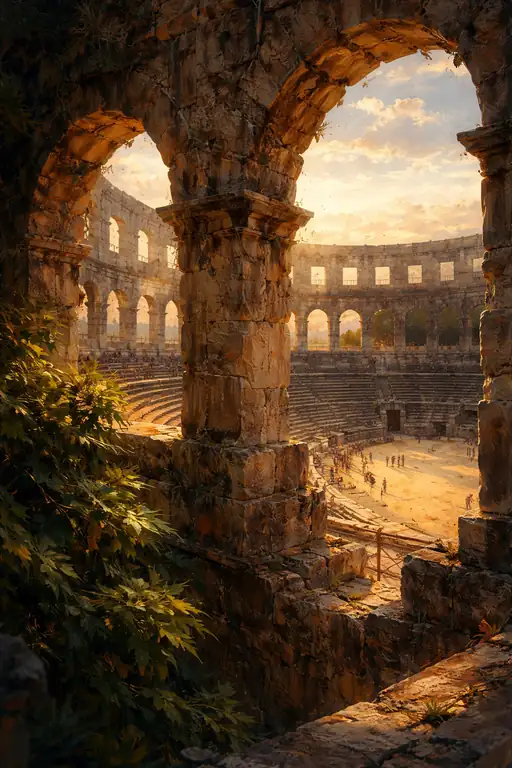 Twilight at the Colosseum
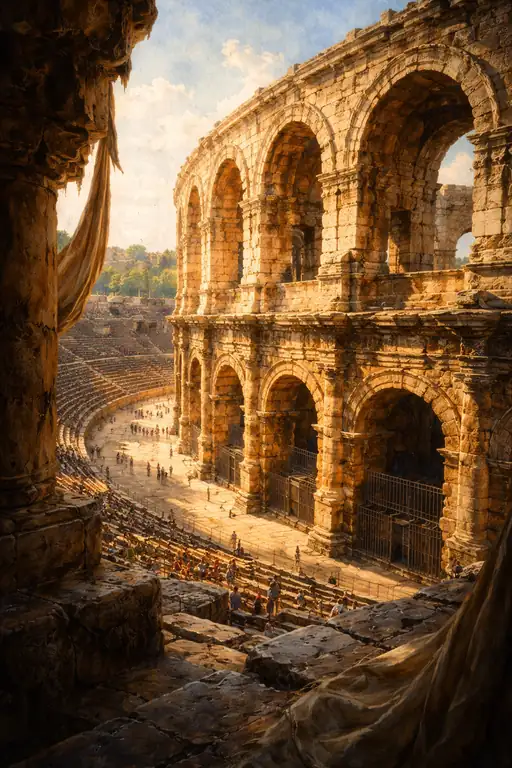 A Glimpse Through Time's Window
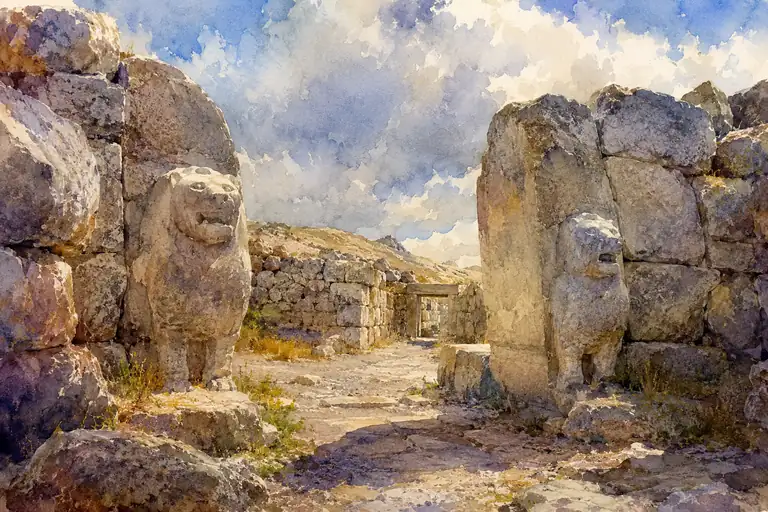 The Silent Roar of Hattusa
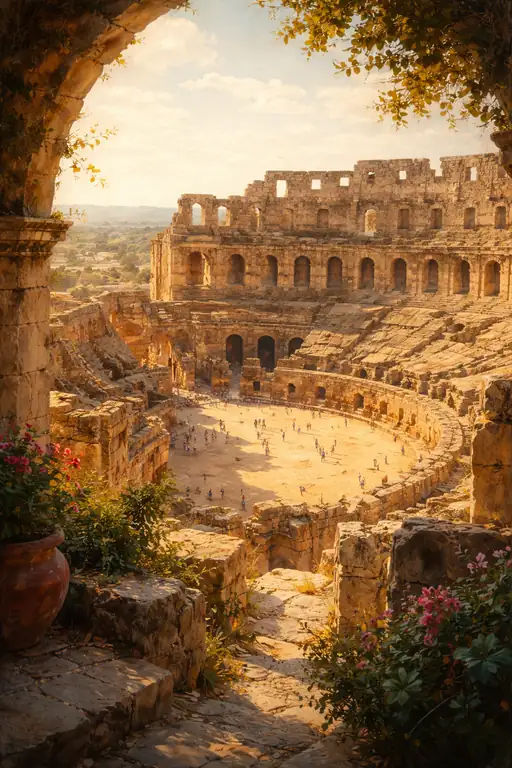 The Sunlit Arena of Time
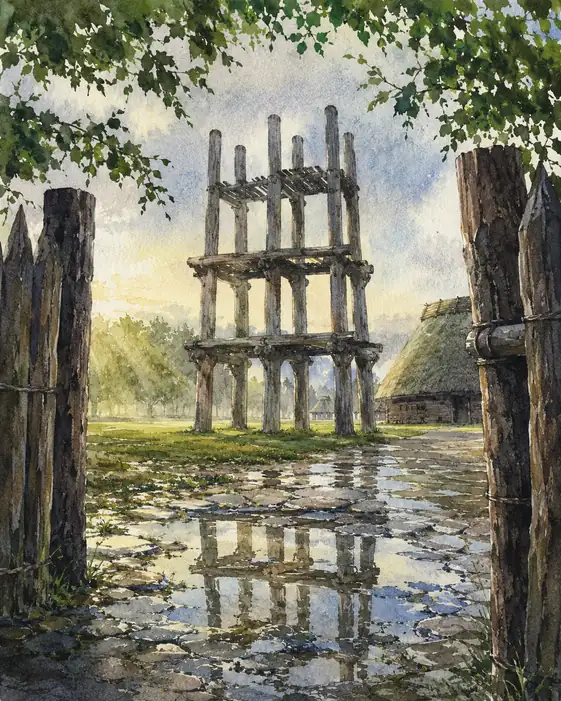 The Empty Tower Remembers Voices
 Gaze into the Golden Horizon
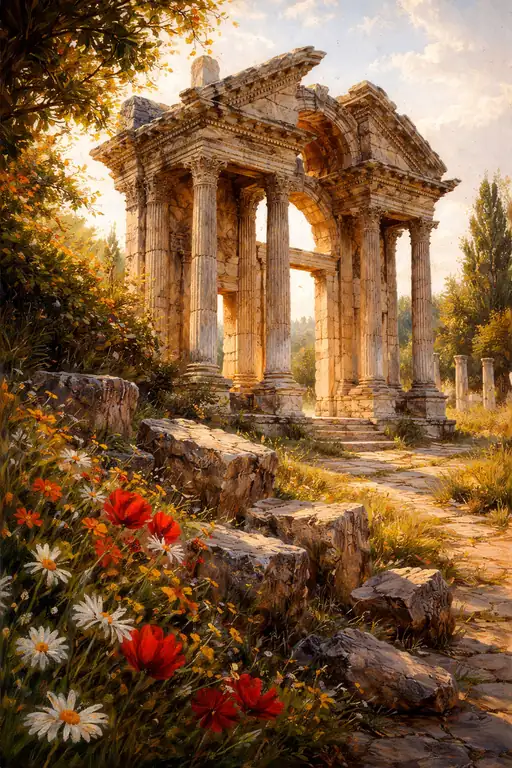 Timeless Pillars Among the Poppies
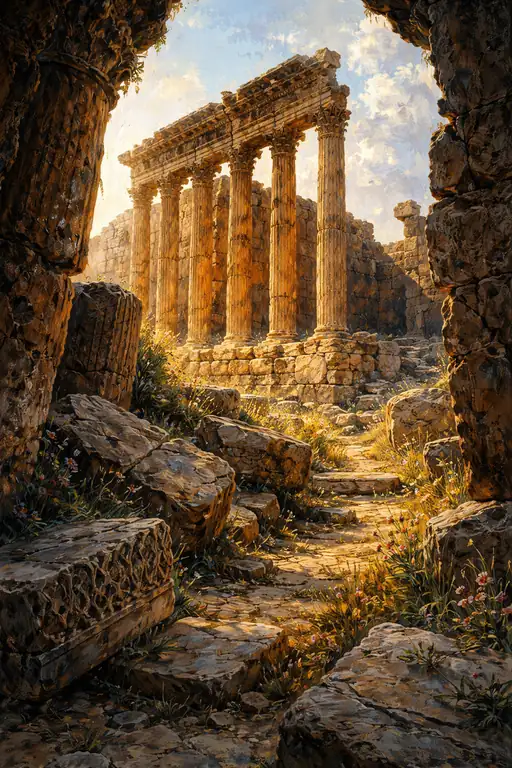 Whispers of the Golden Stone
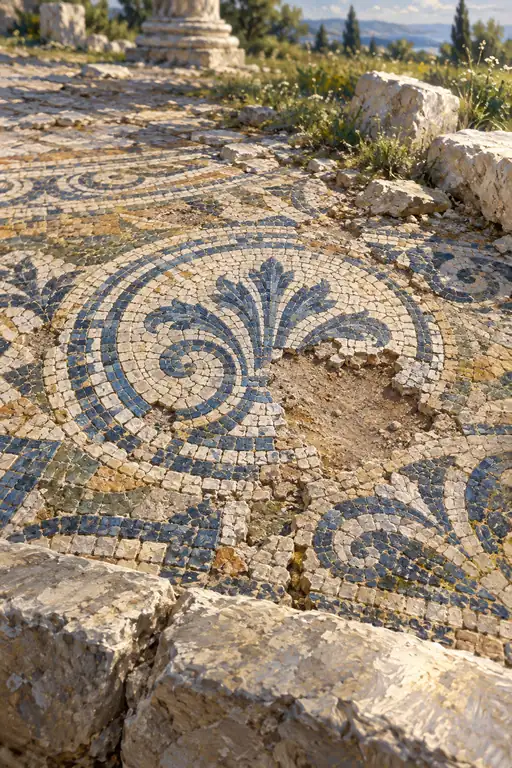 The Blue That Outlived Our Names
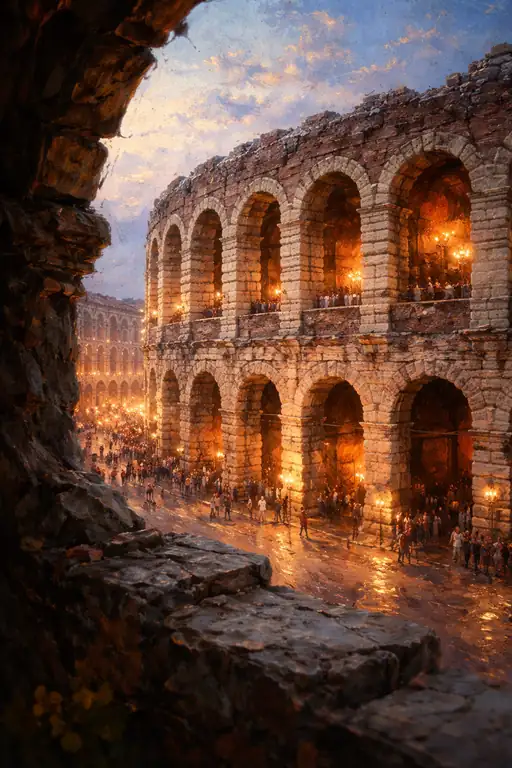 Gathering Under the Twilight Arches