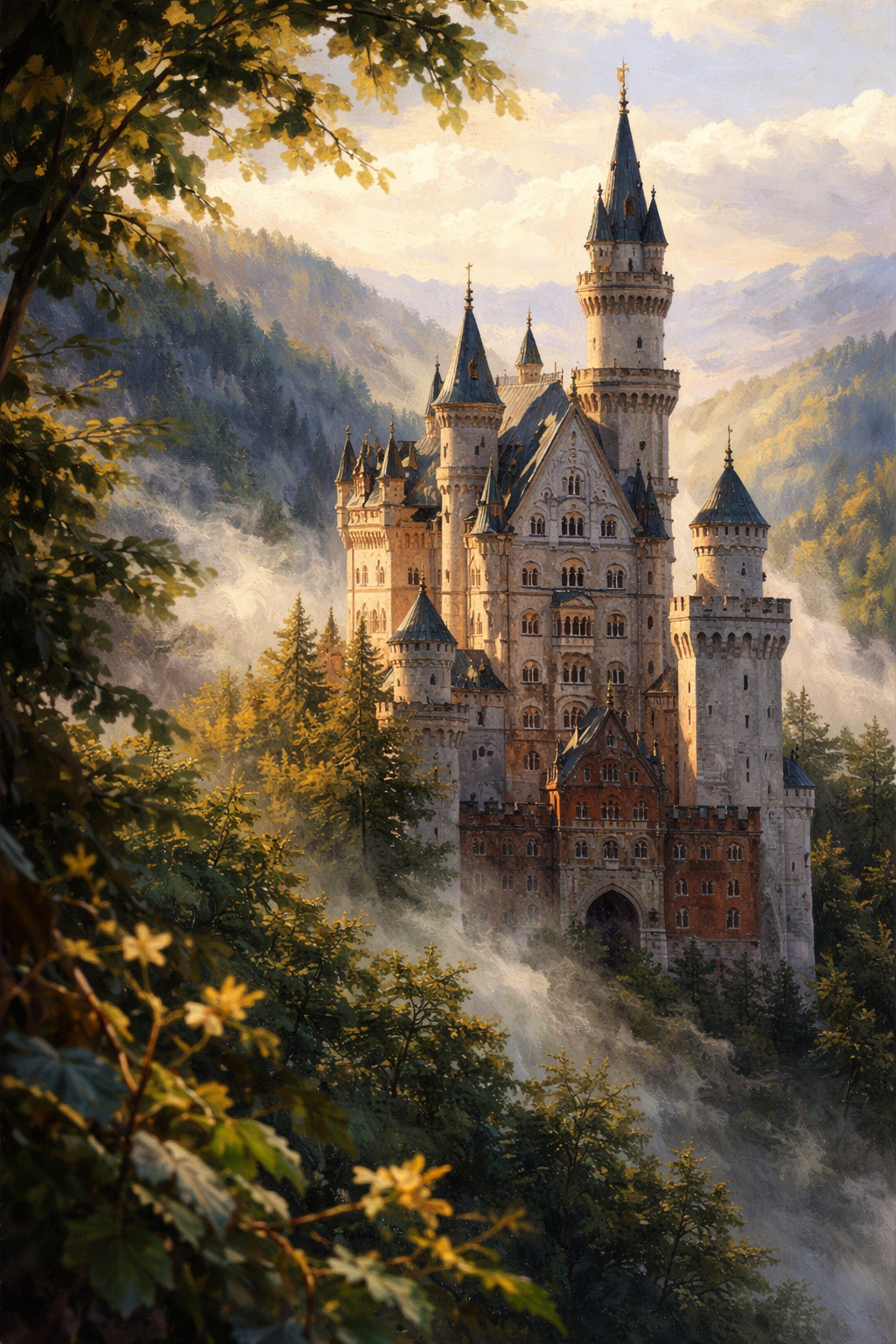
The Misty Splendor of the Alpine Fortress
Critique
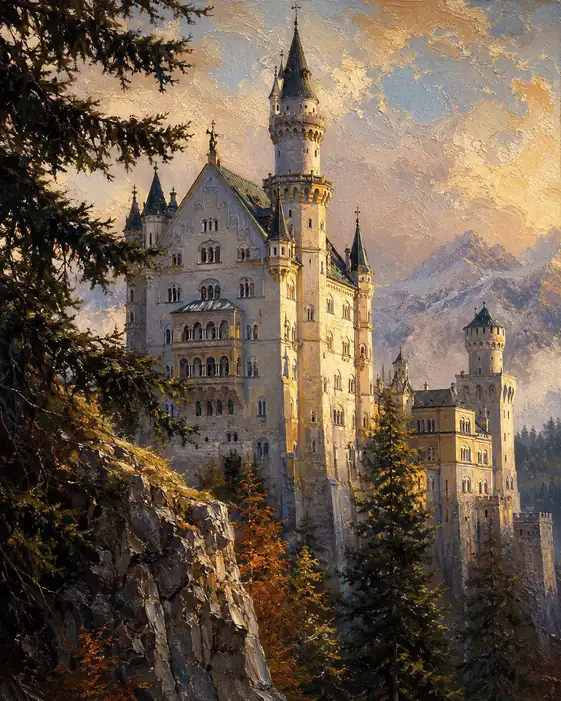
1. Introduction The painting presented here is a vertical composition that captures the majestic presence of a neo-romanesque castle nestled within a misty, alpine environment. This work emphasizes the verticality and grandeur of historical-revival architecture, using light and atmosphere to create a sense of mythic beauty. The scene is masterfully framed by natural elements, which contrast the permanence of stone with the ephemeral nature of mist and foliage. 2. Description The primary subject is a multi-turreted castle with chalk-white walls and dark, pointed steeples, positioned slightly to the right of the center. In the foreground, vibrant green leaves and delicate yellow blossoms provide an organic border that frames the left side and bottom of the view. The middle ground is filled with dense coniferous forests and rising plumes of white mist that partially obscure the lower sections of the fortress, while rugged mountains recede into the distance. 3. Analysis The artist employs a sophisticated color palette, where the warm, sun-kissed tones of the castle’s masonry contrast with the cool greens and blues of the forest and mountains. A strong sense of depth is achieved through the layering of these planes, from the sharp detail of the foreground foliage to the soft, atmospheric rendering of the background peaks. The directional lighting, likely from a rising or setting sun, accents the architectural details and creates a dramatic interplay of light and shadow across the towers. 4. Interpretation and Evaluation This work succeeds in portraying an idealized, romantic vision of European heritage, where architecture becomes a part of the natural landscape. The technical proficiency in rendering both the rigid structures of the castle and the fluid, nebulous quality of the mist demonstrates significant artistic range. By choosing a low-angle perspective, the artist imbues the castle with a sense of overwhelming power and elegance, effectively communicating a theme of timeless stability amidst a changing environment. 5. Conclusion In conclusion, the painting is an exceptional example of architectural landscape art that effectively utilizes atmospheric perspective to enhance its emotional impact. Initially perceived as a traditional scenic view, the work reveals a careful balance of composition and lighting that elevates it to a celebratory study of form and atmosphere. It remains a compelling tribute to the enduring allure of romantic architecture and its harmonious integration into the wild.
Same Subcategory
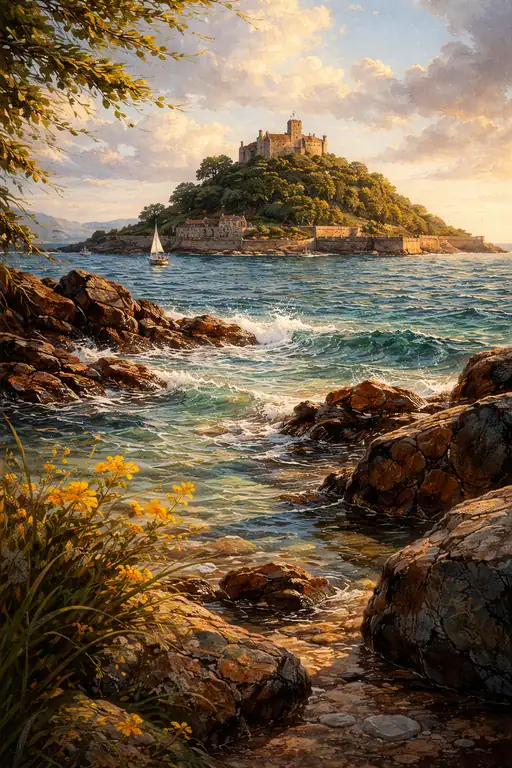 Golden Sunset Over the Island Fortress
Similar Artworks
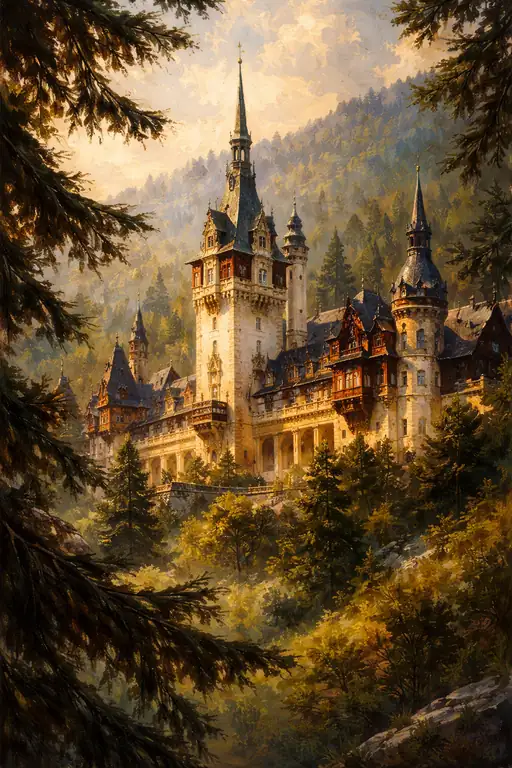 Echoes in the Pine Sanctuary
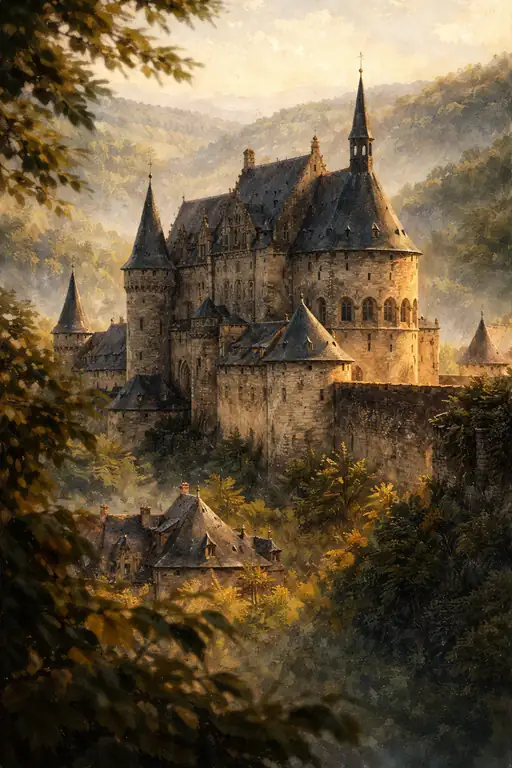 The Sentinel of the Autumn Forest
 Whispers in the Morning Mist
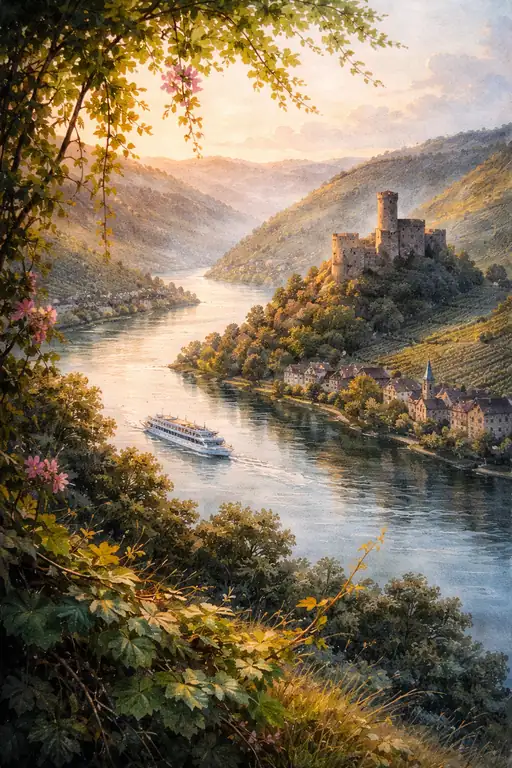 A Voyage Through the Valley of Time
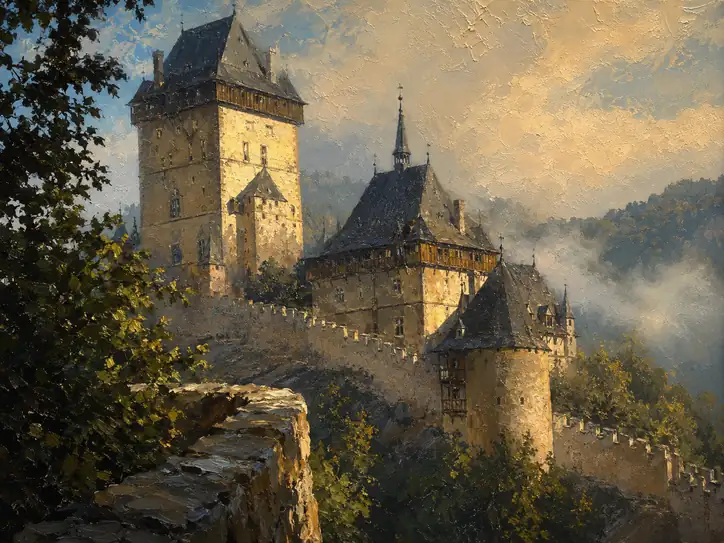 Guardian of the Silent Peaks
 Chateau of the Soft Morning Mist
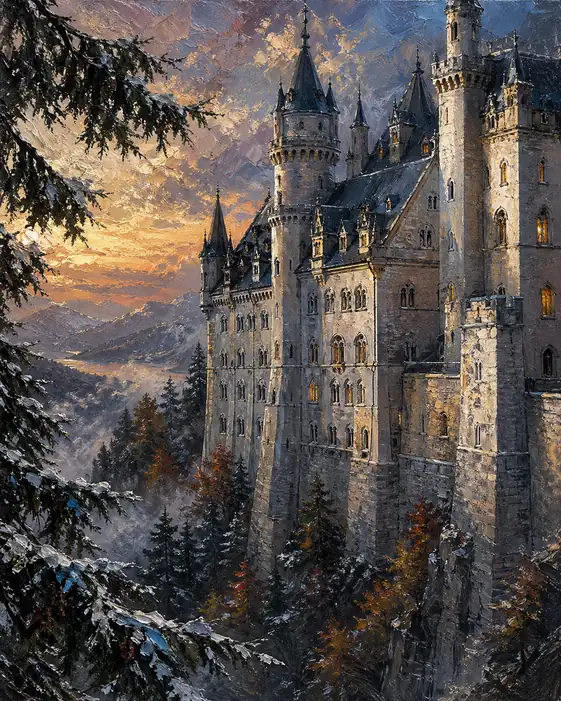 A Solitary Castle Standing Defiant Amidst the Freezing Winter Peaks
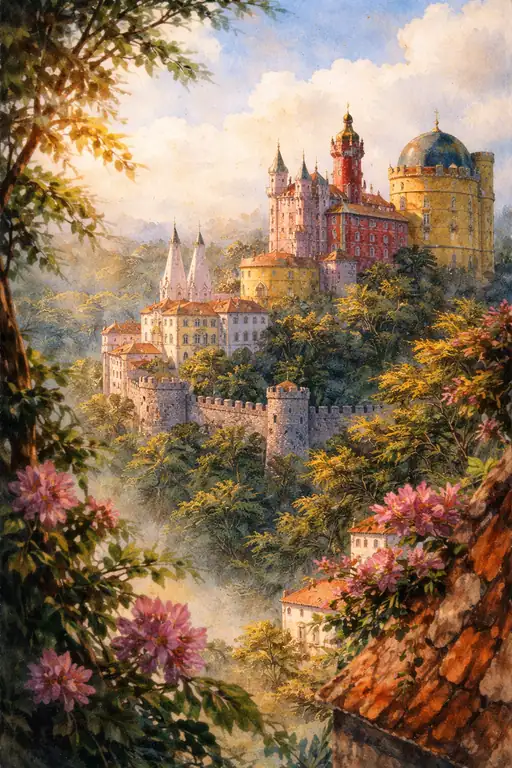 Fairy-Tale Peak of the Morning Mist
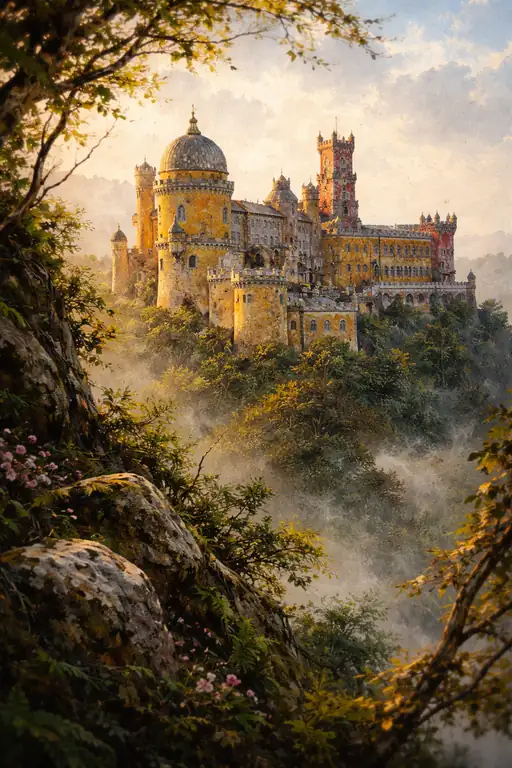 Castle Suspended in Morning Mist
 Sanctuary of Gold and Snow