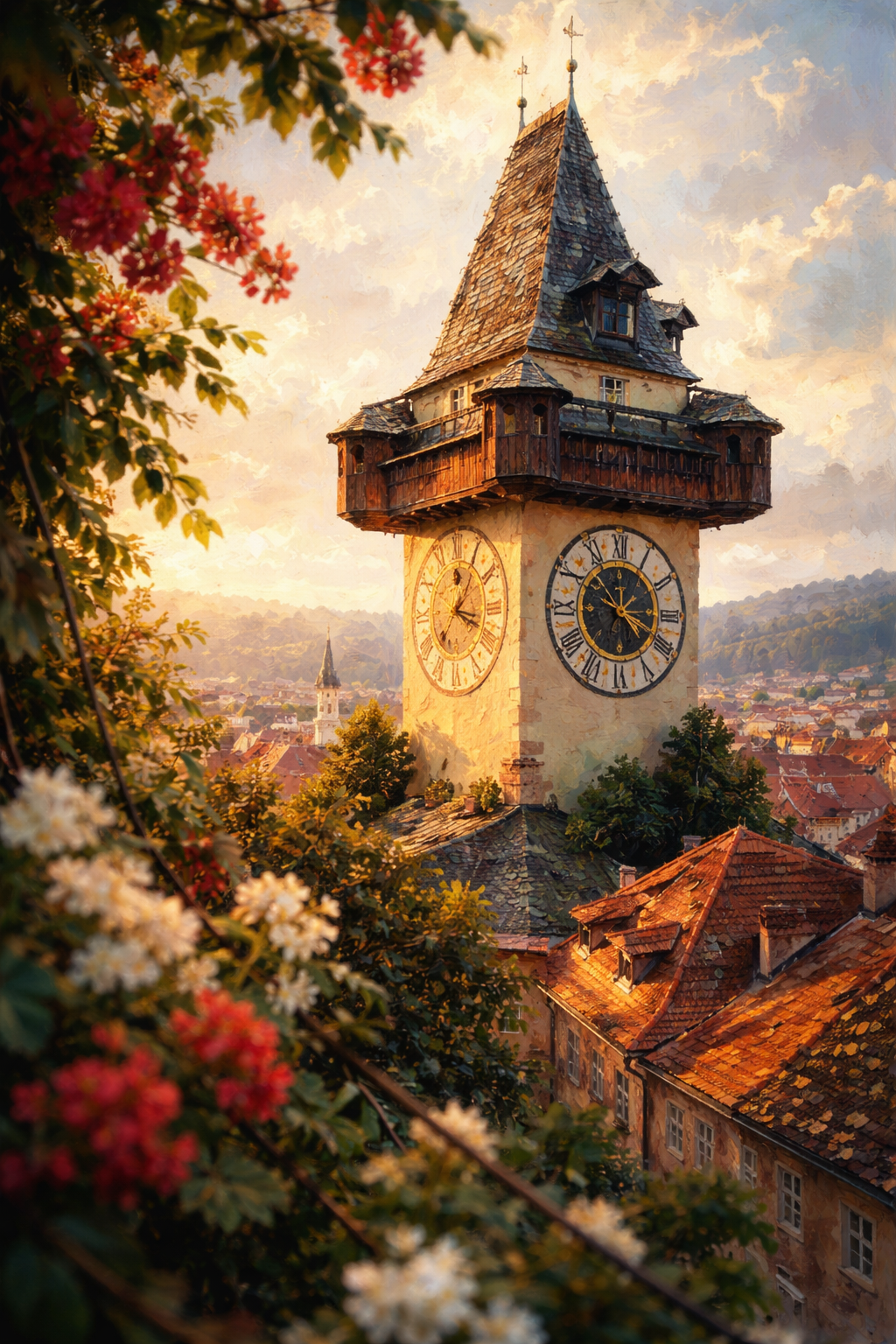
The Golden Hour Over Graz's Heart
Critique
1. Introduction This impressionistic landscape painting captures a sun-drenched view of the characteristic Uhrturm clock tower in Graz, Austria. Framed by delicate floral blossoms in the foreground, the work offers a nostalgic and romanticized perspective on European urban architecture. It focuses on the ephemeral quality of light during the golden hour, transforming a historic landmark into a scene of poetic beauty. 2. Description The vertical composition is dominated by the tall, stone tower with its oversized clock faces and distinctive wooden gallery. In the foreground, clusters of red and white flowers create a soft, natural frame that leads the viewer's eye toward the architecture. Below and beyond the tower, a dense sprawling of buildings with traditional orange-tiled roofs stretches into the hazy distance under a soft, luminous sky. 3. Analysis The artist effectively uses a high-angle perspective and foreground framing to create a profound sense of depth and scale. Light is the primary structural element; the warm, directional sunlight illuminates one side of the tower and the rooftops, creating long, cool shadows that define the city's complex geometry. The brushwork is short and rhythmic, particularly in the sky and foliage, contributing to a shimmering, atmospheric effect. 4. Interpretation and Evaluation The painting successfully evokes a sense of tranquil charm and historical continuity. The technical handling of the golden hour light is Masterful, as it imbues the scene with a tangible warmth and clarity. While the details of the distant city are somewhat abstracted, this approach focuses attention on the tower's prominent presence. The vibrant colors of the flowers provide a perfect chromatic balance to the earthy tones of the stonework and roofs. 5. Conclusion An initial impression of a conventional tourist view gives way to an appreciation of the artist's sensitive rendering of light and mood. The work is a fine example of how impressionistic techniques can breathe new life into familiar architectural subjects. It ultimately succeeds in conveying the timeless allure of the city, leaving a lasting impression of warmth, peace, and elevated perspective.
Same Subcategory
 Whispers of the Ancient Stones
Similar Artworks
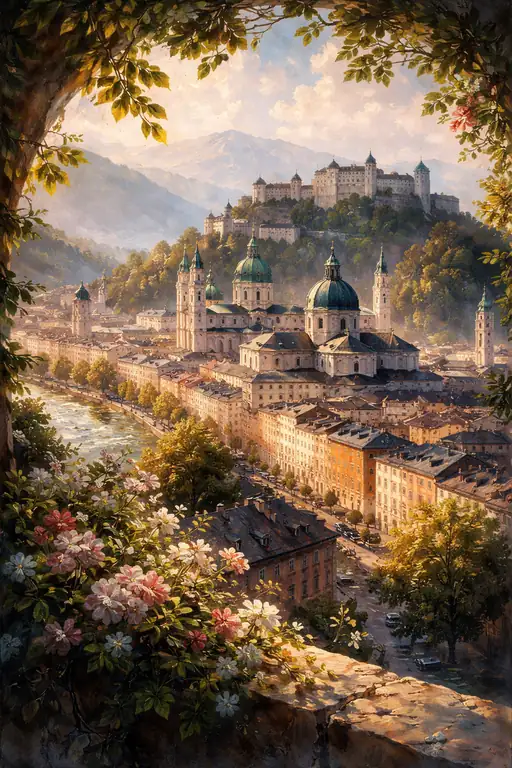 A Golden Heritage Reborn
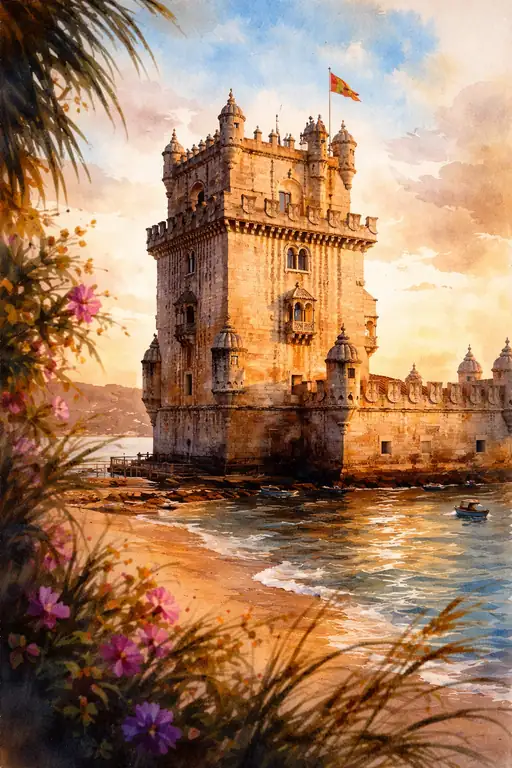 Golden Tides of the Sentinel
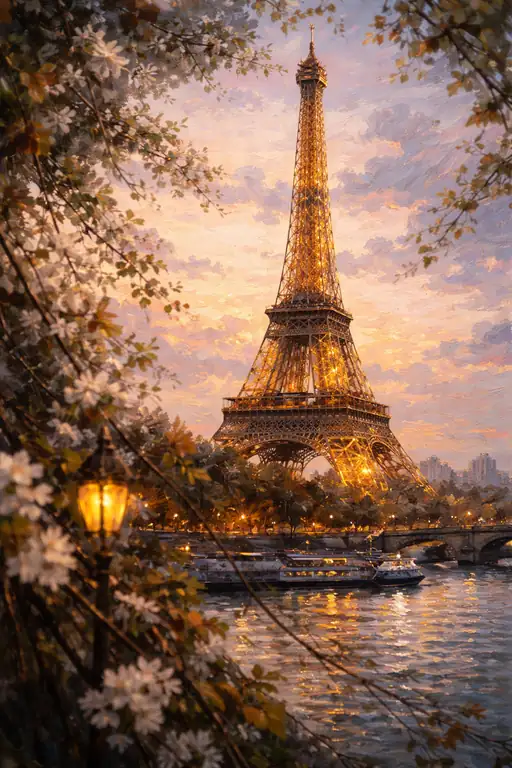 Golden Hour at the Eiffel Tower
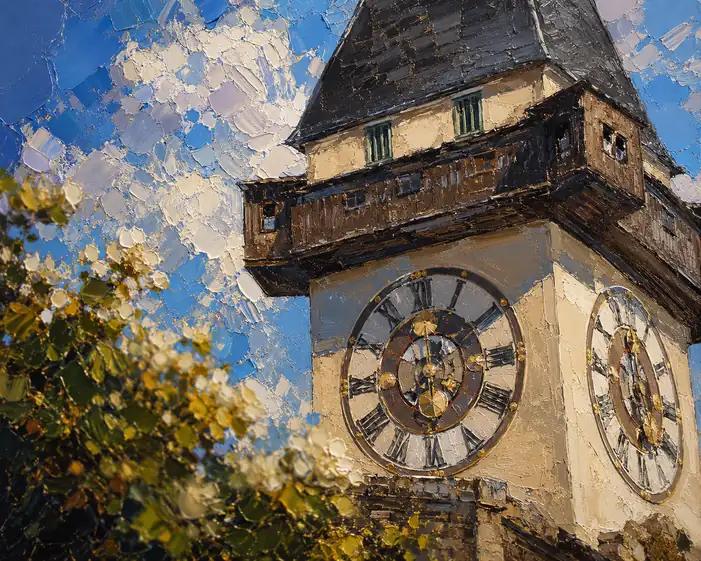 Watching the Clouds Drift by the Dial
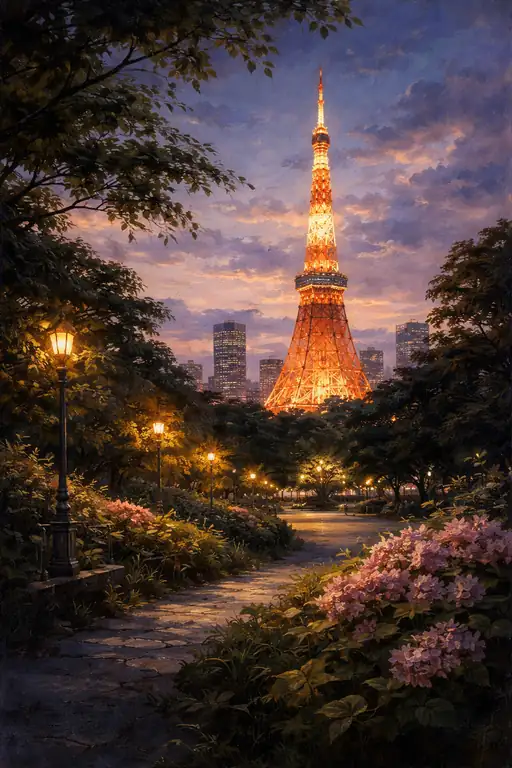 Twilight's Glowing Labyrinth
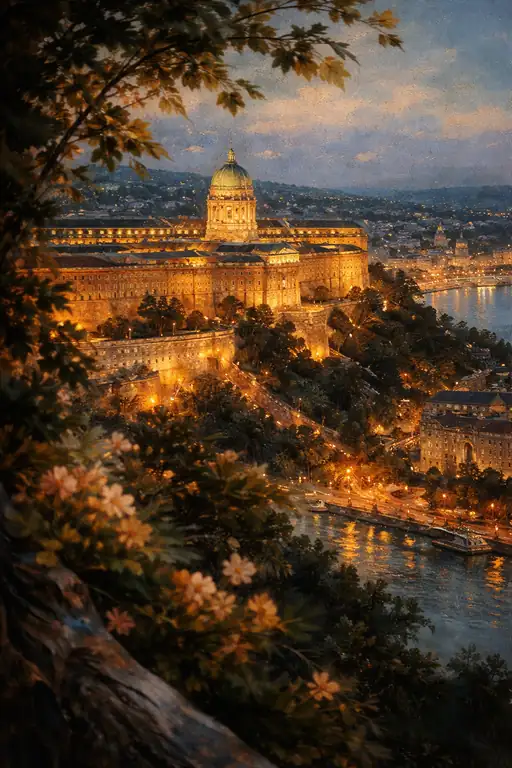 A Nocturnal Dialogue Between Palace and City
 Gateway to the Golden Hour
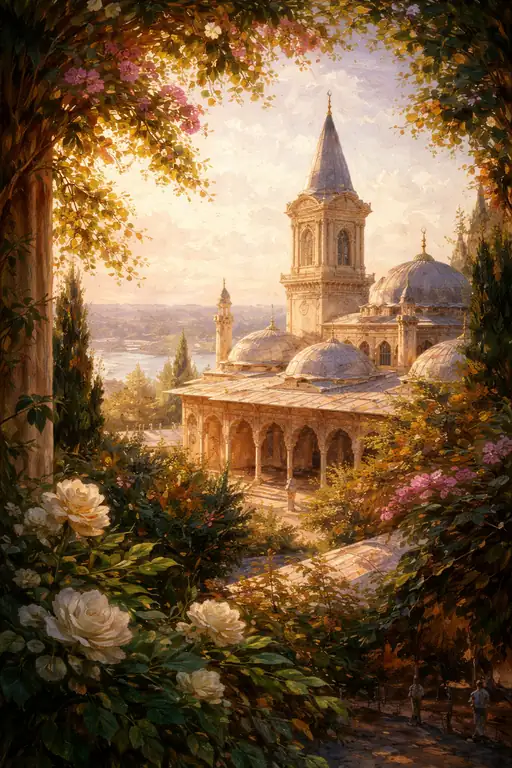 Palace of Eternal Spring
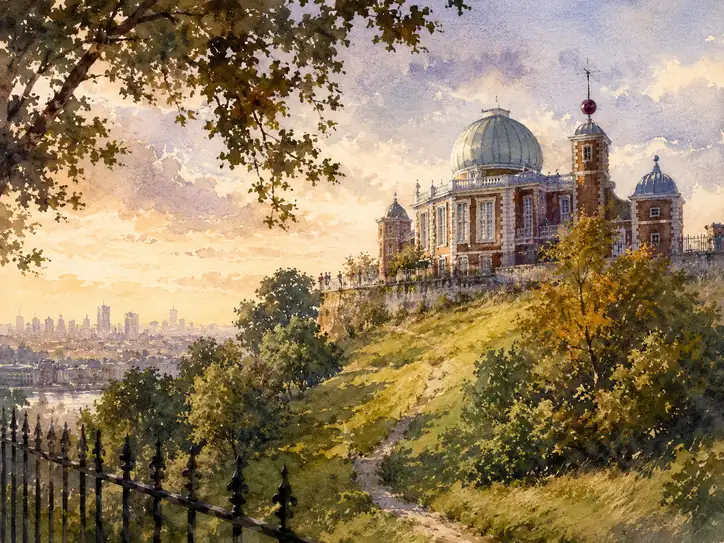 Where Time Meets the Horizon
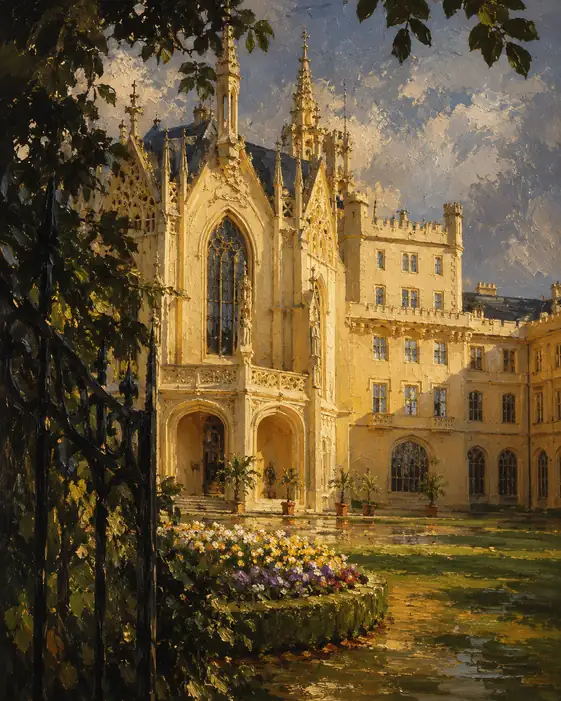 Gothic Radiance: The Breathing Light of Lednice