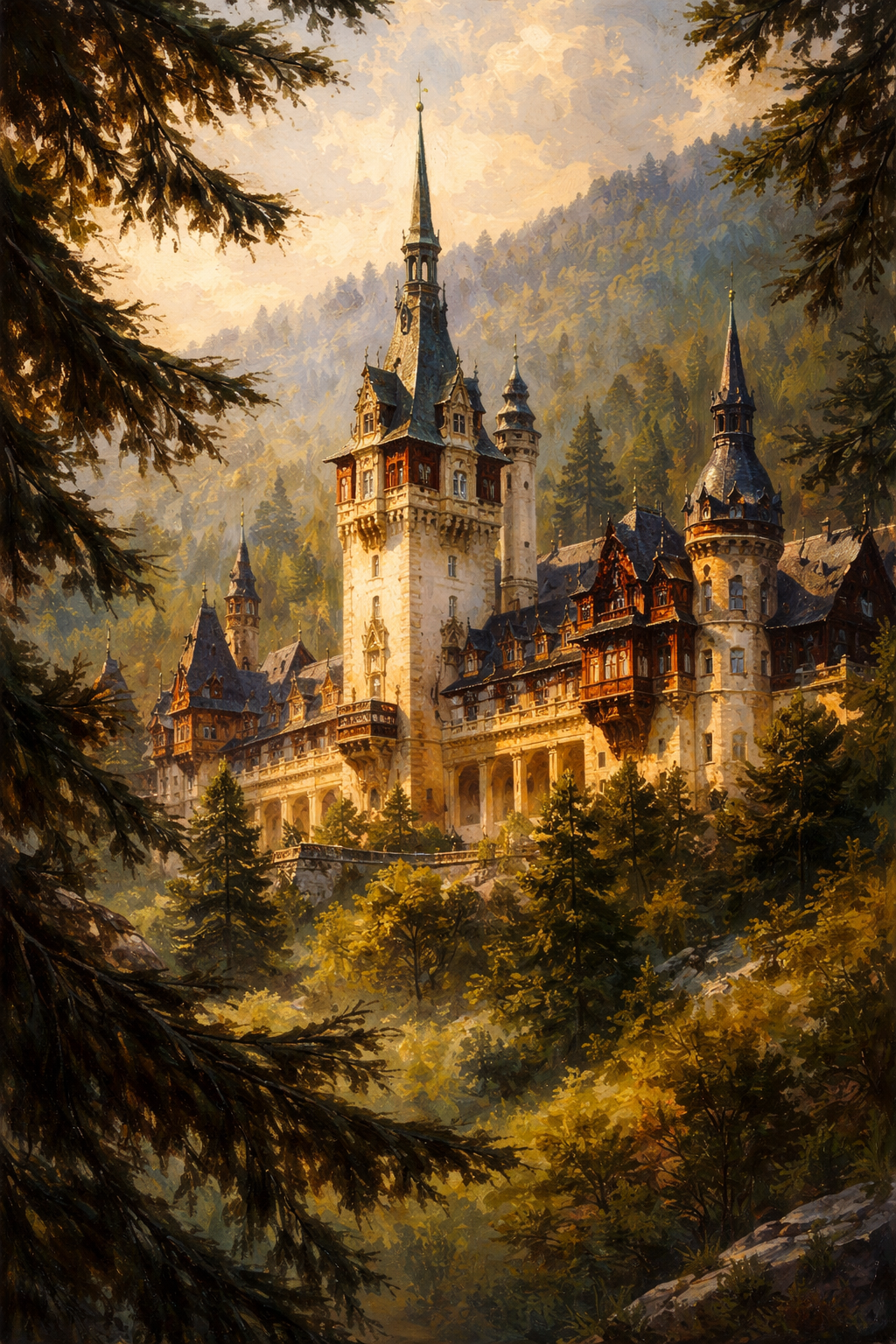
Echoes in the Pine Sanctuary
Critique
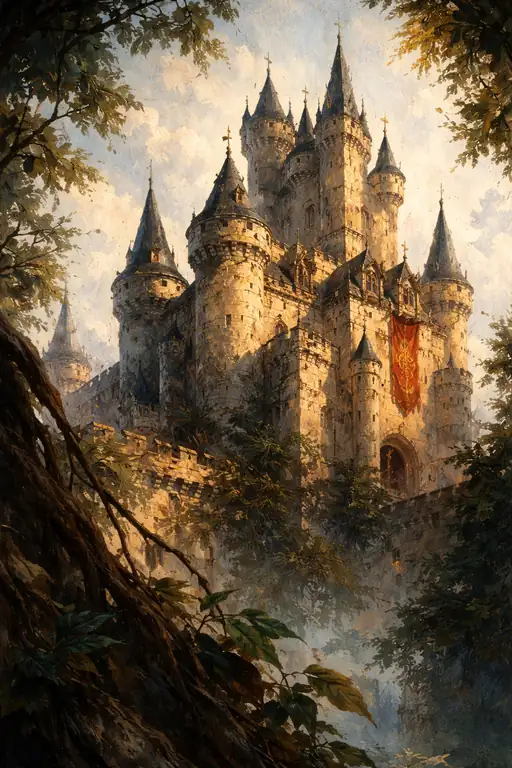
1. Introduction This painting depicts the majestic Peles Castle, a masterpiece of Neo-Renaissance architecture located in the Carpathian Mountains of Romania. The composition emphasizes the castle’s intricate design and its dramatic integration into the rugged mountain landscape. The work captures the "fairytale" quality of the site, presenting it as a grand, isolated sanctuary within a dense and ancient forest. 2. Description The castle is characterized by its numerous spires, timber-framed gables, and ornate turrets, all rendered in a combination of warm stone and dark wood. It is perched on a hillside and surrounded by towering pine trees that frame the structure on both sides. The entire scene is bathed in the low, golden light of the late afternoon, which creates long shadows and a brilliant glow on the castle walls and the distant mountain slopes. 3. Analysis The artist uses a vertical format to mirror the upward reaching spires and the steepness of the surrounding topography. The color palette is dominated by earthy browns, forest greens, and the radiant gold of the sunlight, creating a high-contrast and emotionally charged atmosphere. The brushwork is highly detailed on the architectural elements but becomes broader and more expressive in the rendering of the surrounding forest and the hazy, sunlit sky. 4. Interpretation and Evaluation The work interprets Peles Castle as a bridge between human artistry and the sublime power of the natural world. Evaluation of its formal qualities reveals a sophisticated understanding of both light and perspective, successfully leading the viewer's eye through the complex layers of the forest and the architecture. The technical handling of the golden hour light is particularly effective, imbuing the scene with a sense of wonder and historical reverence. 5. Conclusion This study of Peles Castle effectively captures the romantic and monumental spirit of one of Europe's most unique architectural treasures. The initial impression of a complex and ornate structure matures into a deeper appreciation for the painting's harmonious balance of light, texture, and environment. It stands as a powerful tribute to the beauty of the Carpathian region and the enduring allure of Neo-Renaissance design.
Same Subcategory
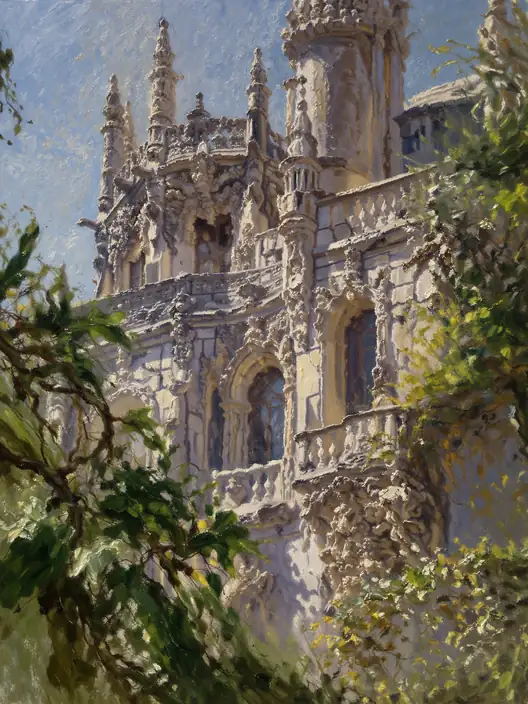 The Stone's Resonant Silence
Similar Artworks
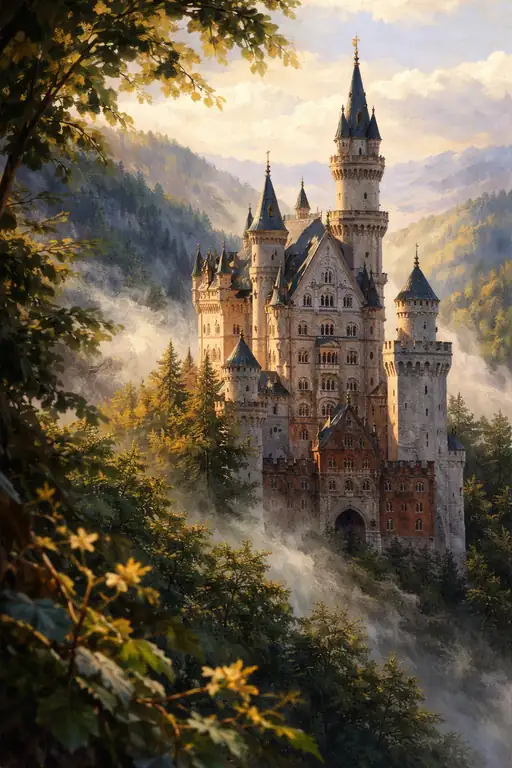 The Misty Splendor of the Alpine Fortress
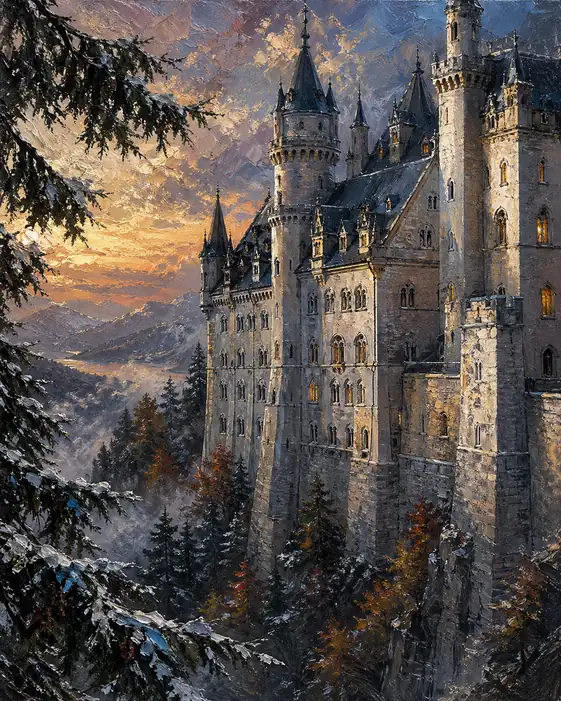 A Solitary Castle Standing Defiant Amidst the Freezing Winter Peaks
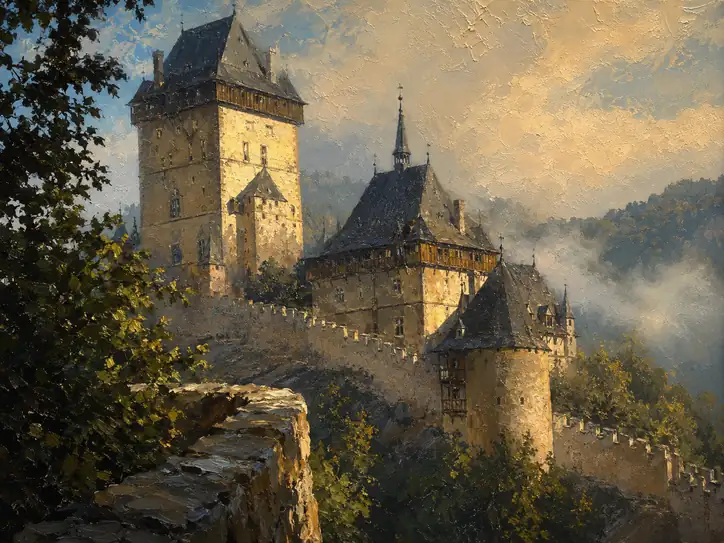 Guardian of the Silent Peaks
 Whispers in the Morning Mist
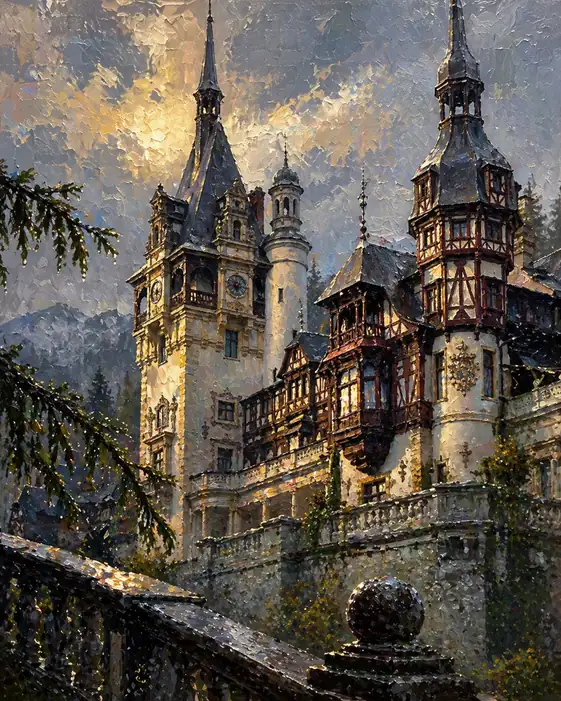 Golden Promise Amidst the Tempest
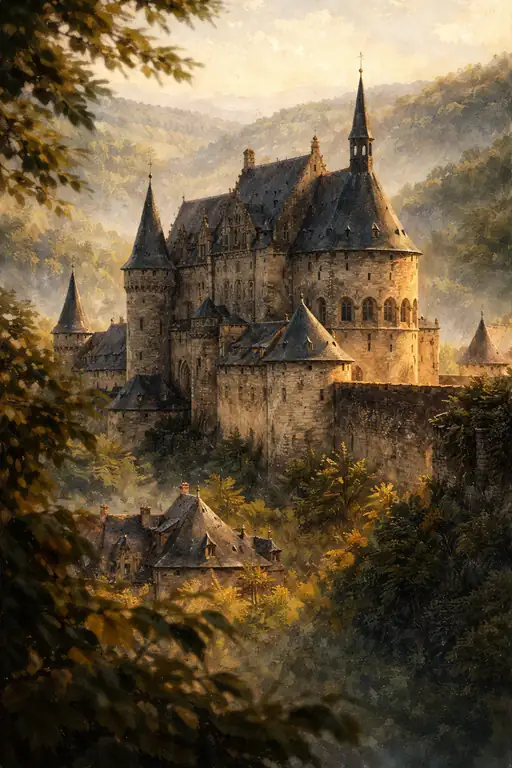 The Sentinel of the Autumn Forest
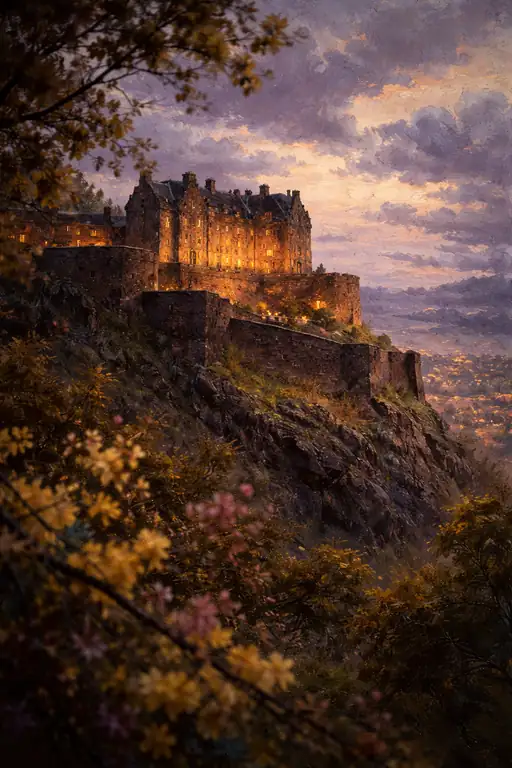 The Citadel's Last Ember in the Dusk
 Where the Sunset Whispers to the Stone
 Radiance of the Grand Hall
 The Last Vigil at Dusk