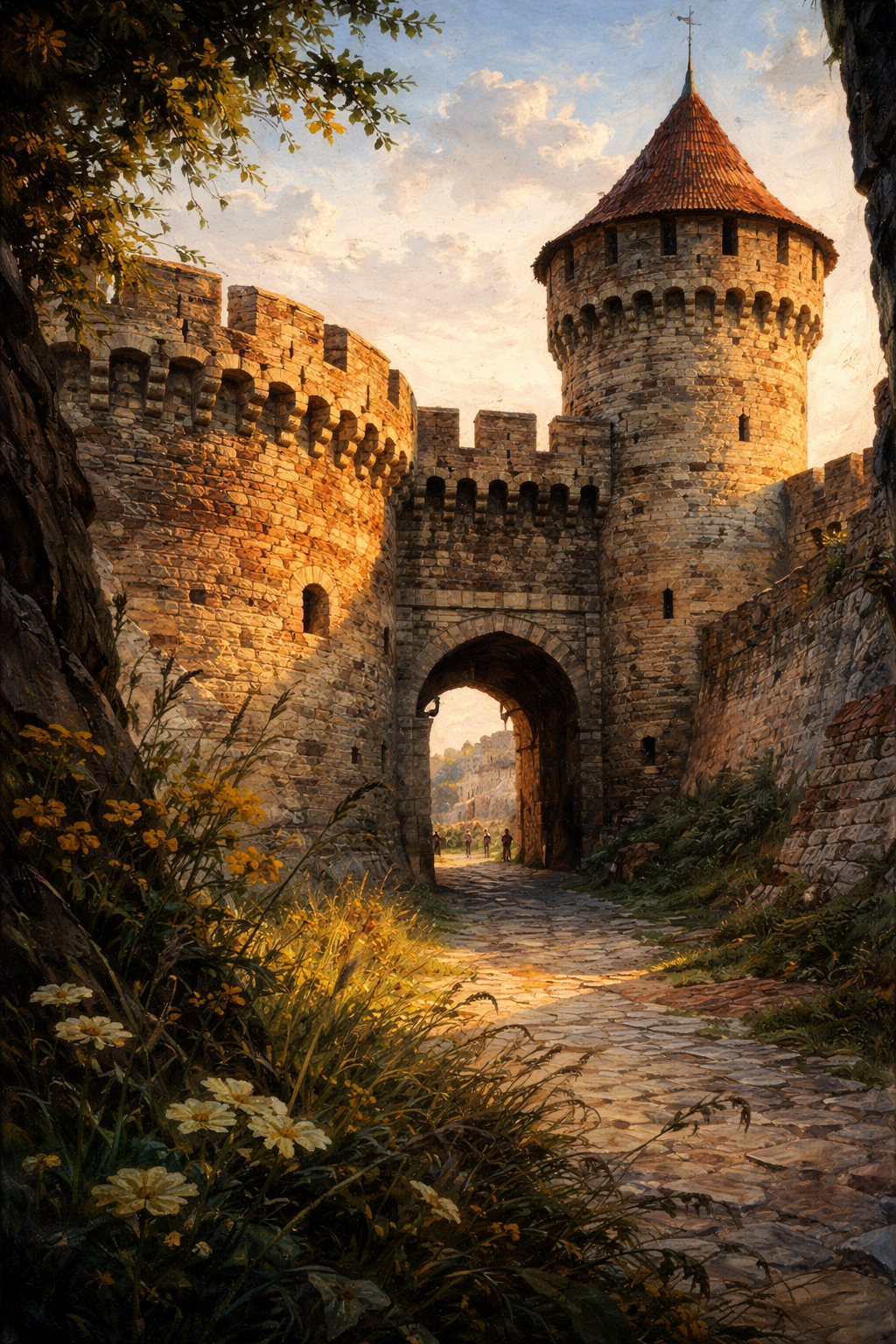
Echoes of History at the Sunlit Gate
Critique
1. Introduction This painting captures the evocative entrance to a medieval stone fortress, bathed in the soft, golden light of late afternoon. A formidable circular tower dominates the right side of the composition, standing adjacent to a heavy arched gateway that speaks of ancient defensive strength. The combination of wild flowers in the immediate foreground and a weathered cobblestone path creates a bridge between the viewer and the historical ruin, evoking a sense of nostalgia and enduring reality. 2. Description The fortress walls are rendered with meticulous attention to the texture of the individual stones, which glow with warmth where hit by the low-angled sun. The round tower features a conical roof of reddish-brown tiles, topped with a delicate finial. Through the central archway, a glimpse of distant buildings and small human figures suggests a world continuing beyond the fortification. In the lower-left, clusters of yellow and white wildflowers are caught in the backlight, adding a layer of organic vitality to the stony landscape. 3. Analysis The strength of the composition lies in its powerful use of perspective, as the winding cobblestone path leads the viewer's eye directly through the center of the work. Color-wise, the warm ochres and siennas of the sunlit masonry contrast sharply with the cool, deep shadows, effectively highlighting the architectural volumes. The juxtaposition of the rigid, man-made fortress and the soft, sprawling vegetation provides a balanced harmony between nature and civilization. Light is used as a unifying element, articulating the weathered surfaces and the atmosphere of the scene. 4. Interpretation and Evaluation The work can be interpreted as a poignant reflection on how structures once meant for war can evolve into objects of lyrical beauty. The artist's precise rendering and sensitive handle on lighting suggest a deep respect for historical continuity. Technically, the depiction of the stone's tactile quality is particularly impressive, merging realism with a more poetic, painterly sensibility. It succeeds in creating a narrative space where the silence of the past is enlivened by the presence of light and living nature. 5. Conclusion In summary, the painting is a masterful integration of dramatic atmosphere and structural solidity. The initial impression of a heroic, light-filled vista matures into an appreciation for the artist's disciplined execution and thoughtful arrangement of elements. It offers a fleeting moment of historical reflection, providing the viewer with both a sense of wonder and quiet contemplation. This piece stands as a testament to the timeless appeal of architectural heritage when viewed through a refined aesthetic lens.
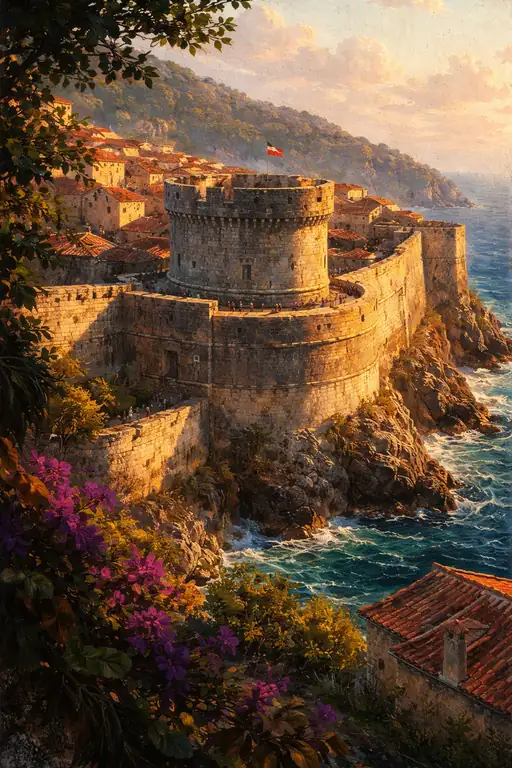 The Bastion's Golden Reverie
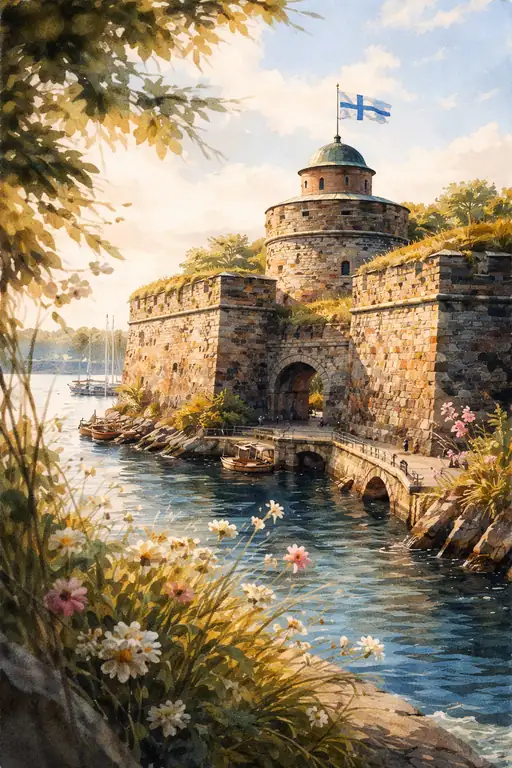 Suomenlinna Fortress in Summer Bloom
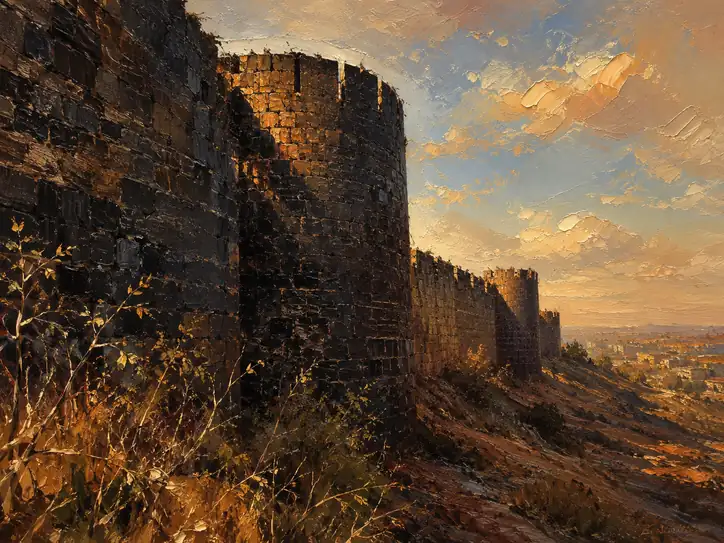 The Last Vigil at Dusk
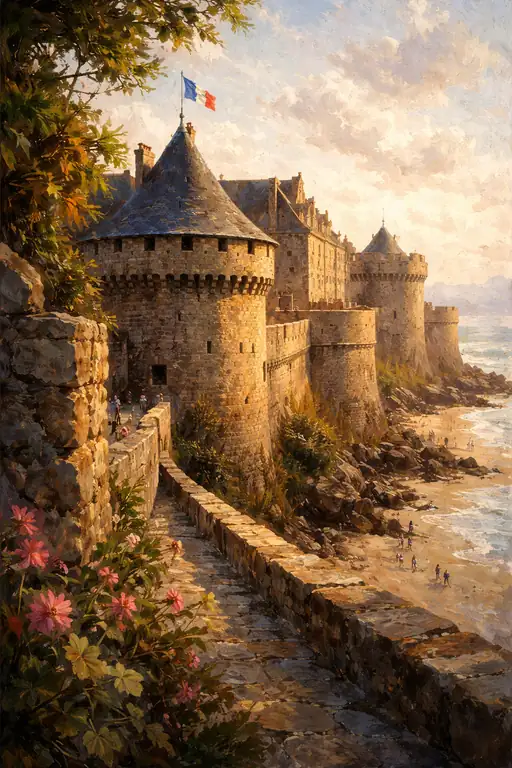 Whispers of the Eternal Sea
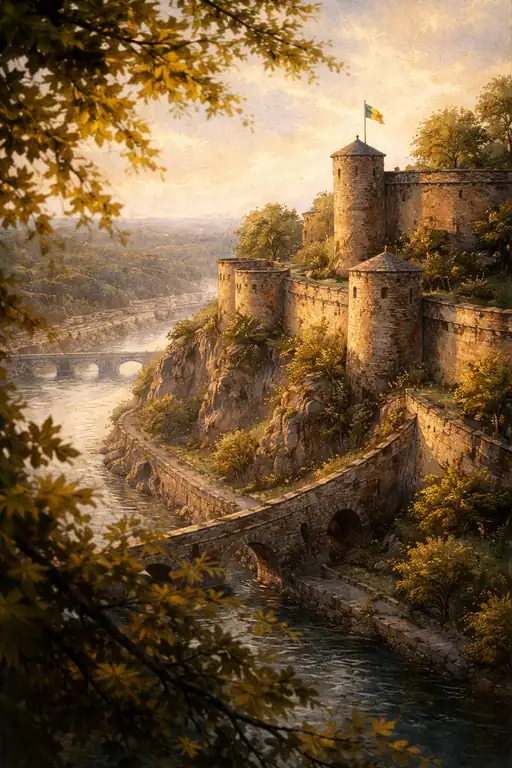 The Sentinel of the Cliff
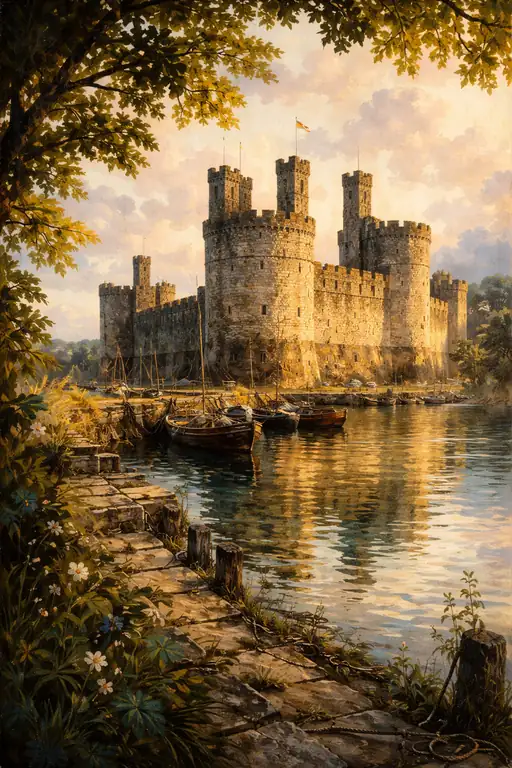 A Golden Lullaby for the Old Fortress
 Beyond the Portcullis
 The Citadel's Warm Embrace
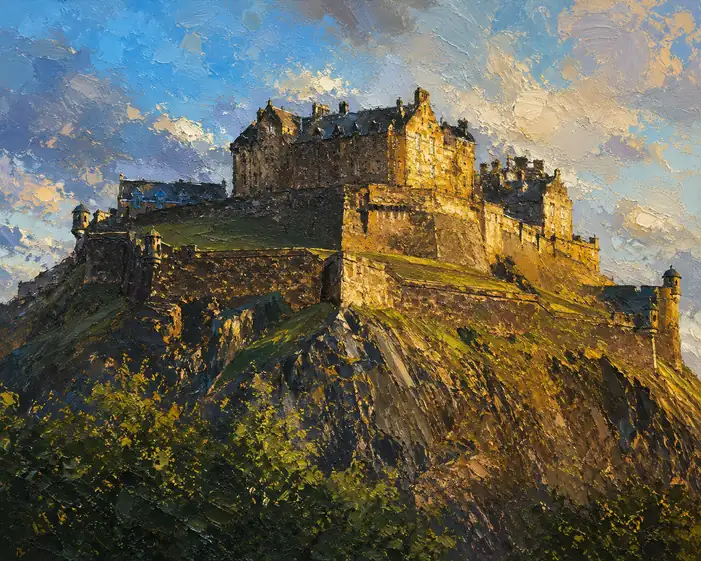 Crowned by Light
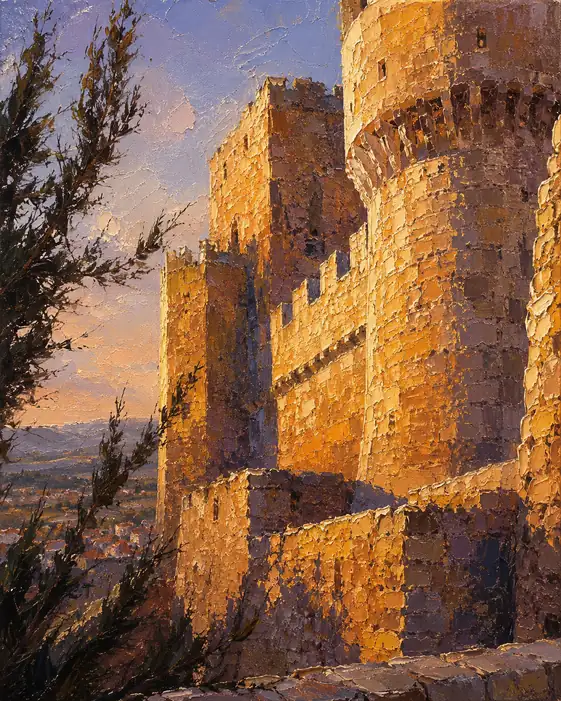 Sentinel of the Golden Hour
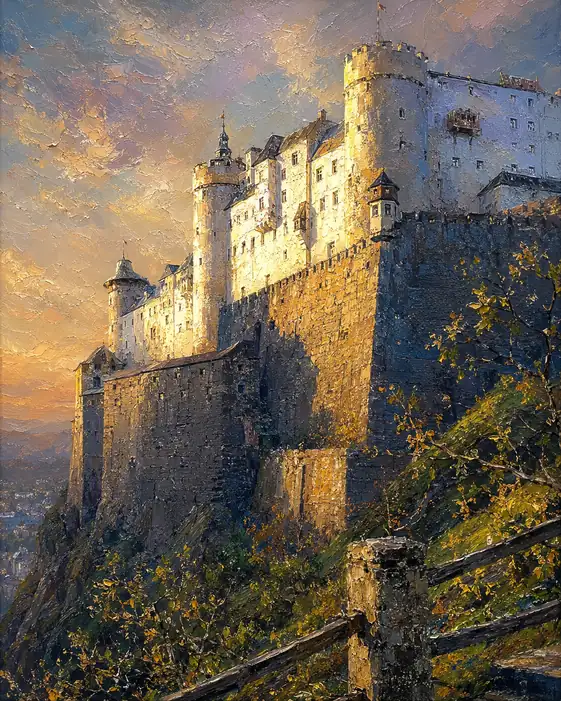 Sentinel of the Setting Sun