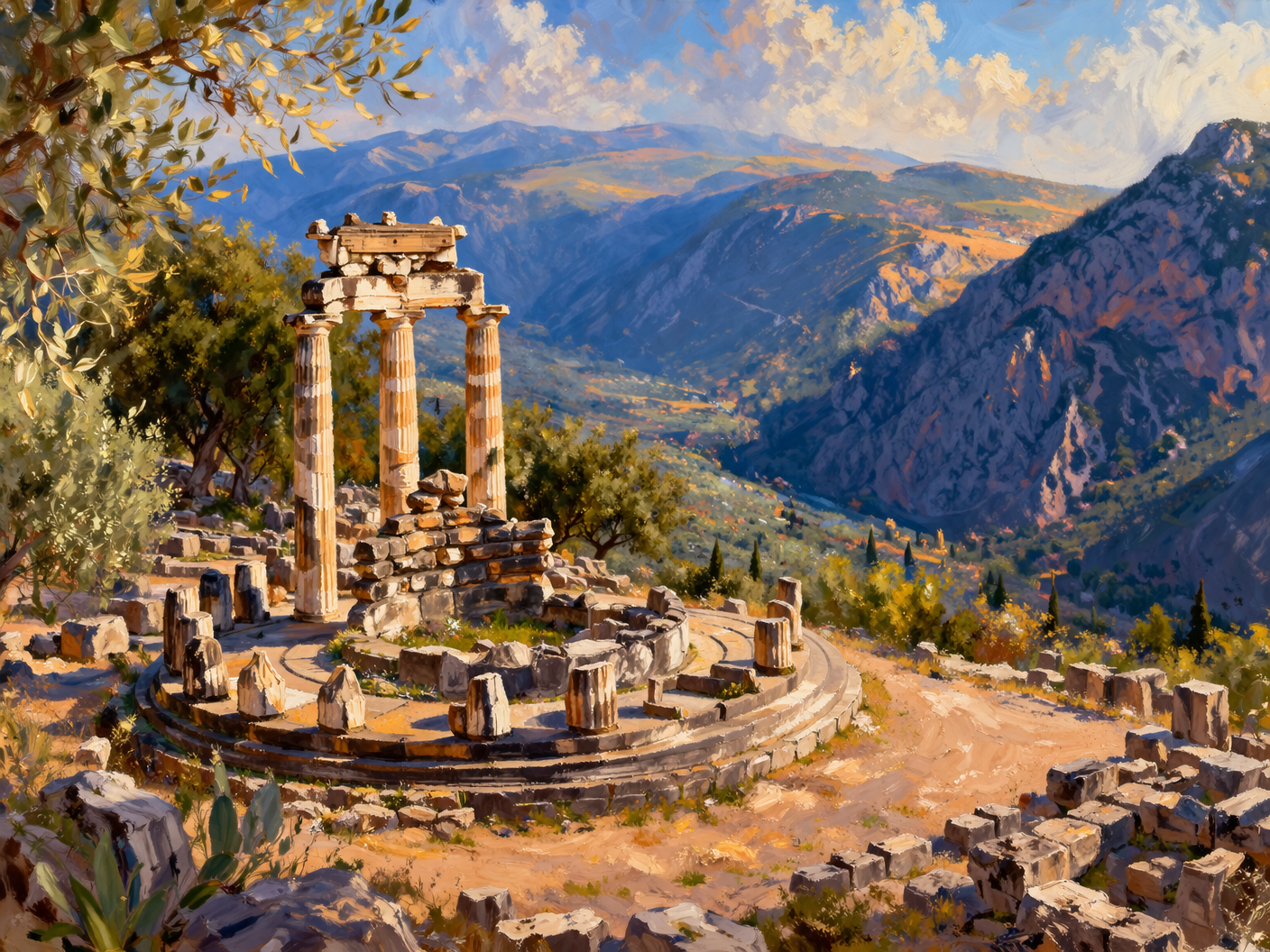
Timeless Pillars of the Mountain Sanctuary
Critique
1. Introduction This painting depicts a majestic archaeological site nestled within a dramatic mountain landscape, evoking a powerful sense of history and ancient grandeur. The composition centers on a partially reconstructed circular temple, an iconic vestige of a classical civilization that stands as a silent witness to the passage of time. Through a bold use of color and light, the artist captures the epic scale of the environment, emphasizing the enduring relationship between human architectural achievements and the rugged beauty of the natural world. 2. Description In the middle ground, the ruins of a tholos-style temple with three weathered fluted columns and a stone entablature form the focal point. The foreground is littered with scattered, rectangular stone blocks and sparse Mediterranean vegetation, such as olive trees and cacti, which ground the scene in its geographical context. Beyond the site, a deep valley gives way to layers of steep, blue-toned mountains that recede toward a horizon under a dynamic sky filled with swift-moving clouds. 3. Analysis The artist employs a vibrant and expressive color palette, utilizing warm ochres and siennas for the sunlit stones and contrasting them with deep purples and cerulean blues in the distant mountain shadows. The brushwork is notably thick and gestural, particularly in the rendering of the rocky surfaces and the atmospheric sky, which adds a tactile, almost sculptural quality to the painting. The strong side-lighting emphasizes the three-dimensional form of the columns and the uneven terrain, creating a rhythmic pattern of light and shadow. 4. Interpretation and Evaluation The work successfully conveys the solitude and contemplative atmosphere often found in ancient sacred sites. The technical mastery is evident in the artist's ability to balance the heavy, geometric forms of the masonry with the fluid, organic lines of the surrounding topography. By placing the ruins on a ledge overlooking the vast valley, the artist elevates the subject matter, both literally and figuratively, suggesting the high-minded aspirations of the builders. The overall effect is one of profound respect for the classical heritage. 5. Conclusion Initially seen as a traditional historical landscape, the painting ultimately reveals a more complex exploration of light and the persistence of form. The integration of ancient architecture within the powerful mountain ranges creates a cohesive and emotionally stirring image. It concludes as a significant artistic tribute to the classical world, leaving the viewer with a lingering sense of the sublime and the eternal nature of artistic and geological structures.
Same Subcategory
 Golden Echoes of the Ages
Similar Artworks
 Echoes of Antiquity in the Valley
 Eternity Within a Sacred Circle
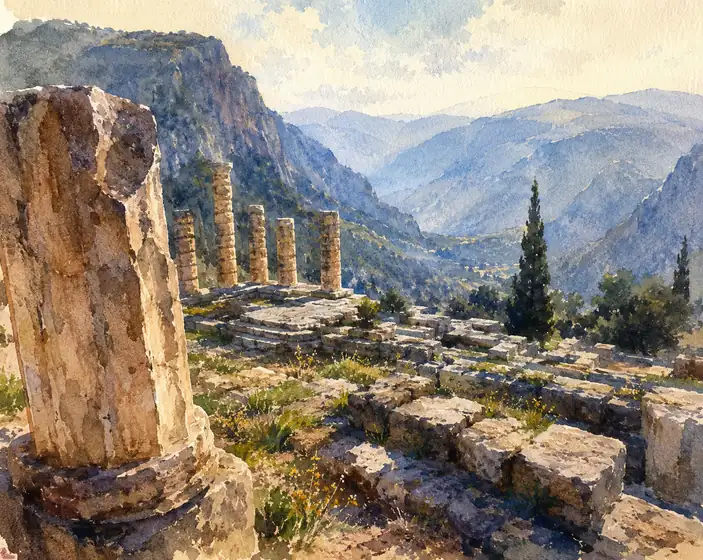 Where the Oracle Still Whispers
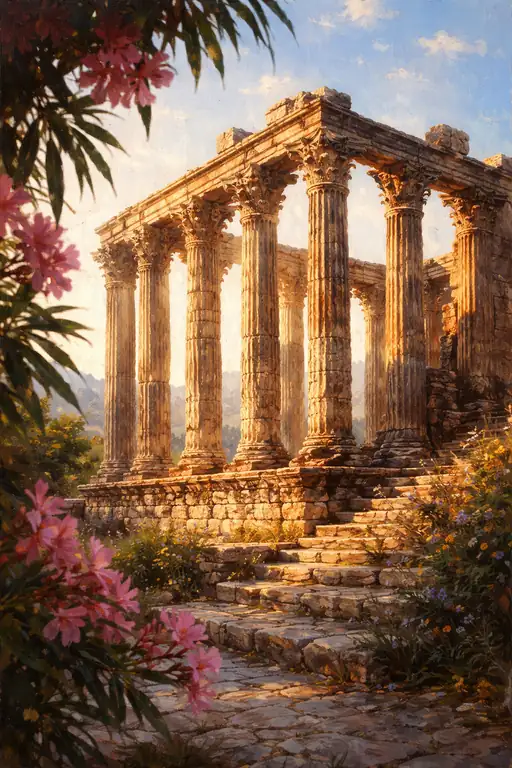 Pillars of Antiquity Awash in Gold
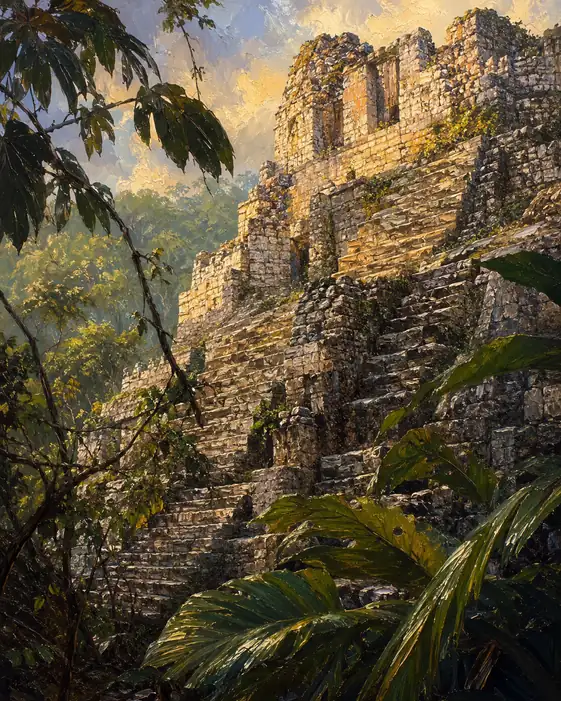 The Golden Stairway to Oblivion
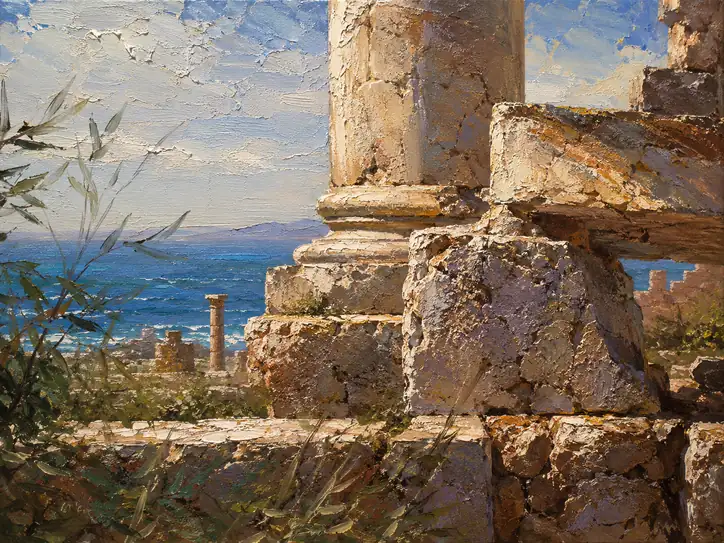 Sentinel of the Eternal Ocean
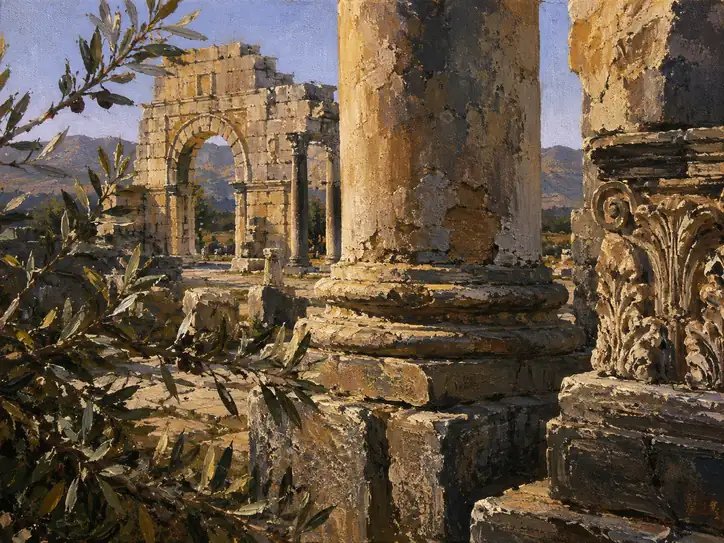 The Silent Witness of Ages
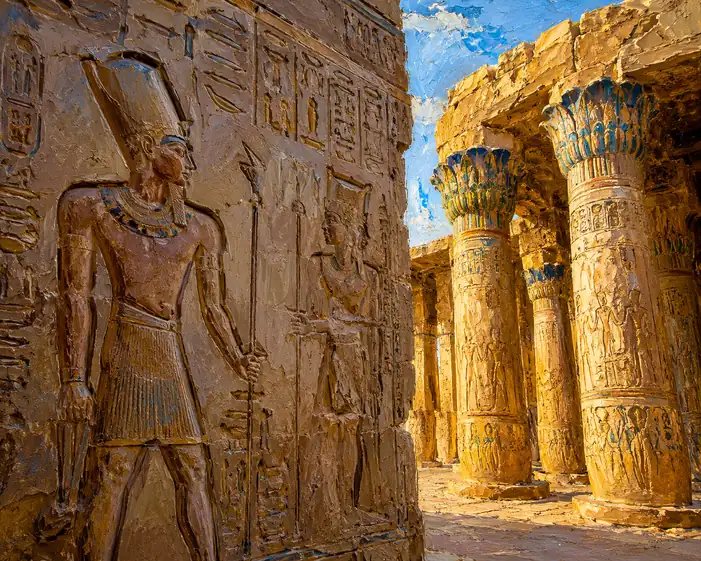 Echoes of the Golden Dynasty
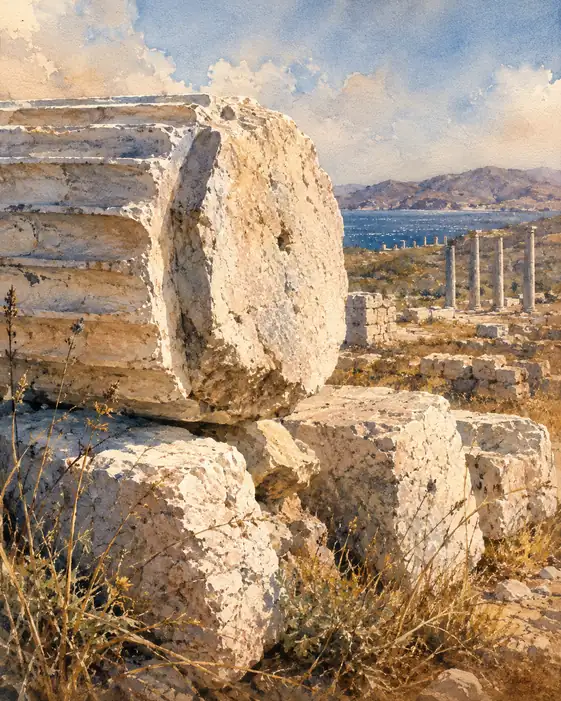 Where Empires Fade into the Blue
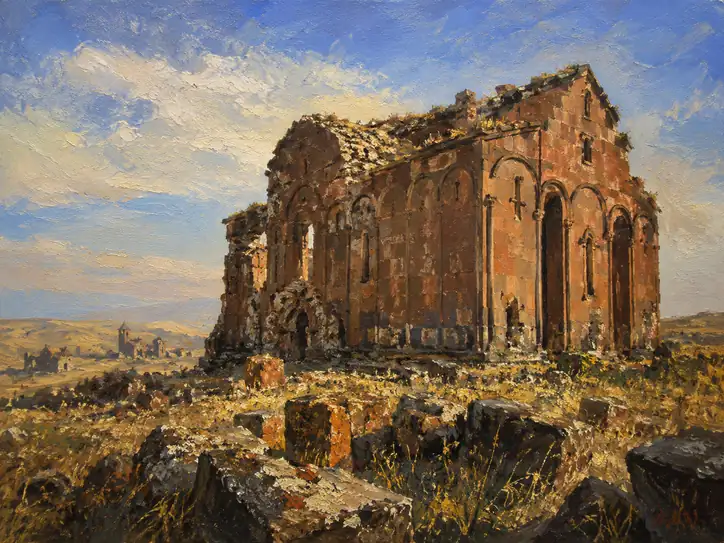 Where the Stone Remembers