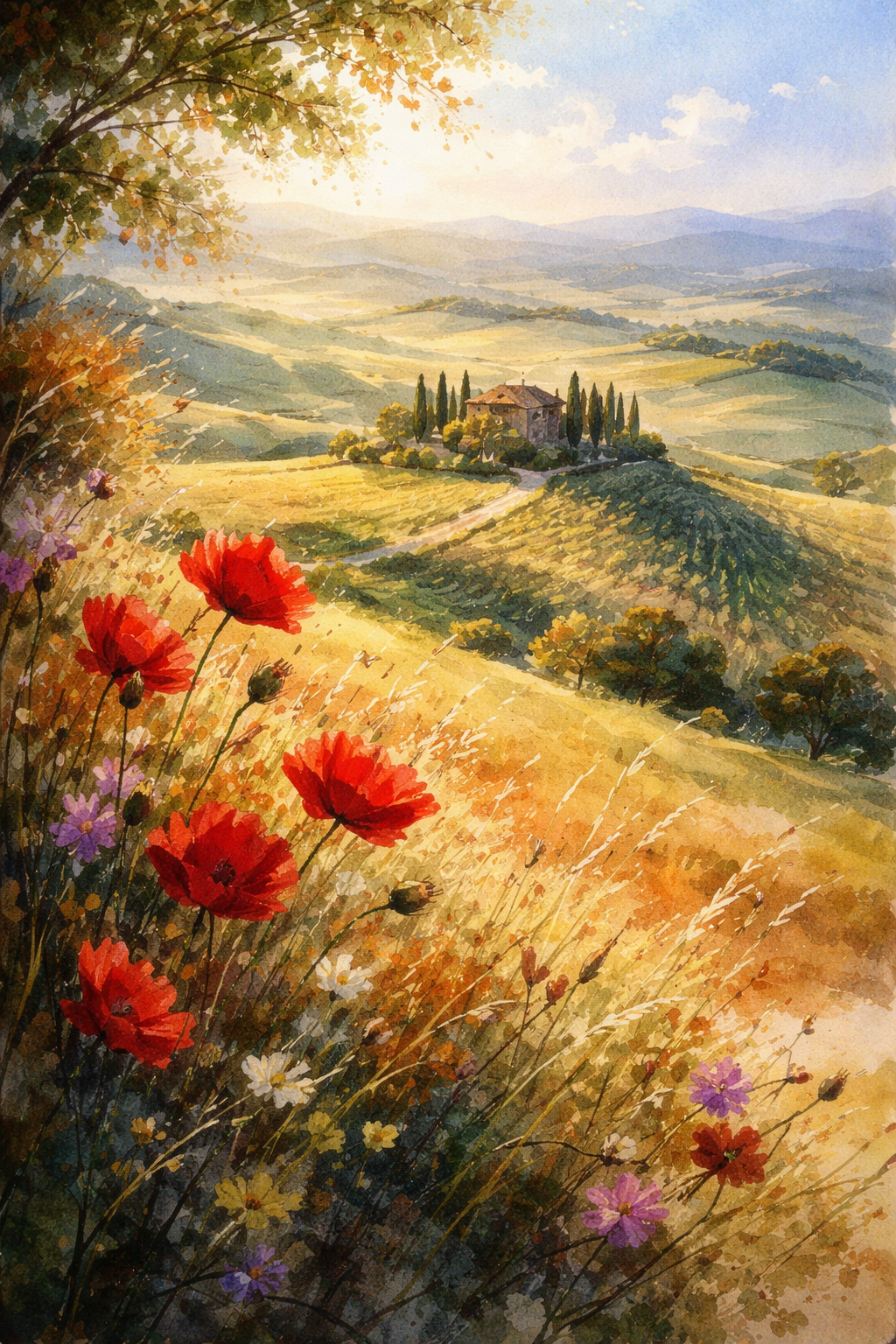
Tuscan Gold: Poppies on the Wind
Critique
1. Introduction This watercolor painting presents a serene landscape that captures the idyllic essence of the Tuscan countryside. The composition uses a strong foreground element to draw the viewer into a vast, sun-drenched vista of rolling hills. The work balances delicate floral details with a sweeping sense of atmospheric perspective. 2. Description In the foreground, vibrant red poppies and a variety of wildflowers bloom amidst tall grasses, their forms rendered with fluid, expressive strokes. A winding dirt path leads the eye through a sunlit field toward a traditional stone villa nestled on a distant ridge. This middle ground is punctuated by the dark, vertical silhouettes of cypress trees that stand in contrast to the golden slopes. The background transitions into misty, pale blue mountains under a luminous, hazy sky where the sun's presence is felt through a soft glow. 3. Analysis The artist employs classic watercolor techniques, utilizing wet-on-wet transitions to create the soft, ethereal quality of the distant hills. The contrast in saturation between the bold red poppies and the desaturated background effectively establishes a profound sense of depth and spatial recession. Fine lines in the foreground grass suggest movement, while the rhythmic placement of the cypress trees provides a stable focal point within the undulating terrain. The warm color palette is dominated by golden yellows and earthy ochres, reflecting the heat of a Mediterranean summer. 4. Interpretation and Evaluation The painting successfully evokes a feeling of peace and nostalgia for a rustic, untroubled world. The technical execution of the watercolor medium is notable for its clarity and the transparency of the washes, which allow the paper’s luminosity to shine through. The placement of the villa serves as a human element that harmonizes with the natural surroundings rather than dominating them. The overall balance of the composition, with the large poppies anchoring the bottom left, creates a satisfying visual path for the observer. 5. Conclusion What begins as a simple floral study expands into a comprehensive celebration of light and distance. The work demonstrates a sophisticated understanding of how atmospheric conditions can transform a landscape into a poetic experience. This painting leaves a lasting impression of warmth and tranquility. It beautifully illustrates the timeless appeal of the rural landscape.
Same Subcategory
 Symphony of the Sunlit Violet
 Where the Violet Wind Ends
Similar Artworks
 When the Tuscan Hills Wake Up
 Sunlit Barn
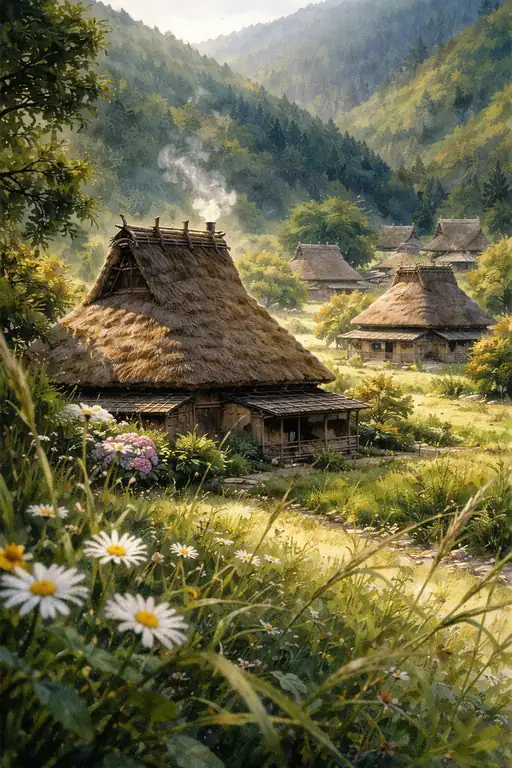 Whispers of the Golden Valley
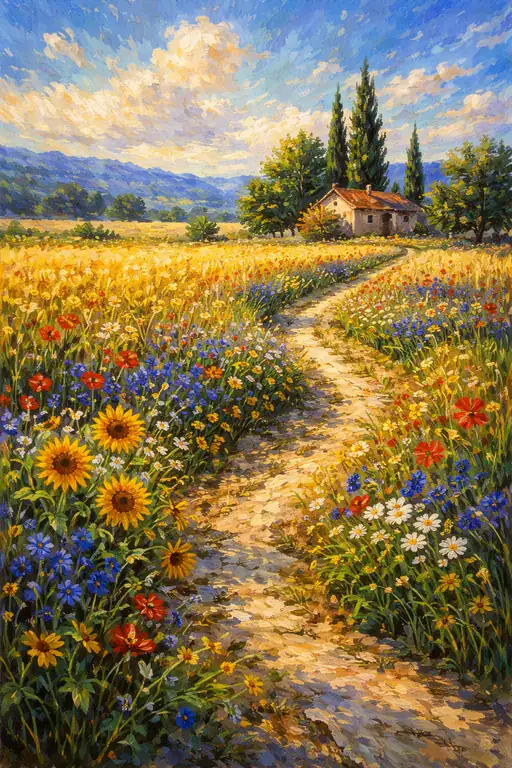 Path to the Golden Horizon
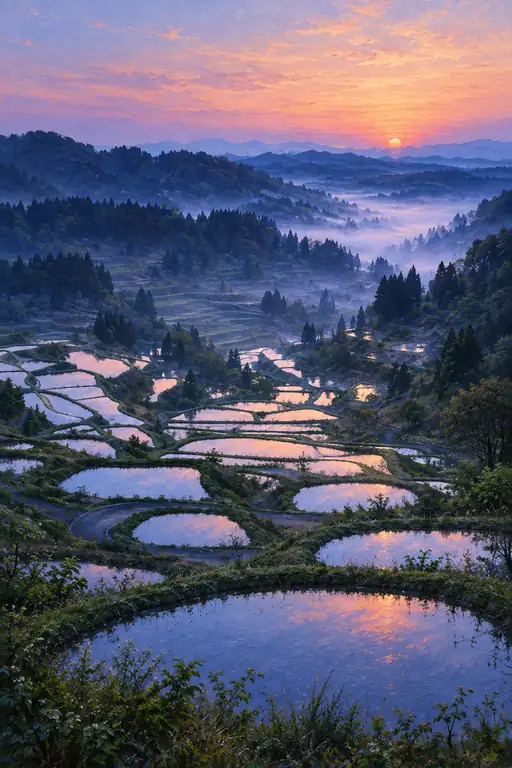 Sunset Glow Over the Valley Terraces
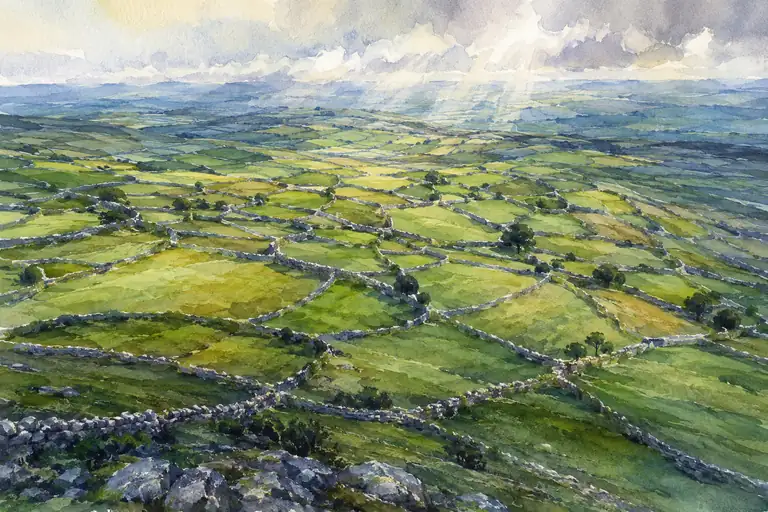 Stairway of Light and Stone
 Where Mist Meets Morning Light
 Whispers of the Unwritten Journey
 Returning Home to the Golden Light
 The Golden Patchwork of Rolling Hills