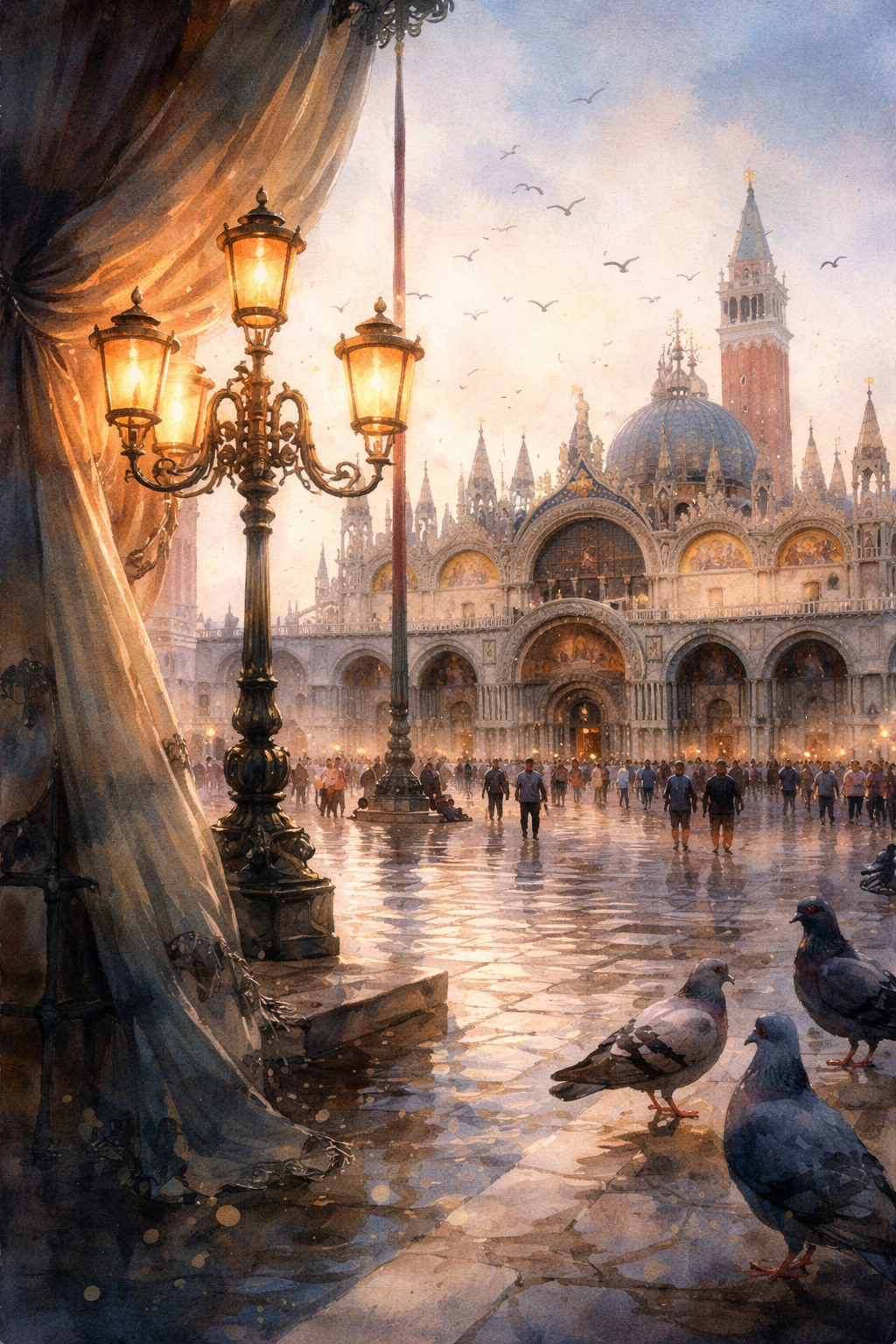
Reflections of a Rain-Kissed Square
Critique
1. Introduction This evocative painting illustrates St. Mark’s Square in Venice, rendered in a luminous, watercolor-inspired style. The work captures the atmospheric beauty of the piazza following a rain shower, focusing on the interplay of artificial light and natural reflections. By blending architectural grandeur with intimate foreground details, the artist creates a composition that feels both monumental and deeply personal. 2. Description In the background, the intricate domes of St. Mark’s Basilica and the tall Campanile rise against a soft, hazy sky filled with distant birds. The wet pavement of the square acts as a mirror, reflecting the warm glow of an ornate, three-lamp streetpost that stands prominently on the left. In the foreground, several pigeons are depicted with characteristic realism, providing a sense of scale and life to the otherwise vast urban space. 3. Analysis The artist employs a sophisticated lighting scheme, where the warm amber light of the lamp contrasts beautifully with the cool, desaturated tones of the architecture and sky. The use of soft edges and diffused colors enhances the feeling of moisture in the air and the ephemeral nature of the scene. Furthermore, the diagonal lines of the square lead the viewer's eye from the textured foreground pigeons toward the majestic Basilica. 4. Interpretation and Evaluation The painting successfully conveys a sense of romantic nostalgia and quietude, moving beyond a simple topographical record. The technical handling of the reflections on the damp stone is particularly noteworthy, demonstrating a mastery of light and transparency. This atmospheric approach prioritizes mood over rigid detail, resulting in a work that effectively captures the'unique spirit of the Venetian landscape. 5. Conclusion Initially perceived as a classical city view, the work reveals itself to be a poetic meditation on light and surface. The harmony between the solid architecture and the fluid reflections creates a compelling visual dialogue. Ultimately, the painting stands as a refined example of how traditional subjects can be revitalized through a sensitive and atmospheric artistic vision.
Same Subcategory
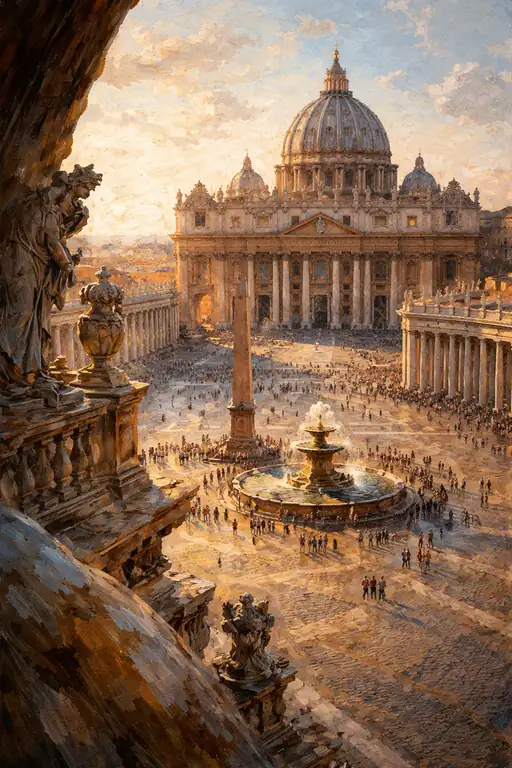 St. Peter's Square in Vatican City
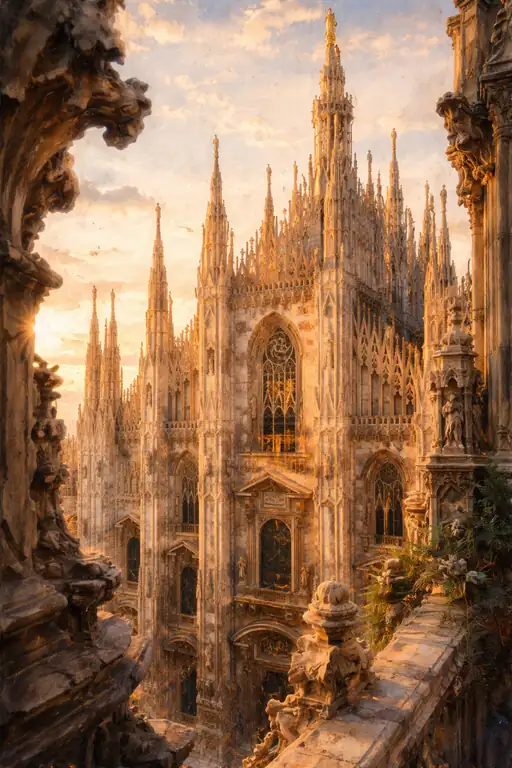 Spires Piercing the Golden Heaven
Similar Artworks
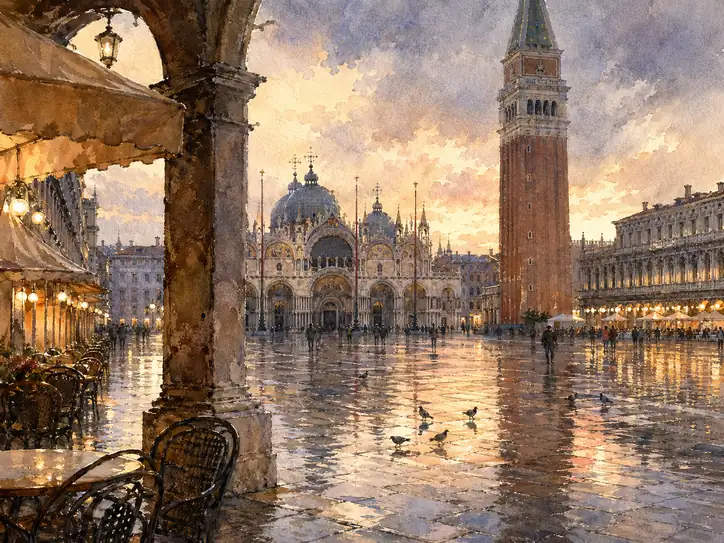 San Marco Reflected in a Golden Mirror
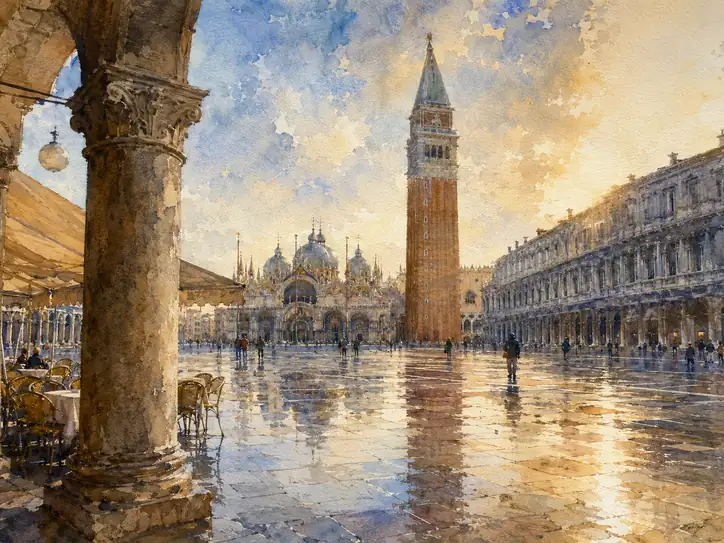 Venice Unveiled: The Mirror of Piazza San Marco
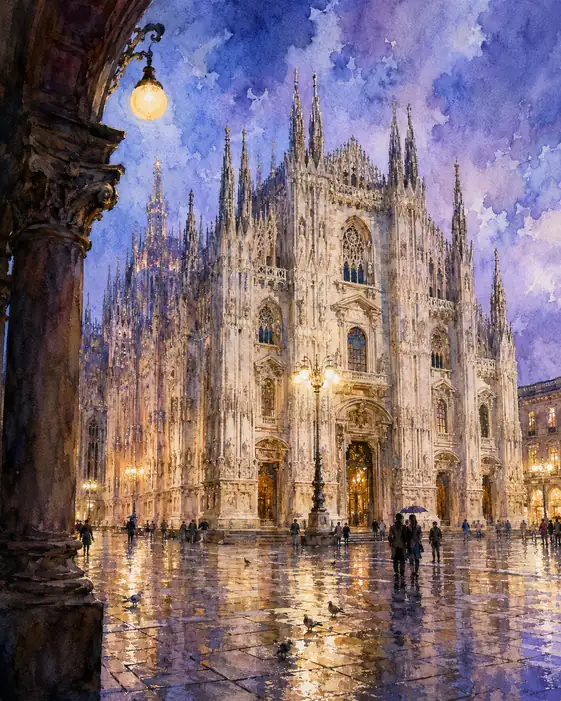 The Cathedral's Luminous Prayer
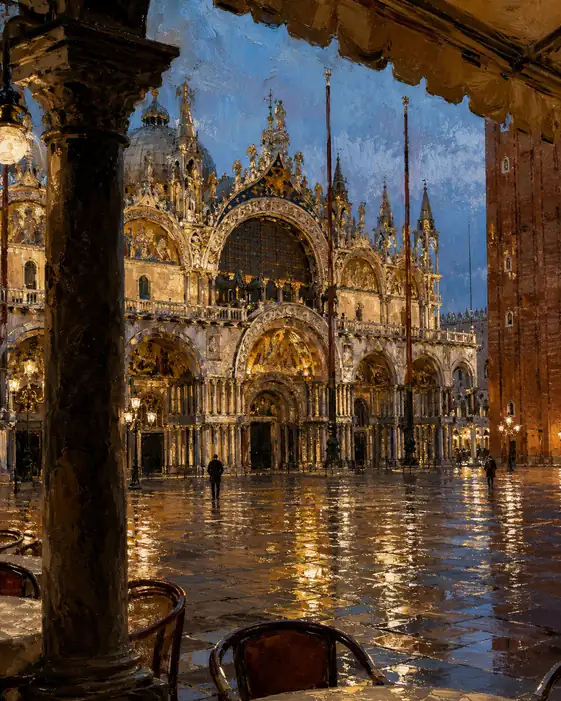 Midnight Gold in the Blue Silence
 A Golden Promise Whispered in White
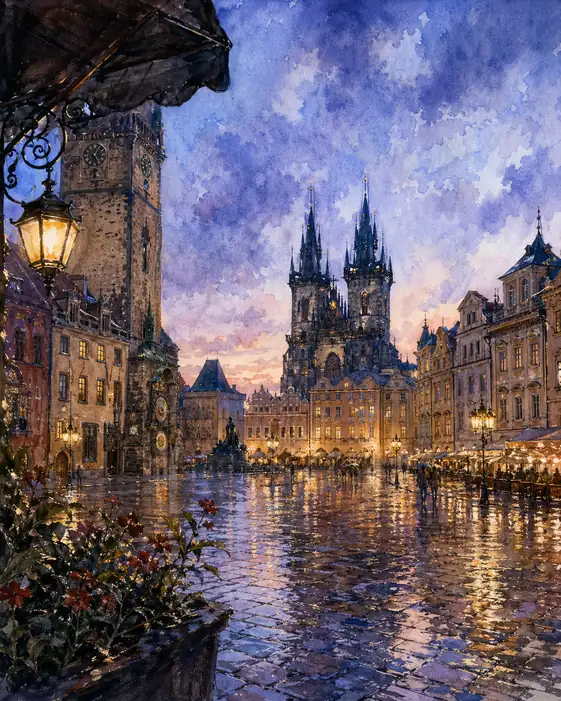 Midnight Reflections: Rain on the Old Town Square
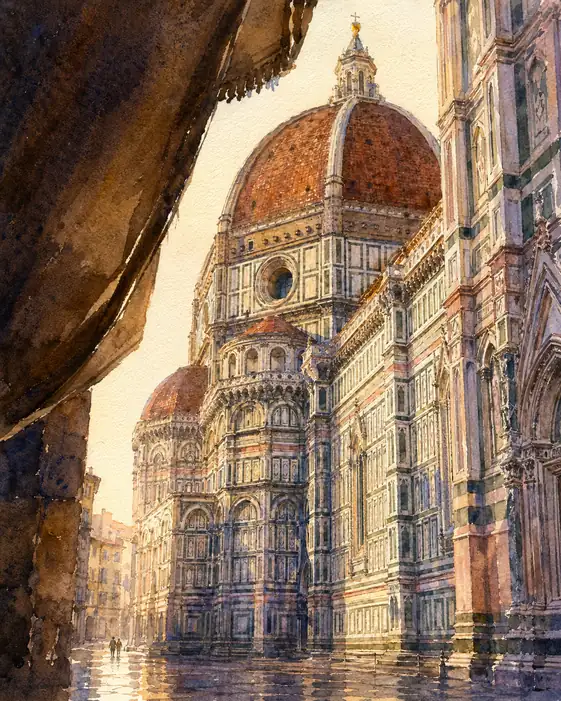 Gilded Memories of the Duomo
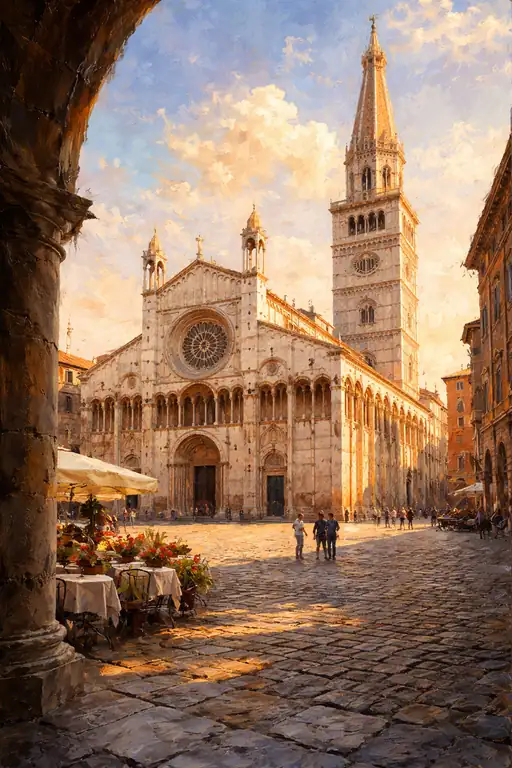 Bathed in Gold: A Moment in the Piazza
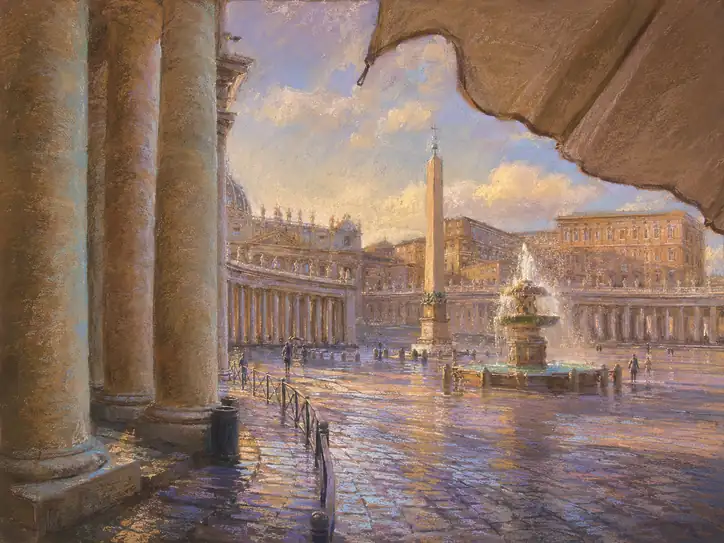 Reflections of the Sacred Square
 Resonance of the Cleared Sky