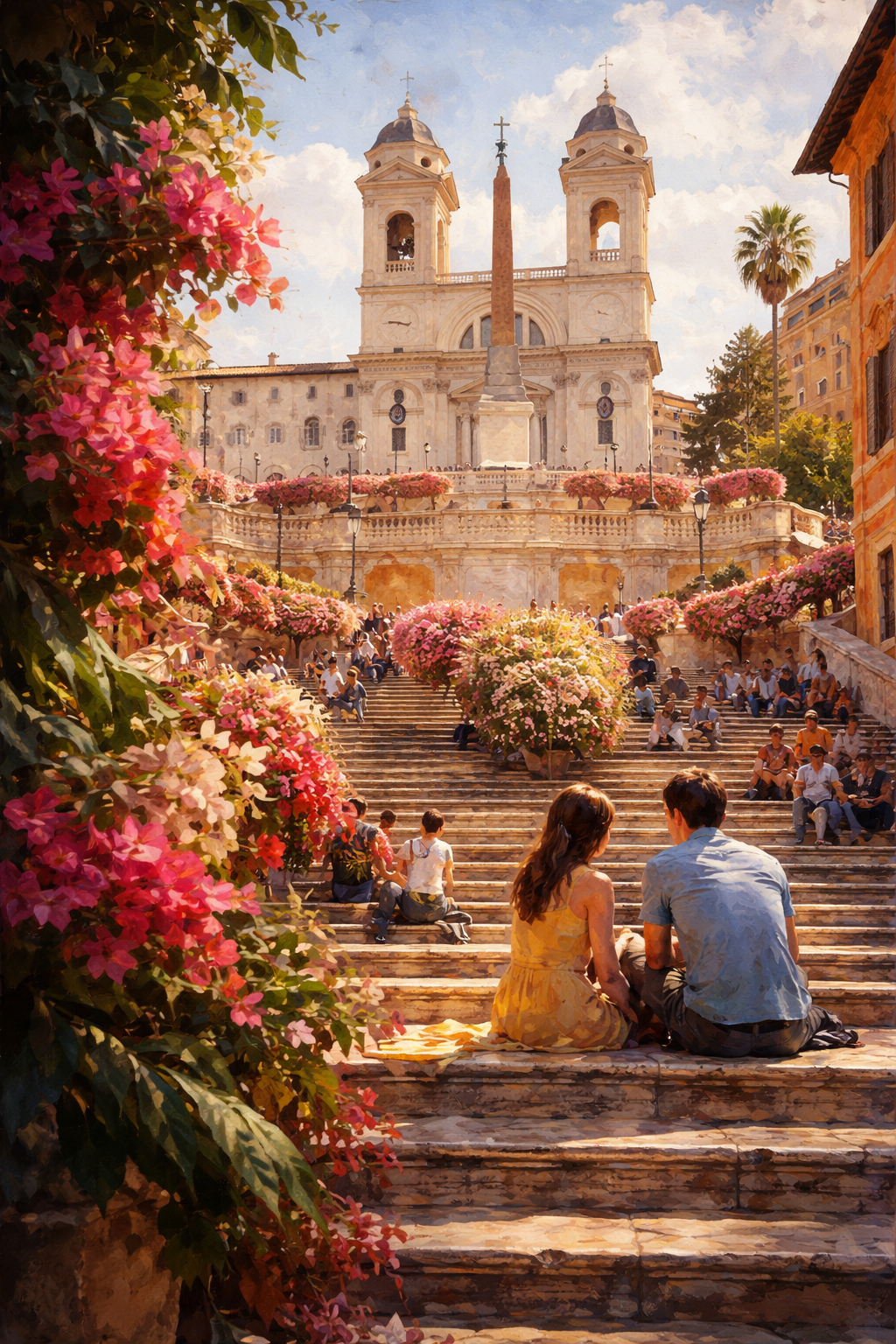
Blossoms on the Ascent of Time
Critique
1. Introduction This painting captures the vibrant and romantic atmosphere of the Spanish Steps in Rome, depicting one of the city's most beloved social spaces during its celebrated spring flowering. The artist employs a steep, upward-leading perspective that emphasizes the grand scale of the staircase while drawing the viewer's eye toward the twin towers of the Trinità dei Monti church. By focusing on a quiet moment between a couple in the foreground, the work balances the monumental architecture of the city with the intimate experiences of those who inhabit it. 2. Description The composition is dominated by the rhythmic ascent of the stone steps, which are lavishly adorned with large pots of pink azaleas. In the lower foreground, a couple sits with their backs to the viewer, their relaxed posture suggesting a moment of shared contemplation. Numerous other figures are scattered across the steps, some sitting and others moving, creating a lively sense of urban community. The background is anchored by the elegant facade of the church and the Sallustiano Obelisk, all rendered in the warm, creamy tones of Roman travertine against a bright, cloud-flecked sky. 3. Analysis Color plays a vital role in defining the mood of the piece, with the intense pinks and purples of the flowers providing a brilliant contrast to the neutral tones of the stone architecture. The artist uses light to create a strong sense of three-dimensional form, with sunlight illuminating the right side of the staircase and casting soft shadows that define the individual steps. The inclusion of lush green foliage and bright blossoms framing the left edge adds a sense of seasonal freshness and further enhances the depth of the scene. 4. Interpretation and Evaluation The work can be interpreted as a celebration of Rome's enduring identity as a place of meeting and romance. The Spanish Steps have long served as a stage for both locals and travelers, and the painting captures the way the city’s historic fabric facilitates contemporary human connection. The juxtaposition of the young couple with the ancient monuments reflects a sense of continuity, where personal narratives are woven into the long history of the urban landscape. It is a scene that evokes the effortless elegance and "dolce vita" spirit of the Italian capital. 5. Conclusion In conclusion, this painting is a charming and technically proficient depiction of a classic Roman scene. The artist’s ability to manage a complex composition with numerous figures while maintaining a clear focus on the central architectural and emotional themes is commendable. By capturing the Spanish Steps in full bloom, the work serves as an evocative reminder of the city's seasonal beauty and its timeless role as a backdrop for life's small, significant moments. It remains a poignant tribute to the enduring allure of Rome in the spring.
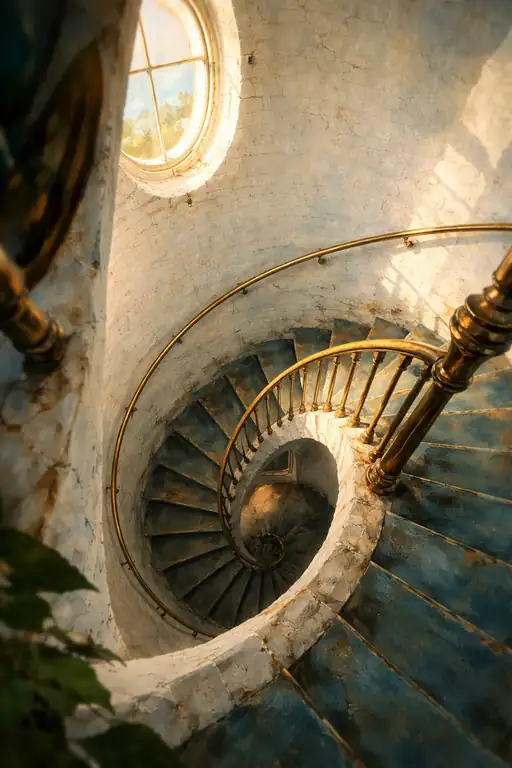 Descent into the Azure Abyss
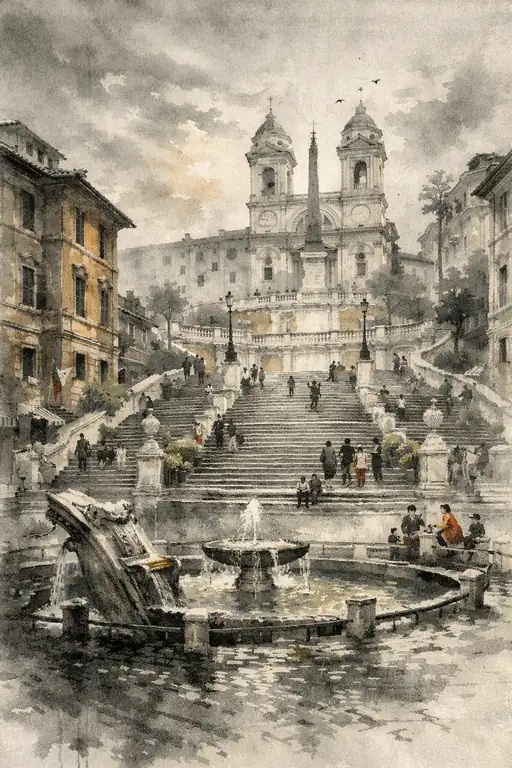 Ascending the Light of Memory
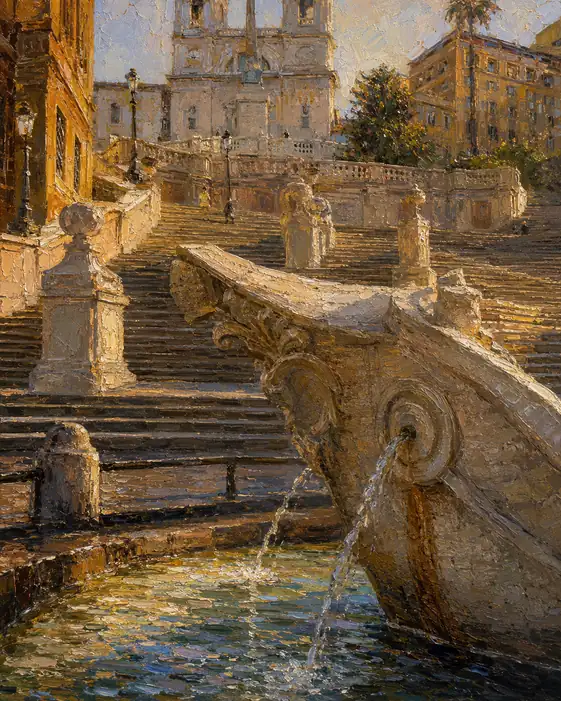 Sunset on the Spanish Steps
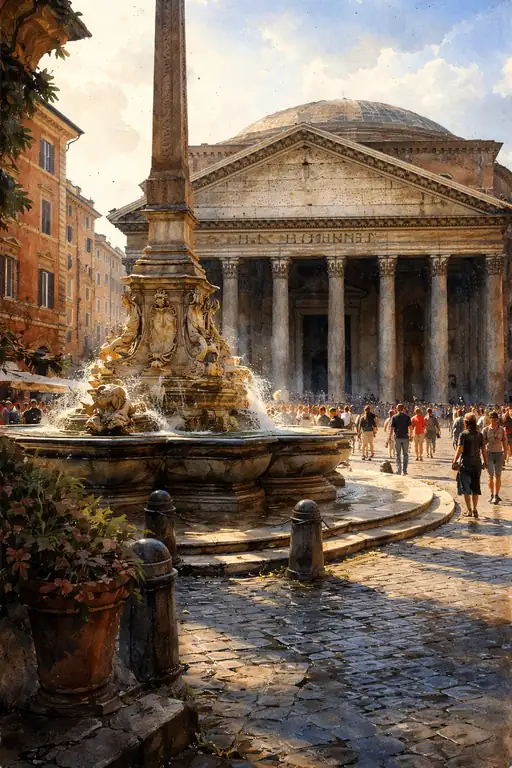 The Eternal Pantheon
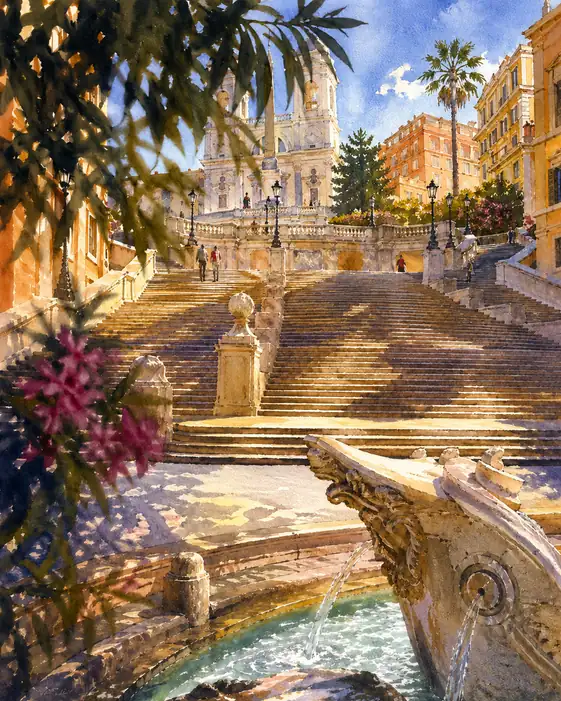 The Sun-Drenched Rhythm of the Steps
 Nearer to You, Slower to Leave
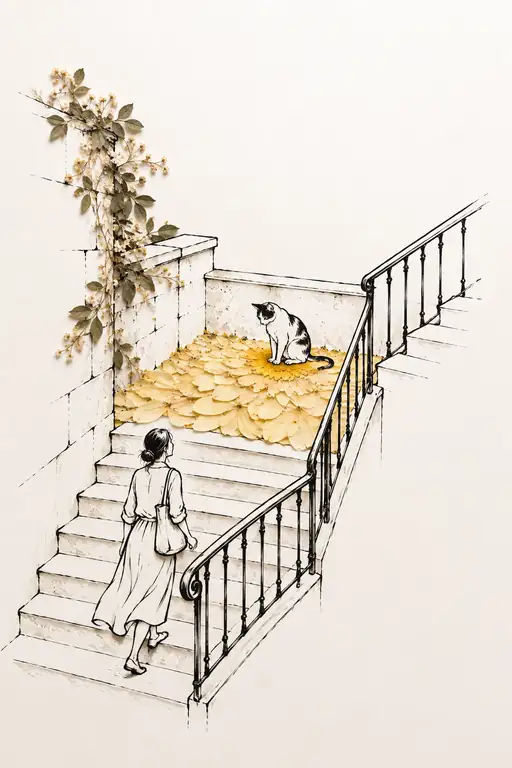 A Small Welcome at the Top
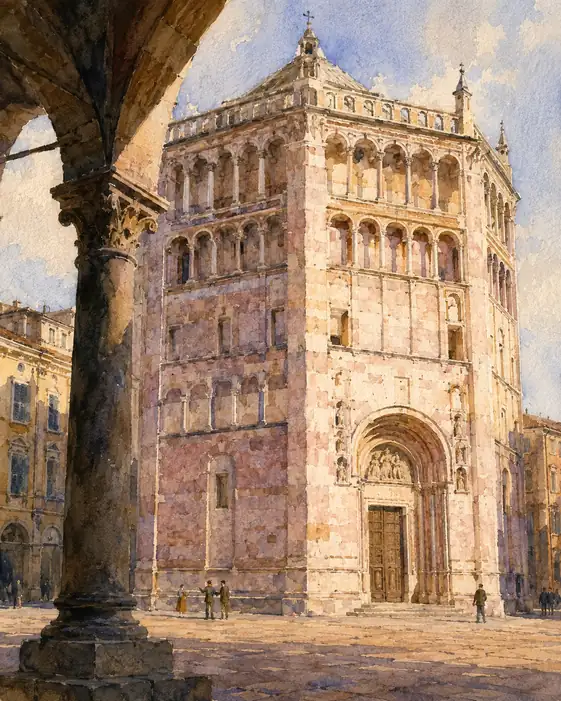 Sun-Drenched Echoes of Eternity
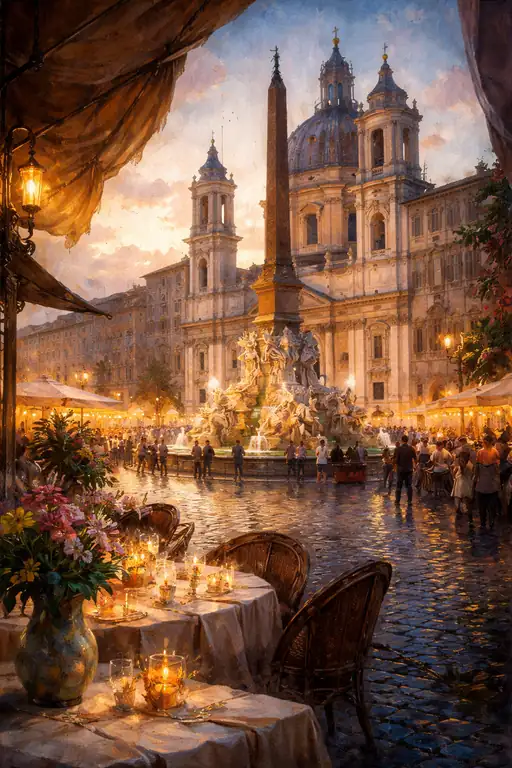 Twilight at Navona
 Each Step, a Promise of Light
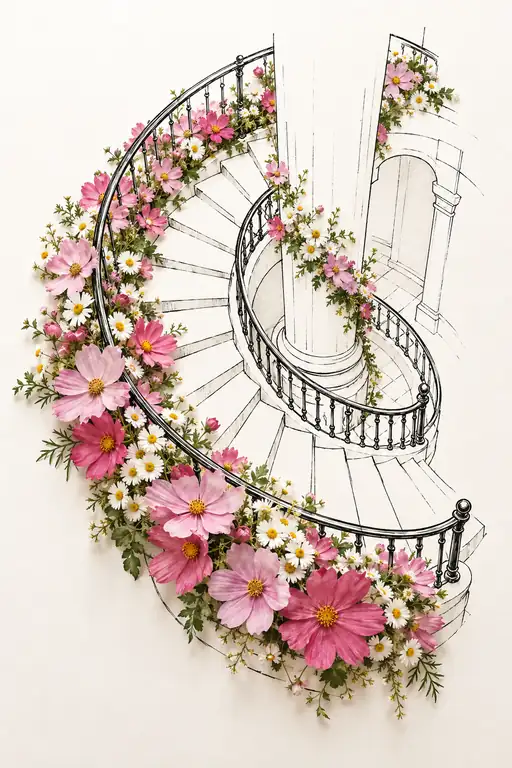 Every Turn, a New Delight