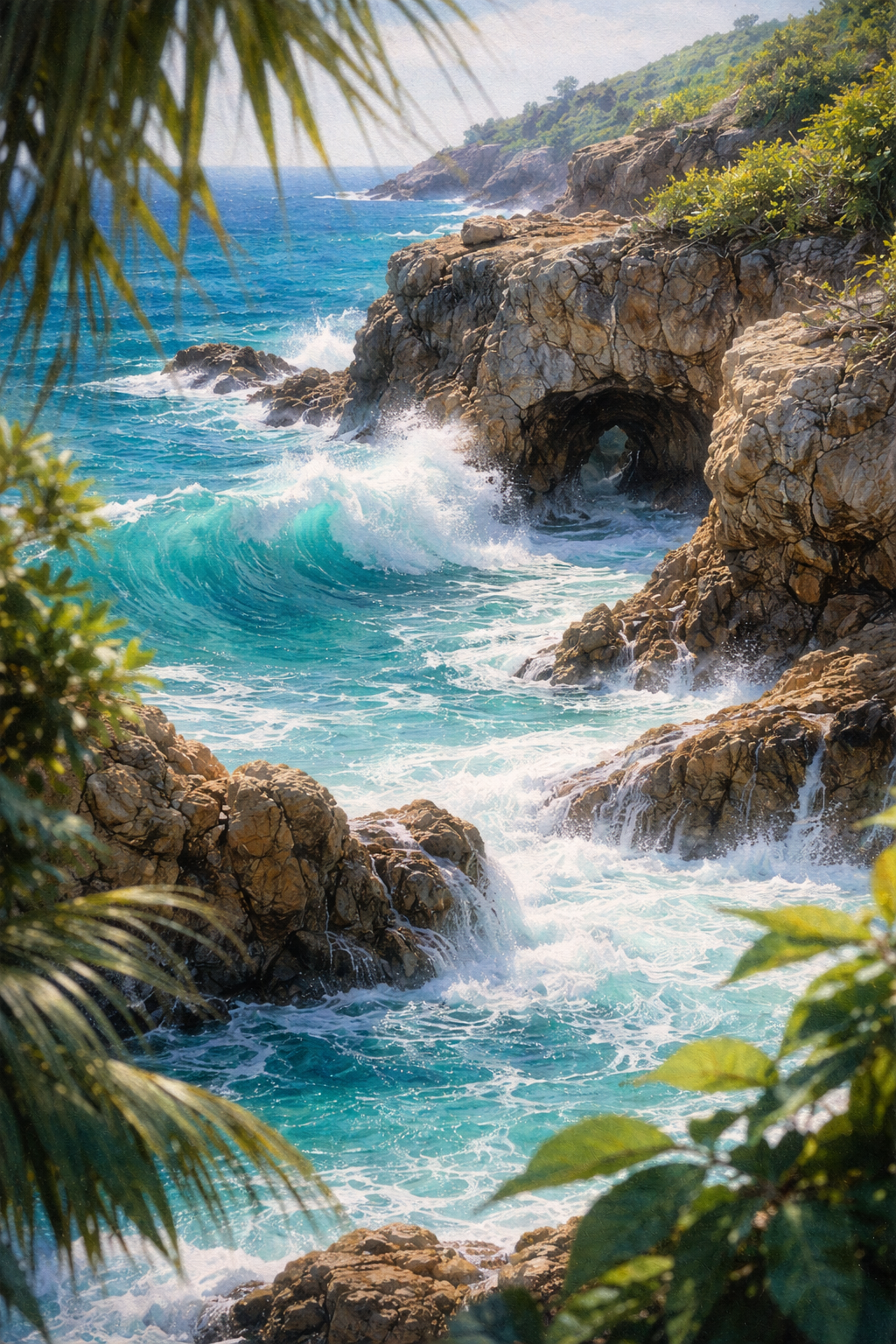
Roar of the Azure Abyss
Critique
1. Introduction This artwork depicts a rugged coastline with weathered cliffs and powerful waves, executed in a painterly style. The scene's dramatic tension is heightened by a natural sea cave carved into the jagged rocks. Tropical foliage in the foreground frames the wild landscape, acting as a natural window that draws the viewer into the raw beauty of the environment. 2. Description Imposing brownish cliffs with complex textures dominate the middle ground, showcasing a sea arch with a dark interior. Waves transitioning from turquoise to white foam collide with the rock faces, creating dynamic sprays rendered with a sense of motion. Dark green leaves occupy the foreground corners, while the distant shoreline extends under bright sunlight that illuminates the scene. 3. Analysis The composition is defined by the intersection of vertical cliffs and the diagonal movement of crashing waves. The color palette balances deep ocean blues, brilliant surf whites, and warm rock tones. The treatment of light is effective, with highlights on sunlit surfaces and deep shadows within the cave emphasizing the three-dimensional form and materiality of the terrain. 4. Interpretation and Evaluation This work can be interpreted as a celebration of nature's energy and the sculptural beauty of the earth. The artist succeeds in creating an expression where light and varied brushwork seem to convey the sound of the waves. While rooted in tradition, the piece exhibits modern refinement in its execution. It stands as a highly original expression based on deep insight into the natural world. 5. Conclusion Though appearing as a direct depiction of a harsh landscape, closer inspection reveals a profound harmony between order and chaos. The intense vitality emitted by this scene reminds the viewer of the inviolable beauty of nature, evoking a quiet yet powerful emotional response.
Same Subcategory
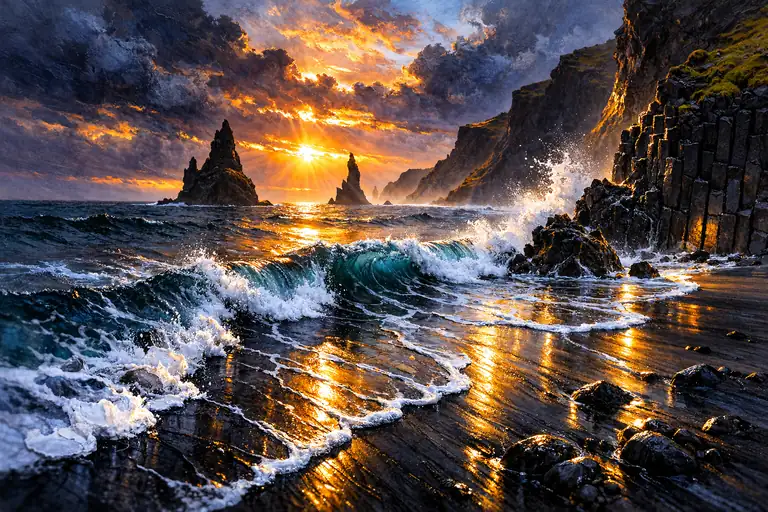 The Radiant Path Across the Turbulent Sea
 Sanctuary in the Storm's Embrace
Similar Artworks
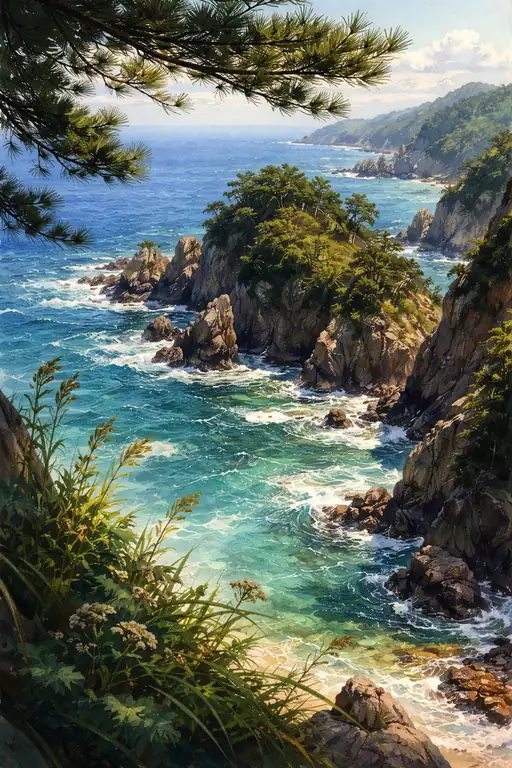 Coastal Grandeur
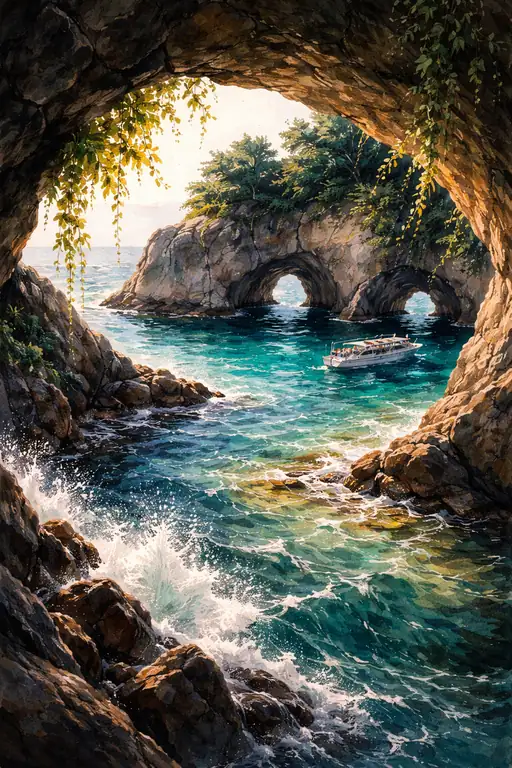 The Grotto's Embrace
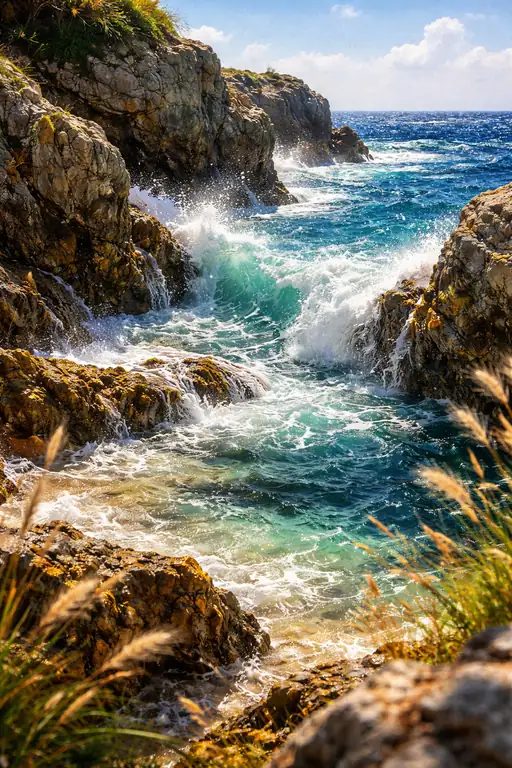 Crashing Waves on Rugged Cliffs
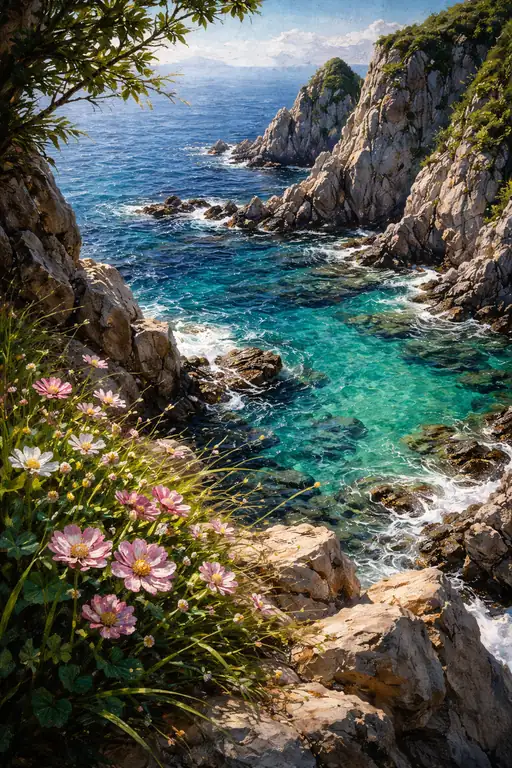 Wild Petals Gazing at the Turquoise Expanse
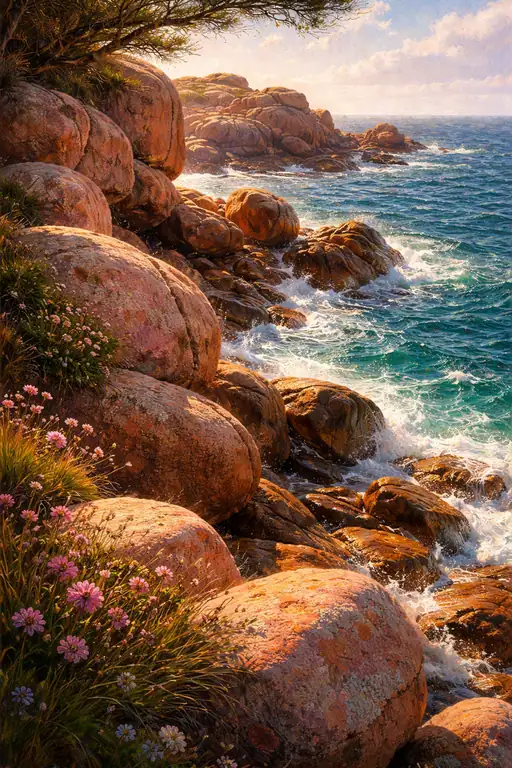 A Delicate Bloom Upon the Rocks
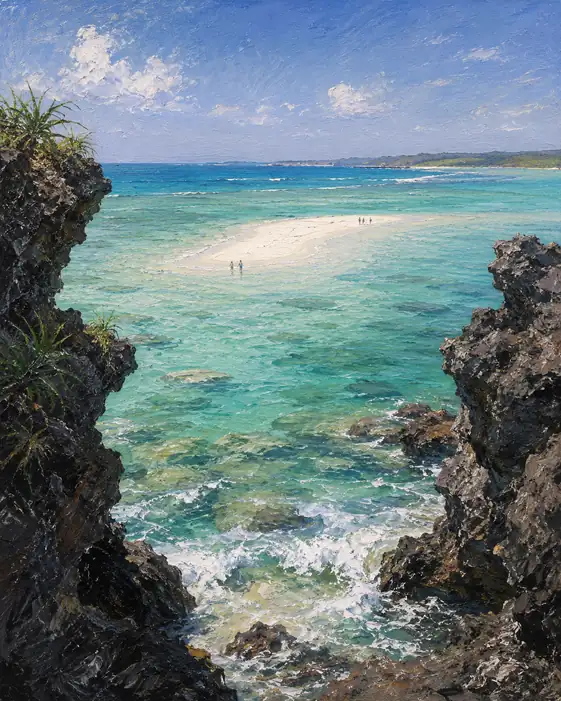 The Sea Found Between Two Cliffs
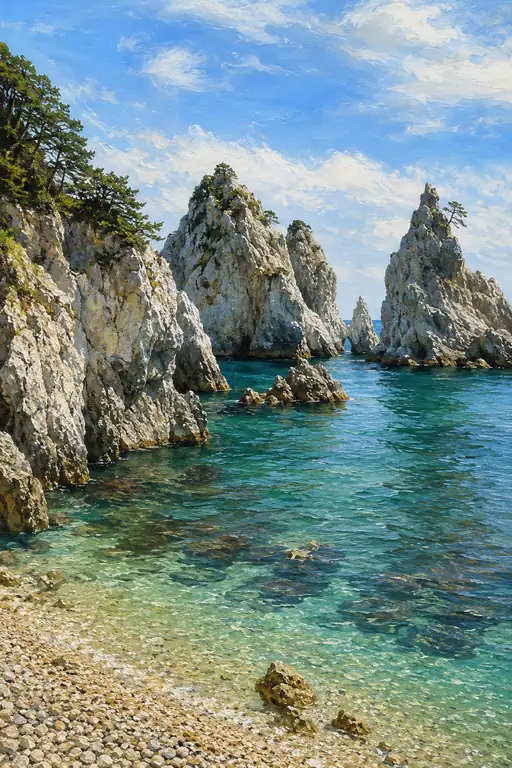 Resilience in the Azure
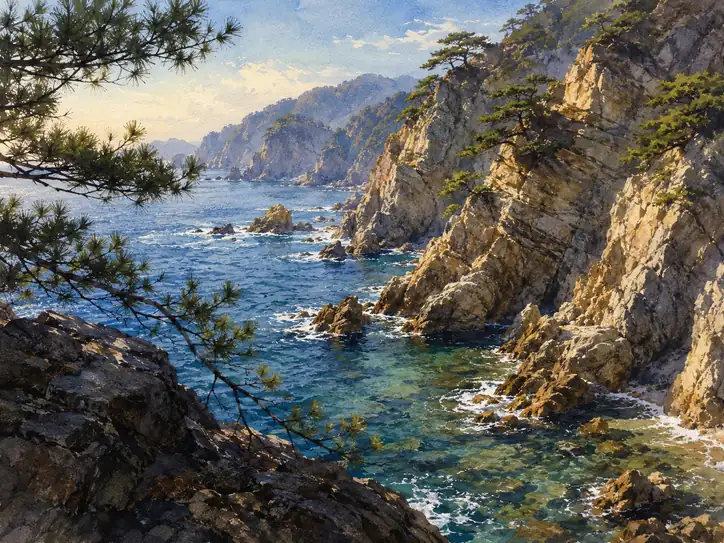 Where Pine Whispers to the Rugged Shore
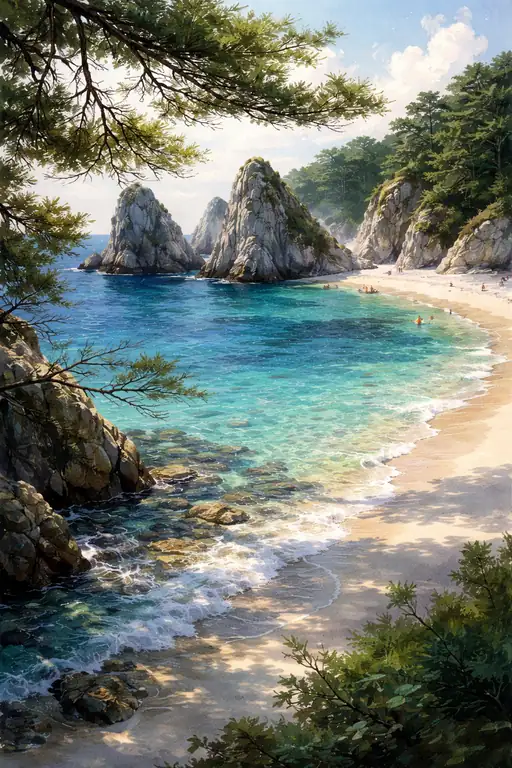 Summer Radiance: The Turquoise Coast
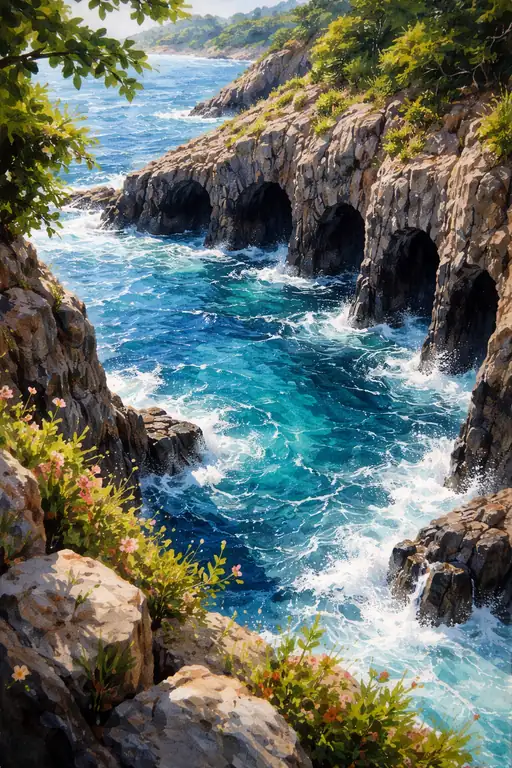 Whispers of the Golden Shore