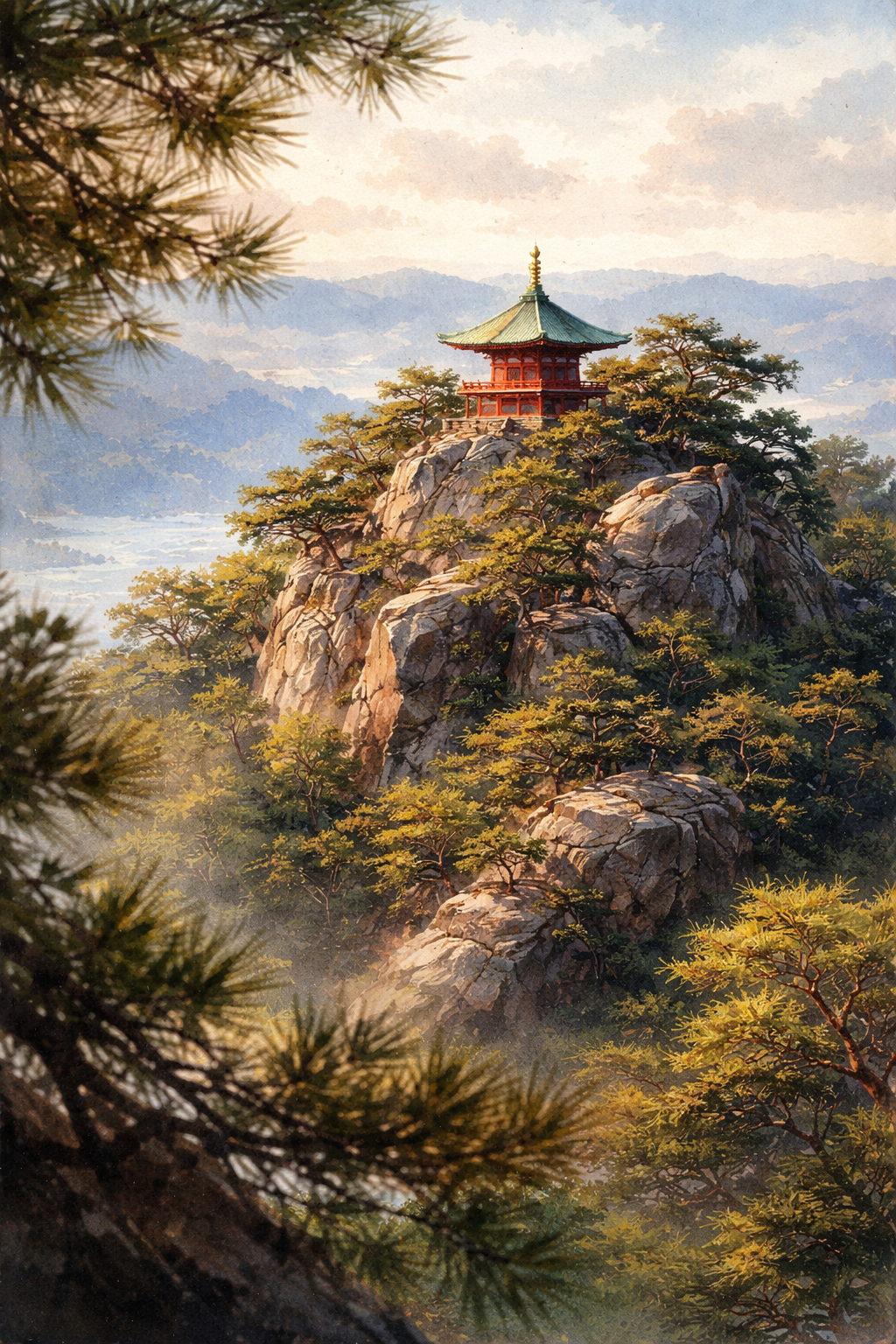
Sanctuary Above the Clouds
Critique
1. Introduction This painting presents a majestic mountain landscape featuring a traditional red pagoda situated at the peak of a rugged rocky outcrop. The composition emphasizes the verticality of the terrain and the harmonious integration of architecture within a natural setting. The work utilizes a refined illustrative style that balances meticulous detail with atmospheric depth. 2. Description The central focus is a multi-tiered red pagoda with a green roof, standing prominently against a vast, open sky. The mountain below is composed of massive, light-colored boulders interspersed with hardy pine trees. In the foreground, out-of-focus pine needles frame the view, while the background reveals distant, hazy blue mountain ranges and a winding river shrouded in mist. 3. Analysis The artist employs a sophisticated aerial perspective, where the clarity and warmth of the foreground mountain contrast with the muted, cooler tones of the distant landscape. The sharp details of the rock textures and the individual needles of the pine trees provide a strong tactile quality. The pagoda serves as a focal point, its vibrant red color standing out against the natural greens and grays. 4. Interpretation and Evaluation The work evokes themes of spiritual isolation and the sublime beauty of the wilderness. The pagoda represents a human presence that is both fragile and enduring in the face of nature’s grandeur. The technical skill displayed in the rendering of light and shadow on the rocky surfaces is exceptional, contributing to a sense of solidity and permanence. 5. Conclusion Initially seen as a traditional landscape study, the painting ultimately stands as a powerful meditation on the relationship between man and the environment. The artist successfully creates a sense of awe through a carefully orchestrated balance of color and composition. It is an evocative piece that demonstrates significant mastery over both form and atmosphere.
Same Subcategory
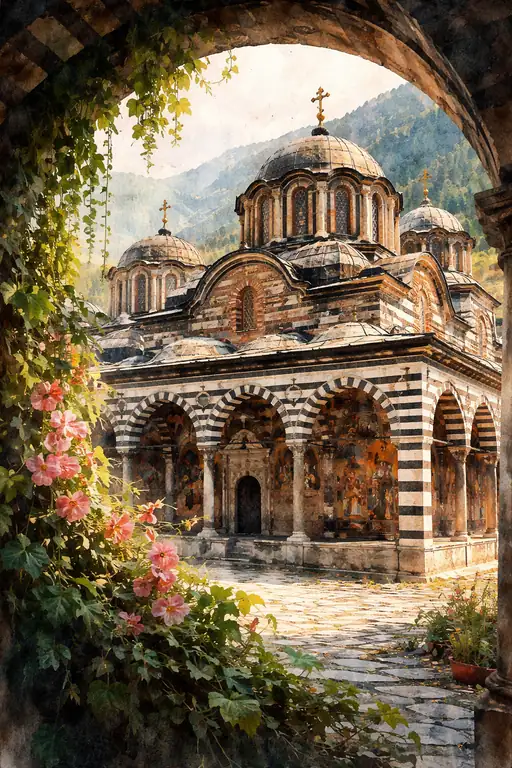 Sanctuary Amidst the Blossoms
Similar Artworks
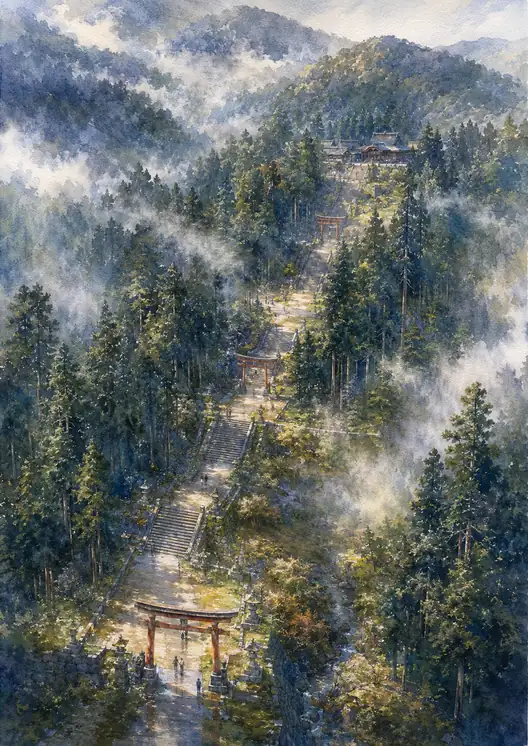 Silent Steps through the Sacred Forest
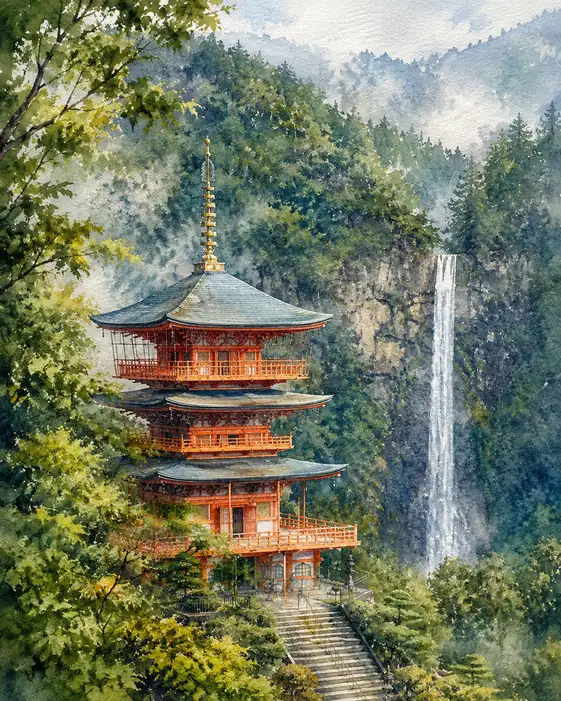 Heaven's Silver Threads, a Prayer in Vermilion
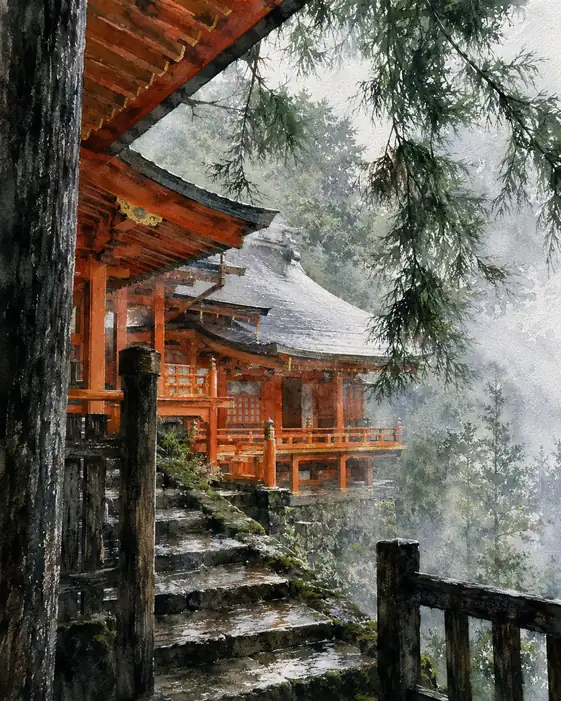 Sanctuary Veiled in Misty Rain
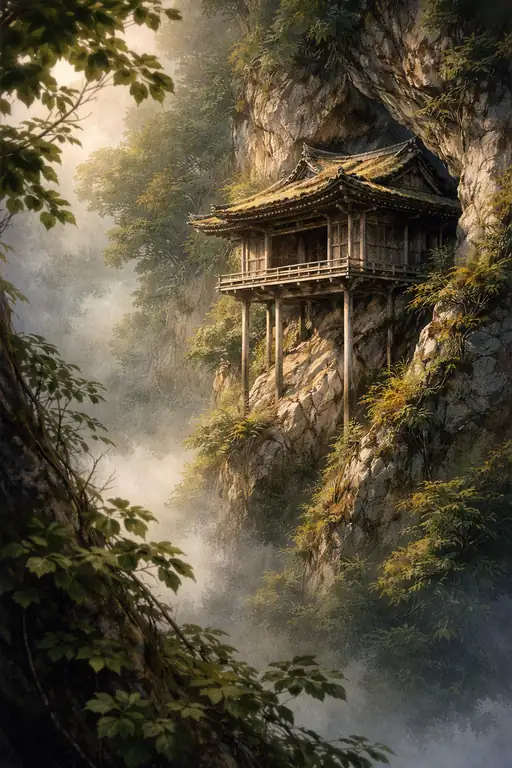 Echoes from the Sacred Void
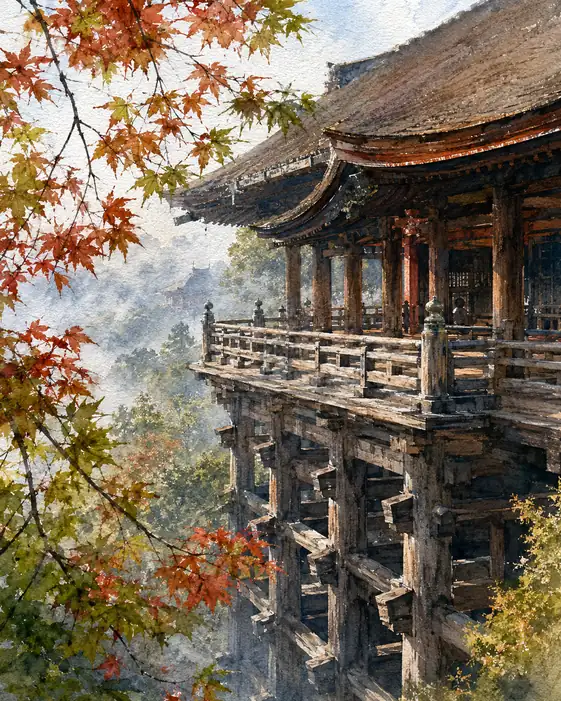 Suspended in the Autumn Mist
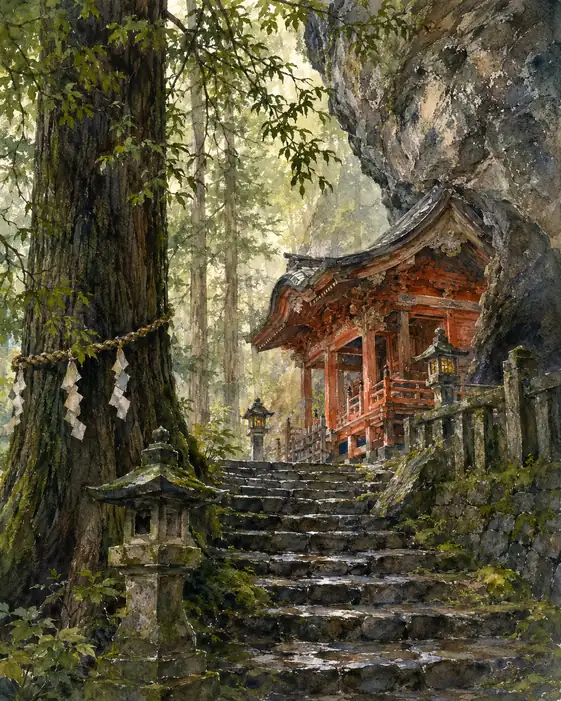 The Ancient Spirit’s Sanctuary
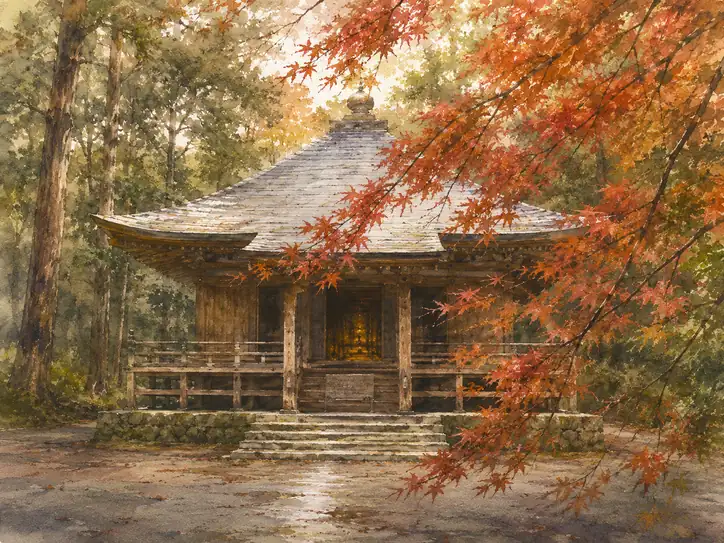 Golden Glow in the Maple Shadows
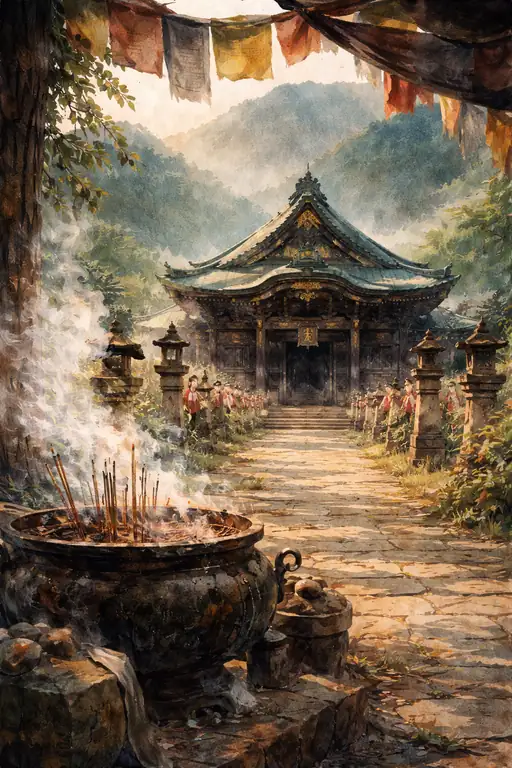 Incense and Solitude at the Mountain Shrine
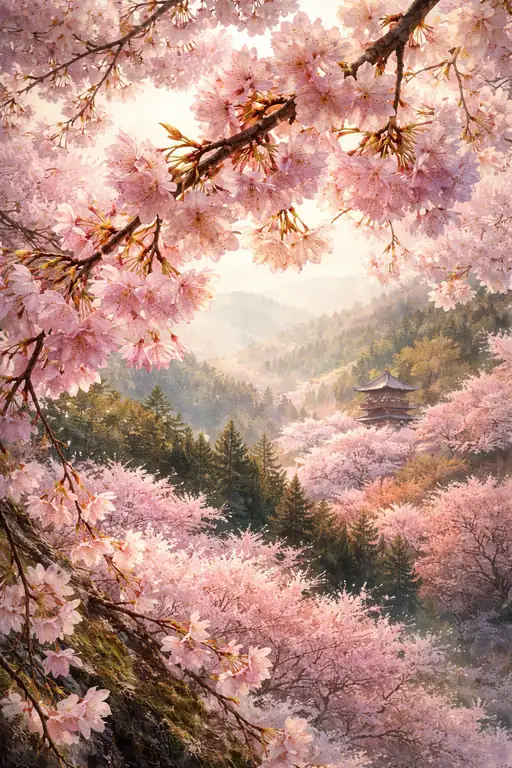 Spring's Evanescent Frame for Ancient Prayers
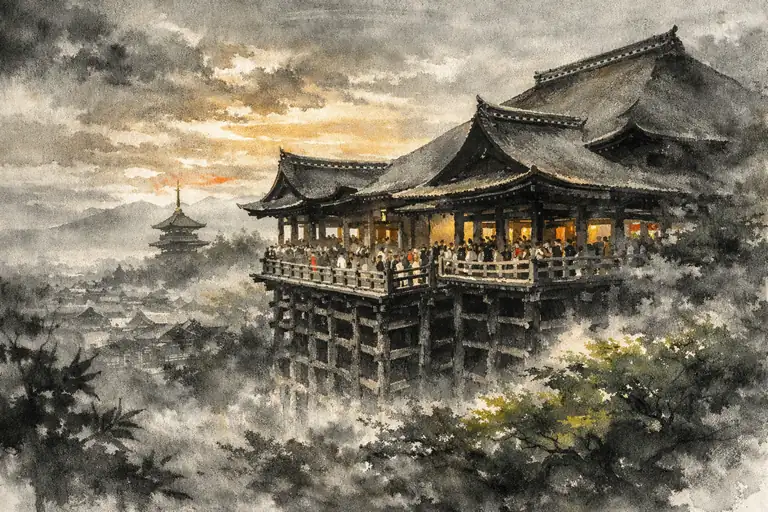 Where Prayers Meet the Golden Dusk