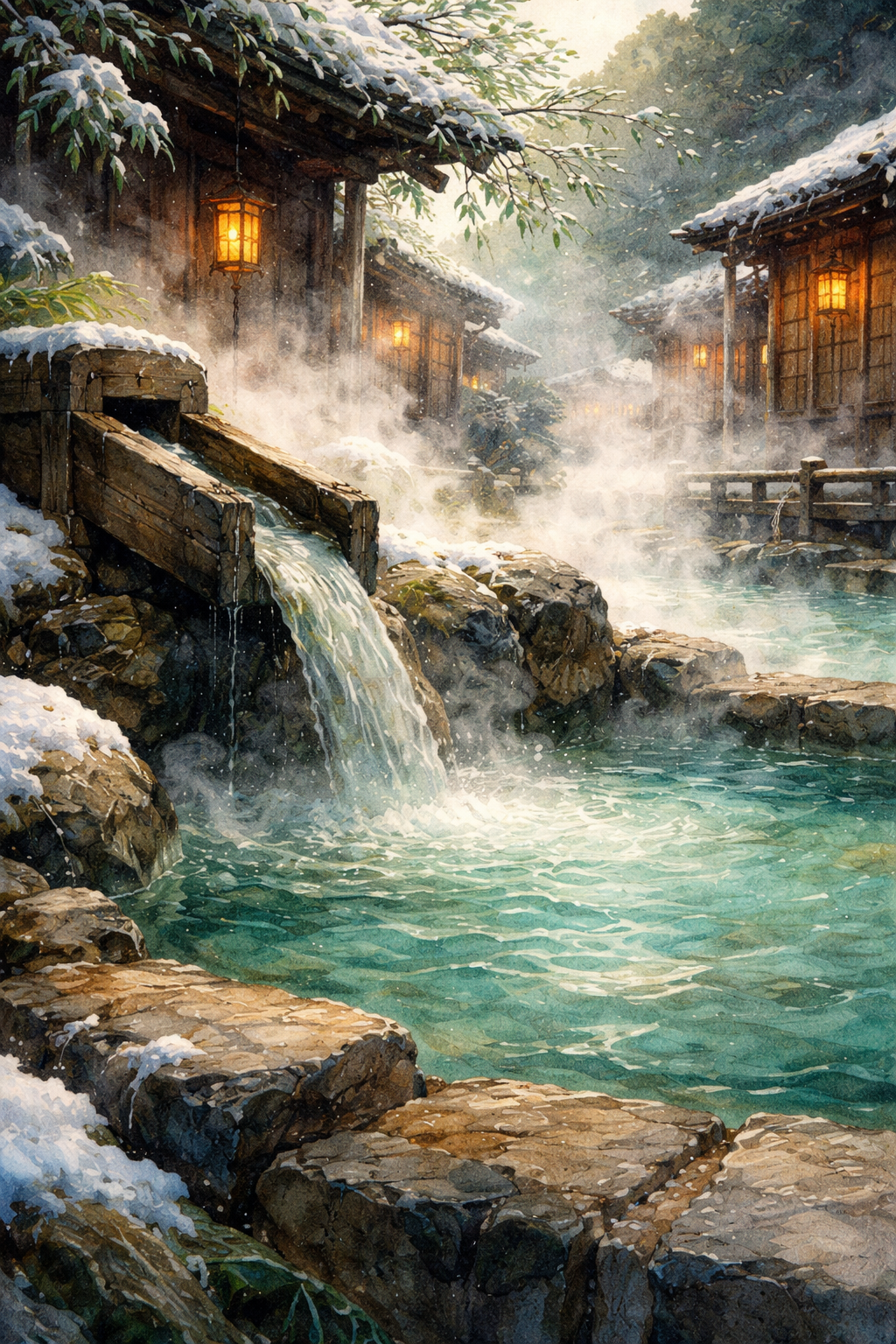
Warmth Within the Frozen Winter
Critique
1. Introduction This watercolor painting depicts a traditional Japanese hot spring village in the heart of winter. The composition focuses on a steaming outdoor bath, surrounded by snow-covered rocks and rustic wooden architecture illuminated by warm lanterns. The artist utilizes the fluid nature of watercolor to capture the ethereal qualities of rising steam and the soft texture of fallen snow. The overall atmosphere is one of cozy seclusion and sensory warmth amidst a cold, mountainous environment. 2. Description In the foreground, a wooden flume channels hot water over dark, mossy rocks into a crystalline turquoise pool. Thick white steam billows upward from the water's surface, partially obscuring the middle ground. Along the banks, several traditional buildings with snow-laden roofs are visible, their interiors casting a warm, orange glow through paper-screen windows. Glowing lanterns hang from the eaves, and a simple wooden bridge crosses the water in the distance under a misty, overcast sky. 3. Analysis The artist demonstrates a sophisticated control of watercolor washes to create the misty, atmospheric effects of the hot spring. The color palette relies on a sharp contrast between the cool teals and whites of the snow and water and the vibrant, warm oranges of the lanterns. The composition is dynamic, with the diagonal line of the water flume leading the eye into the bustling yet tranquil village scene. Light is a central theme, with the lantern glow serving as a focal point that emphasizes the warmth of the sanctuary. 4. Interpretation and Evaluation This work explores the harmony between human habitation and the natural elements, specifically the contrast between extreme cold and healing warmth. The depiction of steam serves as a visual metaphor for the life-giving energy of the earth, while the glowing windows suggest a community thriving in a harsh climate. Technically, the artist excels in rendering varied textures, from the splintered wood of the flume to the soft, heavy accumulation of snow. The composition successfully evokes a strong sense of place and cultural heritage. 5. Conclusion The initial perception of a quiet winter scene transitions into a deeper appreciation for the vibrant life sustained by the geothermal activity. This painting masterfully balances detailed architectural elements with the nebulous forms of water and steam, creating a cohesive and evocative narrative. By focusing on the sensory experience of heat and light, the artist has produced a work that is both visually stunning and emotionally comforting. It stands as a poetic celebration of the Japanese winter landscape.
Same Subcategory
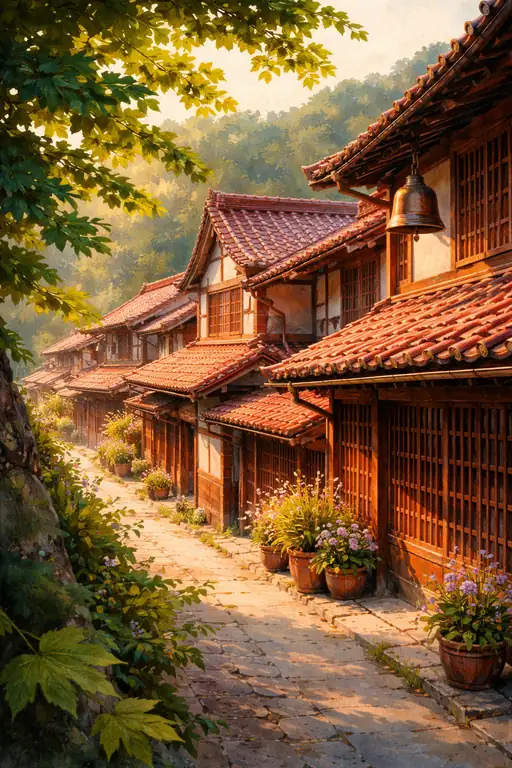 Nostalgia on the Stone Path
Similar Artworks
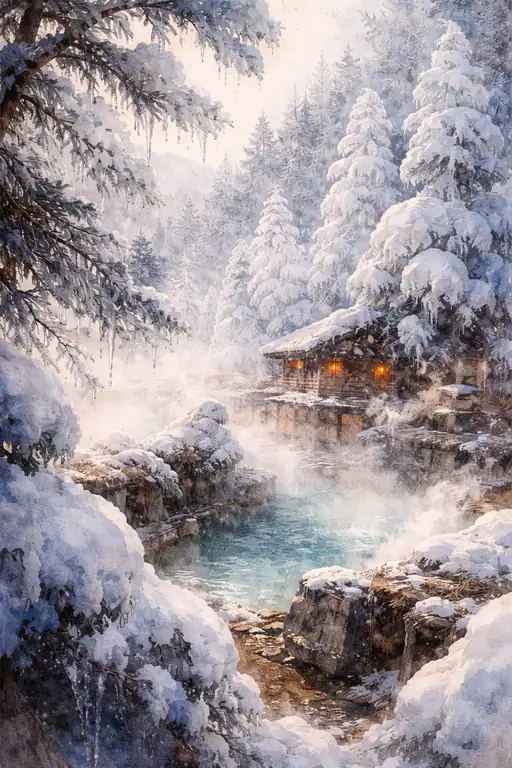 A Sanctuary from the White Silence
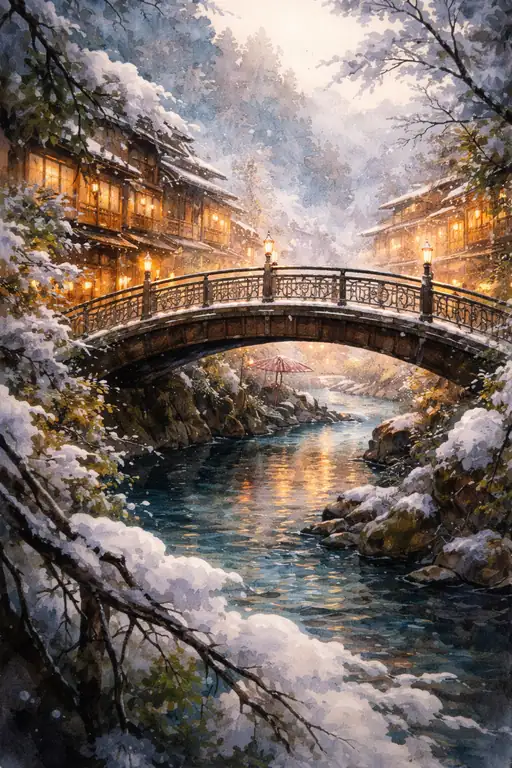 Warmth in the Heart of the Silver Twilight
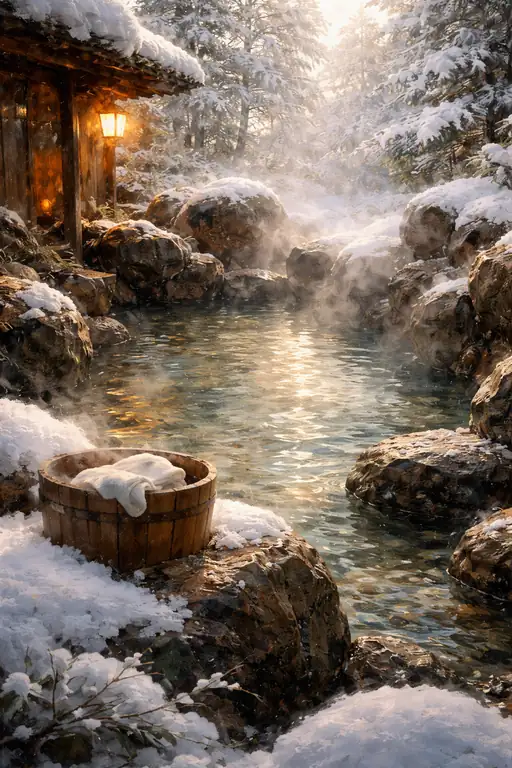 Whispers of Winter's Warmth
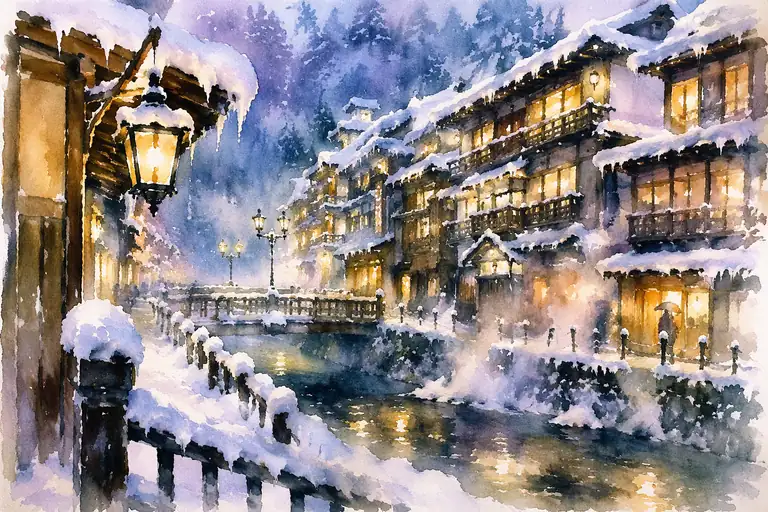 Twilight Whispers Along the Snow
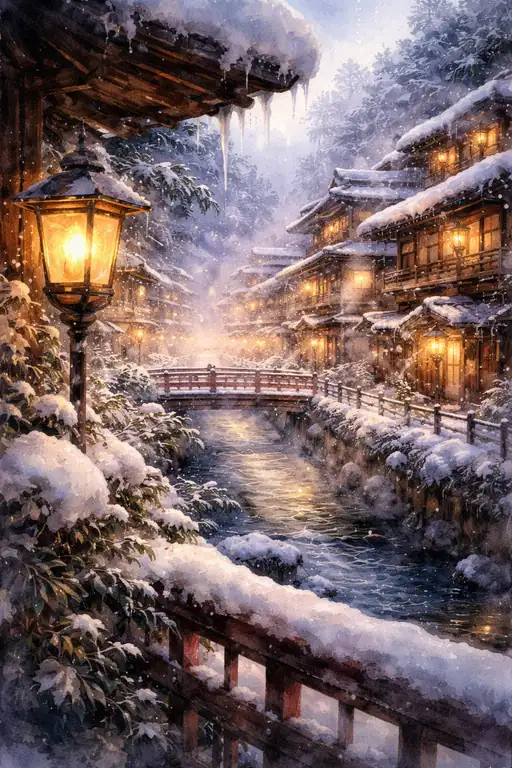 Nostalgic Glow in the Snowy Night
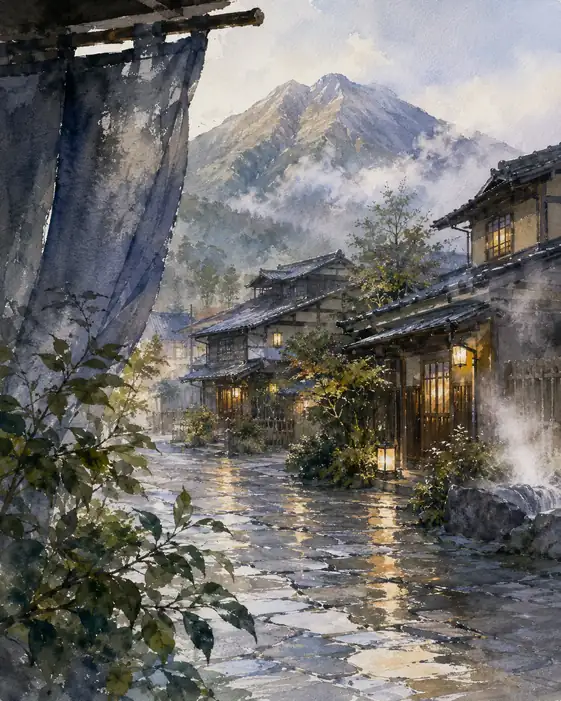 Echoes of the Mist-Bound Inn
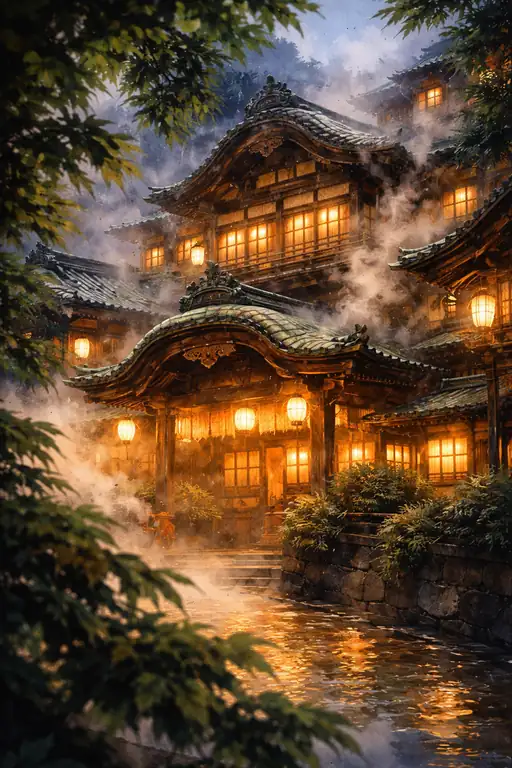 Mystic Vapors of the Evening Lanterns
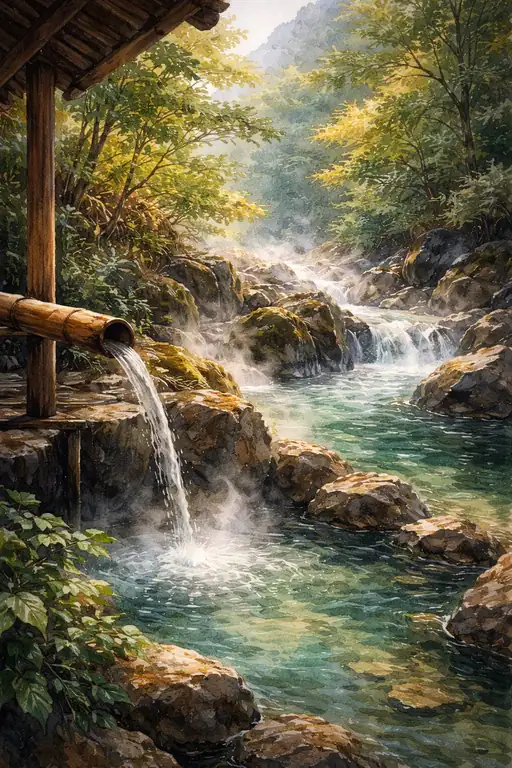 Breath of the Emerald Sanctuary
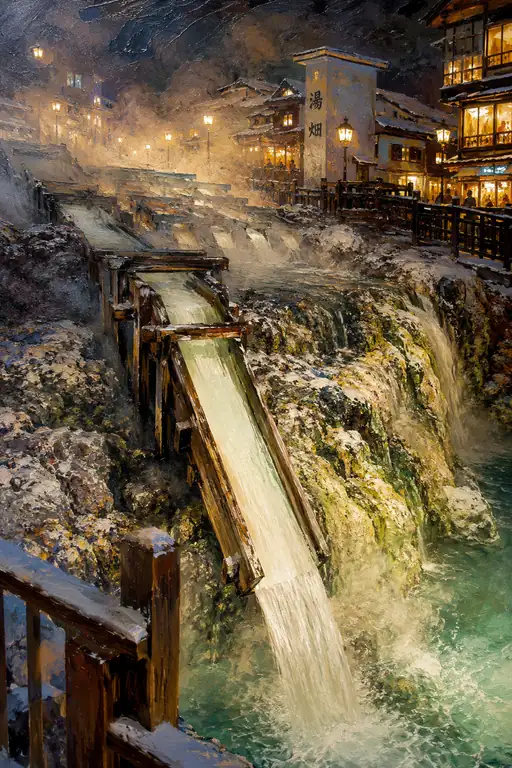 Warmth Amidst the Winter Snow
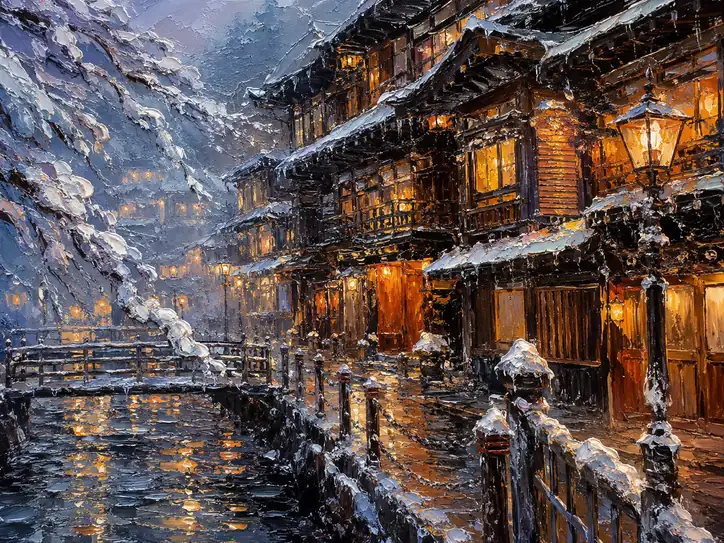 Where the Snow Whispers Warmth