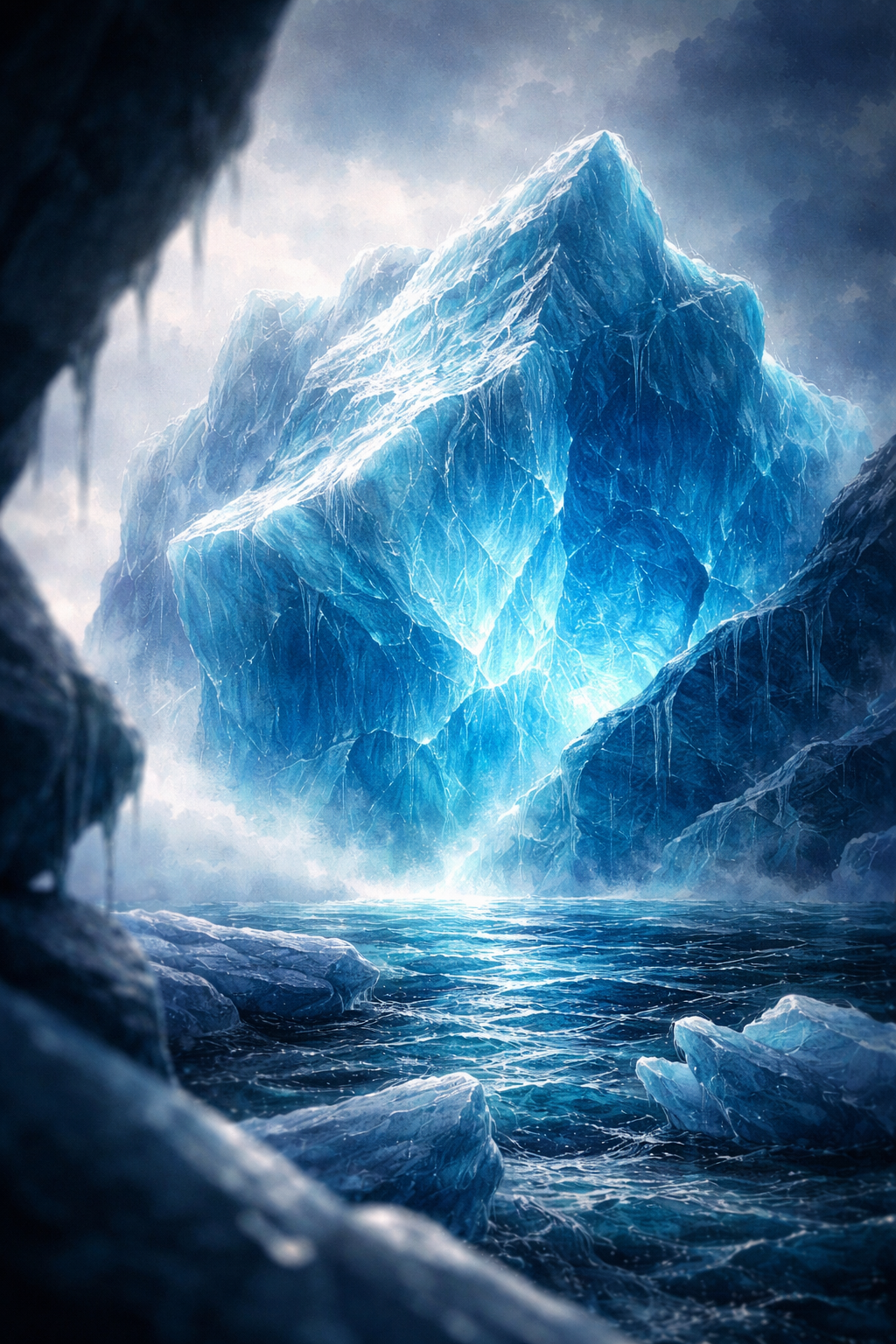
Whispers of the Frozen Citadel
Critique
1. Introduction This oil painting presents a breathtaking Arctic landscape featuring a colossal iceberg as its primary subject. The composition captures the sheer scale and luminosity of the ice, which dominates the center of the canvas against a misty and overcast sky. Through its evocative use of blue tones and crystalline textures, the work successfully conveys the frigid majesty of a remote polar region. 2. Description In the center of the frame, a massive blue iceberg rises from the water, its surface characterized by sharp, jagged edges and intricate cracks. The ice glows with an internal light, radiating varying shades of cerulean and turquoise. Below the iceberg, the dark, turbulent sea reflects the surrounding light, with small icy fragments floating in the foreground. The scene is framed by dark, rocky outcrops on either side, partially covered in frost and mist. 3. Analysis The artist employs a palette dominated by various shades of blue, white, and gray, which creates a unified and cold atmosphere. The brushwork is detailed and precise, particularly in the depiction of the ice's crystalline structure and the reflective surface of the water. Light appears to originate from within the iceberg itself, highlighting its complex geometry and creating a strong sense of volume. This dramatic lighting serves as the main focal point, drawing the eye toward the center of the composition. 4. Interpretation and Evaluation The work can be seen as a meditation on the permanence and fragility of nature's frozen monuments. The exaggerated luminosity of the ice lends the scene a slightly surreal or mystical quality, elevating it beyond a simple landscape study. The technical skill in rendering the translucency of ice and the movement of water is impressive, providing a highly tactile experience. The composition is effectively balanced, using the foreground rocks to provide depth and lead the viewer into the vast, chilly space. 5. Conclusion Upon initial viewing, the painting impresses with its serene yet powerful representation of ice and water. Further analysis reveals a sophisticated layering of colors and textures that enhance the feeling of coldness and isolation. The work succeeds in capturing the unique beauty of an extreme environment through its focused and technically proficient execution. This Arctic scene demonstrates a deep appreciation for the natural world's architectural wonders, leaving a lasting impression on the viewer.
Same Subcategory
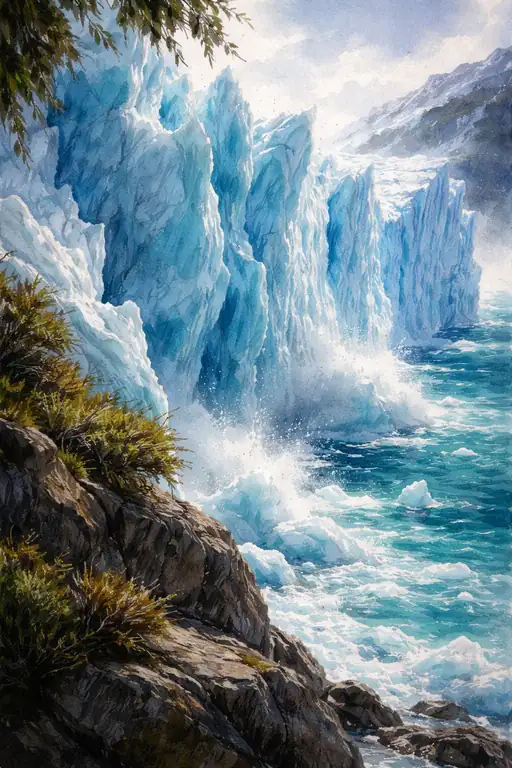 Perito Moreno's Icy Wrath: The Churning Ocean Meets the Glacial Giant
Similar Artworks
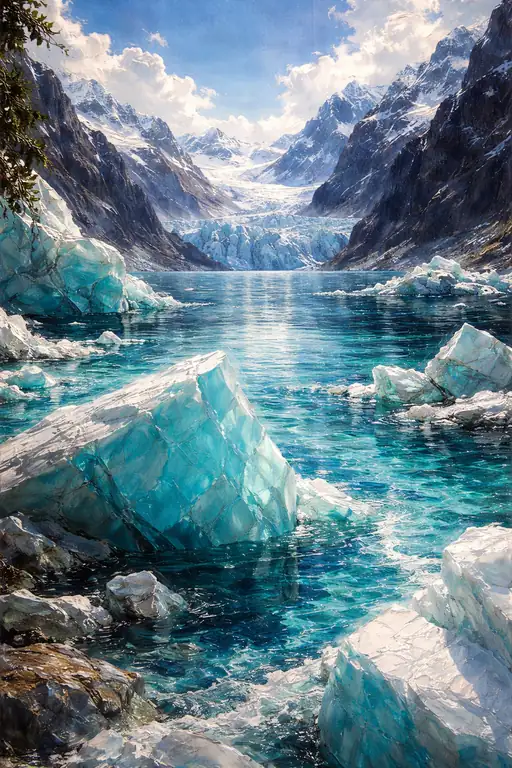 The Solitude of Frozen Wonders
 Golden Rim of the Frozen Silence
 The Moment the Frozen Silence Cracks
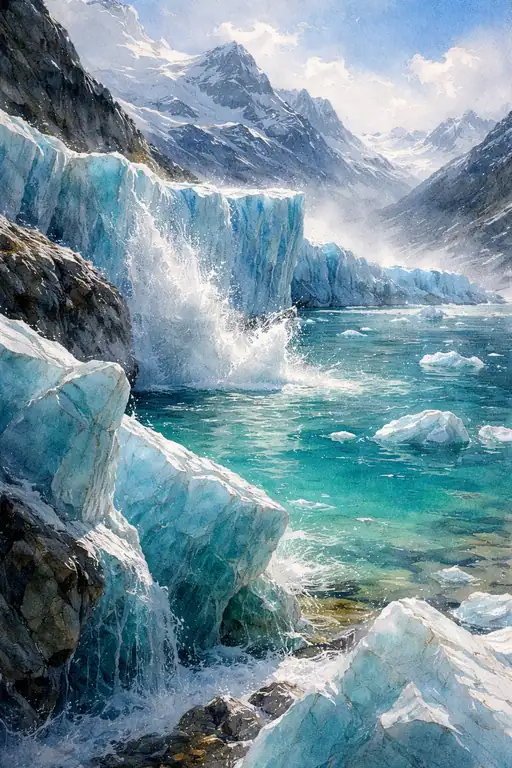 The Great Release: Echoes of the Blue Giant
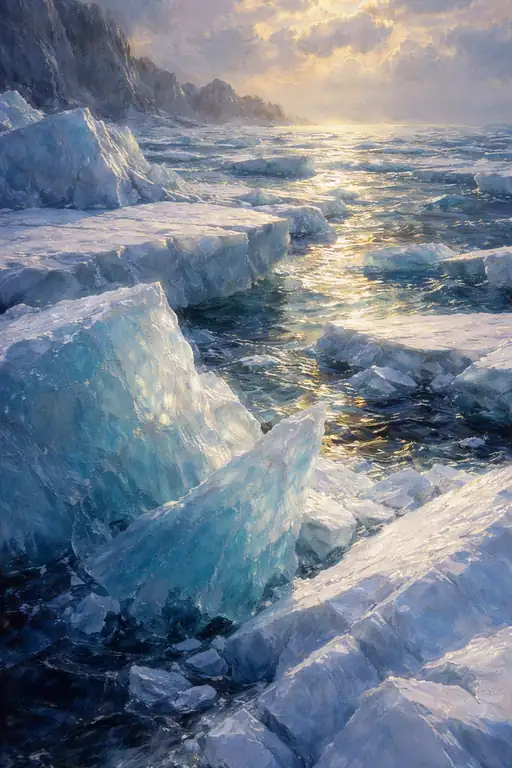 The Last Light of the Polar Kingdom
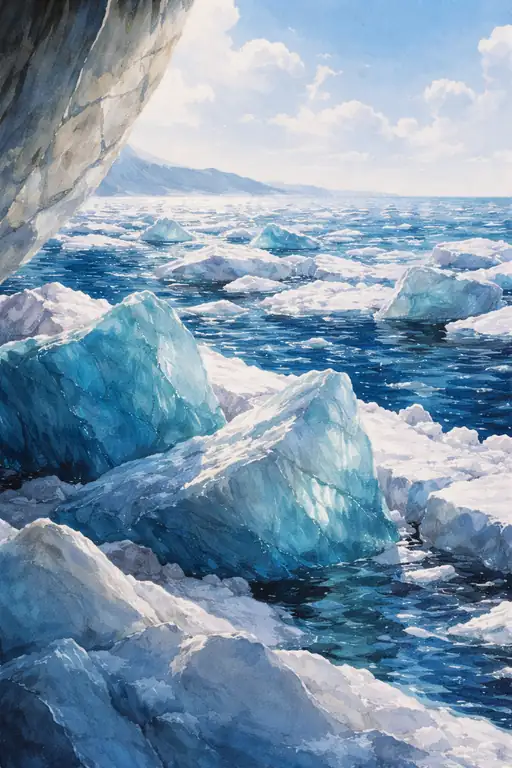 Silence of the Sleeping Glaciers
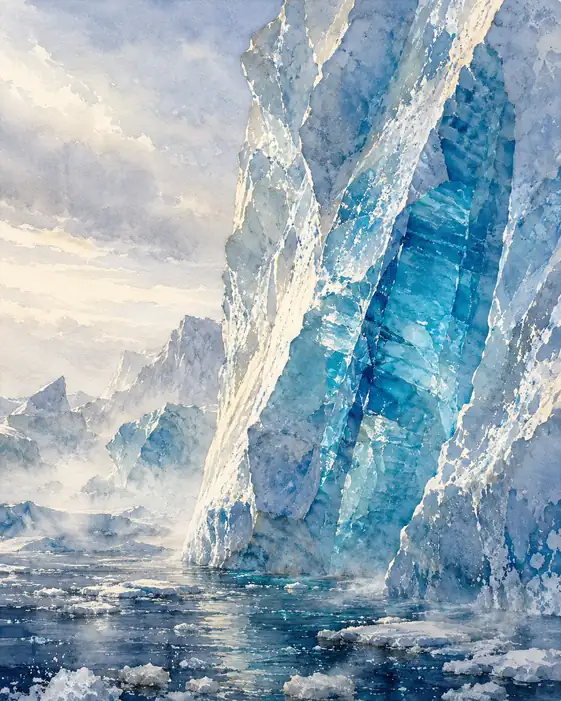 The Blue Silence of the Glacier
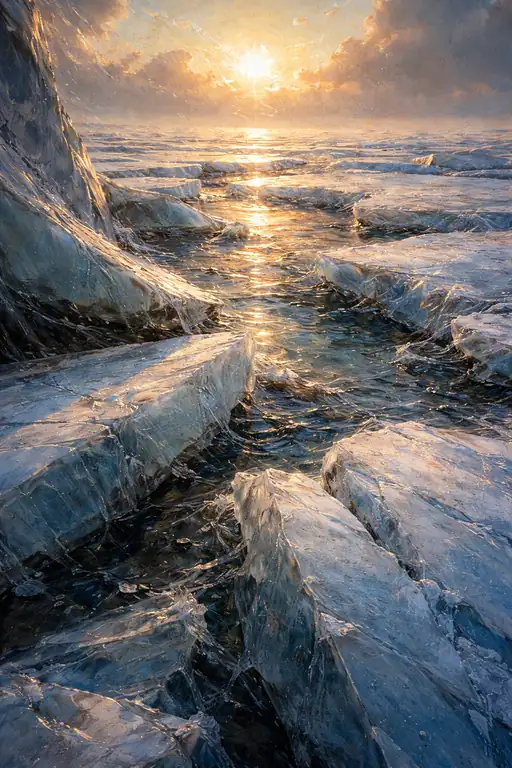 Eternal Radiance in the Heart of Ice
 Crimson Sails Defying the Silence
 Whispers of the Frozen Light