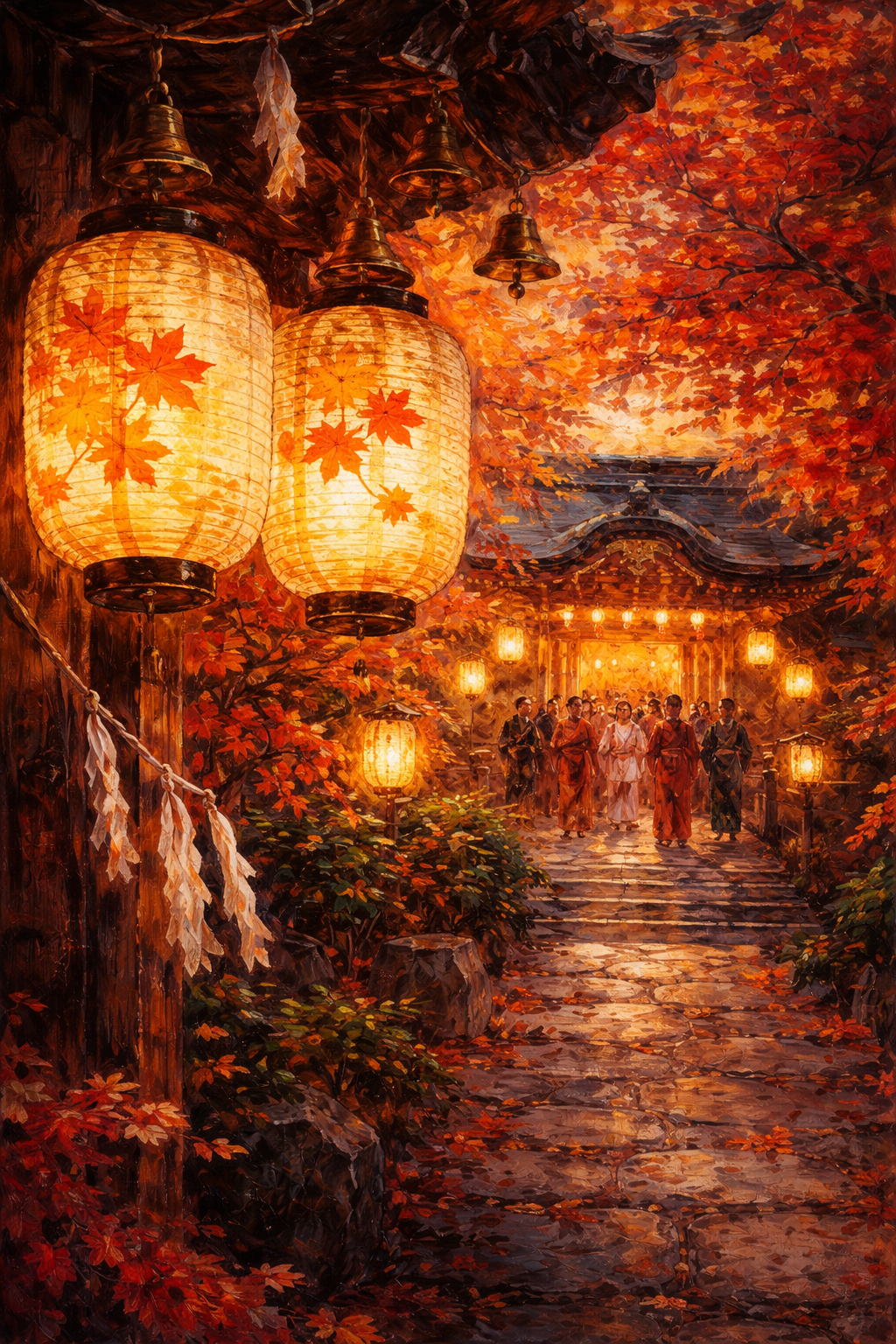
Path of the Crimson Leaves
Critique
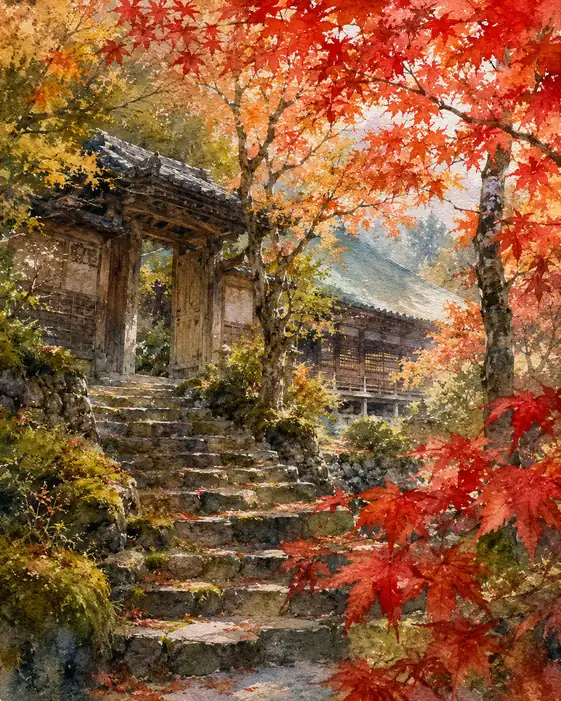
1. Introduction This painting depicts a nocturnal scene at a traditional Japanese shrine or temple during the peak of autumn. The composition is centered on a stone path leading toward a brightly lit gate, flanked by glowing lanterns and vibrant maple trees. The overall atmosphere is one of spiritual tranquility and seasonal celebration, captured with a rich and warm color palette. 2. Description In the foreground, two large, round lanterns with maple leaf patterns dominate the left side, emitting a soft golden light. The stone path, partially covered with fallen leaves, stretches from the bottom right toward the middle ground where several figures in traditional robes are walking. Above and around the path, dense canopies of maple leaves in brilliant shades of red and orange create a natural archway. Smaller lanterns and architectural details of the shrine are visible in the background, reinforcing the cultural setting. 3. Analysis The artist utilizes a painterly technique with visible, textured brushstrokes that enhance the organic feel of the autumn foliage. The lighting is the most significant element, with the warm glow from the lanterns creating a strong contrast against the dark, shadowy areas of the shrine structure. The perspective is handled effectively, drawing the viewer’s eye along the receding stone path toward the illuminated figures and the distant gate. This arrangement creates a sense of depth and movement within the vertical frame. 4. Interpretation and Evaluation The work successfully conveys the ephemeral beauty of autumn in Japan, emphasizing the harmony between man-made structures and the natural environment. The use of light not only provides a focal point but also imbues the scene with a sacred, almost mystical quality. The technical execution of the maple leaves and the reflective surfaces of the stone path demonstrates a high level of skill in capturing light and texture. The choice of warm tones evokes a feeling of nostalgia and reverence for traditional rituals. 5. Conclusion In conclusion, the painting is a compelling representation of a specific cultural moment, characterized by its vibrant colors and evocative lighting. The initial focus on the prominent lanterns eventually gives way to a deeper appreciation of the quiet procession and the surrounding nature. It is a harmonious work that celebrates the intersection of tradition and seasonal change through a sophisticated use of painterly techniques.
Same Subcategory
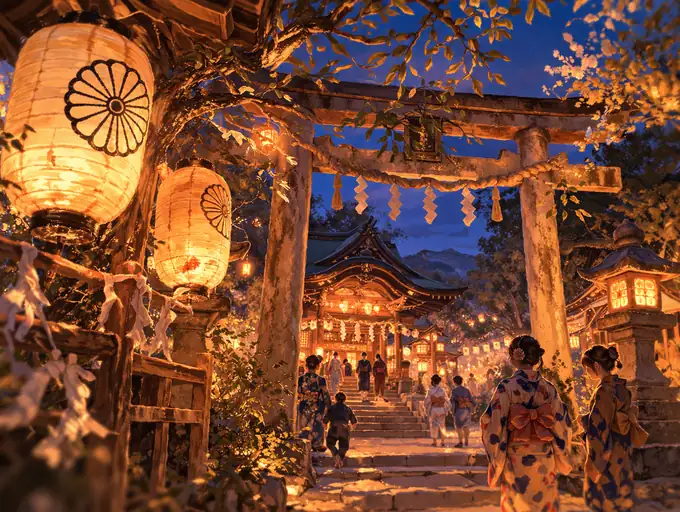 Mystery of the Summer Shrine
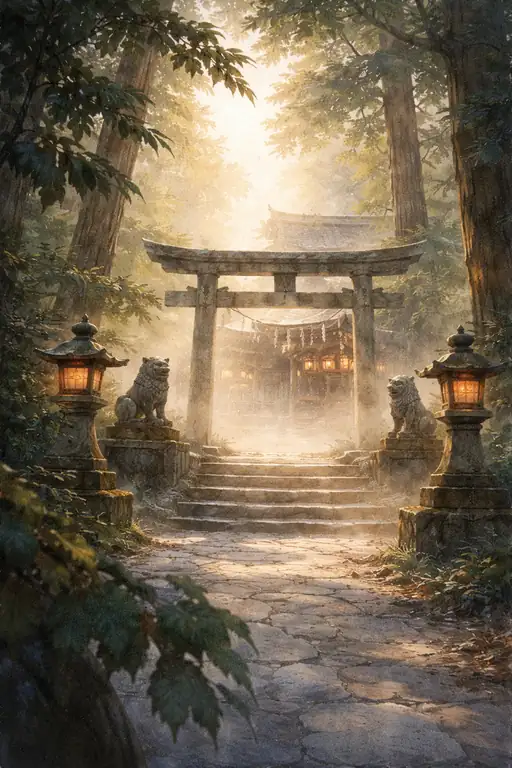 Silent Guardians of the Ethereal Dawn
Similar Artworks
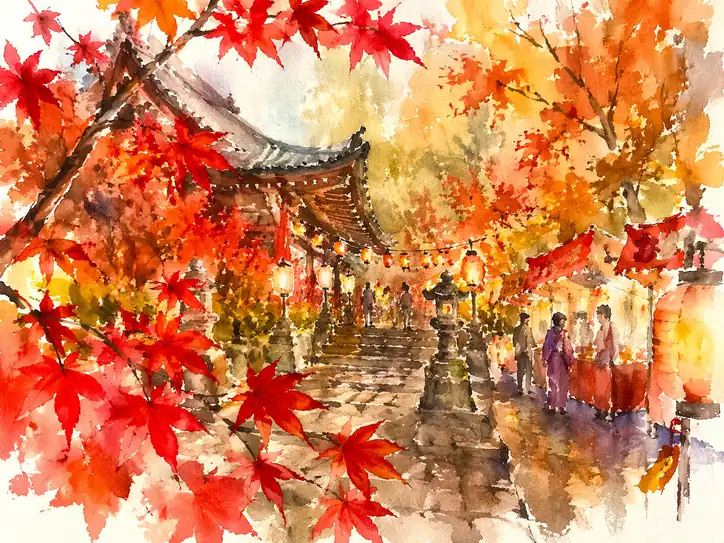 Autumn's Serenity
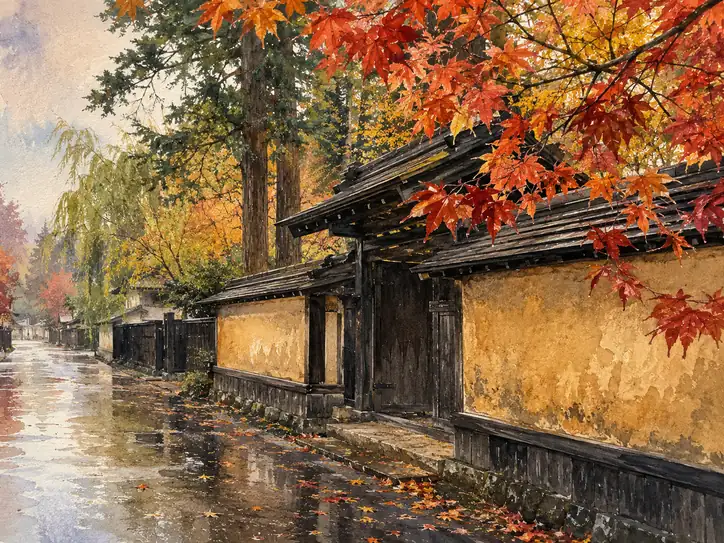 The Rain's Quiet Reflection
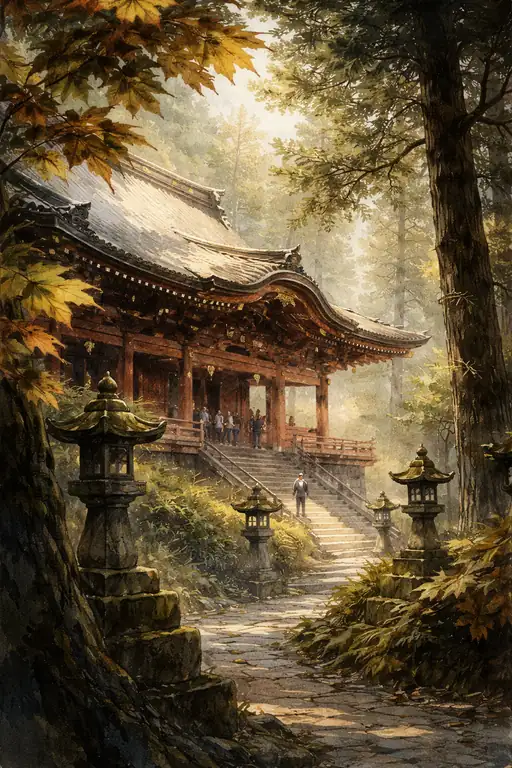 Spiritual Tranquility on the Autumnal Stone Path
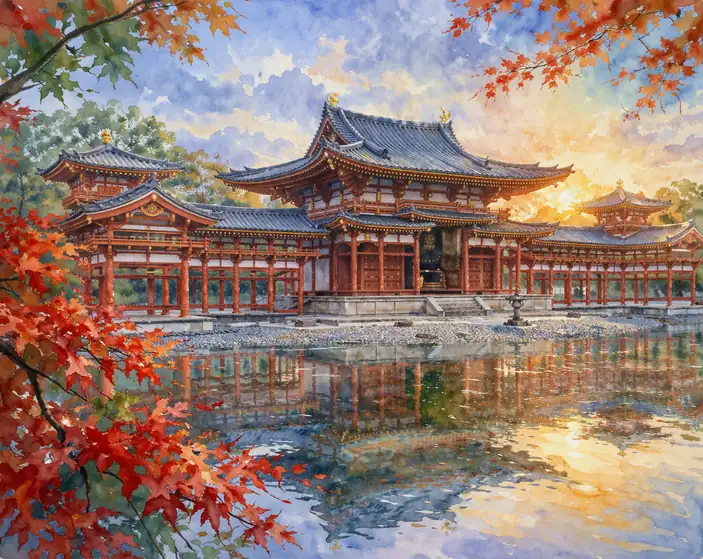 Crimson Reflections of an Ageless Hall
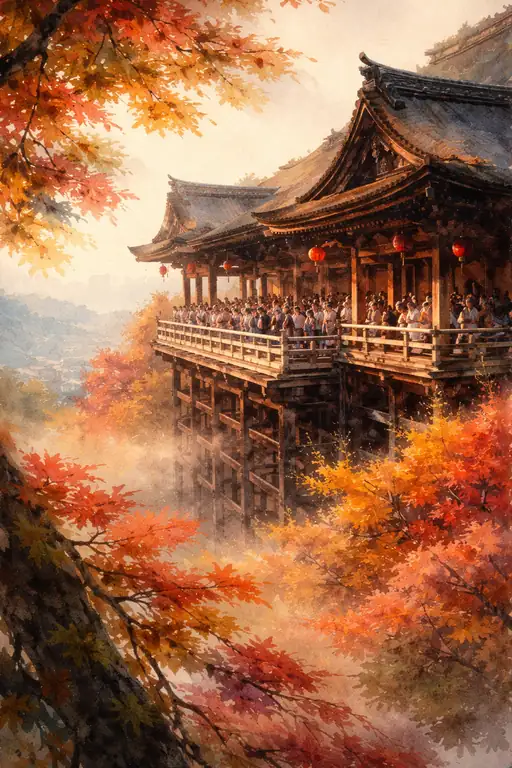 Echoes in the Autumn Mist
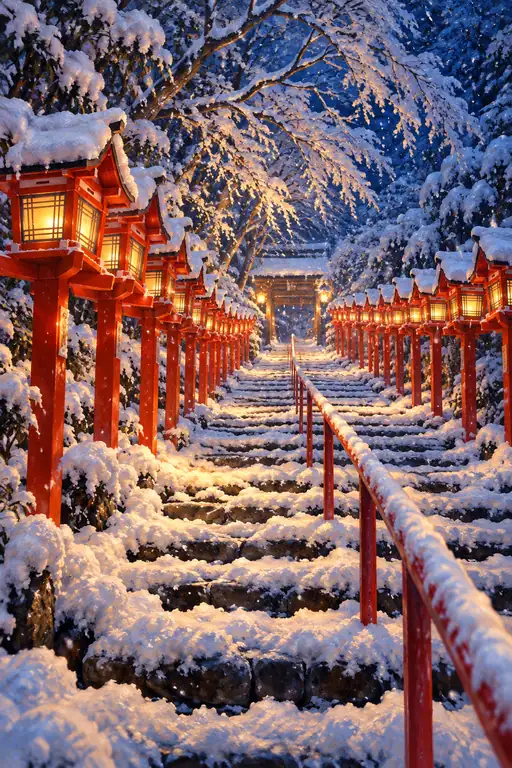 Winter Makes Room for My Prayer
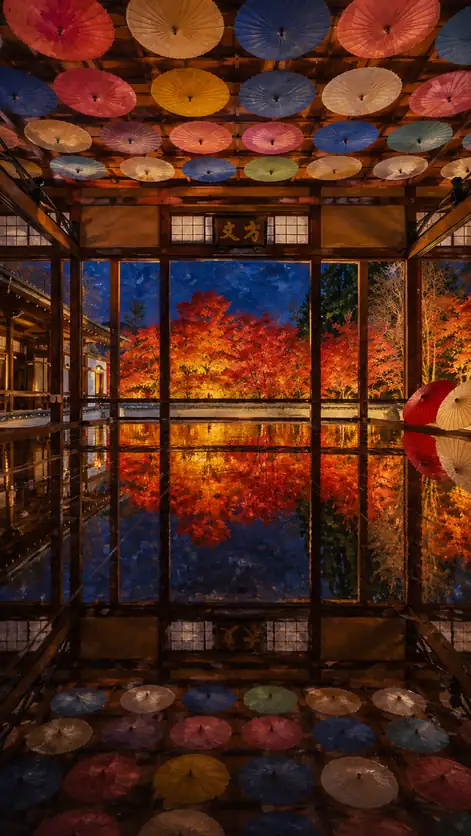 Umbrellas Gather the Autumn Evening
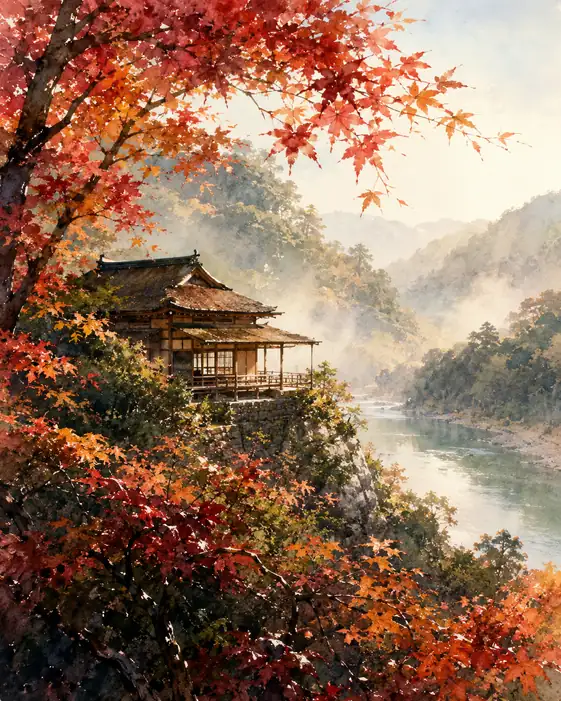 Autumn Keeps a Room Above the River
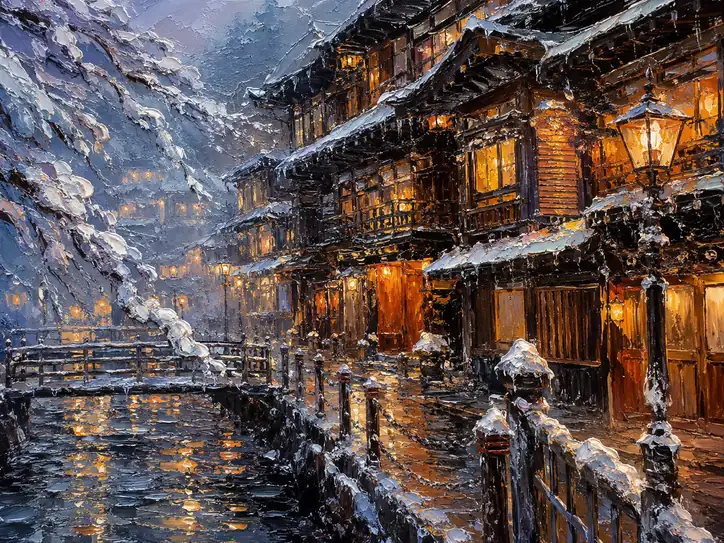 Where the Snow Whispers Warmth
 The Crimson Threshold of Silence