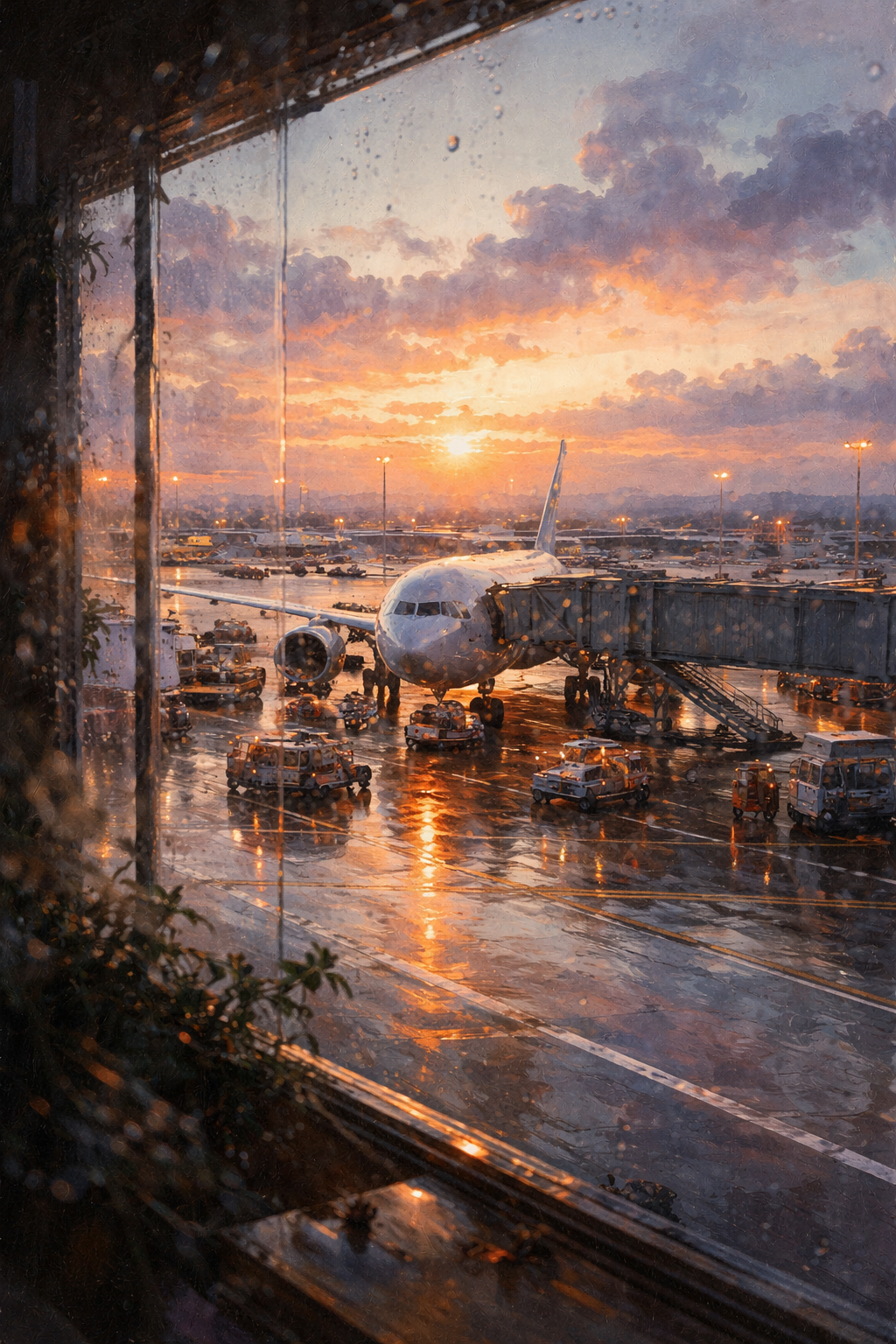
Twilight at the Apron
Critique
1. Introduction The artwork presents a serene scene of an airport apron during the transition of either sunrise or sunset. A large commercial aircraft is positioned centrally, connected to a terminal gate by a mobile jet bridge. The atmospheric conditions suggest a post-rain environment, with the sky filled with scattered clouds illuminated by the low-lying sun. This piece captures a momentary pause in the usually bustling world of international travel. 2. Description In the foreground, the view is framed by a window with visible raindrops, looking out onto a wet asphalt surface. The aircraft is a wide-body model, surrounded by various ground service vehicles and cargo containers that appear as small, boxy shapes on the tarmac. The sun sits just above the horizon, casting a powerful golden glow across the entire composition. To the left, a small amount of indoor foliage is visible through the glass pane. 3. Analysis The artist utilizes a rich palette of warm oranges, yellows, and deep purples to define the dramatic sky and its reflections. The ground surface acts as a mirror, with long vertical streaks of light emphasizing the moisture on the pavement. Visible, textured brushstrokes are employed throughout, particularly in the cloud formations and the reflective puddles, creating a sense of movement and depth. The composition follows a strong diagonal line from the window frame toward the vanishing point. 4. Interpretation and Evaluation This painting effectively conveys the quiet majesty found within industrial landscapes and the poetic nature of air travel. The technical skill is evident in the sophisticated handling of light and the realistic depiction of reflective surfaces under complex lighting conditions. By choosing a viewpoint behind a rain-streaked window, the artist creates a sense of intimacy and introspection. The balance between the mechanical precision of the aircraft and the organic beauty of the sky is particularly noteworthy. 5. Conclusion Initially, the viewer is struck by the intense golden light, but a closer examination reveals a wealth of logistical detail in the airport's operations. The work succeeds in elevating a common modern experience into a subject of contemplation and aesthetic beauty. It stands as a testament to the ability of art to find stillness within the machinery of the modern world. It is a highly accomplished work that resonates with universal themes of departure and arrival.
Same Subcategory
Similar Artworks
 Prelude to the Endless Sky
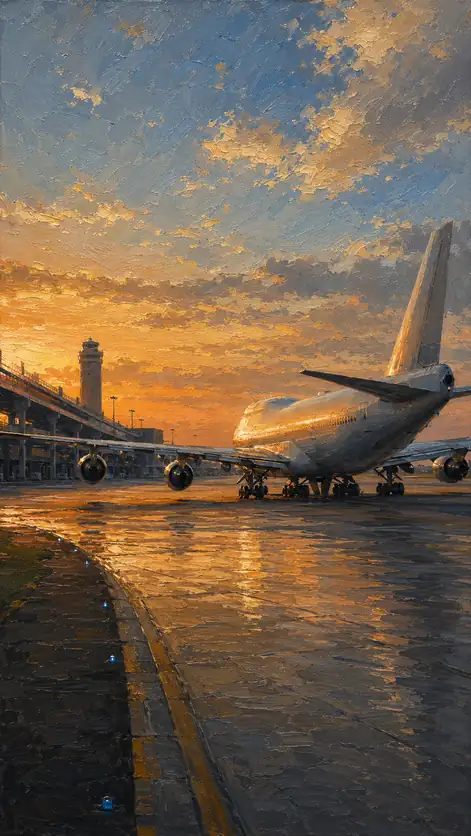 The Last Light on Wings at Rest
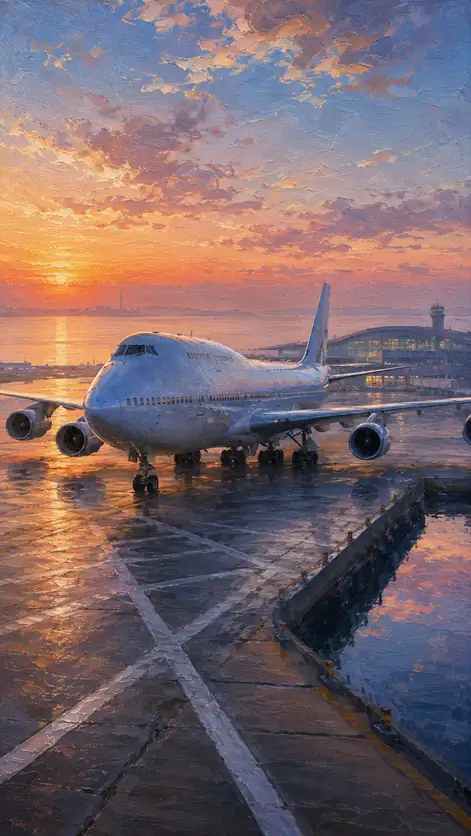 Before the Sky Takes Us
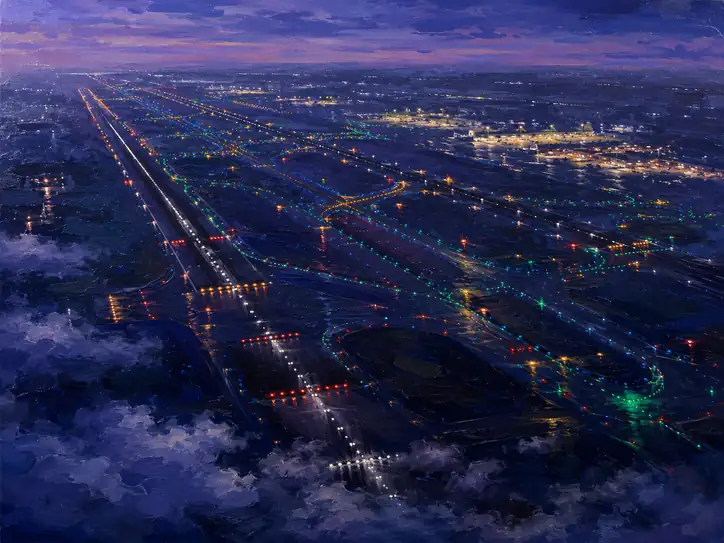 Lines of Hope in the Silent Mist
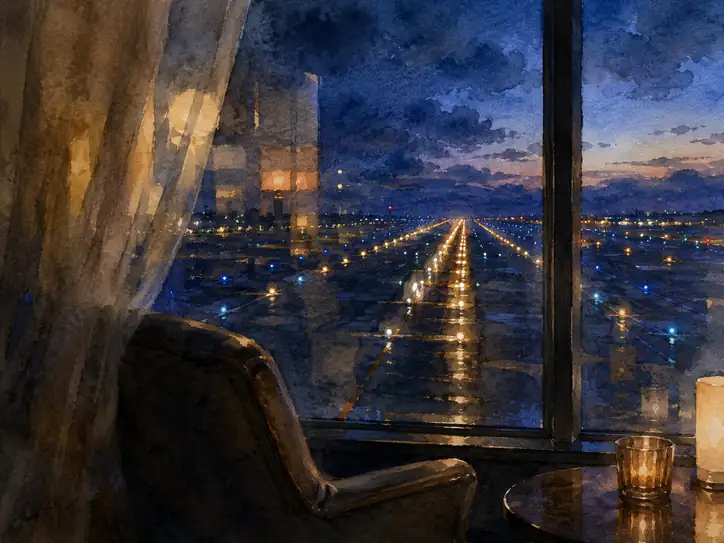 The Quiet Hours of Transit
 The Dreamliner Waiting for Tomorrow
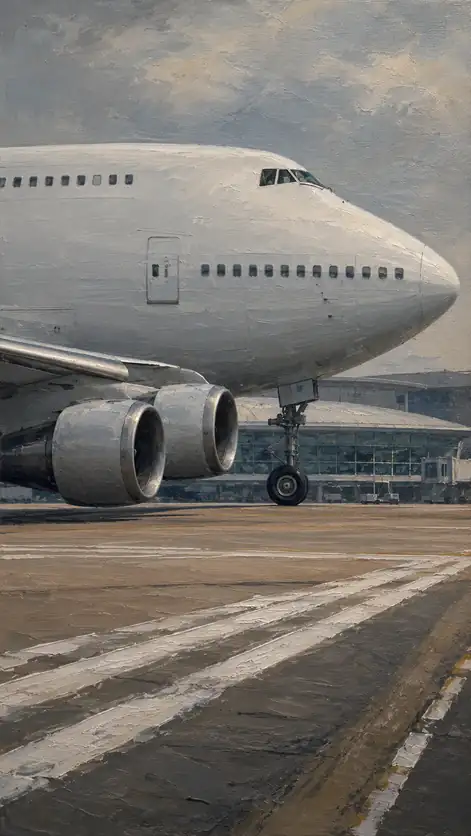 The Quiet Face Before Flight
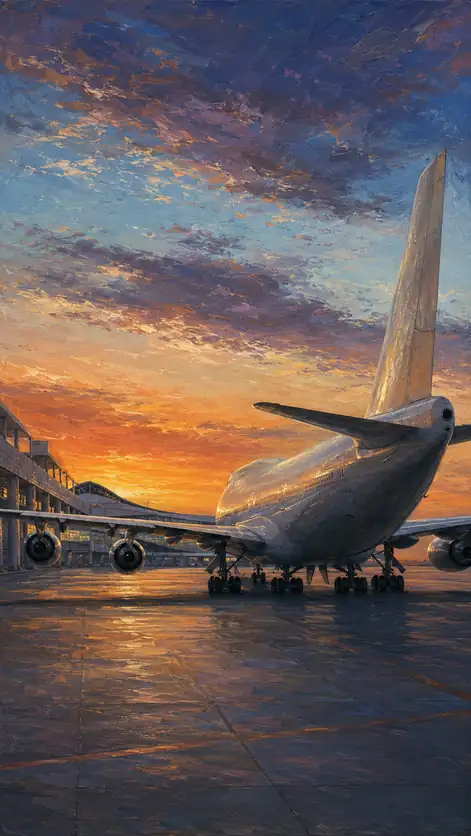 Sunset Waiting Behind the Tail
 Whispers of the Rain-Washed Stone
 Celebration at the Rain-Veiled Window