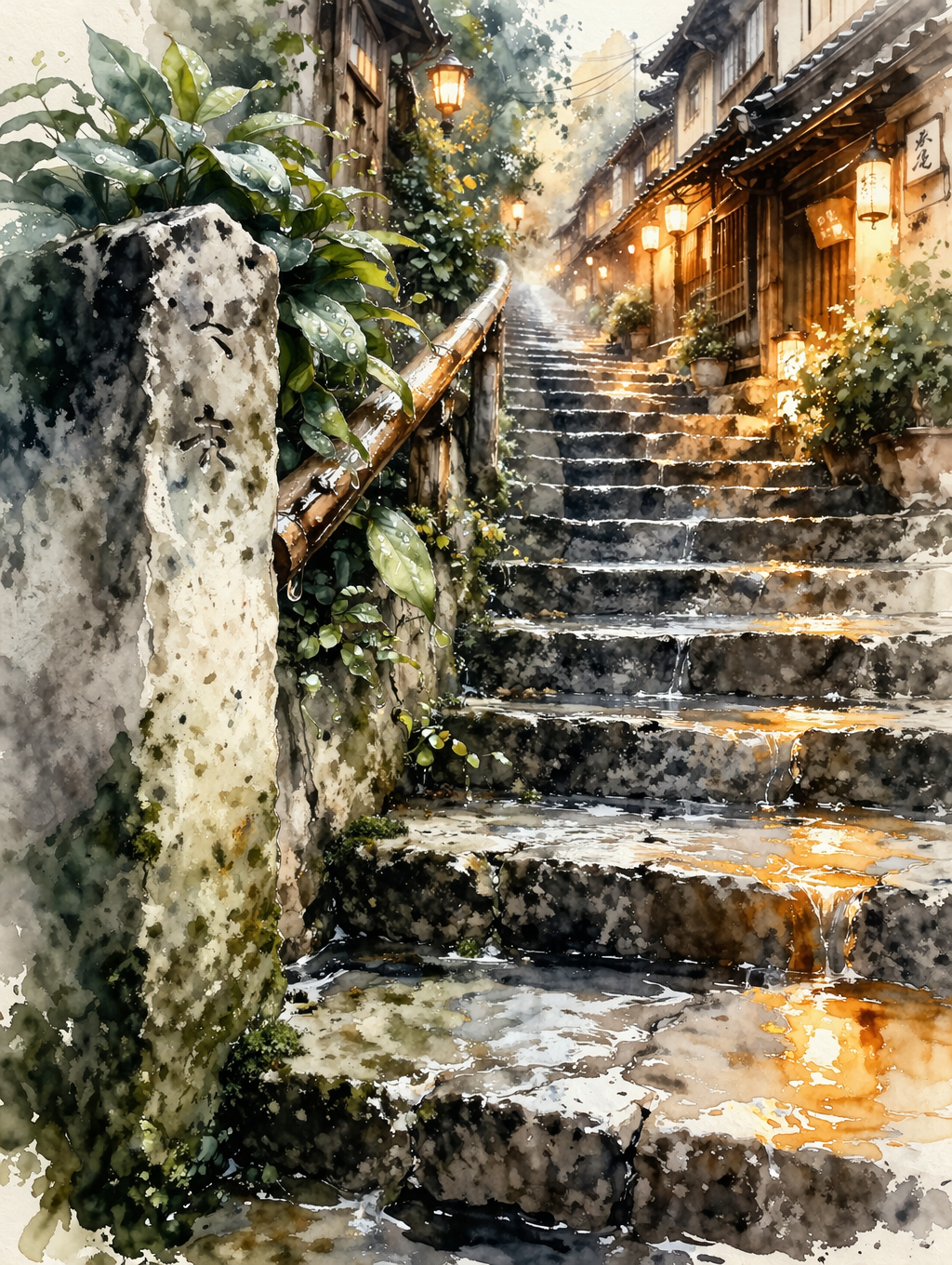
Reflections on the Wet Stone Path
Critique
1. Introduction This watercolor painting offers an intimate and tactile perspective of a traditional Japanese street, focusing on the immediate textures of stone and greenery after a rain. The composition pulls the viewer close to the ground, emphasizing the weathered beauty of a historic townscape. By capturing the interplay between wet surfaces and artificial light, the work elevates a common architectural feature into a subject of profound aesthetic contemplation. It serves as a study of resilience, time, and the quiet beauty found in the details of everyday environments. 2. Description In the immediate foreground, a weathered stone pillar covered in patches of green moss stands prominently on the left. Beside it, a bamboo handrail leads the eye up a series of uneven stone steps that appear wet and reflective. The light from glowing lanterns along the traditional wooden buildings is mirrored on the surface of the stairs, creating streaks of golden and amber light. Lush green plants with visible water droplets sprout from the crevices between the stones and the buildings. The background softly blurs into a hazy, light-filled distance, suggesting a moist, atmospheric evening. 3. Analysis The artist employs a shallow depth of field, which keeps the foreground textures sharp while gently blurring the background to create a sense of immersion. The color palette is a sophisticated mix of earthy grays and browns, vibrant greens, and warm incandescent yellows. Texture is a primary element here; the contrast between the rough, mossy stone and the smooth, reflective water surfaces is rendered with great technical precision. The diagonal line of the handrail and the receding steps provide a strong sense of upward movement, anchoring the composition. 4. Interpretation and Evaluation This work successfully captures the sensory experience of a rainy evening in a historic district, where the smell of wet earth and the glow of lanterns create a specific mood. The technical handling of reflections on the wet stone steps is exceptional, demonstrating an understanding of how light interacts with irregular, moisture-laden surfaces. The presence of moss and thriving greenery suggests a harmonious relationship between the man-made structures and nature over a long period. Evaluation of the piece highlights its ability to make the viewer feel the dampness and the quietude of the scene. 5. Conclusion While the previous townscape focused on the breadth of the street, this painting emphasizes the depth and texture of its individual components. The transition from the ruggedness of the foreground pillar to the soft glow of the distant buildings mirrors a journey of discovery. The work stands as a testament to the enduring charm of traditional craftsmanship and its integration with the natural world. Ultimately, it provides a deeply atmospheric and technically accomplished viewing experience that invites a slow, appreciative gaze at the textures of history.
Same Subcategory
 Mystery of the Summer Shrine
Similar Artworks
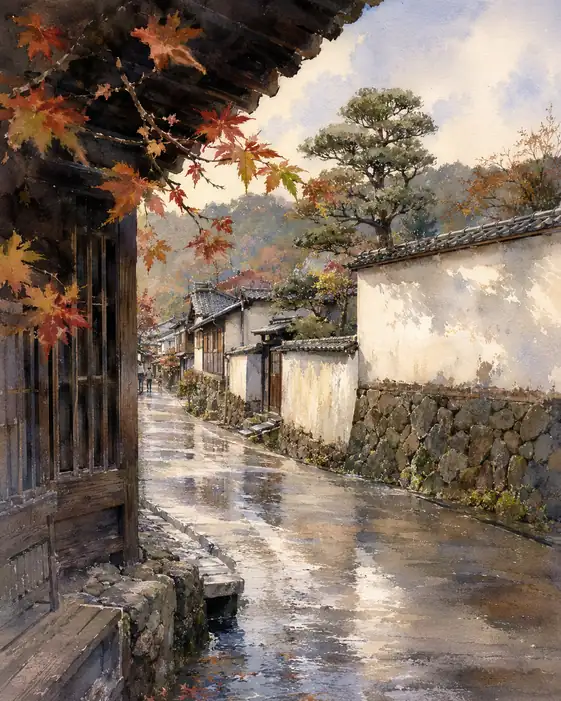 Reflections of a Fading Autumn
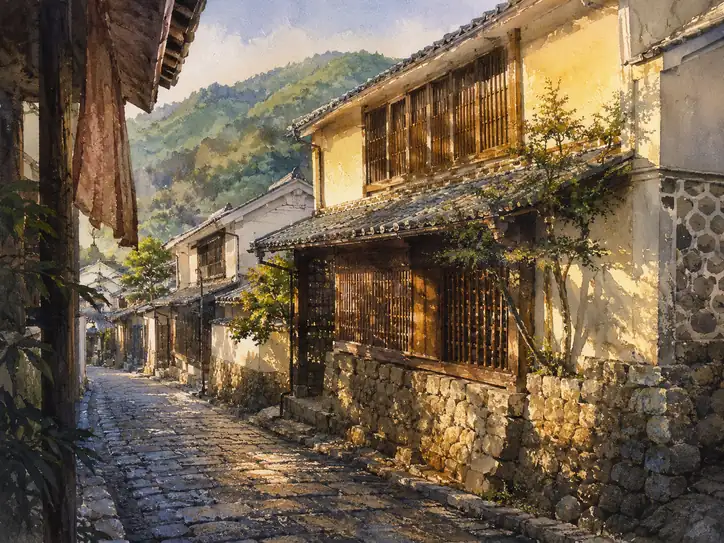 Sun-Drenched Memories of the Old Street
 Lanterns at Twilight
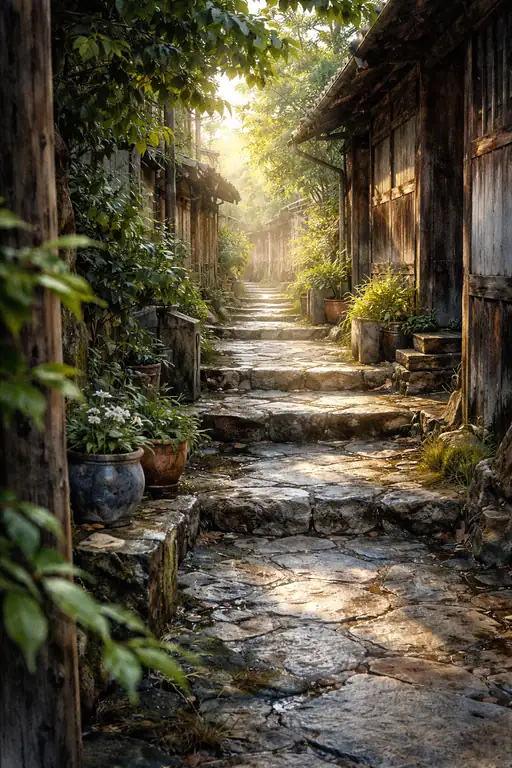 Morning Mist on the Stone Steps
 A Glimmer of Home on the Wet Stone
 A Dialogue Between Stone and Glass
 Golden Shadows on the Post Town
 Lanterns' Glow on the Misty Trail
 The Festive Glow of the Tiered Village
 Her Footsteps Gather the Lanterns