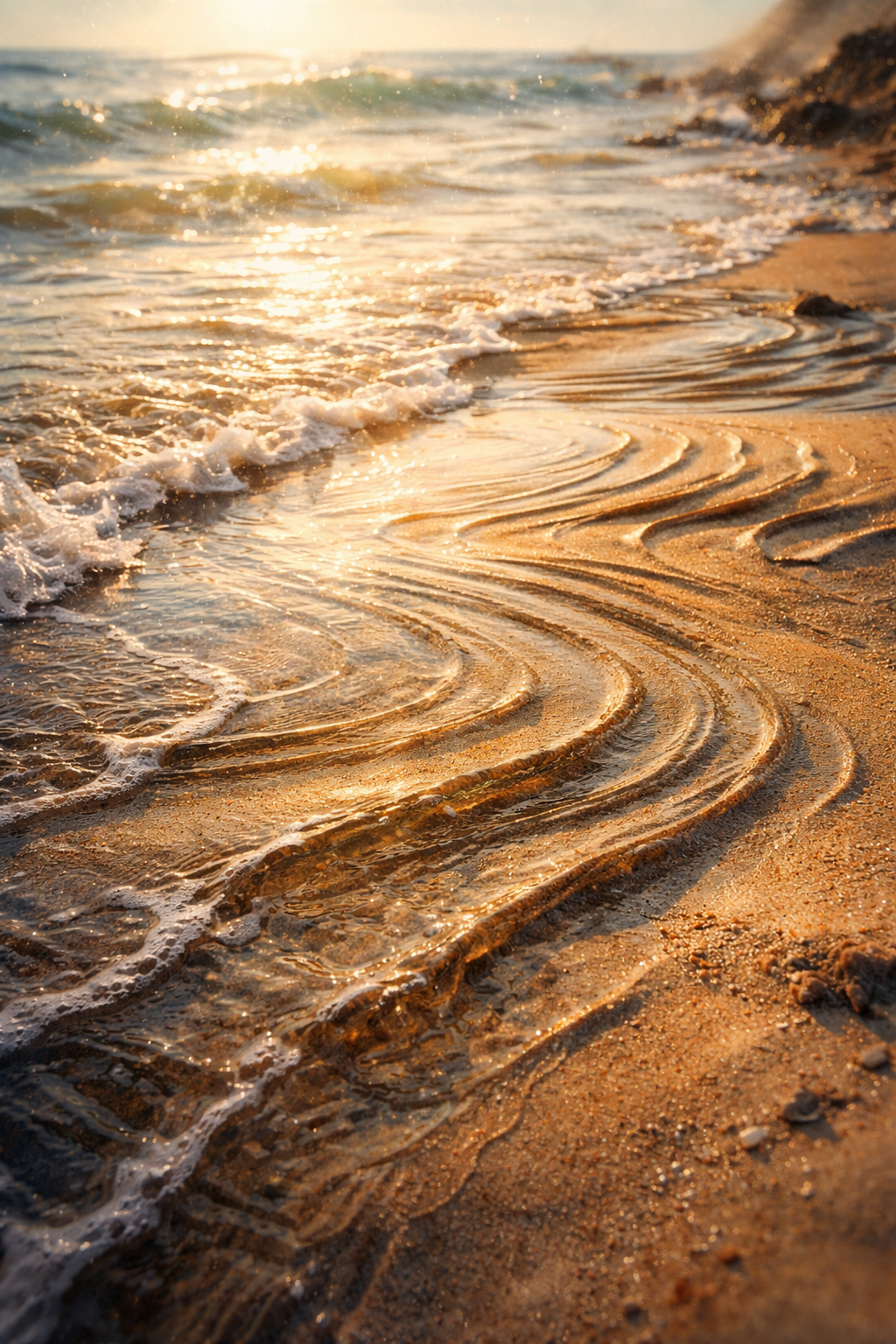
Golden Threads on the Sand
Critique
1. Introduction This painting captures a serene coastal scene during the golden hour, focusing on the intricate interaction between the receding tide and the sandy shore. The composition is centered on the fluid, rhythmic patterns left in the wet sand as the water flows back into the sea. Bathed in warm, amber light, the work evokes a sense of peace and the quiet majesty of the natural world. It serves as a study of movement, light, and the ephemeral beauty of the shoreline. 2. Description The foreground features a series of elegant, curved ridges in the sand, shaped by the force of the water. These channels are filled with shallow, reflective pools that mirror the glowing sky. To the left, a gentle wave breaks, its white foam contrasting with the dark, wet sand. The background shows the vast expanse of the ocean under a hazy sun, which sits low on the horizon. The sunlight creates a brilliant path of light across the rippling water, extending toward the viewer and illuminating the textures of the beach. 3. Analysis Technically, the artist uses a masterful combination of textures, from the granular surface of the dry sand to the smooth, glassy appearance of the retreating water. The composition employs strong leading lines, with the curves in the sand directing the eye from the foreground toward the distant sun. The color palette is dominated by warm ochre, gold, and soft blues, creating a harmonious and unified atmosphere. Lighting is the key emotional driver, with the low sun casting long shadows and highlighting the delicate spray of the waves. 4. Interpretation and Evaluation The piece can be interpreted as a meditation on the passage of time and the constant, cyclical nature of the tides. The detail in the sand patterns demonstrates a high level of observation and technical skill, capturing a moment that would disappear in seconds in reality. By focusing on the ground rather than just the horizon, the artist provides a grounded and intimate perspective on a familiar landscape. The work successfully conveys the tranquility of the coast, elevating a simple natural phenomenon into a work of art. 5. Conclusion In summary, the painting is a evocative representation of the beauty found at the edge of the sea. The initial attraction of the golden light leads to an appreciation for the complex textures and patterns of the sand and water. The artist achieves a delicate balance between realistic detail and atmospheric mood, creating a scene that feels both familiar and extraordinary. This work leaves the viewer with a lasting impression of the quiet and profound beauty of the coastal environment.
Same Subcategory
 Golden Shells at Sunset
Similar Artworks
 Whispers of the Golden Tide
 Fleeting Whispers of the Golden Tide
 Golden Trace of the Receding Tide
 Golden Echoes on the Wet Sands
 Golden Path Through the Coastal Dunes
 Golden Ripples on the Endless Dunes
 Golden Shadows on the Tranquil Shore
 Whispers of the Golden Dunes
 Dusk's Golden Reflection
 Sun-Kissed Ripples on Golden Sands